
Dealing with a persistent pest infestation in residential or commercial premises creates substantial psychological stress, sleep deprivation, and operational disruption. Specifically, choosing an advanced bed bug...
Dealing with a persistent pest infestation in residential or commercial premises creates substantial psychological stress, sleep deprivation, and operational disruption. Specifically, choosing an advanced bed bug heat treatment London delivers an immediate, eco-friendly, and scientifically verified method to eliminate stubborn colonies in a single visit. Furthermore, London’s high-density housing, shared Victorian party walls, and frequent international travel make rapid, decisive pest intervention essential for property owners.
In addition, traditional chemical sprays often fail because modern insect populations have developed strong genetic resistance to standard synthetic pyrethroids. Moreover, chemical sprays cannot reliably penetrate deep mattress seams, skirting boards, electrical conduits, or wall cavities where insects harbor. Consequently, investing in professional bed bug heat treatment London guarantees total colony eradication by utilizing controlled thermal energy that reaches every concealed sanctuary.
Why Bed Bug Heat Treatment London Is the Superior Eradication Method
Thermal remediation relies on thermodynamics rather than toxic chemicals to achieve complete insect mortality. When you book a specialized bed bug heat treatment London, industrial heaters elevate ambient room temperatures to lethal thresholds between 56°C and 60°C. In fact, maintaining this target temperature ensures cellular protein denaturation across all developmental stages, from nymphs to fully grown adults.
Complete Destruction of Bed Bug Eggs
For instance, the primary reason conventional pest control treatments experience high relapse rates is their inability to eliminate resilient eggs. Specifically, bed bug eggshells feature a protective, waxy outer chorion that repels liquid insecticides. However, thermal energy rapidly dehydrates and cooks the egg interior, guaranteeing complete bed bug eggs eradication without requiring follow-up chemical sprays weeks later.
Penetration into Hidden Architectural Cavities
Furthermore, urban London properties often feature intricate architectural woodwork, floorboard voids, hollow partition walls, and decorative coving. Chemical sprays merely coat surface materials, allowing deep-seated bugs to remain unharmed. In contrast, convection heat waves penetrate deep into upholstered furniture, dense box springs, wardrobe crevices, and wall cavities. Therefore, thermal convection leaves zero refuge for surviving pests.
Heat Treatment vs. Traditional Chemical Sprays: Operational Breakdown
Selecting the right eradication strategy requires understanding the critical operational differences between thermal convection and chemical applications. Specifically, property managers and homeowners benefit from analyzing turnaround times, safety levels, and total biological clearance rates.
Single-Day Turnaround vs. Multi-Week Disruptions
A complete thermal remediation protocol finishes within six to eight hours during a single appointment. Conversely, conventional chemical treatments demand three to four separate visits spread across six to eight weeks. As a result, occupants endure extended disruptions, repeated vacuuming routines, and ongoing anxiety when relying on chemical sprays.
Complete Ovicidal Action vs. Ineffective Egg Penetration
Thermal energy delivers instantaneous, one hundred percent mortality against unhatched eggs by denaturing internal cellular proteins. In contrast, standard liquid insecticides fail to penetrate the thick, protective shell of bed bug eggs. Consequently, surviving eggs hatch days later, triggering continuous re-infestation cycles.
Zero Resistance vs. Genetic Pesticide Immunity
Because heat is an absolute physical force, insects cannot develop biological immunity to thermal shock. On the other hand, insect populations across Greater London exhibit widespread genetic resistance to synthetic pyrethroids and carbamate sprays. Therefore, chemical applications frequently scatter surviving insects deeper into adjacent wall cavities.
Total Furniture Preservation vs. Costly Disposal
High-temperature convection penetrates deep into dense mattresses, luxury upholstery, and upholstered headboards, completely sanitizing them without structural damage. In comparison, chemical extermination often forces homeowners to discard expensive bedding and furniture due to heavy pesticide saturation.
Safe Same-Day Re-Entry vs. Chemical Vapors
Occupants return to their premises on the exact same evening once the rooms cool to ambient room temperature. Furthermore, thermal remediation leaves zero toxic residues, unpleasant fumes, or volatile organic compounds on living surfaces.
The Science of Thermal Remediation: How Heat Eradicates Pests
Understanding the physiological mechanics of heat explains why thermal remediation remains unbeatable against resilient insect strains. In particular, insects lack internal thermoregulation mechanisms, making them exceptionally vulnerable to ambient heat shocks.
Thermal Denaturation of Critical Enzymes
When ambient temperatures surpass 50°C, the essential metabolic enzymes within insects break down irreversibly. Consequently, their nervous and respiratory systems shut down within minutes. In addition, high-velocity axial fans distribute heated air evenly, eliminating cold spots where insects might otherwise seek refuge.
Overcoming Genetic Insecticide Resistance
Across Greater London, extensive laboratory testing confirms that local insect strains possess thickened cuticles and nerve insensitivity against standard chemical agents. For this reason, conventional pesticides often cause insects to scatter deeper into neighboring flats. Because heat is a physical mechanism rather than a biochemical agent, insects cannot develop thermal immunity.
Step-by-Step Execution: How Professional Exterminators Deliver Heat Treatments
Delivering a successful thermal service requires specialized engineering, continuous temperature telemetry, and meticulous air balancing. If you suspect an active outbreak, partnering with a certified bed bug heat treatment London specialist ensures rapid, discrete, and total elimination.
Step 1: Comprehensive Thermal and Canine Inspection
To begin with, certified technicians perform an exhaustive inspection using high-resolution thermal imaging cameras and precision borescopes to map infestation hotspots. In many commercial and residential scenarios, trained bed bug detection dogs identify active scent signatures behind baseboards and headboards.
Step 2: Strategic Placement of Industrial Heaters and Air Movers
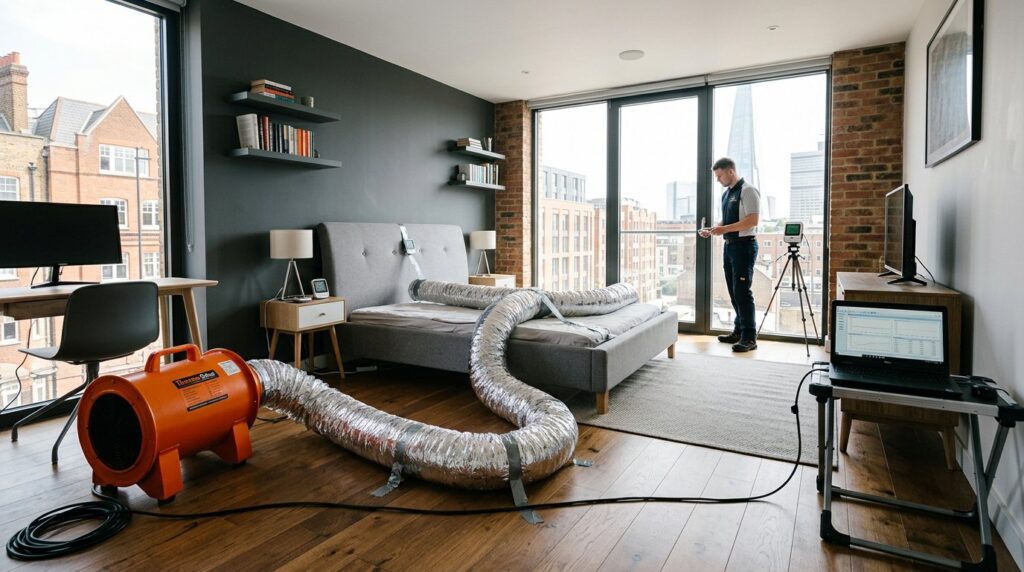
Next, specialists deploy heavy-duty electric or indirect-fired mobile heating units connected to high-capacity axial air blowers. Technicians place remote wireless temperature sensors across furniture interiors, under carpets, and inside exterior wall voids.
Step 3: Sustained Thermal Soak and Temperature Monitoring
Afterward, the treatment area is brought to the target temperature of 56°C to 60°C and held in a thermal soak state for several hours. Meanwhile, technicians monitor wireless sensor feeds continuously on digital dashboards to ensure every cubic inch reaches lethal thermal levels.
Step 4: Strategic Furniture Rotation and Air Circulation
During the heating phase, technicians enter the treatment zone wearing thermal protective suits to rotate mattresses, open drawers, reposition cushions, and rearrange clothing. Consequently, moving items ensures heat penetrates dense storage zones without leaving thermal shadows.
Step 5: Controlled Cool-Down and Preventative Barrier Application
Subsequently, technicians initiate a gradual cooling protocol to return rooms safely to ambient temperatures. In addition, professionals apply non-toxic amorphous silica dust into skirting board voids and electrical faceplates to establish a long-lasting physical barrier against future external introductions.
Addressing London’s Unique Property Challenges
London’s diverse architectural landscape presents distinct pest control challenges that demand tailored thermal remediation strategies. Specifically, properties require customized heating loads depending on their age, insulation, and layout.
Victorian and Edwardian Terraced Properties
In older terraced homes throughout boroughs like Islington, Fulham, and Camden, suspended timber floors and shared lath-and-plaster party walls allow insects to migrate between neighboring residences. For this reason, whole-property residential heat treatment utilizes high-volume air blowers and deep sub-floor heating to prevent insects from escaping into adjacent wall voids.
Modern High-Rise Apartment Complexes
In modern multi-story developments across Canary Wharf, Nine Elms, and Stratford, shared ventilation shafts, concrete subfloors, and central electrical risers require targeted containment. Therefore, technicians isolate HVAC grilles and deploy specialized electric heating rigs designed for quiet, safe operation in high-density buildings.
Houses in Multiple Occupation (HMOs) and Student Halls
Properties with high tenant turnover and dense internal partition walls experience frequent pest introductions. In response, technicians execute concurrent multi-room heating protocols and heat-sanitize luggage and study materials simultaneously.
Boutique Hotels and Luxury Hospitality
Hospitality businesses require rapid turnaround to protect occupancy revenues and guest reviews. Consequently, discreet thermal setups with unmarked vehicles allow hotel managers to restore infested suites to full operational service within twenty-four hours.
Comprehensive Preparation Checklist for Homeowners and Tenants
To maximize treatment efficacy and protect delicate personal possessions, completing structured preparation before the arrival of a bed bug exterminator London is critical.
1. Items That Must Be Removed Prior to Treatment
- Pressurized Canisters: Aerosol cans, spray deodorants, hairsprays, and butane lighters must be removed to avoid pressure expansion.
- Low-Melting Point Substances: Wax candles, crayons, chocolates, cosmetics, lipsticks, and delicate soap bars.
- Delicate Electronics and Media: Vinyl records, vintage audio tapes, flammable chemicals, and primary laptop batteries.
- Living Organisms: All house pets, dogs, cats, caged birds, reptiles, and sensitive houseplants must be vacated during treatment.
2. Items That Must Remain Inside to Guarantee Eradication
- Bedding, Mattresses, and Pillows: All sleep surfaces must stay in the rooms to be fully disinfected by circulating heat.
- Clothing, Luggage, and Wardrobes: Suitcases, backpacks, jackets, and daily garments must remain inside to ensure no hidden hitchhikers survive.
- Upholstered Sofas and Cushions: Sofas and armchairs remain in place for comprehensive heat penetration.
- Books and Paperwork: Books and papers can remain inside drawers or open shelves without sustaining thermal damage.
Commercial and Hospitality Solutions: Zero Downtime for London Businesses
For boutique hotels, serviced apartments, student accommodation providers, and corporate offices, an unaddressed outbreak threatens brand reputation, online reviews, and operational revenues. Booking certified commercial bed bug treatment and professional pest control London services guarantees immediate problem resolution with minimal commercial downtime.
Safeguarding Hotel Revenues and Online Reviews
Undoubtedly, in the hospitality sector, a single negative guest review mentioning biting insects can damage occupancy rates for months. Consequently, deploying rapid thermal decontamination allows hotel managers to return rooms to full inventory within 24 hours.
Discreet Emergency Deployment
Leading pest control London providers utilize unmarked vehicles and whisper-quiet electric heating equipment. Therefore, commercial clients receive discrete, professional remediation without attracting unwanted attention from neighbors, guests, or patrons.
Environmental and Health Advantages of Chemical-Free Heat
Choosing chemical-free pest control offers immense peace of mind for families, asthmatic individuals, and pet owners throughout London.
Complete Absence of Toxic Chemical Residues
In contrast, traditional insecticidal sprays leave persistent chemical residues on carpets, headboards, and mattress fabrics that linger for weeks. In comparison, thermal treatment utilizes pure clean heat, leaving behind zero harmful chemical traces or noxious airborne vapors.
Immediate and Safe Re-Entry
Consequently, families can comfortably re-enter their homes on the exact same evening following thermal cool-down. For instance, parents can tuck their children into bed knowing their sleeping environment is completely sanitized, fresh, and insect-free.
Understanding Pricing Dynamics for Bed Bug Heat Treatment London
In practice, the cost of a thermal eradication service in London depends on several structural and logistical factors. Evaluating these factors allows property owners to budget accurately for complete pest elimination.
Key Factors Influencing Treatment Rates
- Total Property Volume: Larger properties with higher cubic meterage require more heating units, higher electrical power, and longer thermal soak times.
- Infestation Severity: Heavy infestations with widespread colony dispersion may require supplemental thermal air movers and multi-room simultaneous treatments.
- Property Architecture: Multi-level Victorian homes with high ceilings or hard-to-access loft conversions require tailored thermal ducting.
- Preventative Post-Treatment Barriers: Integrating perimeter dusting and monitoring traps provides extended long-term protection.
Frequently Asked Questions About Bed Bug Heat Treatment London
How long does a professional bed bug heat treatment take?
In general, a comprehensive whole-home thermal treatment takes between 6 and 8 hours. This timeframe includes the initial heating phase, a sustained 3 to 4-hour thermal soak, and a gradual cool-down period.
Will the high heat damage my furniture or home electronics?
Specifically, standard home furnishings, television screens, wooden furniture, and drylined walls safely withstand temperatures of 56°C to 60°C. However, technicians advise removing temperature-sensitive items such as wax candles, vinyl records, and aerosol cans prior to service.
Can bed bugs escape the heat by hiding in neighboring walls?
To prevent pest migration, technicians deploy high-velocity axial fans that rapidly saturate rooms with uniform heat waves, eliminating cold spots. In addition, technicians apply non-toxic insecticidal dust barriers along wall perimeters to catch any insects attempting escape.
Why is heat treatment better than standard chemical sprays?
Above all, heat treatment eliminates 100% of bed bugs and their eggs in a single day, regardless of pesticide resistance. Conversely, chemical sprays require multiple disruptive visits and cannot kill unhatched eggs, frequently leading to recurring infestations.
Do I need to throw away my mattress or sofa after an infestation?
On the contrary, one of the greatest benefits of heat treatment is that you do not need to discard expensive mattresses, box springs, or designer furniture. Convection heat penetrates deep into upholstery fibers, fully sanitizing items in place.
Conclusion
Overcoming a severe bed bug infestation in a bustling metropolis requires a decisive, scientifically backed eradication strategy. Utilizing professional bed bug heat treatment London ensures immediate relief, total ovicidal elimination, and complete restoration of domestic peace of mind. By choosing a single-day chemical-free pest control solution, homeowners and property managers safeguard family health, protect valuable interior furnishings, and permanently resolve pest challenges without toxic chemical residues. In conclusion, investing in certified thermal remediation specialists guarantees your London property remains clean, welcoming, and 100% pest-free.