
Lighting plays a transformative role in defining the ambiance, functionality, and spatial aesthetics of residential and commercial interiors. Installing modern LED ceiling lights provides homeowners, architects, and...
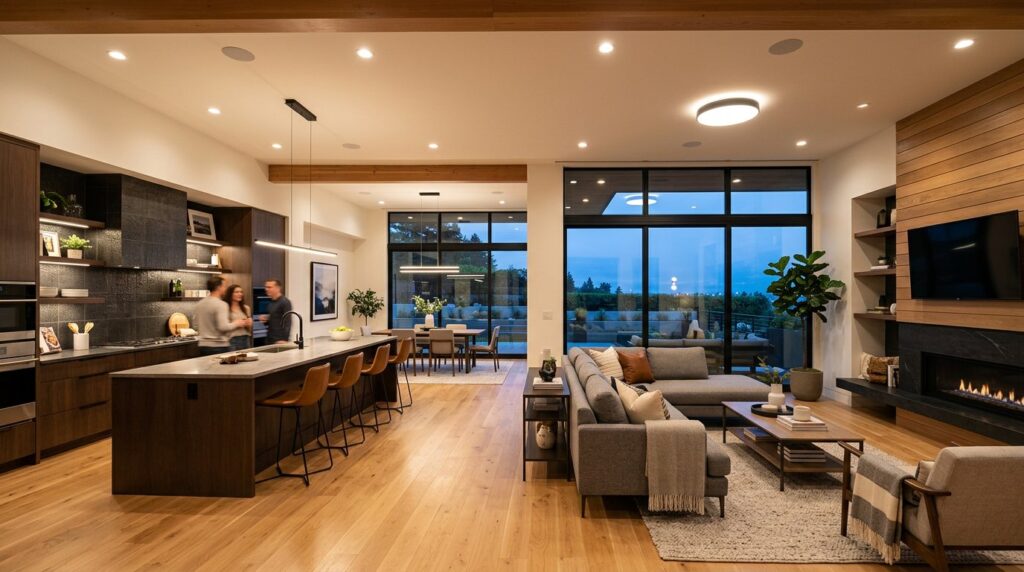
Lighting plays a transformative role in defining the ambiance, functionality, and spatial aesthetics of residential and commercial interiors. Installing modern LED ceiling lights provides homeowners, architects, and interior designers with energy-efficient illumination that enhances daily comfort while drastically reducing electricity bills. Furthermore, advancements in solid-state lighting technology have introduced unprecedented flexibility in colour rendering, dimming control, and minimalist fixture engineering.
Whether you are designing a contemporary open-concept kitchen, modernizing a cozy living room, or upgrading moisture-prone bathroom environments, selecting the appropriate ceiling luminaires is essential. In addition, evaluating technical specifications like lumen output, correlated colour temperature (Kelvin), colour rendering index (CRI), and ingress protection (IP) ratings ensures your illumination meets specific visual demands. Consequently, investing in high-quality LED ceiling lights guarantees long-lasting reliability, flicker-free performance, and visually captivating indoor environments for years to come.
Why Modern LED Ceiling Lights Outperform Traditional Incandescent and Halogen Bulbs
In modern architecture, solid-state lighting has completely revolutionized residential illumination by overcoming the severe inefficiencies of legacy filament and gas-discharge lamps. When property owners upgrade to LED ceiling lights, they replace outdated, energy-wasting incandescent bulbs with semiconductor luminaires that convert up to ninety percent of electricity directly into visible light. In fact, modern LED fixtures consume up to eighty-five percent less power than traditional halogen spotlights while producing superior luminous flux.
Exceptional Operational Lifespan and Minimal Maintenance
Traditional incandescent bulbs burn out after approximately one thousand hours, and halogen spotlights rarely exceed two to three thousand hours of operation. In sharp contrast, quality solid-state luminaires deliver continuous operational lifespans ranging between twenty-five thousand and fifty thousand hours. Therefore, upgrading ceiling fixtures eliminates the frustration, safety hazards, and recurring expense of frequent ladder climbing to change burnt-out bulbs.
Drastic Heat Reduction and Enhanced Household Safety
In comparison, halogen and incandescent lamps generate extreme operating temperatures, often reaching surface temperatures exceeding two hundred degrees Celsius. As a result, trapped ceiling heat creates significant fire hazards and degrades nearby wiring insulation over time. Solid-state fixtures operate at significantly lower temperatures through integrated aluminum heat sinks, protecting building structural elements and reducing summertime air conditioning cooling loads.
Core Categories of Contemporary LED Ceiling Fixtures
Selecting the right luminaire style depends on your room’s ceiling height, architectural aesthetic, and specific functional lighting requirements. During interior design planning, LED ceiling lights fall into several distinct architectural categories.
1. Recessed LED Downlights and Spotlights
Specifically, recessed downlights sit flush within ceiling drywall cutouts, providing clean, minimalist overhead illumination that never clutters visual sightlines. Specifically, fire-rated recessed downlights incorporate intumescent seals that expand during fires to restore ceiling fire resistance barriers in compliance with strict building safety regulations.
2. Flush Mount and Semi-Flush Ceiling Luminaires
In addition, ideal for rooms with standard eight-foot or lower ceiling heights, flush-mount luminaires attach directly against the ceiling surface. Modern low-profile LED flush panels utilize edge-lit acrylic diffusers to deliver uniform, glare-free light distribution across wide living spaces without dominating the room.
3. Surface-Mounted Linear Battens and Architectural Tracks
Meanwhile, surface-mounted linear LED fixtures and adjustable track lighting systems allow users to aim directional spotlight heads toward artwork, bookshelves, and kitchen countertops. Furthermore, track systems provide immense modular versatility, enabling homeowners to reposition or add individual light heads effortlessly along continuous energized rails.
4. Suspended LED Pendant Lights and Chandeliers
Similarly, suspended decorative luminaires serve as dramatic visual centerpieces above dining tables, kitchen islands, and double-height stairwell foyers. In addition, contemporary LED pendants blend sculptural minimalist metalwork with integrated micro-LED arrays to deliver breathtaking ambient warmth.
Technical Specifications: Lumens, Kelvins, and Colour Rendering
In practice, selecting optimal illumination requires looking beyond wattage and understanding the fundamental optical metrics that govern light quality. Evaluating technical parameters ensures your LED ceiling lights deliver ideal visual clarity.
Lumens vs. Wattage: Measuring True Light Output
Historically, in traditional lighting, consumers relied on wattage to estimate brightness, but wattage measures electrical consumption rather than visible illumination. Today, brightness is measured strictly in lumens (lm). For instance, a high-efficiency ten-watt LED luminaire produces approximately eight hundred to one thousand lumens, matching the light output of an outdated sixty-watt incandescent bulb while consuming a tiny fraction of the electricity.
Correlated Colour Temperature (CCT): Setting the Emotional Mood
Colour temperature, measured in Kelvin (K), dictates the warm or cool tone of white light emitted by the luminaire. Selecting the right Kelvin rating is critical for supporting circadian rhythms and establishing appropriate room functionality:
- Very Warm White (2200K to 2700K): Emits a soft, amber candle-like glow that promotes relaxation, making it perfect for master bedrooms, dining rooms, and cozy living room accent zones.
- Warm White (3000K): Delivers a crisp yet inviting golden-white light, serving as the standard recommendation for modern residential living rooms, hallways, and family gathering spaces.
- Neutral / Cool White (4000K): Provides a bright, energizing white light that enhances visual acuity, making it ideal for kitchen countertops, home offices, utility rooms, and vanity mirrors.
- Daylight White (5000K to 6000K): Replicates midday sunlight, suited primarily for commercial workshops, art studios, and high-precision task environments.
Colour Rendering Index (CRI): Preserving Natural Color Accuracy
Above all, the Colour Rendering Index (CRI) measures how accurately a light source reveals the true, natural colors of objects compared to natural daylight on a scale from zero to one hundred. Low-CRI lighting (below eighty) makes interiors appear dull, washed out, and sickly. Consequently, selecting luminaires with a high CRI rating of ninety or above ensures hardwood grains, interior paint colors, fabrics, and culinary dishes appear vibrant and true to life.
Advanced Dimming Technologies and Smart Control Integration
Modern interior architecture demands flexible lighting controls that transition seamlessly from bright daytime task work to intimate evening dining. When specifying LED ceiling lights, selecting compatible dimming drivers ensures smooth, flicker-free dimming across all output ranges.
Trailing-Edge Phase Dimming
In residential engineering, trailing-edge electronic dimmers represent the preferred standard for residential mains-voltage LED fixtures, cutting the trailing edge of the AC voltage waveform to regulate current without buzzing or lamp hum. Furthermore, pairing high-quality trailing-edge dimmers with dimmable LED drivers achieves ultra-smooth dimming down to one percent luminous output.
DALI and 0-10V Commercial Architectural Controls
In comparison, for luxury residences and commercial office complexes, Digital Addressable Lighting Interface (DALI) and 0-10V analogue protocols provide individual addressability for every ceiling fixture. As a result, facility managers configure automated lighting scenes, daylight harvesting algorithms, and zone scheduling through centralized digital dashboards.
Smart Wireless Protocols: Zigbee, Matter, and Smart Home Ecosystems
Furthermore, integrating smart LED luminaires compatible with Zigbee, Thread, or Matter protocols allows homeowners to control lighting via smartphone apps, motion sensors, and voice commands. In addition, automated scheduling adjusts color temperatures dynamically throughout the day to support healthy natural circadian sleep cycles.
Room-by-Room Guide to Strategic Ceiling Lighting Design
Above all, achieving a balanced, professional lighting scheme requires layering ambient, task, and accent illumination tailored to the unique spatial function of each room. Applying strategic placement principles for LED ceiling lights ensures flawless visual harmony throughout the home.
1. Kitchen and Culinary Preparation Zones
For culinary spaces, kitchens demand high-intensity, shadow-free task illumination across all food preparation surfaces. For example, install recessed downlights spaced approximately one meter apart directly above countertop edges rather than centered behind the cook, preventing harsh shadows from falling across chopping boards.
2. Living Rooms and Entertainment Lounges
In living areas, living rooms benefit from layered, adaptable illumination that supports reading, entertaining, and television viewing. For instance, combine a central flush-mount or decorative pendant luminaire with dimmable perimeter downlights and warm under-coving LED accent strips to establish a cozy, welcoming atmosphere.
3. Bathrooms and Wet Areas (Ingress Protection Standards)
In wet zones, bathrooms feature elevated moisture, steam, and water splashing hazards, requiring ceiling fixtures with verified Ingress Protection (IP) ratings. Specifically, building regulations specify IP44-rated splash-proof fixtures for general bathroom zones, and IP65 water-jet-rated downlights directly above shower enclosures and bathtubs to ensure absolute electrical safety.
4. Bedrooms and Private Sleeping Sanctuaries
Finally, bedrooms require gentle, glare-free ambient light that promotes evening relaxation. For this reason, avoid placing high-output downlights directly above the bed pillows; instead, install soft warm-white perimeter downlights and dimmable center fixtures controlled by multi-way bedside switches.
Essential Installation and Safety Considerations for Homeowners
To ensure electrical safety, while replacing simple plug-and-play surface fittings is straightforward, installing recessed downlights and hardwired ceiling luminaires requires strict adherence to electrical building safety codes. Collaborating with certified electricians for LED ceiling lights guarantees code compliance and home safety.
- Verify Ceiling Insulation Clearances: When installing recessed downlights beneath attic insulation, always choose insulation-coverable (IC-rated) fixtures that can be safely covered by thermal insulation without overheating.
- Ensure Adequate Circuit Load Calculations: Although LED luminaires consume minimal wattage, calculate total driver inrush currents when connecting multiple high-output downlights to a single dimmer switch to prevent breaker tripping.
- Adhere to Fire Safety Regulations: In multi-story buildings and shared apartment complexes, install certified fire-rated downlight cans (BS 476 compliant) to maintain thirty, sixty, or ninety-minute fire separation integrity between floors.
- Match Dimmer Switches with Driver Specifications: Never connect modern dimmable LED luminaires to legacy leading-edge incandescent dimmer switches, which cause severe strobing, buzzing, and premature driver failure.
Frequently Asked Questions About LED Ceiling Lights
How many lumens do I need for different rooms in my home?
In general, standard living rooms and bedrooms require approximately twenty to thirty lumens per square foot (approx. 200 to 300 lux). In contrast, task-intensive spaces like kitchens, home offices, and bathroom vanities require fifty to eighty lumens per square foot (approx. 500 to 800 lux) for optimal visual clarity.
Why do some LED ceiling lights buzz or flicker when dimmed?
Specifically, buzzing and flickering occur when there is an incompatibility between the LED fixture’s electronic driver and the wall dimmer switch. Using legacy leading-edge dimmers instead of specialized trailing-edge LED dimmers causes rapid current fluctuations, leading to lamp hum and visible strobing.
What is the difference between IP44 and IP65 rated ceiling lights?
An IP44 rating protects fixtures against solid objects larger than one millimeter and water splashing from any direction, making it suitable for general bathroom zones. In comparison, an IP65 rating provides total dust-tight sealing and protection against low-pressure water jets, making it mandatory directly inside enclosed shower cubicles.
Can integrated LED ceiling lights be replaced when they fail?
In technical terms, integrated LED luminaires feature built-in semiconductor diode arrays rather than screw-in bulbs, designed to last fifteen to twenty years under normal daily use. When an integrated fixture reaches the end of its operational lifespan, you typically replace the internal electronic LED driver or the entire luminaire unit.
Are fire-rated downlights legally required in residential homes?
In fact, building safety regulations require fire-rated downlights in ceilings beneath occupied floors (such as ground-floor ceilings with bedrooms above) to maintain the structural fire barrier and prevent flames from spreading into the floor void during a fire.
Conclusion
Upgrading your home’s illumination with modern solid-state technology is one of the most effective and aesthetically rewarding home improvements available today. Investing in high-performance LED ceiling lights delivers exceptional energy efficiency, superior colour accuracy, and complete atmospheric versatility across every room in your home. By selecting appropriate lumen levels, tailored Kelvin colour temperatures, and high-CRI luminaires, homeowners create visually captivating, glare-free spaces that enhance everyday well-being. In conclusion, choosing quality LED ceiling fixtures ensures your home remains beautifully illuminated, cost-efficient, and reliably bright for decades to come.