
Modern retail consumers move effortlessly between Instagram discovery, mobile apps, desktop web carts, curbside pickup, and physical flagship boutiques, expecting unified pricing, instant stock accuracy,...
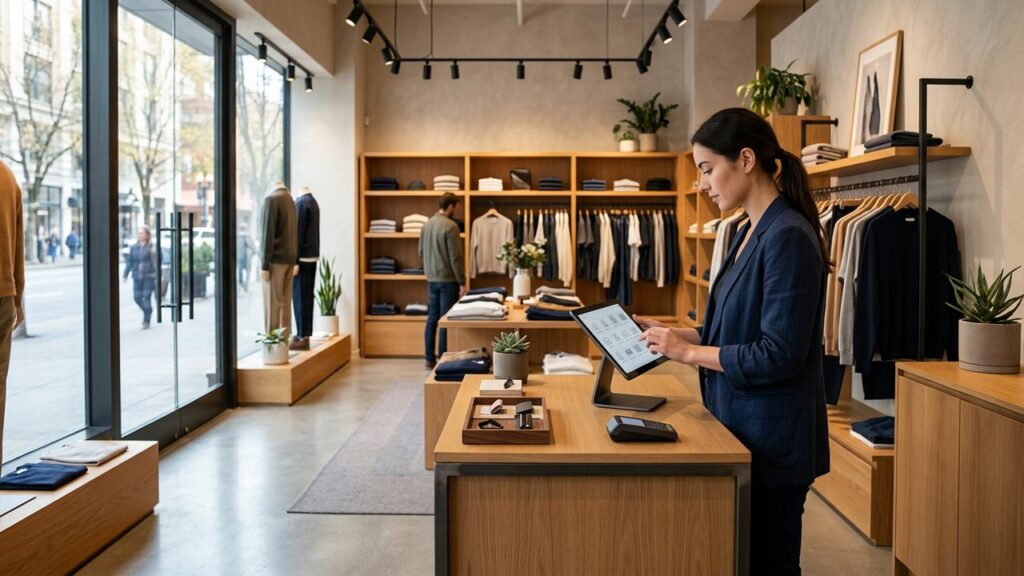
Modern retail consumers move effortlessly between Instagram discovery, mobile apps, desktop web carts, curbside pickup, and physical flagship boutiques, expecting unified pricing, instant stock accuracy, and frictionless checkout at every step. Off-the-shelf SaaS plug-ins work nicely during early launch phases, yet ambitious omnichannel merchants eventually outgrow rigid templates and turn to custom software development for the retail industry to build defensible operational speed and distinctive brand experiences. When inventory sits unsynced across warehouses, POS registers, and online marketplaces, stockouts and clunky returns erode both customer loyalty and net margins.
Creative engineering and digital strategy teams such as COLAB Los Angeles, which unite brand design, prototyping, custom software architecture, mobile apps, and growth marketing for consumer, beauty, packaging, and retail brands, prove that retail software works best when customer experience and backend reliability are engineered together. Understanding where custom software development for the retail industry outperforms packaged tools helps retail executives allocate capital cleanly and avoid costly integration dead ends.
Why Growing Merchants Outgrow Packaged Retail Software
Turnkey e-commerce suites and generic point-of-sale subscriptions deliver impressive speed to market for straightforward catalogs. However, once a retailer expands across multiple physical boutiques, regional fulfillment warehouses, wholesale B2B portals, custom packaging tiers, or subscription clubs, duct-taping twelve third-party apps together creates fragile middleware bottlenecks. Every platform update risks breaking order syncs, monthly SaaS per-user fees balloon unpredictably, and brand interfaces look identical to every rival using the same theme.
Investing selectively in custom software development for the retail industry solves those structural constraints directly. Instead of bending unique merchandising rules, bundle pricing logic, or store-transfer workflows around someone else’s software limits, merchants own clean architectures engineered specifically around how their customers browse, buy, pick up, and reorder.
Bridging Digital Brand Storytelling and Real-Time Store Operations
The best retail software never feels purely back-office or purely cosmetic. On the front end, shoppers expect snappy visual configurators, tailored bundle builders, saved loyalty wallets, and hyper-fast mobile checkout. Behind the counter, associates need live SKU lookups across nearby locations, instant clienteling histories, automated replenishment alerts, and seamless ship-from-store dispatch. Aligning both layers through custom software development for the retail industry turns physical stores and digital channels into mutually reinforcing revenue assets.
Core Use Cases Driving Highest Retail Engineering ROI
Retail leaders rarely need to rebuild commodity payment processing or email servers from scratch. Instead, high-payback custom software development for the retail industry targets the exact proprietary touchpoints that differentiate customer experience or slash fulfillment friction:
- Unified Omnichannel Inventory and Order Management (OMS) built through custom software development for the retail industry synchronizing store POS registers, web storefronts, wholesale portals, and 3PL warehouses in real time.
- Native Branded Mobile Commerce and Loyalty Apps crafted via custom software development for the retail industry offering push notifications, barcode scan-and-go checkout, VIP drops, and personalized shade/size profiles.
- Interactive Product Configurators and Custom Bundle Engines powered by custom software development for the retail industry for CPG, beauty, packaging, apparel, and made-to-order retail brands.
- B2B Wholesale and Distributor Portals delivered through custom software development for the retail industry supporting tiered contract pricing, net-30 invoicing, bulk CSV reorders, and live allocation visibility.
- Associate Clienteling and Endless-Aisle Tablet Apps created via custom software development for the retail industry letting in-store staff view customer preferences and ship out-of-size items directly to shoppers’ homes.
- Custom Data Warehouses and Demand Forecasting Dashboards engineered via custom software development for the retail industry combining POS sales, ad spend, return codes, and seasonal lead times into actionable buy plans.
Comparing Off-the-Shelf SaaS vs. Hybrid Composable vs. Full Custom Retail Stacks
Smart retail CTOs rarely frame technology strategy as an all-or-nothing choice between rigid templates and reinventing every wheel. Composable architectures allow merchants to keep proven commodity engines (such as payment gateways or tax calculators) while deploying custom software development for the retail industry on the exact customer-facing apps, ERP bridges, and merchandising engines that drive competitive advantage.
| Architecture Model | Best Retail Stage | Time to Market | Customization & IP Ownership | Long-Term Total Cost Profile |
|---|---|---|---|---|
| Standard Packaged SaaS + Apps | Early-stage single-channel shops (<$2M GMV) | 2 to 6 weeks | Low; constrained by app ecosystem limits | Low upfront; rising app fees & revenue shares at scale |
| Composable Hybrid (Core Engine + Custom Apps/APIs) | Scaling omnichannel DTC & multi-store brands ($2M to $50M) | 8 to 16 weeks | High across UX, loyalty, OMS, and ERP middleware | Balanced initial build; strong margin leverage at scale |
| Full Custom Retail Platform | Complex multi-brand, B2B/B2C, or proprietary models ($50M+) | 4 to 9 months | 100% bespoke architecture, workflows, and IP ownership | Higher upfront engineering; zero restrictive SaaS lock-in |
The Four-Phase Delivery Blueprint for Retail Software Projects
Retail engineering failures almost never happen because developers could not write code; they happen when agencies jump straight into sprints without validating real store associate workflows, peak holiday traffic loads, or ERP edge cases. Structured agencies executing custom software development for the retail industry follow four disciplined milestones:
1. Discovery, Operations Shadowing, and System Architecture
Before designing a single screen in custom software development for the retail industry, strategists shadow store clerks, warehouse pickers, and customer support reps while mapping every legacy API (POS, ERP, WMS, payment gateway, CRM, shipping carrier). Clear data contracts inside custom software development for the retail industry prevent conflicting inventory counts once traffic surges.
2. Interactive UX Prototyping and Usability Validation
Click-through wireframes and visual design systems during custom software development for the retail industry let merchandisers, store managers, and sample shoppers test checkout flows, mobile navigation, and tablet clienteling screens before heavy engineering begins. Catching a confusing return or bundle step early in custom software development for the retail industry costs a fraction of rewriting production code.
3. Agile Full-Stack Engineering and Automated Integration QA
Modern teams deliver custom software development for the retail industry using modular API-first stacks (React, Next.js, React Native, Node.js, Python, or GraphQL middleware) paired with automated checkout tests, PCI-compliant payment tokenization, and peak-season load testing modeled at 5x Black Friday concurrency.
4. Pilot Store Rollout, Telemetry, and Iterative Growth
Rather than flipping every retail location overnight during Q4 peak, disciplined merchants commissioning custom software development for the retail industry launch in one or two flagship stores first, monitor real associate tap counts, API latency, and cart conversion rates, refine friction points swiftly, and roll out nationwide with confidence.
Budgeting and Timeline Planning for Retail Engineering Investments
Transparent budgeting prevents scope creep and aligns finance leaders with engineering milestones. Scope for custom software development for the retail industry depends heavily on integration complexity, mobile platform count (iOS, Android, web), ERP data cleanliness, and custom design depth. Benchmarking baseline digital product scopes through a practical website cost calculator helps retail teams establish realistic phase-one budgets for custom software development for the retail industry before inviting formal technical RFPs.
| Retail Custom Build Type | Typical Investment Range | Estimated Delivery Window | Key Cost Drivers | Primary Revenue / Margin Lever |
|---|---|---|---|---|
| Custom Storefront / Configurator UX | $25,000 to $75,000 | 6 to 12 weeks | Custom design system, interactive 3D/bundle logic, speed | Higher conversion rate and average order value (AOV) |
| Branded Mobile Shopping & Loyalty App | $45,000 to $130,000 | 10 to 18 weeks | iOS/Android UX, push automation, wallet & POS loyalty sync | Higher repeat purchase frequency and zero-ad-cost retention |
| Omnichannel OMS / ERP Middleware | $40,000 to $120,000 | 10 to 16 weeks | Legacy ERP connectors, multi-warehouse routing, real-time webhooks | Lower overselling, faster ship-from-store, fewer labor hours |
| End-to-End Custom Retail Ecosystem | $120,000 to $350,000+ | 4 to 9 months | B2B + B2C portals, mobile apps, analytics warehouse, security QA | Full IP ownership, omnichannel speed, multi-brand scale |
Security, PCI Compliance, and Peak-Season Resilience
Retail systems handle high-velocity payment transactions and sensitive consumer profiles, making security architecture non-negotiable from sprint one. Whenever planning custom software development for the retail industry, enforce four non-negotiable technical safeguards:
- Never store raw payment card data on custom servers during custom software development for the retail industry; route cardholder inputs directly through tokenized PCI-DSS Level 1 gateways such as Stripe, Adyen, or Braintree.
- Design idempotent webhook queues and retry buffers inside custom software development for the retail industry between your storefront, POS, and ERP so temporary carrier or warehouse hiccups never drop paid customer orders or double-charge cards.
- Run realistic load-testing simulations during custom software development for the retail industry well before Black Friday, Cyber Monday, or influencer product drops, validating CDN edge caching, database read replicas, and autoscaling thresholds.
- Implement role-based access controls, encrypted PII fields, and clear GDPR/CCPA consent deletion hooks across custom software development for the retail industry spanning web portals and mobile apps.
Aligning Engineering with Conversion Marketing and Brand Growth
One advantage of working with integrated creative-and-engineering studios when investing in custom software development for the retail industry is keeping brand aesthetics, SEO crawlability, analytics tagging, and paid acquisition tightly synchronized. Server-side rendering inside custom software development for the retail industry keeps product pages indexable and blazing fast for organic search, clean event pipelines feed accurate Conversions API purchase data to ad networks, and cohesive visual identity ensures mobile apps, packaging, and web checkouts feel unmistakably like one elevated brand.
Avoiding Over-Engineering: Start with a High-Impact Phase One
The smartest retail leaders resist trying to build every dream feature inside release one of custom software development for the retail industry. Instead, prioritize the single sharpest commercial bottleneck first: perhaps a unified inventory sync cutting stockout refunds by 35 percent, or a custom product bundle flow lifting average order value by 18 percent. Proving hard financial lift inside 90 days funds phase two cleanly out of real incremental margin.
How to Vet a Retail Custom Software Development Partner
Before signing a Master Services Agreement for custom software development for the retail industry, run prospective engineering partners through six tough operational questions:
- Can you walk through live consumer, CPG, or omnichannel retail builds you architected via custom software development for the retail industry, including how they handled POS/ERP synchronization and peak holiday traffic?
- Will our company retain 100 percent intellectual property ownership of all source code, design tokens, cloud repositories, and documentation resulting from custom software development for the retail industry upon payment?
- How do your UX designers and engineers collaborate during custom software development for the retail industry so brand storytelling and sub-second page performance reinforce rather than fight each other?
- What automated testing, staging environments, and rollback playbooks protect our live checkout during ongoing releases of custom software development for the retail industry?
- How do you structure post-launch SLA support, security patching, and holiday peak readiness after custom software development for the retail industry goes live?
- Which pieces should we buy as proven APIs versus build via custom software development for the retail industry to protect our budget?
AI Personalization, Predictive Merchandising, and Modern Retail Innovation
Leading consumer brands investing in custom software development for the retail industry increasingly pair clean omnichannel foundations with pragmatic, margin-focused AI modules rather than flashy gimmicks. Practical AI capabilities built inside custom software development for the retail industry include personalized shade, size, or regimen recommendation quizzes backed by real return-rate telemetry; predictive inventory allocation models that shift seasonal stock automatically toward high-velocity regional stores before markdowns hit; and smart customer service copilots wired directly into live order-tracking APIs.
When beauty, CPG, packaging, hospitality, and apparel retailers own their first-party data layer through custom software development for the retail industry, every browse event, in-store scan, and repeat refill sharpens lifetime value (LTV) forecasting without relying on fragile third-party ad cookies. That owned intelligence turns custom software development for the retail industry into a strategic balance-sheet asset rather than a sunk IT expense.
Change Management and Store-Associate Adoption Playbook
Even brilliantly engineered custom software development for the retail industry falls flat if busy floor associates find tablets confusing during Saturday rushes. Involve two top-performing store managers and one warehouse supervisor during early UX prototyping so screen tap counts stay minimal and barcode scans register cleanly under dim boutique lighting. Launch brief 15-minute video walkthroughs, designate store floor champions during the pilot month, and log weekly associate feedback directly into sprint backlogs so custom software development for the retail industry genuinely makes store teams’ lives easier from day one.
Measuring Hard Business KPIs After Launch
Evaluate every phase of custom software development for the retail industry against five objective retail metrics at 30, 90, and 180 days post-launch: mobile checkout conversion rate lift, average order value (AOV) growth from custom bundles or recommendations, reduction in oversold-order cancellations and inventory write-offs, average order fulfillment cycle time across stores and 3PL warehouses, and repeat 90-day customer retention inside branded apps or loyalty wallets. Tying sprints directly to unit margins keeps custom software development for the retail industry funded and laser-focused on real profit.
FAQ’s
When does custom software development for the retail industry make more sense than standard SaaS?
Custom software development for the retail industry pays off strongly once recurring app fees, manual inventory reconciliation across multiple stores and warehouses, complex B2B wholesale pricing, or bespoke product configurators begin costing more in lost sales and labor than a focused custom or composable build.
How long does a typical retail custom software project take to launch?
Focused storefronts, loyalty apps, or OMS middleware built via custom software development for the retail industry generally launch in 8 to 16 weeks, whereas comprehensive multi-channel B2B/B2C retail ecosystems with legacy ERP modernization typically span 4 to 9 months in phased releases.
Can custom retail software integrate cleanly with existing POS and ERP systems?
Yes. Experienced engineering teams specializing in custom software development for the retail industry routinely connect modern web and mobile interfaces with NetSuite, SAP, Microsoft Dynamics, Lightspeed, Square, Shopify Plus, and regional warehouse systems via resilient REST/GraphQL APIs and queued event webhooks.
How do retailers keep custom software PCI-DSS compliant without massive overhead?
Teams executing custom software development for the retail industry use hosted payment fields and direct tokenization from certified processors like Stripe or Adyen so sensitive cardholder numbers never touch custom application servers, dramatically shrinking PCI audit scope while preserving fully branded checkout UX.
Should growing retailers launch a custom mobile app or focus on mobile web first?
Optimize mobile web speed and checkout conversion first to capture new customer acquisition seamlessly, then deploy custom software development for the retail industry for a branded mobile app once you have a meaningful repeat-buyer cohort where push notifications and loyalty perks drive high repeat order value.
Who owns the source code after custom software development for the retail industry concludes?
With any reputable engineering partner, your retail business must own 100 percent of custom source code, private Git repositories, cloud infrastructure accounts, and UX design files produced during custom software development for the retail industry outright upon payment.
Conclusion
Retail winners combine unforgettable brand storytelling with rock-solid operational infrastructure that works invisibly behind every tap and swipe. Investing strategically in custom software development for the retail industry lets ambitious merchants break free from rigid cookie-cutter apps, unify real-time inventory across stores and warehouses, launch sticky loyalty apps, and scale without brittle middleware breaking at peak season.
Adopt a composable mindset: keep proven commodity APIs for payments and tax, deploy bespoke engineering where brand UX and operational speed create true margin leverage, start with one measurable phase-one milestone, and insist on full code ownership. Done right, custom software development for the retail industry becomes a lasting profit multiplier across every channel your shoppers love.