
Finding dependable HVAC Birmingham services can feel overwhelming when summer heat settles in and your air conditioner fails without warning. Between a demanding climate, the...
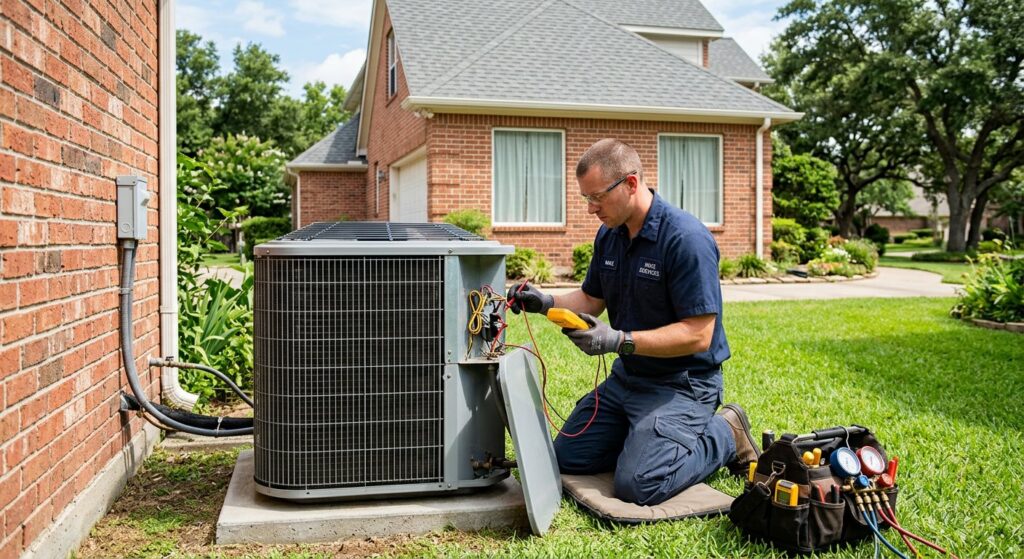
Finding dependable HVAC Birmingham services can feel overwhelming when summer heat settles in and your air conditioner fails without warning. Between a demanding climate, the high cost of new equipment, and dozens of companies competing for your attention, one wrong decision can cost you thousands of dollars and months of discomfort. This guide removes the guesswork. It explains what heating and cooling work actually costs in the Birmingham area, how Alabama licensing rules protect you, which efficiency standards and rebates apply right now, and the nine most effective steps local homeowners use to cut cooling costs without sacrificing comfort. Every recommendation is grounded in current state and federal requirements, so you can act with confidence instead of relying on outdated advice found in older articles.
Key Takeaways
- Birmingham’s humid subtropical climate produces roughly 51 days above 90 degrees each year, so HVAC systems here run harder and wear faster than the national norm.
- A full system replacement in the Birmingham metro typically runs $5,200 to $13,000 installed, while common repairs average $274 to $394.
- Alabama law requires HVAC contractors to hold a state license from the Alabama Board of Heating, Air Conditioning and Refrigeration Contractors.
- New split-system air conditioners installed in the South must meet a 14.3 SEER2 minimum, and new heat pumps must reach 15.2 SEER2.
- Federal 25C energy tax credits expired on December 31, 2025, so current savings come from local programs such as Alabama Power’s Switch and Save rebate.
Why Birmingham Homes Push HVAC Systems Harder
Birmingham sits in a humid subtropical climate zone where cooling is not a luxury, it is a necessity for several months of the year. July highs average around 91 degrees, and the city records more than 50 days annually at or above the 90 degree mark. Humidity frequently sits between 70 and 80 percent, which forces air conditioners to do two jobs at once: lowering the temperature and pulling moisture out of the air. Add roughly 56 inches of rain per year and mild but occasionally freezing winters, and you get one of the longest, most demanding operating seasons in the country.
What the Climate Does to Equipment Lifespan
Long cooling seasons mean compressors log thousands of run hours every year. Seasonal pollen, heavy spring debris, and constant moisture exposure put extra strain on outdoor condenser units, coils, and electrical components. A central air conditioner that might last 15 to 20 years in a milder northern climate commonly delivers 12 to 15 years in central Alabama, and less when maintenance is skipped. Heat pumps and gas furnaces face their own winter workload, since January lows hover near freezing and heat pumps rely on auxiliary heat during cold snaps.
The Hidden Cost of Humidity
Humidity deserves special attention. An oversized air conditioner cools a room quickly but shuts off before it removes enough moisture, leaving a home cold, clammy, and uncomfortable. That short cycling also wears out parts prematurely. Modern variable-speed systems handle Alabama’s latent load far better because they run longer, gentler cycles that dehumidify while they cool. This is one reason a bigger unit is rarely the right answer for a Birmingham home.
9 Powerful Ways to Cut HVAC Costs in Birmingham
1. Schedule Professional Maintenance Twice a Year
The single most reliable way to lower lifetime HVAC costs is a spring tune-up for the air conditioner and a fall check for the furnace or heat pump. A professional visit typically includes cleaning the condenser and evaporator coils, checking refrigerant charge, testing capacitors and contactors, flushing the condensate drain, and verifying safe combustion on gas equipment. Clean coils and correct refrigerant levels allow the system to move heat efficiently instead of working overtime. Routine service also creates the paper trail most manufacturers require to keep warranty coverage valid.
2. Replace Filters on the Right Schedule
A clogged filter chokes airflow, which can drop efficiency, freeze evaporator coils, and overheat furnaces. Central Alabama’s dense spring pollen season clogs filters faster than most homeowners expect. Check filters monthly and replace them every one to three months, or more often in homes with pets. Most Birmingham households do well with a MERV 8 to MERV 11 filter, which balances filtration against airflow, but confirm your system’s rated limit before moving to higher MERV values.
3. Upgrade to a High-Efficiency System When Replacement Makes Sense
Because Birmingham systems run so many hours each year, efficiency upgrades pay back faster here than in cooler regions. Federal minimums for the South require 14.3 SEER2 on new split-system air conditioners and 15.2 SEER2 on new heat pumps, but equipment rated 16 SEER2 and above is widely available and often worth the premium for a long cooling season. Variable-speed compressors and ECM blower motors also improve humidity control, which matters as much as raw temperature in this climate. Ask every contractor to show operating cost comparisons between efficiency tiers so the decision is based on math, not marketing.
4. Put a Smart Thermostat to Work
The Department of Energy estimates you can save as much as 10 percent a year on heating and cooling by setting the thermostat back 7 to 10 degrees for eight hours a day. A smart thermostat automates that strategy with schedules, geofencing, and humidity-aware settings, so savings happen whether you remember or not. Alabama Power has also offered rebates on ENERGY STAR certified smart thermostats under its appliance rebate program, so ask about current incentives before you buy.
5. Seal and Insulate Your Ductwork
ENERGY STAR estimates that typical duct systems lose 20 to 30 percent of conditioned air through leaks, holes, and poor connections. In Birmingham, where ducts usually run through attics that can exceed 120 degrees in July, that loss is expensive. Have ducts sealed with mastic or approved metal tape and insulated to at least R-8 in unconditioned spaces. Duct sealing is one of the few upgrades that improves comfort in every room while lowering bills.
6. Right-Size Your System With a Manual J Load Calculation
Bigger is not better in air conditioning. An oversized system short cycles, dehumidifies poorly, wastes energy, and fails early. The industry standard for sizing is the ACCA Manual J load calculation, which factors in square footage, insulation levels, window orientation, air leakage, and local design temperatures. Any reputable Birmingham contractor will perform a Manual J before recommending equipment. If a quote arrives based only on the size of your old unit or a rough square footage rule of thumb, treat it as a warning sign and get a second opinion.
7. Strengthen the Building Envelope
The cheapest kilowatt is the one you never use. Air sealing and attic insulation reduce the cooling load your system must fight all summer. ENERGY STAR recommends attic insulation between roughly R-38 and R-60 for Alabama’s climate zone, and sealing top plates, recessed lights, attic access doors, and duct chases delivers the fastest returns. Many Birmingham homes built before the 2000s have far less attic insulation than current recommendations, which means the improvement is often straightforward and cost effective.
8. Know When to Repair and When to Replace
Repair makes sense for young systems with isolated failures. Replacement usually wins when a unit approaches the end of its expected life, needs frequent repairs, or uses refrigerant that is becoming more expensive as production phases down. Rising summer bills with no change in habits are another clear signal.
The 5,000 Rule and Other Signals
Many contractors use a simple guideline called the 5,000 rule: multiply the equipment’s age in years by the quoted repair cost, and consider replacement when the total exceeds $5,000. It is a rule of thumb, not a law, but it is a useful sanity check. Combine it with repair history, refrigerant type, and energy trends before deciding, and always compare the quote against replacement quotes so the decision is an informed one.
9. Work With a Licensed Local Contractor and Catch Problems Early
Alabama licensing requirements exist to protect you, and local expertise matters in a climate this demanding. A licensed Birmingham technician recognizes regional failure patterns, sizes equipment correctly for the humidity, and can respond quickly when a July breakdown becomes an emergency. Learn the early warning signs of trouble: warm air from vents, weak airflow, water around the indoor unit, short cycling, grinding or buzzing sounds, and burning odors. Calling at the first symptom usually turns a major failure into a minor repair.
How Much Does HVAC Cost in Birmingham?
HVAC Birmingham prices run below the national average, largely because of lower construction and labor costs, but a full replacement is still a major investment. The ranges below reflect recently compiled regional cost data for the Birmingham area. Every home is different, so treat these as planning numbers and confirm with written quotes.
| Service | Typical Range, Birmingham Metro | Notes |
|---|---|---|
| Central AC replacement | $3,200 to $7,800 | Depends on tonnage and efficiency tier |
| Heat pump installation | $5,200 to $12,200 | Higher for cold-climate or variable-speed models |
| Full system, AC plus furnace | $5,400 to $13,000 | Includes indoor and outdoor equipment |
| Common AC repair | $274 to $394 average | Minor fixes from $91, complex up to $777 |
| Mechanical permit | About $50 to $200 | Varies by municipality |
What Changes Your Quote
Contractors price each job from specific variables, and understanding them helps you compare bids fairly:
- System size in tons, confirmed by a Manual J calculation
- Efficiency tier, since 16 to 18 SEER2 equipment costs more up front than baseline models
- Ductwork condition, including sealing, insulation, or replacement needs
- Refrigerant type, line set replacement, and electrical upgrades
- Installation difficulty, such as attic, crawlspace, or crane access
- Warranty length and included labor coverage
How Permits Protect You
Most municipalities in the Birmingham area, including those in Jefferson and Shelby Counties, require a mechanical permit for HVAC replacement. Your contractor should pull the permit as part of the job. Permits trigger inspections that verify safe refrigerant handling, electrical work, and combustion venting, and unpermitted installations can create problems when you sell the home. If a contractor suggests skipping the permit to save money, that savings is a red flag in disguise.
How to Choose the Best HVAC Birmingham Company
Industry research has repeatedly shown that improper installation, such as incorrect refrigerant charge or leaky duct connections, can forfeit a large share of a system’s rated efficiency and shorten its life.
Licensing and Credentials Checklist
Work through this list before signing any contract:
- Verify an active state license with the Alabama Board of Heating, Air Conditioning and Refrigeration Contractors, the HACR Board
- Confirm EPA Section 608 certification for anyone handling refrigerant
- Ask for proof of general liability insurance and the state-required performance bond
- Request a written, itemized quote covering equipment model numbers, efficiency ratings, and scope of work
- Insist on a Manual J load calculation and a pulled mechanical permit
- Read recent local reviews and ask for references from jobs similar to yours
- Ask about technician certifications such as NATE and factory training
Red Flags That Signal Trouble
Some warning signs are easy to spot once you know what to look for:
- High pressure tactics or discounts that expire the moment you hesitate
- Refusal to provide a written estimate or itemized equipment details
- Requests for large cash payments up front before work begins
- Suggestions to skip the mechanical permit or bypass code requirements
- No local physical address, or a company that recently changed names repeatedly
A short phone call to the HACR Board or a check of its online verification tool resolves most licensing questions in minutes, and it is a step too many homeowners skip.
Efficiency Standards, Refrigerants, and Rebates in 2026
Regulatory changes over the past few years reshaped what Birmingham homeowners should expect when buying or repairing a system, and staying current protects you from bad advice.
The New Refrigerant Transition
Under the federal AIM Act phase-down, residential air conditioners and heat pumps manufactured for 2025 and beyond must use lower global warming potential refrigerants such as R-454B or R-32 in place of the long-standard R-410A. Existing R-410A systems can still be serviced, but the phase-down is gradually increasing the cost of that refrigerant. When you replace a system, your contractor should follow the A2L refrigerant safety requirements that apply to these newer products. This transition also strengthens the case for replacement planning: if your aging system needs a major refrigerant-related repair, weighing that cost against a new-unit quote is more important than ever.
Rebates Birmingham Homeowners Can Actually Claim
Here is where accuracy matters, because many articles still promote incentives that no longer exist. The federal Energy Efficient Home Improvement Credit, known as Section 25C, expired for equipment placed in service after December 31, 2025, following the One Big Beautiful Bill Act. As of 2026, there is no federal tax credit for heat pumps or high-efficiency air conditioners, so ignore outdated claims of a $2,000 federal credit.
Birmingham homeowners still have local options. Alabama Power’s Switch and Save program offers a $1,000 rebate to customers who replace a gas furnace with an all-electric heat pump that meets the program’s efficiency requirements, and the utility has offered additional rebates on heat pump water heaters and ENERGY STAR smart thermostats. Income-qualified households may also find help through ADECA’s Weatherization Assistance Program, which funds insulation, air sealing, and heating and cooling repairs or replacements. Program terms change, so verify current requirements with Alabama Power or ADECA before you buy.
A Simple Birmingham HVAC Maintenance Schedule
Consistency beats intensity when it comes to HVAC care. This column schedule keeps a Birmingham system on track through the demanding seasons:
| Frequency | Task | Why It Matters |
|---|---|---|
| Monthly | Check the air filter, especially in spring | Preserves airflow through heavy pollen weeks |
| Quarterly | Clear leaves and debris from the condenser | Maintains heat transfer at the outdoor unit |
| Spring | Professional AC tune-up before cooling season | Restores efficiency before peak run hours |
| Fall | Professional heating and safety check | Confirms safe, reliable winter operation |
| Annually | Flush condensate drain and inspect coils | Prevents water damage and efficiency loss |
Homeowners who follow a schedule like this typically avoid the most common and most preventable failures, including frozen coils, clogged drains, and overheated blowers.
Frequently Asked Questions
How much does HVAC replacement cost in Birmingham?
A full system replacement typically runs $5,200 to $13,000 installed, while replacing only the central AC usually costs $3,200 to $7,800. Collect at least three written quotes to compare fairly.
Are HVAC contractors required to be licensed in Alabama?
Yes. Anyone performing HVAC work must hold a license from the Alabama Board of Heating, Air Conditioning and Refrigeration Contractors, and apprentices must be registered with the Board. Always verify the license before signing with any HVAC Birmingham company.
How long do HVAC systems last in Birmingham?
Most central air conditioners last 12 to 15 years in Birmingham’s demanding climate, compared with longer lifespans in cooler regions. Consistent professional maintenance is the biggest factor in reaching the high end of that range.
What size HVAC system does my home need?
The only reliable method is an ACCA Manual J load calculation, which accounts for insulation, windows, orientation, and air leakage. Sizing by square footage alone often produces oversized systems that dehumidify poorly.
Are heat pump rebates available in Birmingham?
Yes. Alabama Power’s Switch and Save program pays a $1,000 rebate for qualifying gas-to-heat-pump conversions, and additional utility rebates change periodically. The federal 25C tax credit expired at the end of 2025, so verify current programs before purchase.
When is the best time to replace an HVAC system?
Spring and fall are ideal because contractors have shorter backlogs, scheduling is faster, and pricing is sometimes more flexible. Replacing before peak season also means you are not choosing equipment in an emergency.
Conclusion
HVAC Birmingham decisions carry real financial weight because this climate gives every inefficiency hundreds of extra run hours to cost you money. The winning formula is straightforward: maintain the system you own with seasonal professional service and disciplined filter changes, tighten the building envelope so your equipment fights less heat and humidity, and when replacement day comes, insist on licensed contractors, Manual J sizing, itemized written quotes, and current information about the standards and rebates that actually apply in 2026. Verify every contractor through the Alabama HACR Board, compare at least three estimates, and be skeptical of anyone citing expired federal credits. Homeowners who follow this playbook consistently land in the same fortunate position: lower summer bills, fewer emergency calls, and a home that stays comfortable through the longest, stickiest days an Alabama summer can deliver.