
Preparing a sleep space for a newborn involves many small decisions, and choosing the right bassinet sheet is one of the most practical. A bassinet...
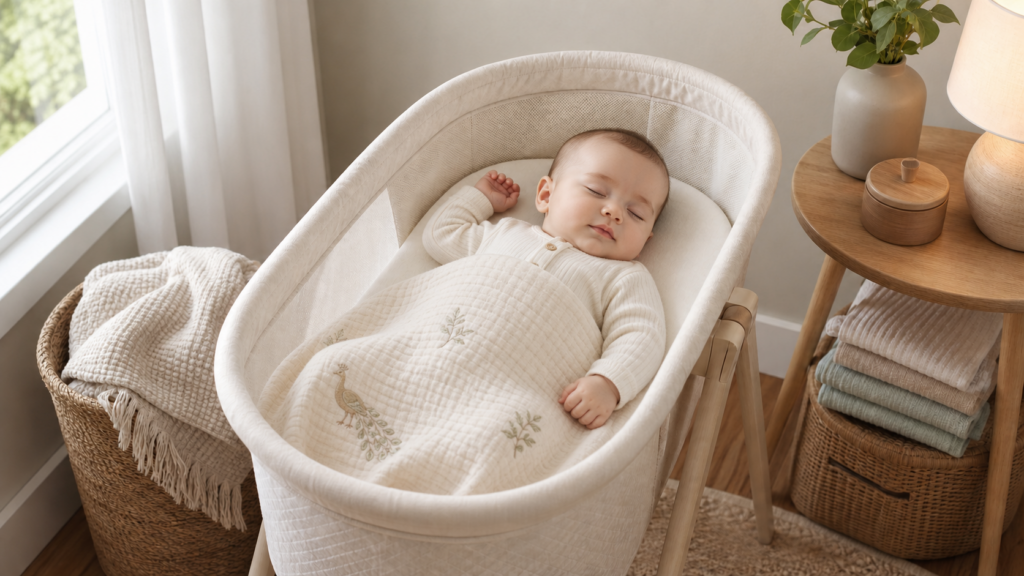
Preparing a sleep space for a newborn involves many small decisions, and choosing the right bassinet sheet is one of the most practical. A bassinet sheet creates the surface your baby rests on, so its fit, fabric, softness, breathability, and ease of cleaning all matter. Although it may look like a simple piece of nursery bedding, the wrong size or poorly fitted sheet can create unnecessary problems, while a well-designed fitted sheet can make daily care much easier.
Newborns spend a large amount of time sleeping and resting. Their bedding may need to handle spit-up, milk dribbles, diaper leaks, sweat, and frequent washing. For this reason, parents usually need more than one sheet and should think beyond appearance alone.
The best sheet should fit the bassinet mattress securely without loose fabric, bunching, or excessive stretching. It should also feel comfortable against delicate skin and be easy to remove and wash.
This guide explains what bassinet sheets are, how to choose the right size, which fabrics are commonly used, how many sheets you may need, how to wash them, what safety details to consider, and how to select practical bedding for everyday newborn care.
What Is a Bassinet Sheet?
A bassinet sheet is a fitted piece of fabric designed to cover the mattress or sleep pad inside a bassinet.
It usually has elastic around the edges so it can wrap securely around the mattress.
Unlike larger crib sheets, bassinet sheets are made for smaller sleep surfaces. Bassinet mattresses can vary considerably in shape and size, which makes accurate measurements important.
Some bassinets use rectangular mattresses, while others have rounded corners, oval shapes, or specially designed pads.
The purpose of the sheet is to provide a clean and comfortable sleeping surface while staying securely in place.
Why the Right Bassinet Sheet Matters
A newborn’s sleep environment should be simple and carefully arranged.
A properly fitted sheet helps keep the mattress surface clean and comfortable without adding loose bedding.
The fit is particularly important.
If a sheet is too large, excess fabric may gather or wrinkle. If it is too small, it may pull away from the mattress corners or place too much tension on the mattress pad.
A correctly sized sheet should lie smooth and flat.
Choosing suitable fabric can also make nighttime care easier because babies frequently create small messes that require quick sheet changes.
Bassinet Sheets vs. Crib Sheets
Bassinet and crib sheets perform similar functions, but their sizes are usually different.
A standard crib mattress is much larger than most bassinet mattresses.
Using a crib sheet on a bassinet is generally not practical because the excess material may not fit securely.
Likewise, a bassinet sheet will usually be far too small for a crib mattress.
Parents should buy sheets specifically sized for the sleep surface being used rather than assuming all baby bedding is interchangeable.
This becomes especially important with bassinets because there is less standardization in mattress dimensions.
Measure the Bassinet Mattress Before Buying
The first step when shopping for sheets is checking the exact mattress dimensions.
Measure the length, width, and depth of the mattress or sleep pad.
If the mattress has curved corners or an oval shape, pay attention to that as well.
Some manufacturers provide compatible sheet dimensions in the bassinet manual or product information.
If measurements are available, compare them carefully with the dimensions listed for the sheet.
Do not rely only on terms such as “standard bassinet sheet” because different brands may use different mattress sizes.
Why a Snug Fit Is Important
A fitted sheet should wrap firmly around the mattress.
It should not slide easily or create large folds across the sleeping surface.
Elastic edges help hold the sheet underneath the mattress.
After fitting the sheet, run your hand over the surface and check for wrinkles, loose areas, or corners that lift away.
A good fit should remain smooth even when the mattress is moved slightly.
If the sheet repeatedly comes loose, it may not be compatible with the mattress shape or thickness.
Common Bassinet Sheet Materials
The fabric can affect softness, temperature, durability, and washing performance.
Several materials are commonly used for baby bedding.
Cotton Bassinet Sheets
Cotton is one of the most popular options.
It tends to feel soft, breathable, and comfortable against a baby’s skin.
Cotton sheets are also generally easy to wash and can handle regular use.
Different cotton fabrics may feel different depending on weave, thread construction, finishing, and thickness.
Some cotton sheets are very smooth, while others have a slightly textured feel.
Parents often choose cotton because it works well in a wide range of nursery environments.
Organic Cotton Options
Organic cotton sheets are made from cotton grown under specific agricultural standards.
Some parents prefer them because they want bedding made with fewer synthetic agricultural inputs during cotton production.
However, “organic” does not automatically mean that every sheet will be softer, safer, or more durable.
Fit, construction quality, washing instructions, and fabric finishing remain important.
Look at the complete product rather than relying on one label.
Jersey Knit Bassinet Sheets
Jersey knit fabric has a soft, slightly stretchy feel similar to a comfortable T-shirt.
This stretch can make the sheet easier to fit over some mattress shapes.
Jersey sheets may feel warmer and softer than crisp woven cotton.
They are often popular for everyday use because they are flexible and comfortable.
However, excessive stretching can affect fit over time, especially if the sheet is repeatedly washed at high temperatures.
Muslin Bassinet Sheets
Muslin is a lightweight fabric often chosen for its airy texture.
It can feel especially comfortable in warmer environments.
The fabric may become softer after repeated washing.
Because muslin has a more open texture than some tightly woven fabrics, parents should still pay close attention to durability and fit.
A well-made muslin sheet should remain securely fitted to the mattress after laundering.
Bamboo-Derived Fabrics
Some baby bedding is made from fibers derived from bamboo.
These fabrics are often marketed as very soft and smooth.
They may feel comfortable against sensitive skin and can have a lightweight texture.
However, the final fabric depends heavily on the manufacturing process.
Parents should focus on actual fabric quality, washing durability, fit, and construction rather than assuming that the raw material alone determines performance.
Polyester and Blended Fabrics
Some bassinet sheets use polyester or cotton-polyester blends.
These fabrics may be durable, wrinkle-resistant, and quick to dry.
Blended materials can also maintain their shape well after repeated washing.
However, they may not feel exactly the same as natural cotton.
The best choice depends on your priorities for softness, drying speed, durability, and temperature.
Choosing a Fabric for Sensitive Skin
Newborn skin can be delicate.
A smooth, clean, breathable fabric is often a practical choice.
Wash new sheets before first use if the care instructions recommend it.
This can remove dust or manufacturing residue and make the fabric feel softer.
Avoid strongly scented detergents if your baby’s skin appears sensitive.
If a baby develops persistent irritation, discuss the issue with a healthcare professional rather than assuming that bedding is the only cause.
Breathability and Temperature Comfort
Babies should not become excessively warm during sleep.
The sheet is only one part of temperature management, but breathable fabric can help create a comfortable surface.
Lightweight cotton, muslin, and some other fabrics allow more airflow than heavy materials.
The nursery temperature, baby’s sleep clothing, mattress material, and room ventilation also affect comfort.
Do not rely on a special sheet alone to regulate a baby’s body temperature.
Waterproof Sheets vs. Waterproof Mattress Protectors
Some parents look for waterproof bassinet bedding because diaper leaks and spit-up are common.
A waterproof fitted sheet may include a moisture-resistant layer.
Another option is to use a separate mattress protector underneath a normal fitted sheet, provided it is specifically designed for the bassinet and fits securely.
The main goal is to protect the mattress without creating loose or bulky layers.
Always check the bassinet manufacturer’s guidance regarding mattress protectors and additional layers.
How Many Bassinet Sheets Do You Need?
Many parents find that having several sheets is more practical than owning just one.
Newborn bedding can become dirty unexpectedly, especially during the night.
A simple rotation might include one sheet on the mattress, one clean replacement ready for use, and another in the laundry.
Three to five sheets can be convenient for many families, although the right number depends on laundry frequency and how often the bassinet is used.
Families who wash clothes daily may need fewer.
Those who prefer larger laundry cycles may appreciate having more backups.
Why Backup Sheets Make Nighttime Easier
A leaking diaper at 2 a.m. is much easier to manage when a clean sheet is ready nearby.
Parents can remove the dirty sheet, replace it quickly, and return to settling the baby.
Searching through laundry baskets or waiting for a sheet to dry can make nighttime disruptions more difficult.
Keeping one or two clean bassinet sheets in an accessible drawer or basket near the sleep area can simplify these unexpected changes.
Washing a Bassinet Sheet Before First Use
New sheets should generally be washed before the baby sleeps on them, unless the manufacturer provides different instructions.
Washing can remove dust, packaging residue, and loose fibers.
Use the recommended water temperature and drying method.
Some fabrics may shrink if washed or dried at excessive heat.
Shrinking can be especially important with bassinet bedding because the fit needs to remain secure.
Check the care label before washing.
How Often Should Bassinet Sheets Be Washed?
There is no single schedule that fits every baby.
Sheets should be changed whenever they become wet, dirty, or soiled.
Even when the sheet looks clean, regular washing helps keep the sleep surface fresh.
Newborns may spit up frequently or have small milk dribbles that are easy to overlook.
Inspect the sheet during everyday care.
If you notice moisture, stains, strong odors, or visible dirt, replace it with a clean one.
Choosing Baby-Friendly Laundry Products
Parents often prefer mild laundry detergents for newborn bedding.
Fragrance-free or lightly formulated detergents may be useful when a baby has sensitive skin.
However, products labeled specifically for babies are not automatically necessary for every household.
The important point is that detergent should rinse effectively and not leave heavy residue.
Avoid using excessive detergent because more soap does not always produce cleaner bedding.
Follow the washing machine and detergent instructions.
Should You Use Fabric Softener?
Fabric softener is not always necessary for baby sheets.
Some softeners leave coatings or fragrance on fabric.
If you prefer to avoid these residues, simply wash the sheets with an appropriate detergent and dry them according to the care instructions.
Many cotton and muslin fabrics naturally soften through repeated washing.
If a manufacturer advises against fabric softener, follow that guidance.
Drying Bassinet Sheets
Sheets can often be machine dried, line dried, or air dried depending on the fabric.
Machine drying is convenient, particularly when a replacement sheet is needed quickly.
However, high heat may cause certain fabrics to shrink or reduce elastic durability.
Use the recommended drying temperature.
If the sheet feels noticeably tighter after washing, check whether the fabric has shrunk before placing it back on the mattress.
Checking Elastic Quality
Elastic is one of the most important parts of a fitted bassinet sheet.
Strong elastic helps keep the sheet underneath the mattress.
Poor-quality elastic may loosen after repeated washing.
When buying sheets, inspect whether the elastic runs around the entire edge or only selected corners.
Full-edge elastic can often provide more consistent tension.
After several washes, check that the elastic still holds securely.
Replace sheets that no longer remain properly fitted.
Deep Pockets and Mattress Thickness
A bassinet sheet should fit not only the length and width of the mattress but also its depth.
If the mattress is thicker than the sheet’s pocket design, the corners may pull away.
If the pockets are far too deep, excess material may gather underneath.
Measure mattress thickness before buying.
This small detail can prevent many common fit problems.
Bassinet Sheet Shapes
Bassinet mattresses come in several shapes.
Rectangular Bassinet Sheets
These are designed for mattresses with straight sides and defined corners.
They may resemble miniature crib sheets.
Oval Bassinet Sheets
Oval sheets fit mattresses with fully rounded ends.
The elastic should follow the curved shape without creating folds.
Hourglass-Shaped Sheets
Some bassinets use mattresses that are wider at the ends and narrower through the center.
These require specifically shaped sheets.
Rounded Rectangle Sheets
Many bassinets use rectangular mattresses with heavily rounded corners.
The sheet dimensions and stretch must match the actual design.
Always compare the sheet shape with your mattress.
Can You Use a Universal Bassinet Sheet?
Universal sheets are designed to stretch across multiple mattress sizes.
They can be convenient when the size range closely matches your mattress.
However, “universal” does not mean that every product will fit every bassinet.
Test the fit carefully.
If the sheet feels loose, forms folds, or easily lifts away from the corners, choose a more precisely sized option.
Compatibility matters more than the universal label.
Bassinet Sheet Safety Basics
The safest sleep setup is generally simple.
The mattress should be firm and appropriately fitted to the bassinet, and the fitted sheet should remain smooth and secure.
Avoid adding loose bedding simply to make the bassinet look more comfortable.
Pillows, loose blankets, stuffed toys, bumpers, and decorative cushions should not be placed around a sleeping newborn.
Parents should follow current safe-sleep recommendations and the bassinet manufacturer’s instructions.
Avoiding Loose Fabric
Loose fabric can develop when a sheet is oversized or stretched incorrectly.
After fitting the sheet, check the entire surface.
There should not be large areas that can be pulled upward easily.
The sheet should remain taut without significantly changing the shape of the mattress.
If the mattress curls or bends because the sheet is too tight, the size is also incorrect.
The goal is a balanced, secure fit.
Avoid Layering Multiple Fitted Sheets
Some parents consider placing several sheets on the mattress at once so they can remove the top layer after a mess.
Although this may seem convenient, multiple layers can change the firmness or fit of the sleep surface.
Follow the bassinet manufacturer’s instructions before adding extra layers.
A safer and simpler approach is usually to keep clean backup sheets nearby and replace the dirty sheet when needed.
Bassinet Sheet Colors and Nursery Design
Sheets are available in many colors and patterns.
Neutral shades such as white, cream, beige, gray, sage, or soft blue can fit easily into many nursery themes.
Printed designs may include stars, animals, plants, geometric patterns, or simple shapes.
Appearance is a personal choice, but fit and fabric should come first.
A beautiful sheet that does not remain securely fitted is not a good choice.
Light vs. Dark Bassinet Sheets
Light-colored sheets can make stains easier to notice.
This can be useful because parents can quickly see when the sheet needs changing.
Darker sheets may hide small stains but can coordinate well with modern nursery designs.
There is no major practical rule requiring one color over another.
Choose shades that work with your laundry routine and nursery preferences.
Seasonal Bassinet Sheet Choices
Some families change fabrics based on the season.
Lightweight cotton or muslin may feel comfortable during warmer months.
Soft jersey can feel cozy during cooler seasons.
However, the baby’s overall sleep clothing and room temperature matter more than the sheet alone.
Avoid overly thick bedding simply because the weather is cold.
Safe sleep recommendations should remain the priority throughout the year.
Bassinet Sheets for Summer
During warm weather, lightweight breathable sheets are often preferred.
Cotton percale, light jersey, or muslin can provide a smooth surface without excessive thickness.
Keep the nursery comfortably ventilated.
Avoid assuming that a cooling sheet can compensate for an overheated room or too many clothing layers.
Monitor the baby’s comfort and dress them appropriately for the environment.
Bassinet Sheets for Winter
In cooler months, some parents prefer softer fabrics such as jersey knit.
The sheet may feel less cool when first touched.
However, do not use thick, padded, or loose bedding to make the bassinet warmer.
Temperature should be managed through the room environment and appropriate infant sleepwear.
The fitted sheet should remain simple and secure.
Bassinet Sheets for Travel
Travel bassinets and portable sleep spaces may use unique mattress dimensions.
Do not assume that the sheets from your main bassinet will fit a travel model.
Measure the travel mattress separately.
Packing two fitted sheets is often useful for trips because washing facilities may not always be convenient.
Store them in a clean bag so they remain ready to use.
Bassinet Sheets for Daytime Naps
If your baby uses the same bassinet for nighttime sleep and daytime naps, the sheet will see frequent use.
Inspect it regularly for moisture or dirt.
You may need more replacement sheets than a family that uses the bassinet only at night.
A simple rotation system can help.
For example, keep clean sheets in one dedicated drawer and move dirty ones directly to a laundry basket.
Choosing Sheets for Frequent Spit-Up
Some newborns spit up more frequently than others.
This can lead to frequent bedding changes.
If this is common in your home, prioritize sheets that are easy to wash and dry.
Durable cotton, jersey, or quick-drying blends may be practical.
Having four or five sheets available can reduce laundry pressure.
Do not add loose absorbent cloths under or around the baby unless they are specifically approved as part of the sleep system.
Choosing Sheets for Diaper Leaks
Diaper leaks often happen unexpectedly.
A washable fitted sheet combined with an approved mattress protection system can make cleanup easier.
If leaks happen repeatedly, also check diaper sizing and fit.
The bedding should protect the mattress without changing the firmness or shape of the sleep surface.
Keep an extra sheet and clean sleep clothing nearby for fast nighttime changes.
Signs a Bassinet Sheet Needs Replacing
Bassinet sheets do not last forever.
Replace a sheet if the elastic becomes weak, the fabric develops holes, seams begin to separate, or the material becomes badly stretched.
A sheet that once fitted correctly may become loose after repeated use and washing.
Also inspect the fabric for rough areas or damage around elastic seams.
Regular checks take only a few seconds but help ensure that the sheet continues to fit correctly.
How to Store Clean Bassinet Sheets
Keep clean sheets somewhere dry and easy to reach.
A nursery drawer, labeled basket, or closet shelf works well.
Fold sheets together so you can identify them easily.
If you own sheets for different bassinets, travel beds, or cribs, store them separately.
Baby bedding can look similar when folded, so organizing by size prevents confusion during nighttime changes.
Creating a Simple Sheet Rotation
A practical rotation can make laundry easier.
Use one sheet on the mattress.
Keep two or three clean sheets ready.
Place dirty sheets directly in a dedicated laundry basket.
Wash them together with other suitable baby items according to fabric instructions.
This simple routine helps prevent situations where every sheet is dirty at the same time.
Should Bassinet Sheets Match Other Nursery Bedding?
Matching is optional.
Some parents enjoy coordinating sheets with curtains, rugs, wall colors, or nursery decor.
Others prefer simple neutral bedding.
Because a bassinet should remain uncluttered during sleep, the fitted sheet may become one of the main visible design features.
This makes sheets an easy way to add color or pattern without introducing loose decorative items into the sleep space.
Personalized Bassinet Sheets
Customized or personalized sheets may seem attractive for gifts or nursery decor.
If choosing customized bedding, make sure decorative features do not interfere with the sleeping surface.
Avoid raised embroidery, attached decorations, loose appliques, beads, or other elements that could create texture or detachable pieces.
The safest design is usually simple and flat.
Personalization should never compromise fit or function.
Bassinet Sheets as Baby Shower Gifts
Sheets can be practical baby shower gifts because parents often need multiple sets.
Before purchasing, try to find out which bassinet the family plans to use.
This helps ensure compatibility.
A beautiful sheet in the wrong size may never be used.
Neutral colors and easy-care fabrics are often good gift choices when the nursery style is unknown.
Including two or three matching sheets can also create a useful gift set.
Price vs. Quality
Bassinet sheets are available at many price points.
A higher price does not automatically guarantee better fit or durability.
Likewise, an inexpensive sheet may work very well if it is properly sized and well constructed.
Compare fabric quality, elastic strength, stitching, washing instructions, and mattress compatibility.
A practical sheet that survives frequent laundering can provide better value than one chosen mainly for decorative packaging.
What to Look for When Buying Online
Shopping online provides more options, but you cannot physically test the fabric or fit before buying.
Check the exact dimensions listed.
Look for mattress depth compatibility.
Review fabric composition.
Read washing instructions.
Look carefully at product photographs to understand shape and elastic construction.
If customer reviews are available, comments about fit and shrinkage may be especially helpful.
Remember that another parent’s bassinet may differ from yours, so measurements should remain the main reference.
Common Bassinet Sheet Buying Mistakes
Buying Without Measuring
This is one of the most common mistakes.
A sheet may look correct but still be too loose or too tight.
Choosing Appearance Over Fit
Patterns are important for nursery style, but fit should come first.
Buying Only One Sheet
One sheet can quickly become inconvenient after a nighttime accident.
Ignoring Mattress Depth
Length and width alone may not guarantee compatibility.
Using a Crib Sheet Instead
Crib sheets are usually much larger than bassinet sheets.
Ignoring Fabric Care Instructions
Improper washing can cause shrinkage or damage elastic.
How to Test a New Bassinet Sheet
After washing the sheet, place it on the bassinet mattress.
Check each corner.
Make sure the elastic wraps underneath securely.
Smooth the sleeping surface with your hands.
Look for large wrinkles or loose fabric.
Lift the mattress slightly and ensure the sheet does not easily slide off.
Then place the mattress back into the bassinet exactly as instructed by the manufacturer.
If the sheet changes the mattress shape or repeatedly slips away from the edges, try a different size.
Bassinet Sheet Care for Long-Term Use
Proper care helps sheets remain useful longer.
Wash according to the label.
Avoid unnecessarily high temperatures.
Do not overload the washing machine.
Dry according to fabric recommendations.
Inspect the elastic periodically.
Rotate multiple sheets so one item does not receive all the wear.
Store clean sheets in a dry place.
These simple habits can help maintain shape, softness, and fit throughout the months your baby uses the bassinet.
When to Transition Away From Bassinet Sheets
Bassinet sheets are useful only while the baby is using a compatible bassinet.
Babies eventually transition to another sleep space as they grow.
The timing depends on the bassinet’s weight limits, developmental guidelines, manufacturer instructions, and the baby’s growth.
When moving to a crib, purchase properly fitted crib sheets rather than trying to reuse bassinet bedding.
Keep old bassinet sheets only if you expect to use the same bassinet again and the sheets remain in good condition.
Building a Practical Newborn Bedding Set
Parents do not need a large collection of complicated bedding.
A simple setup is often easier to maintain.
A practical collection might include several fitted bassinet sheets, any manufacturer-approved mattress protection, and suitable infant sleepwear.
This provides enough flexibility for everyday accidents without overloading the nursery with unnecessary items.
Focus on washable, correctly sized products rather than decorative accessories inside the sleep area.
Frequently Asked Questions
What is a bassinet sheet?
A bassinet sheet is a fitted fabric cover designed specifically for a bassinet mattress or sleep pad. It creates a clean sleeping surface while wrapping securely around the mattress.
How many bassinet sheets should I buy?
Many parents find that three to five sheets are practical. This allows one to be used, one or more to remain clean, and another to be washed when accidents happen.
Can I use a crib sheet on a bassinet?
Usually not. Crib sheets are much larger and may not fit securely. A bassinet sheet should match the exact dimensions and shape of the bassinet mattress.
What is the best material for a bassinet sheet?
Cotton, jersey knit, muslin, bamboo-derived fabrics, and blends are common choices. The best option should be soft, breathable, washable, durable, and properly fitted to the mattress.
How often should I wash a bassinet sheet?
Wash the sheet whenever it becomes wet, dirty, or soiled. Regular washing is also useful because newborns can leave small amounts of milk, sweat, or spit-up on bedding.
Should a bassinet sheet be tight?
It should fit snugly and smoothly without loose fabric, but it should not be so tight that it bends or changes the shape of the mattress.
Do I need a waterproof bassinet sheet?
Not necessarily. Some parents use a compatible waterproof mattress protector beneath a normal fitted sheet. Any added layer should be designed for the bassinet and follow the manufacturer’s instructions.
Can I use multiple bassinet sheets at the same time?
It is generally better to use one properly fitted sheet and keep clean replacements nearby. Multiple layers can affect mattress fit and should only be used if specifically allowed by the bassinet manufacturer.
Conclusion
Choosing the right bassinet sheet is a small but important part of preparing a comfortable and practical sleep space for a newborn. The best option should fit the mattress securely, remain smooth during use, feel gentle against delicate skin, and withstand frequent washing. Before buying, measure the bassinet carefully and consider mattress shape, depth, fabric type, elastic quality, and care instructions rather than relying only on appearance. Keeping several clean backup sheets can make nighttime accidents and everyday laundry much easier to manage. Whether you prefer cotton, jersey, muslin, or another suitable fabric, prioritize secure fit, simple care, durability, and a clutter-free sleep surface. A thoughtfully chosen bassinet sheet can support a cleaner, more comfortable nursery routine while making life a little easier during the busy newborn stage.