
Manufacturers are constantly looking for ways to improve product quality, reduce material waste, and maintain consistent production standards. One technology helping achieve these goals is...
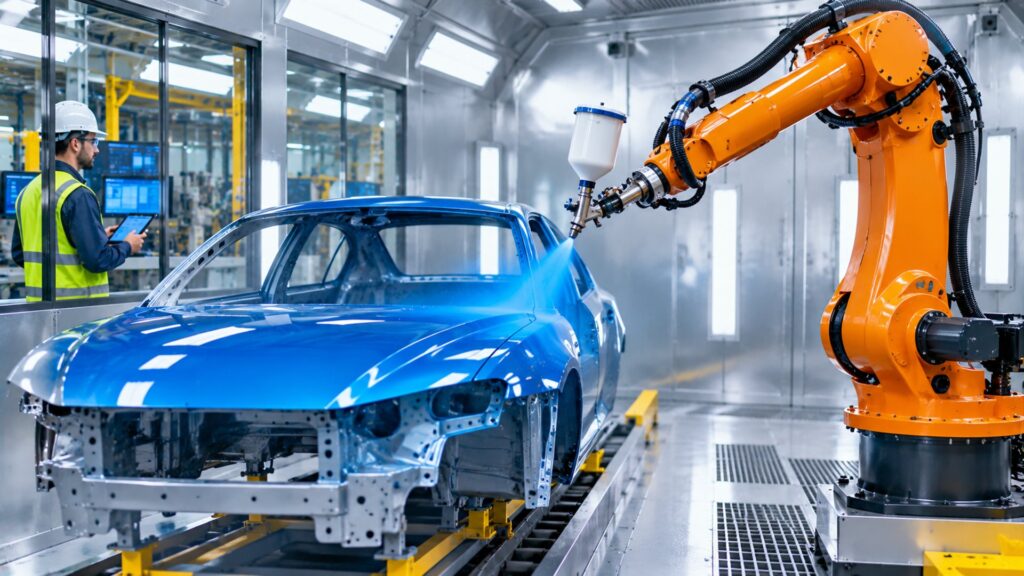
Manufacturers are constantly looking for ways to improve product quality, reduce material waste, and maintain consistent production standards. One technology helping achieve these goals is a robotic paint booth, which uses industrial robots and automated spray equipment to apply coatings with precision and repeatability. These systems are becoming increasingly important in automotive, heavy equipment, marine, and general industrial manufacturing, where consistent surface finishes and efficient production processes are essential.
As manufacturing requirements become more demanding, traditional manual painting methods can struggle to deliver the consistency, speed, and process control needed for large-scale operations. Robotic painting technology addresses many of these challenges by combining programmable movements, advanced spray equipment, and controlled booth environments.
What Is a Robotic Paint Booth?
A robotic paint booth is an enclosed or controlled painting environment equipped with industrial robotic arms that automatically apply paint, protective coatings, or other finishing materials to manufactured products.
Unlike conventional painting booths, where workers manually operate spray guns, robotic systems follow programmed application paths. These paths control the robot’s movement, spray distance, application angle, speed, and coating distribution.
The result is a more predictable painting process that can accommodate different product shapes, coating requirements, and production volumes.
Modern robotic paint booths are commonly integrated with industrial automation technologies, including programmable logic controllers (PLCs), sensors, automated conveyors, paint delivery systems, and machine vision equipment. Together, these components create a coordinated finishing operation that can work continuously with minimal manual intervention.
How Does a Robotic Paint Booth Work?
A robotic paint booth operates through a combination of mechanical equipment, automation software, and coating application technology. Each component plays a role in ensuring that manufactured parts receive the required finish.
Here is how a typical automated painting process works:
1. Part Positioning and Preparation
Before painting begins, components are positioned using conveyors, fixtures, or automated material-handling equipment. Proper positioning allows the robot to access the required surfaces and follow the programmed application path.
Depending on the manufacturing process, parts may also undergo cleaning, degreasing, sanding, or surface preparation.
2. Robotic Programming
The industrial robot is programmed to follow a specific movement sequence based on the dimensions and geometry of the component. Engineers determine the appropriate spray distance, gun angle, travel speed, and application overlap.
Offline simulation can also help validate robot movements and identify potential interference before production begins.
3. Automated Paint Application
Once the part enters the painting area, the robot activates the spray applicator and follows its programmed path. The application equipment distributes the coating across the required surfaces.
Depending on the system configuration, manufacturers can use conventional spray guns, electrostatic applicators, bells, or other specialized coating equipment.
4. Drying and Curing
After application, components move through flash-off zones, drying areas, or curing ovens, depending on the coating material and production requirements.
5. Inspection and Quality Control
Once the coating process is complete, inspection equipment can evaluate the finished surface for coverage issues, defects, or inconsistencies. Machine vision systems can help identify areas that require additional attention before products move to the next manufacturing stage.
Key Benefits of Robotic Paint Booth Systems
Investing in robotic painting automation can improve several aspects of manufacturing operations. The specific benefits depend on the equipment configuration, coating material, production volume, and existing process.
1. Consistent Paint Application
One of the biggest advantages of robotic painting is repeatability. Industrial robots can follow the same programmed movements, application angles, and spray distances throughout production.
This reduces variations commonly associated with manual painting, such as inconsistent coating thickness, uneven coverage, and missed areas.
For manufacturers producing large quantities of similar components, maintaining consistent finishing quality can help reduce rework and improve customer satisfaction.
2. Reduced Paint Waste
Paint overspray can increase material costs and create additional waste-management requirements.
Robotic systems help manufacturers control paint application through optimized spray paths, controlled material delivery, and appropriate applicator settings.
When properly engineered, these improvements can reduce unnecessary coating consumption and improve material utilization.
3. Improved Workplace Safety
Industrial painting often involves exposure to airborne paint particles, volatile organic compounds (VOCs), and potentially hazardous coating chemicals.
Automated painting systems reduce the need for workers to perform repetitive spraying inside hazardous environments.
Robotic automation does not eliminate every workplace risk, but properly designed booths, ventilation systems, filtration equipment, and safety controls can create a more controlled working environment.
4. Higher Production Efficiency
Manual painting operations can become production bottlenecks when manufacturers need to process large quantities of components.
Robotic paint systems can perform repetitive application tasks at consistent speeds and integrate with automated conveyor systems.
This helps manufacturers coordinate painting operations with other production activities and improve overall workflow efficiency.
5. Greater Flexibility
Modern robotic painting systems can be programmed for different part geometries, coating materials, and application requirements.
Manufacturers can modify robot paths and application parameters when introducing new products or changing production specifications.
This flexibility is particularly useful for facilities producing multiple product variations on the same manufacturing line.
Important Components of an Automated Paint Booth
A successful robotic painting installation requires more than an industrial robot. Several interconnected components contribute to coating quality, operational safety, and production performance.
Industrial Painting Robots: These programmable robotic arms perform the actual coating application. Their reach, payload, movement capabilities, and environmental ratings must match the painting requirements.
Spray Applicators: Spray guns, rotary bells, and other application equipment distribute paint or coating materials across product surfaces.
Paint Delivery Systems: Pumps, hoses, valves, regulators, and circulation equipment transport coating materials to the applicators. Automated color-change systems can also help manage production involving multiple paint colors.
Booth Ventilation and Filtration: Airflow management and filtration help control airborne particles, overspray, and environmental conditions inside the painting area.
Automation Controls: PLCs, robot controllers, sensors, and safety equipment coordinate the operation of the complete painting system.
Conveyor and Material Handling Equipment: These systems transport components through preparation, painting, curing, and inspection stages.
Inspection Systems: Machine vision and other inspection technologies help identify coating defects and verify that parts meet quality requirements.
Integrating these components correctly is essential for achieving dependable production results.
Industries That Use Robotic Paint Booths
Robotic painting technology is used across several manufacturing industries where coating consistency, production efficiency, and surface protection are important.
Automotive Manufacturing
Automotive manufacturers use robotic paint booths to apply primers, basecoats, topcoats, and clearcoats to vehicle bodies and components.
Robotic systems help maintain consistent finishes across large production volumes while supporting demanding automotive surface-quality requirements.
Heavy Equipment Manufacturing
Construction machinery, agricultural equipment, and industrial vehicles often require durable protective coatings.
Automated painting systems can apply these coatings across large and complex component surfaces while maintaining repeatable application parameters.
Marine and Composite Manufacturing
Manufacturers producing fiberglass products, marine components, and composite structures use automated systems to apply gelcoat and other finishing materials.
Robotic application helps manage coating distribution across complex shapes and larger surfaces.
General Industrial Manufacturing
Industrial manufacturers use robotic painting systems for metal enclosures, machinery components, fabricated products, and other equipment requiring protective or decorative finishes.
Depending on the application, these systems can support liquid paint, powder coating, and specialized industrial finishes.
Robotic Paint Booth vs. Manual Painting: What Is the Difference?
Both painting methods have a place in manufacturing, but they offer different advantages depending on production requirements.
| Comparison Factor | Robotic Painting | Manual Painting |
| Application consistency | Highly repeatable programmed paths | Depends on operator technique |
| Production speed | Suitable for continuous automated production | Depends on workforce and workflow |
| Paint consumption | Can reduce overspray through process optimization | More dependent on manual application |
| Workplace exposure | Reduces direct operator involvement in spraying | Operators may work closer to spray operations |
| Flexibility | Requires programming and process adjustments | Manual adaptation can be straightforward |
| Initial investment | Generally higher | Generally lower |
| Best suited for | Repetitive and demanding production applications | Smaller batches and varied manual work |
The right approach depends on production volume, product complexity, quality expectations, available investment, and facility requirements.
What Should Manufacturers Consider Before Investing in a Robotic Paint Booth?
Selecting an automated painting system requires careful evaluation of both current production requirements and future manufacturing goals.
Here are some important considerations:
Production Volume: Manufacturers should evaluate the number of components processed per shift and the expected production cycle time. This helps determine the number of robots and the required system configuration.
Part Geometry: Complex shapes, recessed areas, and irregular surfaces may require specialized robot movements, multiple applicators, or additional robot axes.
Coating Requirements: Different coatings require different application technologies. Automotive finishes, powder coatings, gelcoat, and protective industrial coatings each have specific process requirements.
Available Floor Space: Booth dimensions, robot reach, conveyor arrangements, maintenance access, and ventilation equipment must be considered during system design.
Safety and Compliance: Automated spray environments require appropriate hazardous-location equipment, ventilation, fire protection, and safety controls. Applicable standards and local regulatory requirements should be reviewed during engineering.
Integration Capabilities: The painting system should work effectively with existing production equipment, material-handling systems, controls, and downstream processes.
Return on Investment: Manufacturers should evaluate potential improvements in labor utilization, coating consumption, production throughput, quality, and rework costs against the initial investment and ongoing operating expenses.
Why Professional Robotic Paint System Integration Matters
Purchasing an industrial painting robot is only one part of building an effective automated finishing operation. The robot must be properly integrated with the booth, applicators, paint delivery equipment, ventilation, controls, and production line.
This is where experienced automation engineering partners become important.
GLOBAL Automation Technologies provides robotic painting and coating system integration for automotive, electric vehicle, marine, composite, and industrial manufacturing applications.
As a Level 5 FANUC Authorized System Integrator, the company supports manufacturers with robot selection, booth layout, offline simulation, programming, process validation, machine vision integration, installation, commissioning, and production launch support.
Its engineering approach focuses on aligning robotic movements, spray patterns, film-build requirements, airflow management, and material delivery with the manufacturer’s production goals.
GLOBAL also supports existing manufacturing facilities looking to modernize manual painting operations or upgrade their current automation infrastructure.
Manufacturers can explore its automated paint system capabilities to understand how robotic integration can support their specific finishing requirements.
The Future of Robotic Painting in Manufacturing
Robotic painting technology continues to evolve as manufacturers adopt more connected and intelligent production systems.
Machine vision, advanced simulation, improved spray applicators, and integrated process monitoring are making automated finishing operations more adaptable.
These technologies can help manufacturers identify application issues earlier, improve production visibility, and make more informed process adjustments.
As product quality expectations increase and manufacturers look for ways to improve operational efficiency, robotic painting systems are likely to remain an important part of modern industrial automation.
Conclusion
A robotic paint booth offers manufacturers a practical way to improve coating consistency, reduce material waste, support workplace safety, and streamline finishing operations. By combining industrial robots with appropriate spray equipment, ventilation, automation controls, and inspection technologies, manufacturers can develop more predictable and efficient painting processes.
However, achieving these results requires more than installing robotic equipment. System design, application engineering, programming, and production integration all play important roles in determining long-term performance.
Working with an experienced automation integrator such as GLOBAL Automation Technologies can help manufacturers evaluate their requirements and develop a robotic painting solution suited to their products, facility, and production objectives.