
Choosing a laser equipment manufacturer is the decision that quietly determines everything else about your investment: the quality of the welds you produce, the downtime...
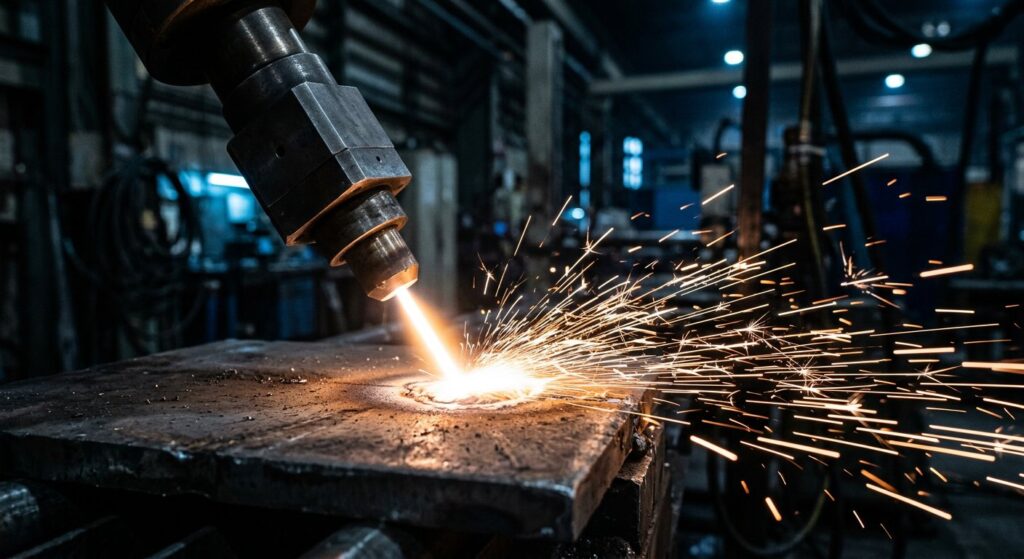
Choosing a laser equipment manufacturer is the decision that quietly determines everything else about your investment: the quality of the welds you produce, the downtime you absorb, the parts you can actually get, and whether the machine you bought this year is still supported in year five. A laser system is not a commodity purchase like a power tool; it is a precision instrument built around a source, optics, motion control, and software that all have to work together, and the difference between a genuine manufacturer and a box-assembling reseller shows up within months, usually at the worst possible time on your production schedule. Buyers in metal fabrication, battery manufacturing, mold repair, jewelry, signage, and restoration work face a crowded global market of suppliers at wildly different price points, and the price tag alone tells you almost nothing about what you are actually getting. This guide walks through the nine checks that separate a dependable laser partner from an expensive mistake, explains the four core machine families and which laser type fits which material, and closes with a quick-reference table and the questions buyers ask most before wiring a deposit.
Key Takeaways
- A true laser equipment manufacturer designs and builds in-house with its own R&D, rather than assembling branded components or reselling someone else’s machines.
- Match the machine family first, welding, cleaning, cutting, or marking, and the laser source second, because material compatibility is the deal-breaker.
- Fiber lasers dominate metal processing for speed, efficiency, and low maintenance, while CO2 and UV systems serve non-metals and heat-sensitive work.
- Certifications, safety engineering, and real application evidence matter more than brochure specifications.
- After-sales support, spare parts availability, and training are the make-or-break factors for imported equipment, and they belong in the evaluation before you buy, not after something breaks.
What Does a Laser Equipment Manufacturer Do?
A laser equipment manufacturer designs, engineers, and assembles laser processing systems under its own quality control, from the machine frame and motion system to the integration of the laser source, galvanometer scanners, cooling, and control software. The best manufacturers run genuine in-house R&D, iterate on their own designs, customize machines for specific applications, and stand behind the result with parts, service, and process development support. In practice the label covers a wide range: some companies engineer everything themselves, some buy a laser source and build the machine around it, and others simply trade machines built by third parties with their logo on the panel. Understanding where a supplier sits on that spectrum is the first check in this guide, because every other promise depends on it. The distinction also shapes pricing: manufacturer-direct pricing usually reflects engineering and materials, while reseller pricing quietly includes two margins, and only one of those margins works for you after the sale.
Manufacturer, Integrator, or Reseller?
A manufacturer with in-house production controls the details that decide long-term reliability: frame rigidity, wire routing, optical alignment, thermal management, and the quality of every weld and connector inside the cabinet. An integrator combines purchased subsystems into working machines, which can be perfectly sound when the integration skill is real. A reseller, however, adds a margin without adding capability, and when a component fails, the diagnosis chain runs through a middleman who may have never opened the machine. Ask directly where design happens, which components are sourced versus built, and who performs final assembly and testing; a confident manufacturer answers with specifics, photos, and an invitation to inspect.
The Four Core Machine Families
Most industrial laser portfolios span four families, and a capable manufacturer usually covers several under one roof. Laser welding machines fuse metals with a focused beam for automotive parts, battery tabs and terminals, mold repair, jewelry, and heat exchangers, in handheld, automated, and high-speed galvanometer configurations. Laser cleaning machines strip rust, paint, oil, and contaminants from surfaces non-abrasively, a job that previously meant blasting or solvents, and one increasingly valued in restoration work on delicate historical surfaces. Laser cutting machines slice sheet metal and specialty materials, including dedicated systems for cutting glass types that traditional tooling struggles with. Laser marking machines etch permanent serial numbers, barcodes, logos, and traceability codes onto metals and plastics, the quiet workhorse of regulated industries.
9 Critical Checks Before You Buy
1. Confirm You Are Dealing With a Real Manufacturer
Verify what the company actually is before evaluating anything else: ask for the legal entity name, founding year, factory address, and production photos or a live video walkthrough, and check whether the product line is coherent or a random assortment of every machine category imaginable. Companies that design and build their own machines talk fluently about trade-offs, tolerance choices, and why their frame or cooling layout differs from competitors, while resellers recite specification sheets. For international buyers, an export-oriented manufacturer with experience shipping to your region will already understand voltage standards, crating, customs documentation, and the support expectations that come with distance. This one check filters out a remarkable share of future problems.
2. Match the Machine to Your Actual Application
The most expensive mistake in laser purchasing is buying the wrong category of machine well. Start from the workpiece, not the brochure: what materials, what thicknesses or joint types, what throughput, and what quality standard the finished part must meet. Welding reflective or dissimilar metals, repairing molds, or joining battery tabs each pushes toward different configurations, from pulsed QCW sources for precision mold work to high-speed galvanometer systems for continuous production seams. A reputable manufacturer will ask about your parts before quoting a price, and many will run your sample workpiece on their machine and send you the video and the finished piece, which is the single most persuasive evidence in this entire purchase. Bring your worst case to that test, the thickest joint, the dirtiest surface, the most delicate substrate, because anyone can demonstrate on ideal material, and the honest answer about limits is worth more than a flawless demo.
3. Understand the Laser Source Behind the Machine
The source is the heart of the machine, and laser type determines what the machine can do. Fiber lasers, with their near-infrared wavelength and excellent beam quality, dominate metal processing: they cut and weld fast, feature a compact solid-state design with minimal maintenance, and offer far higher electrical efficiency than older CO2 technology, which remains useful for non-metals like wood, acrylic, and leather. UV lasers mark and process heat-sensitive materials with minimal thermal impact, ideal for electronics and delicate plastics, while pulsed variants such as QCW sources deliver controlled energy for spot welding and fine repair work. Ask which source brand goes into the machine, what its rated service life is, and whether the rated power is tested and documented rather than simply claimed. Power claims deserve particular skepticism at the budget end of the market, where independent buyers with meters routinely find machines delivering well below the sticker rating, and a 20 percent shortfall follows you for the life of the machine.
4. Inspect Build Quality Beyond the Spec Sheet
Two machines with identical headline specifications can differ enormously in how they are built. Look for a rigid, stress-relieved frame that resists vibration; clean internal wiring and organized component layout; proper optical protection with contaminate-resistant lenses; effective cooling matched to the duty cycle; and safety engineering that includes proper interlocks, enclosures where required, and compliance with laser safety classifications for Class 4 equipment. Ask about the quality checks a machine passes before shipment, because serious manufacturers test power output, beam alignment, and running stability over time rather than simply confirming the unit switches on. If possible, visit the factory or commission a third-party inspection; even an hour on the production floor tells you more than a week of email.
5. Demand Real Certifications and Compliance
Certifications are not paperwork decoration; they determine whether your machine can clear customs, pass insurance and workplace inspections, and protect you legally if something goes wrong. Depending on your market, look for CE marking under the applicable machinery and laser safety directives, FDA registration for laser products entering the United States, and ISO 9001 quality management at the factory level. Electrical safety standards matter especially across export markets, since voltage, plug standards, and safety conventions differ by region, and a manufacturer experienced in exporting to Europe and North America will build to those requirements as a matter of routine. Ask for certificate numbers and verify them, because forged certificates exist and the verification takes minutes.
6. Weigh Customization and Engineering Support
Production lines rarely fit standard machines perfectly, and this is where genuine manufacturers earn their premium. Strong engineering teams customize worktable dimensions, travel, fixtures, power ranges, and automation integration, robotic arms, rotary attachments, conveyor loading, to the actual part, and they develop the process parameters for your material rather than handing you a generic settings chart. A manufacturer that publicly offers tailored production solutions, and can show examples, a custom pillow-plate welding machine built to an unusual sheet size, a mold-repair system on a multi-joint robotic arm, is telling you that your edge cases are their normal work. The test question is simple: ask them to modify something, and watch whether engineering answers or sales stalls.
7. Scrutinize After-Sales Support Before You Need It
For imported machinery, support is the whole game. Probe exactly what happens when the machine stops: Is there a warranty, and what does it actually cover? Are spare parts, lenses, nozzles, protective windows, source modules, stocked and shipped internationally? Do they provide remote diagnostics, video-based troubleshooting, and English-language documentation and software? Is installation and operator training included, onsite or virtual? A useful exercise is to ask three of their existing customers in your region about response times, because references reveal what the service promise looks like on an ordinary Tuesday rather than in a sales deck. Machines do not stay new, but a manufacturer with real after-sales infrastructure keeps them productive anyway. Time-zone coverage is part of that infrastructure for overseas buyers: ask whether support engineers are available in your working hours, not theirs, and whether remote sessions can walk your technician through a fix while production waits.
8. Evaluate Total Cost of Ownership, Not Price
The purchase price is one line in a decade of costs. Total cost of ownership includes electricity consumption, where fiber systems hold a decisive advantage over older technology; consumables and optics replacement; cooling; maintenance labor; downtime during repairs; and the productivity value of speed and uptime. A cheaper machine that runs slower, breaks optics monthly, and waits on overseas parts is the expensive one, a lesson most fabricators learn exactly once. Ask suppliers to help you model throughput on your actual parts, energy use at your duty cycle, and a realistic maintenance schedule, then compare machines on cost per good part produced. Financially, the question is never which machine costs less, but which one makes you more. Duty cycle belongs in the model too: a machine rated to run all day at high power that is derated to run half time delivers half the throughput you budgeted, and no purchase price discount repays a lost shift.
9. Demand Evidence: Applications, References, and Samples
Marketing photographs are free; application evidence is earned. A manufacturer worth shortlisting can show work in your industry, welds on your alloy, cleaning results on your contamination, marks on your material, ideally with parameters attached, and customer references willing to take your call. Look for a track record across demanding sectors: aerospace and automotive component work where quality regimes are strict, battery manufacturing where consistency is everything, mold repair where precision determines part life, jewelry where the margin for error is microscopic, and restoration where the material is irreplaceable. HS LASER, a Laser Equipment Manufacturer founded in 2018 and exporting worldwide, is a good example of the profile this article describes: an R&D-driven maker of laser welding, cleaning, glass cutting, and marking machines whose application list spans aerospace, automotive manufacturing, energy storage batteries, photovoltaics, jewelry, mold repair, university research, and even cultural relic restoration. Evidence like that, specific industries, specific machines, real customers, is what due diligence looks like when it is done properly.
Laser Machine Types at a Glance
| Machine Family | Primary Job | Typical Applications | Key Selection Factor |
|---|---|---|---|
| Laser welding | Fuses and joins metals | Automotive parts, battery tabs, mold repair, jewelry, heat exchangers | Source type and pulse control for the joint and alloy |
| Laser cleaning | Strips rust, paint, coatings, contaminants | Mold maintenance, surface prep, restoration of delicate artifacts | Power class and pulse design for the substrate |
| Laser cutting | Cuts sheet metal and specialty materials | Sheet fabrication, glass cutting for optical and display glass | Beam quality and motion accuracy at your thickness |
| Laser marking | Permanent codes, logos, traceability | Serial numbers, barcodes, medical and electronics parts | Laser type matched to material: fiber, CO2, or UV |
Read the table by row and then by column: the row tells you which machine to shortlist, and the column tells you the exact question to ask each manufacturer about it.
Frequently Asked Questions
What is the difference between a laser equipment manufacturer and a trading company?
A manufacturer designs and assembles machines in its own facility and controls quality, customization, and parts; a trading company resells machines made by others, which adds cost and lengthens the support chain when problems occur.
Which laser type is best for metal work?
Fiber lasers are the standard for cutting, welding, and marking metals, including reflective alloys, thanks to their speed, beam quality, efficiency, and low maintenance; CO2 systems remain preferable for non-metals, and UV lasers suit heat-sensitive materials.
What certifications should I look for?
Depending on your market: CE marking for Europe, FDA laser product registration for the United States, and ISO 9001 at the factory, all verifiable by certificate number rather than taken on trust.
Can I get a machine customized for my product?
Genuine manufacturers routinely customize tables, travel, power, fixtures, and automation, and will develop process parameters on your sample parts; heavy resistance to modification is a strong signal you are dealing with a reseller.
How important is after-sales support for imported machines?
Decisive: parts availability, remote diagnostics, training, and warranty terms determine uptime, and the cost of a single extended outage usually exceeds the price difference between a well-supported machine and a cheap one.
How can I verify quality before paying?
Ask the manufacturer to process your sample workpiece and send it back with video and parameters, request customer references in your region, and consider a factory visit or third-party inspection before shipment.
Conclusion
Selecting a laser equipment manufacturer is ultimately a search for a long-term engineering partner rather than a transaction, and the nine checks above all point at the same underlying question: can this company understand, build, and support the machine your production actually needs? Verify the manufacturer is real, match the machine family and laser source to your materials, look past the spec sheet into build quality and compliance, test their willingness to customize, interrogate the support infrastructure, compare machines on total cost of ownership, and demand application evidence until you have seen your own part processed on their floor. Buyers who run that process end up with equipment that pays for itself on schedule, and buyers who skip it fund their own cautionary tale. The laser industry rewards diligence disproportionately, because the gap between a good machine and a bad one is invisible on delivery day and unmistakable a quarter later, so do the checking before the wire transfer, not after. Buyers who document their requirements, test on real parts, and verify every claim end up as the references the next buyer calls, and that is the position worth negotiating from.