
Scheduling software for small business automates appointments, reminders, and communication so you stop missing calls and no-shows. The best options answer the phone, book clients...

Scheduling software for small business automates appointments, reminders, and communication so you stop missing calls and no-shows. The best options answer the phone, book clients into your calendar, send texts, and collect payments. No-shows cost small businesses an average of 26,000 dollars a year, and scheduling software for small business is the proven fix.
Every small business owner knows the feeling. The phone rings during a job, the call goes to voicemail, and the appointment is lost forever. Scheduling software for small business exists to end that problem. It captures every booking request, reminds every client, and keeps your calendar full without adding a receptionist.
This guide explains what scheduling software for small business does, why it matters, the ten proven benefits, the features that matter, how to choose scheduling software for small business, what it costs, and how tools like Scheduley turn scheduling software for small business into a complete AI front desk.
What Is Scheduling Software for Small Business?
A scheduling platform is a digital tool that manages how clients book, confirm, reschedule, and pay for your services. It replaces paper calendars, phone tag, and manual reminders with a system that runs itself.
Modern scheduling tools include a booking website, calendar syncing, automated reminders, online payments, and client communication. The newest tools add artificial intelligence that answers phone calls, replies to texts, and books appointments during the conversation.
The goal of a scheduling platform is simple. Every available slot should fill, and no client should slip through the cracks. When that happens, revenue grows, stress drops, and the owner gets time back. That is why a scheduling platform is no longer optional for growing businesses.
Why Scheduling Software for Small Business Matters Now
Several forces make scheduling software for small business essential in today’s market.
Missed Calls Are Expensive
Small service businesses miss a surprisingly large share of their calls. Industry analysis shows that a typical small business loses thousands of dollars every year to missed scheduling calls alone. When a client calls to book and nobody answers, that client often calls the competitor next. A scheduling platform prevents this by answering and booking around the clock.
No-Shows Drain Revenue
No-shows are another costly leak. Studies estimate that no-shows cost small businesses an average of 26,000 dollars per year, because empty slots mean lost revenue with staff still paid. Automated reminders built into scheduling software for small business reduce no-shows by 30 to 40 percent, which recovers thousands of dollars quickly.
Clients Expect Convenience
Modern clients want to book at midnight, reschedule from their phone, and pay without calling. A scheduling platform delivers that convenience, and businesses that offer it win more bookings than those that do not.
AI Has Changed What Is Possible
Artificial intelligence has transformed scheduling software for small business. AI now answers calls, understands booking requests, checks the real calendar, confirms appointments, and sends follow ups automatically. This turns a scheduling platform into a virtual front desk that never sleeps.
The Cost of Human Receptionists
Hiring a receptionist costs far more than software. The median salary for a receptionist is around 34,000 dollars per year, before benefits and training. A scheduling platform typically costs a small fraction of that, which makes the ROI obvious.
The 10 Best Benefits of Scheduling Software for Small Business
These ten benefits explain why a scheduling platform pays for itself many times over.
1. You Never Miss a Booking
The first benefit of a scheduling platform is that you stop losing appointments. Every call, text, and message gets an answer, and every booking request lands directly on your calendar. For a business losing several appointments a month, the software recovers real revenue immediately.
2. Fewer No-Shows
A scheduling platform sends automated reminders by text and email, confirms appointments, and makes rescheduling easy. Businesses that use reminders see no-show rates drop from around 20 to 30 percent to under 8 percent. That improvement alone can pay for the software many times over.
3. More Time for the Work That Pays
Instead of chasing calls and juggling a calendar, owners focus on serving clients. The software handles the admin, and the owner gets hours back every week. For tradespeople, that time goes into more jobs, and for salons, it goes into more appointments.
4. Clients Can Book Themselves
With a scheduling platform, clients book online whenever they want, day or night. A built in booking website shows real availability, lets clients pick a time, and confirms instantly. Self service booking removes friction, and less friction means more bookings.
5. A Professional Front Desk Without the Salary
The right scheduling platform answers calls with AI, takes messages, books appointments, and even transfers calls to you live. It works nights, weekends, and holidays, which means your front desk is always open. That is the modern promise of an AI scheduling platform.
6. Fewer Missed Calls Through Text and DMs
Clients do not only call. They text, and they message on social media. A good scheduling platform replies to texts and DMs, so no channel goes unanswered. This multichannel coverage is a major reason the software outperforms an answering service.
7. Faster Payments
Many scheduling platforms collect payments online at the time of booking. Deposits, balances, and invoices are handled automatically, which improves cash flow and reduces the awkward money conversation. Payment features turn the software into a revenue tool, not just a calendar.
8. Fewer Empty Slots With a Waitlist
A waitlist built into the software texts clients the moment a spot opens. Cancellations stop being lost revenue because someone is ready to fill the slot. Waitlists are one of the smartest features of modern scheduling platforms.
9. Better Organization for Teams and the Trades
For businesses with multiple staff, the software assigns jobs, tracks statuses, and keeps everyone aligned. For the trades, jobs mode adds dispatch statuses, arrival windows, and on my way texts. This is why a scheduling platform works for both salons and service companies.
10. Data and Insights You Can Act On
A scheduling platform shows your busiest hours, your no-show rate, and your revenue per slot. With that data, owners make smarter decisions about hours, pricing, and marketing. Insights turn the software into a growth engine.
Scheduling Software for Small Business for Appointment Businesses
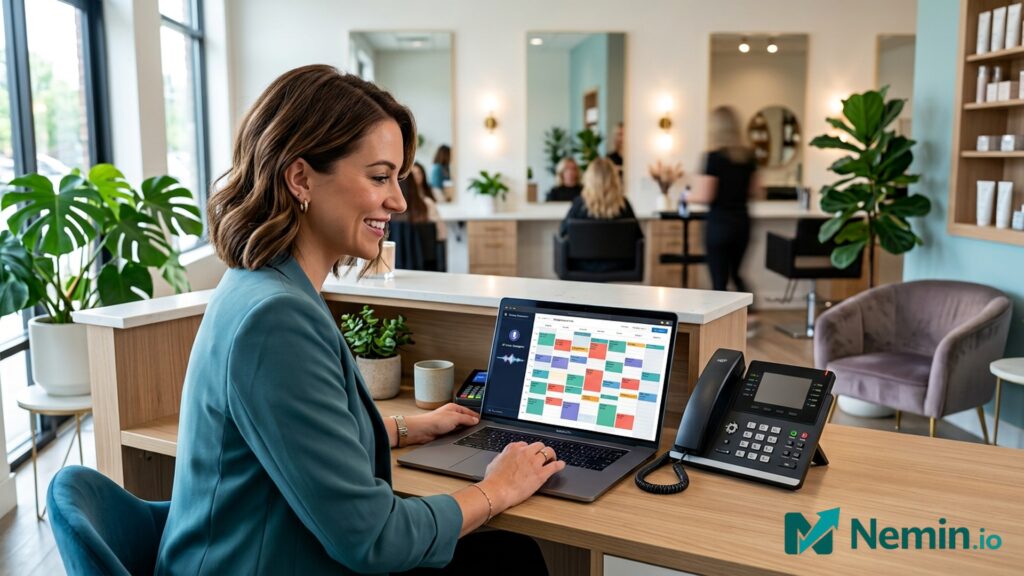
Appointment businesses like salons, barbershops, clinics, and studios live and die by their calendars. A scheduling platform is built for exactly these businesses.
For a salon or barber, the software manages services, staff, and durations, lets clients book their favorite stylist, and collects payments at booking. For a clinic, the software handles intake, reminders, and rescheduling while reducing no-shows. For a studio or consultant, scheduling software for small business sells sessions and packages automatically.
The key is that the software fills the calendar without the owner chasing every booking. When a client texts to reschedule, the software handles it. When a client asks about availability on Instagram, the software answers. Appointment businesses that adopt the software grow faster because they capture demand around the clock.
Scheduling Software for Small Business for the Trades
The trades, including HVAC, plumbing, electrical, landscaping, and home services, have unique scheduling needs, and a scheduling platform handles them well.
Field teams need dispatch, arrival windows, and status updates, which the best scheduling platforms provide. Trades also need quotes and invoices that clients can approve from their phone, and modern scheduling software for small business includes those too. When a job is done, the software follows up for reviews and repeat bookings.
The biggest win for the trades is answering the phone while the crew is on a job. Scheduling software for small business with an AI front desk takes the call, books the visit, and sends the confirmation, so no lead is lost to voicemail. For plumbers, electricians, and HVAC companies, that is the difference between a full week and a quiet one.
Meet Scheduley: The AI Front Desk Built for Appointment Businesses and the Trades
Scheduley is a clear example of where scheduling software for small business is heading. Scheduley describes itself as an AI front desk built for appointment businesses and the trades, and its platform shows how far scheduling software for small business has come.
Instead of juggling four subscriptions, Scheduley replaces them with one platform. It answers calls 24/7 with AI, books appointments straight into your calendar during the call, and replies to texts and Instagram and Facebook messages. It sends quotes and invoices clients approve online, manages jobs with dispatch statuses and arrival windows for the trades, and texts clients the moment a waitlist spot opens.
Scheduley also includes a built in booking website, online payments, call summaries, and an AI morning briefing that reviews your day. Pricing is flat and predictable, with appointments starting at 19 dollars a month and trades at 39 dollars a month. That makes Scheduley one of the most accessible options in scheduling software for small business.
The comparison page at scheduley.com shows how Scheduley stacks up against AI receptionists, salon software, and trades software. For owners choosing scheduling software for small business, Scheduley is worth a close look, because it covers the whole front desk in one flat price.
Features to Look For in Scheduling Software for Small Business
Not all scheduling software for small business is equal. These features separate great tools from frustrating ones.
AI phone answering. The most valuable feature in scheduling software for small business is AI that answers calls and books appointments during the conversation.
Booking website. A built in website where clients can book themselves is essential in scheduling software for small business.
Automated reminders. Text and email reminders are the feature that cuts no shows, and every good scheduling software for small business includes them.
Text and social messaging. Reply to SMS and Instagram and Facebook DMs from one inbox in scheduling software for small business.
Online payments. Collect deposits and balances at booking, because payments turn scheduling software for small business into a revenue tool.
Waitlist. Automatically fill cancellations by texting clients the moment a spot opens.
Recurring appointments. Support weekly and monthly clients without manual rebooking.
Jobs mode for trades. Dispatch statuses, arrival windows, and on my way texts for field teams.
Call summaries and briefings. Get a summary after every call and a morning briefing of your day.
Simple pricing. Avoid per call fees, per user seats, and surprise add ons when you choose scheduling software for small business.
How to Choose Scheduling Software for Small Business
Choosing scheduling software for small business is easier when you follow a process. Use these steps to find the right fit.
Step 1: List Your Non Negotiables
Write down the features you cannot live without. If you are a trade, you need jobs mode. If you run a salon, you need staff and service management. Your non negotiables define which scheduling software for small business will work.
Step 2: Check What You Miss Today
Count your missed calls and no shows for a month. That number is your baseline, and it tells you how much scheduling software for small business is worth to you.
Step 3: Compare the Full Front Desk
Do not compare calendars alone. Compare answering, texting, booking, payments, and website in one platform. Scheduling software for small business that covers everything beats a patchwork of tools.
Step 4: Look at Pricing Carefully
Check for per call fees, per user pricing, and add ons. Flat pricing makes scheduling software for small business predictable, and predictability matters for a small budget.
Step 5: Try It With Real Clients
Start with a trial and route real calls and bookings through the tool. The right scheduling software for small business feels effortless for you and your clients.
Step 6: Plan the Switch
Move your calendar, set your availability, and communicate the change. A smooth switch makes scheduling software for small business successful from day one.
What Scheduling Software for Small Business Costs
Pricing for scheduling software for small business ranges from free to several hundred dollars a month, depending on features.
Simple booking tools start around 10 to 20 dollars a month. Full platforms with reminders, payments, and workflow automation range from 30 to 100 dollars a month for most small businesses. AI front desk platforms vary more, and Scheduley starts at 19 dollars a month for appointments and 39 dollars a month for trades, with flat pricing and no per call fees.
Compare that to the cost of a receptionist, which can exceed 30,000 dollars a year, or the 26,000 dollars a year that no shows cost the average small business. By that math, scheduling software for small business is one of the highest ROI purchases an owner can make, and it often pays for itself in the first month.
Common Mistakes When Choosing Scheduling Software for Small Business
Avoid these mistakes so you choose the right scheduling software for small business the first time.
Buying a calendar when you need a front desk. A simple calendar does not answer calls or send reminders. Choose scheduling software for small business that covers the whole booking journey.
Ignoring the phone. Many tools only handle online booking. If your clients call, you need scheduling software for small business that answers the phone too.
Paying per call or per user. Usage based pricing gets expensive fast. Flat pricing keeps scheduling software for small business affordable as you grow.
Forgetting the trades. Field service businesses need dispatch and quotes, so confirm those exist in the scheduling software for small business you pick.
Skipping reminders. The reminder feature is what cuts no shows, and it should be built into scheduling software for small business, not added later.
Not testing with real traffic. A trial with real calls and bookings reveals whether scheduling software for small business actually works for your business.
Frequently Asked Questions
These are the questions owners ask most about scheduling software for small business.
- What is the best scheduling software for small business?
The best software for small business covers booking, reminders, answering, and payments in one platform, and the right choice depends on your industry and budget. - How much does scheduling software for small business cost?
Most scheduling software for small business costs between 10 and 100 dollars a month, with AI front desk options like Scheduley starting at 19 dollars a month. - Can scheduling software for small business answer the phone?
Yes, modern AI powered software for small business answers calls, books appointments, and replies to texts automatically. - Does scheduling software for small business reduce no shows?
Yes, automated reminders in scheduling software for small business reduce no shows by 30 to 40 percent on average. - Is scheduling software for small business good for the trades?
Yes, the best scheduling software for small business includes jobs mode, dispatch statuses, quotes, and invoices for field teams. - Do I need a receptionist if I use scheduling software for small business?
Often not, because AI scheduling software for small business answers calls and books around the clock for a fraction of a salary. - Can clients book online with scheduling software for small business?
Yes, scheduling software for small business includes a booking website where clients book themselves day or night. - How fast does scheduling software for small business pay for itself?
Most businesses recover the cost of scheduling software for small business within the first month from recovered bookings and fewer no shows.
Conclusion
Scheduling software for small business has moved from a nice to have to a must have, and the numbers explain why. Missed calls cost real revenue, no shows drain an average of 26,000 dollars a year, and clients expect to book whenever they want. Scheduling software for small business answers every channel, reminds every client, books every slot, and collects every payment, and the newest platforms add an AI front desk that never sleeps.
Whether you run a salon, a clinic, or a trade business, the right scheduling software for small business fills your calendar, protects your revenue, and gives you back your time. Scheduley shows where scheduling software for small business is heading, with one flat priced platform that answers calls, texts, and DMs, books the work, and runs the front desk for appointment businesses and the trades. The cost of scheduling software for small business is small, but the return is enormous, and the best time to start is now.