
Producing a multi-scene video with generative AI has traditionally involved an awkward trade-off between creative ambition and production efficiency. A creator may have a complete...
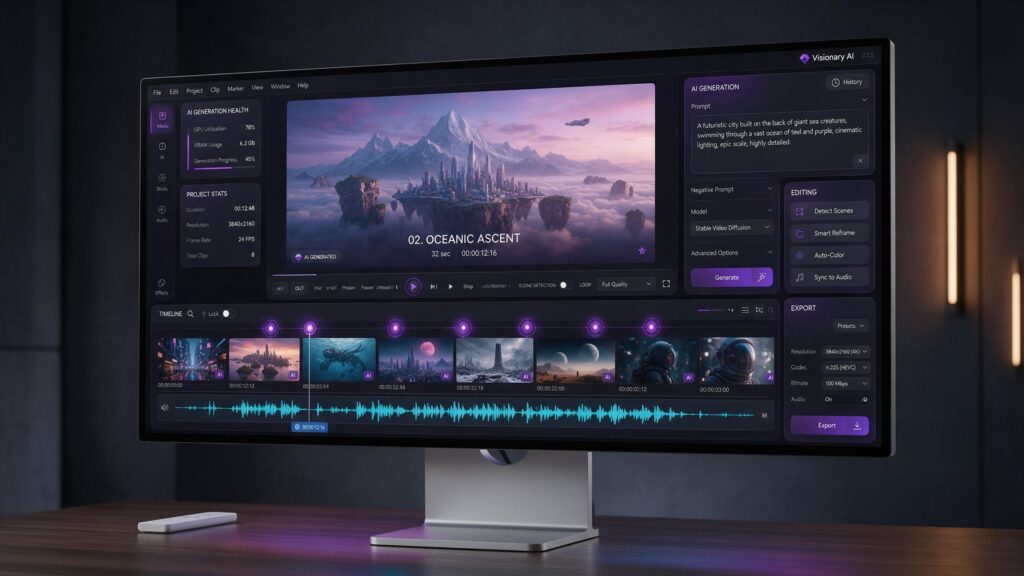
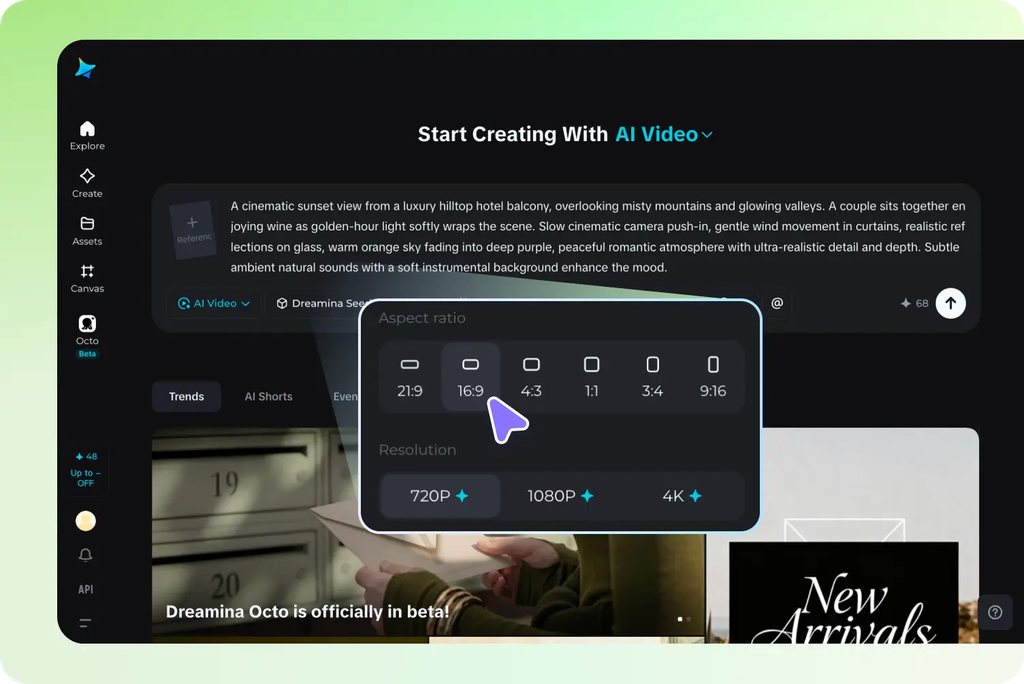
Producing a multi-scene video with generative AI has traditionally involved an awkward trade-off between creative ambition and production efficiency. A creator may have a complete story in mind, but turning that story into a sequence of usable shots can require repeated generations, manual assembly, continuity checks, and additional editing. Every time a short clip fails because of an incorrect character detail, an inconsistent background element, or an unwanted movement, the creator may need to regenerate the entire segment. That makes the cost of AI video production less about the price of an individual generation and more about how many attempts are required before the final sequence becomes usable. The emergence of longer generation and more targeted editing changes this equation because the unit of production starts moving away from isolated clips and toward complete narrative segments.
This shift becomes particularly interesting when comparing the capabilities of Seedance 2.5 with earlier short-form AI video workflows. Seedance 2.5 supports standard continuous videos of up to 30 seconds and also offers a beta long-video workflow that can extend generations up to 180 seconds. It can work with as many as 50 multimodal references, including scripts, images, videos, music, and style materials. More importantly, its localized editing capability allows creators to modify specific regions of a generated video instead of regenerating the entire sequence. These features have a direct production implication: creators can potentially spend less time rebuilding shots that are already mostly correct and more time refining the specific parts that actually need attention.
The economic impact is therefore not simply that longer videos can be generated. Longer generation changes how a creator plans scenes, while targeted editing changes how mistakes are priced in terms of time and effort. A 30-second sequence that remains coherent across several actions can reduce the need to construct every moment from separate clips. At the same time, the ability to make localized changes means a small problem does not necessarily invalidate the entire generation. For independent filmmakers, advertising teams, social media creators, agencies, and product marketers, this can make AI video production more practical because efficiency increasingly depends on reducing unnecessary regeneration rather than merely generating content faster.
The Real Cost of Multi-Scene AI Video Is Hidden in Rework
The obvious cost of AI video generation is the generation itself, but the less visible cost is rework. Consider a sequence containing several connected shots. If every shot is generated independently, the creator has to repeatedly solve the same problems: character appearance, clothing, environment, lighting, camera perspective, movement, and timing. Even when individual clips look impressive, the transition between them can expose inconsistencies. A character may appear slightly different, an object can change shape, or the lighting can shift between shots. Fixing those problems can require additional generations and manual editing. As the number of scenes increases, these small inefficiencies compound.
This is why longer continuous generation can have economic value even when the underlying generation process is still computationally demanding. A longer sequence can allow several connected actions to exist inside one generation instead of forcing the creator to construct every moment independently. The benefit is not guaranteed for every project because complex scenes still require careful direction and review, but the production model changes. Instead of asking how cheaply one short clip can be generated, the creator can ask how many usable seconds of coherent footage can be produced before substantial rework becomes necessary.
Creators can use Dreamina to explore Seedance 2.5 and experiment with different references and creative ideas before developing a complete video sequence.
Longer Generation Changes How Scenes Are Planned
Traditional short AI video workflows encourage creators to think in very small visual units. A character walks for a few seconds, a product rotates for another few seconds, and a camera transition is generated separately. This approach can be useful when every shot needs a distinct visual treatment, but it also creates a continuity problem. Each generation becomes a new interpretation of the same story. The creator has to maintain consistency manually because the model is repeatedly being asked to reconstruct the scene from a limited amount of context.
Longer generation introduces a different planning model. Instead of treating every movement as a separate clip, creators can structure a scene around a sequence of connected beats. A character can enter a room, interact with an object, move toward another part of the environment, and complete an action within the same continuous generation. Seedance 2.5 is designed to support longer continuous sequences and can generate standard videos up to 30 seconds, while its long-video beta extends the possible duration considerably. This gives creators more room to think in terms of scenes rather than isolated moments.
The economic advantage becomes clearer when a story contains repeated interactions or gradual camera movement. If the creator can communicate several related actions inside one generation, fewer transitions need to be constructed manually. That does not eliminate editing, because professional content still benefits from pacing and shot selection, but it can reduce the amount of assembly required to create basic continuity. The creator’s time can then move toward directing and refinement instead of repeatedly reconstructing the same scene.
Why Targeted Editing Can Be More Valuable Than Another Generation
One of the most important changes in the newer workflow is localized editing. In a conventional generative workflow, a problem inside a mostly successful video can force the creator to regenerate the whole sequence. That creates an unfortunate situation where correcting one detail can disturb several details that were already working. A character’s face may be correct, the lighting may be excellent, and the camera movement may be exactly right, but an unwanted object in the background can still require another complete generation.
Seedance 2.5 approaches this problem through localized editing, allowing creators to make changes to specific areas of a video while preserving broader elements such as composition, lighting, motion, audio, and timeline continuity. This is economically significant because the value of an editing feature is not limited to what it can change. Its greater value may come from what it allows the creator to avoid regenerating. If most of a scene is already acceptable, preserving that successful material protects the time and creative decisions invested in it.
This also changes the psychology of experimentation. Creators can take more ambitious approaches when a mistake does not necessarily mean starting from zero. A filmmaker can test a particular environmental detail, a product placement, or a localized visual adjustment and then refine the result without abandoning the complete sequence. The production process becomes more iterative and less destructive. Instead of treating every generation as a disposable attempt, the creator can treat a successful generation as a working asset that can be progressively refined.
How Reference Capacity Reduces the Cost of Maintaining Continuity
Continuity becomes increasingly difficult as a project becomes more complex. A short advertisement might involve a product, a presenter, multiple locations, specific lighting, brand visuals, music, and several camera positions. A short film can introduce even more variables, including characters, costumes, props, environments, and recurring visual motifs. When those elements are communicated only through text, maintaining the intended relationship between them becomes difficult.
Seedance 2.5 supports up to 50 multimodal references, creating substantially more room for structured visual direction. These references can include scripts, reference photographs, video material, music, and style guides. The value of a larger reference capacity is not simply the number itself. It allows creators to separate different forms of creative information and provide the model with more context about what should remain consistent. Reference-to-video workflows can also use visual materials to guide character movement, spatial placement, and interaction.
This can reduce the amount of corrective work required later. If a character’s appearance, environment, movement, and visual style are established through appropriate references from the beginning, the creator has a stronger foundation for producing connected scenes. The best economic outcome comes when reference planning prevents mistakes before they occur. Every avoided regeneration represents saved production time, and across a multi-scene project those savings can become more meaningful than the cost of any individual generation.
Where Seedance 2.0 Still Fits Into an Efficient Production Pipeline
The move toward longer generation does not make shorter AI video generation irrelevant. Short clips remain useful for testing concepts, developing individual shots, creating social media content, and experimenting with visual direction. Seedance 2.0 supports 4K multimodal video generation with text, image, video, and audio inputs, making it useful for creators who want to develop specific scenes or visual ideas before building larger sequences. Its support for multiple reference types also allows creators to establish character identity, environment, motion, and other visual requirements without relying entirely on written instructions.
From an economic perspective, this creates an interesting relationship between different stages of production. A creator can use shorter generations to test visual ideas and determine whether a character design, camera concept, or environment works before committing to a longer sequence. Once the creative direction is established, longer-generation workflows can be used for more connected scenes. This separates experimentation from final sequence construction and can prevent expensive or time-consuming iterations at the wrong stage of the project.
A More Efficient AI Video Workflow Starts With Pre-Production
Longer generation and localized editing are useful, but they do not eliminate the need for planning. In fact, the ability to generate longer sequences makes pre-production more important because an unclear instruction can affect a larger portion of the video. Before generating a complex scene, creators should know what needs to happen, which visual elements must remain stable, and where the important changes occur. A simple scene plan can identify the subject, environment, action, camera behavior, sound, and intended transition before generation begins.
A practical workflow might look like this:
- Define the narrative beat: Decide what the scene needs to communicate rather than beginning with visual effects.
- Establish visual references: Select character images, environments, products, style references, and movement examples according to their specific roles.
- Map the action: Break the scene into logical moments so character movement and camera movement have a clear relationship.
- Plan the audio: Identify dialogue, music, narration, and important sound effects that influence timing.
- Generate the larger sequence: Use longer continuous generation when connected actions benefit from remaining within the same scene.
- Inspect continuity: Check identity, geometry, lighting, movement, framing, and audio before making major changes.
- Apply targeted corrections: Modify localized problems rather than automatically regenerating successful sections.
- Finish through editing: Use conventional editing decisions for pacing, transitions, titles, sound mixing, and final delivery.
The important point is that efficiency comes from combining these stages rather than expecting the model to solve everything in a single generation. A longer generation can reduce fragmentation, while localized editing can reduce destructive rework. References can reduce ambiguity, and pre-production can reduce the number of mistakes that reach the generation stage in the first place.
How Longer Videos Affect Creative Economics for Different Teams
For independent creators, the biggest benefit may be time. A single person often has to perform roles that would normally be distributed across a larger production team. Reducing the number of separate generations and minimizing unnecessary regeneration can make projects that once required too much manual work more achievable. This is particularly relevant for short films, promotional videos, YouTube content, and social campaigns where production speed can influence whether an idea is worth pursuing.
For agencies and commercial teams, the calculation is slightly different. Their main concern may be revision cycles. A client rarely approves the first version of a video without requesting changes. If every revision requires regenerating an entire scene, production time can expand quickly. Localized editing offers a more practical revision model because certain requested changes can potentially be isolated without rebuilding the entire visual sequence. The result is not simply faster generation but a potentially more manageable relationship between client feedback and production workload.
Why Localized Editing Changes the Value of a Successful Generation
A generated video becomes more valuable when the creator can preserve its successful elements. Suppose a sequence has excellent camera movement and natural character performance but contains one incorrect visual detail. In a regeneration-only workflow, the creator risks losing the camera movement and performance while trying to correct the single mistake. This creates a form of production waste because successful creative information is discarded along with the problem.
Localized editing changes that relationship. By allowing specific areas to be revised while maintaining broader scene continuity, the creator can treat the generation as an editable asset rather than a fixed output. Seedance 2.5’s localized editing capability is particularly relevant here because the official workflow describes preserving aspects such as lighting, composition, motion, audio, and timeline continuity while making targeted changes. This can make each successful generation more reusable and therefore increase the effective value extracted from it.
What This Means for the Future of AI Video Production
The most important economic shift may be the gradual movement from generation volume toward production efficiency. Early AI video workflows often encouraged creators to generate many short clips and choose the best results. That approach can still work, but it becomes increasingly inefficient as projects become longer and more structured. When a video contains multiple connected scenes, the creator needs continuity, revision control, and predictable iteration rather than an endless stream of disconnected outputs.
Seedance 2.5’s longer generation, larger reference capacity, reference-to-video workflows, and localized editing point toward a more production-oriented model. The creator is no longer limited to asking for a short visual sample and then assembling dozens of independent generations. Instead, the workflow can increasingly resemble a digital production environment where scenes are generated with more context and refined without destroying everything that already works.
Final Thoughts
The economics of AI video production are ultimately determined by more than generation speed or individual output quality. The real question is how much usable creative work can be produced before the project enters a cycle of repeated regeneration and manual correction. Longer continuous generation addresses one part of that problem by allowing connected actions to exist within larger sequences. A greater reference capacity addresses another by giving creators more ways to communicate characters, environments, movement, sound, and style. Localized editing tackles perhaps the most frustrating problem of all by allowing specific mistakes to be corrected without necessarily rebuilding an entire successful scene.
This does not mean that every project should automatically use the longest available generation or the maximum number of references. More control also creates more decisions, and poor planning can still produce inefficient results. The advantage appears when creators match the tool to the production problem. Short generations can remain useful for exploration and testing, while longer sequences become valuable when continuity matters. Similarly, targeted editing is most useful when a scene is already strong and only specific elements require correction.
The larger change is conceptual. AI video production is moving away from a model where every generation is treated as a finished or disposable clip and toward a workflow where generated footage can become part of an iterative production process. When longer scenes reduce fragmentation and localized editing reduces destructive regeneration, creators can spend more of their time directing the story and less of it rebuilding material that was already close to correct. That shift can make multi-scene AI video more scalable for creators who care not only about visual quality but also about the time and resources required to reach a finished result.
FAQs
How does longer video generation affect AI video production costs?
Longer generation can reduce the need to create and assemble numerous short clips when several actions belong to the same continuous scene. The potential saving comes mainly from reducing fragmentation and manual assembly, although complex scenes may still require multiple generations and revisions.
What is localized editing in Seedance 2.5?
Localized editing allows creators to modify specific areas or elements of a generated video instead of regenerating the entire sequence. Seedance 2.5 is designed to preserve broader elements such as lighting, composition, motion, audio, and timeline continuity while applying targeted changes.
How many references can Seedance 2.5 use?
Seedance 2.5 supports up to 50 multimodal references. These can include different forms of creative material such as text, scripts, images, videos, music, and style references.
Is Seedance 2.5 better for long videos than short AI clips?
It is designed with longer continuous generation in mind. Standard generation can reach 30 seconds, while a beta long-video workflow can extend up to 180 seconds. Whether that is preferable depends on the project’s structure and how much continuity is required.
Why are references important for multi-scene videos?
References give the model more concrete information about visual identity, environments, movement, composition, and style. In a multi-scene project, this can help reduce ambiguity and make it easier to maintain important elements across connected sequences.
Does longer generation eliminate the need for video editing?
No. Longer generation can reduce fragmentation, but editing remains useful for pacing, selecting the strongest moments, adding titles, adjusting sound, creating transitions, and preparing the final deliverable.
When should creators use shorter generations?
Short generations are useful for testing ideas, experimenting with character designs, exploring camera concepts, creating individual shots, and developing visual references before committing to a longer connected sequence.
Can targeted editing save more time than generating another complete video?
It can when most of the existing video is already successful. Regenerating an entire sequence to fix one localized problem can introduce new inconsistencies and force the creator to repeat successful work. Targeted editing can reduce that unnecessary rework.
What is the biggest production advantage of Seedance 2.5?
Its value comes from the combination of capabilities rather than one feature alone. Longer generation can reduce scene fragmentation, expanded reference support can provide more creative context, and localized editing can make revisions less destructive. Together these capabilities support a more iterative production workflow.
How should creators prepare before generating a long AI video?
They should establish the narrative beat, select purposeful references, define character and environment consistency, plan camera and character movement, identify important audio cues, and determine which parts of the scene need to remain stable. Good preparation reduces ambiguity and makes later revisions easier.