
Seedance AI sits within the rapidly evolving field of generative video, where models can turn prompts and other supported inputs into short moving-image sequences. Interest around...
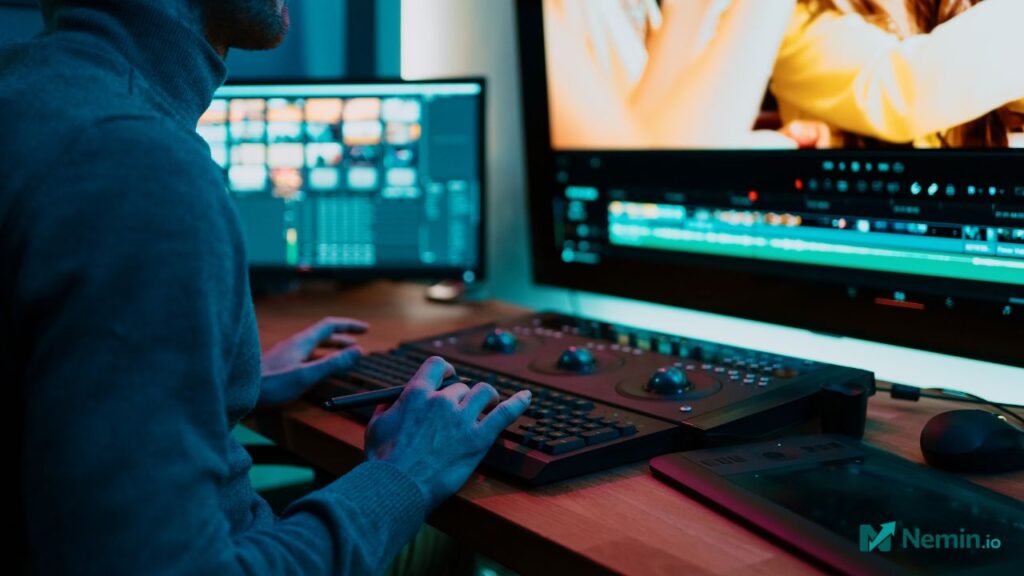
Seedance AI sits within the rapidly evolving field of generative video, where models can turn prompts and other supported inputs into short moving-image sequences. Interest around the Seedance name reflects a broader shift in AI video creation toward better motion, prompt adherence, cinematic composition, and workflows that can complement traditional editing and production. Claims surrounding a specific “Seedance 2.5” release, however, should be checked against current official ByteDance or Seed documentation before being treated as confirmed product specifications.
That distinction matters because AI-model names, access routes, feature sets, and version labels can change quickly. Third-party websites and social posts sometimes use unofficial terminology or publish supposed specifications before they can be independently verified. Rather than inventing features for Seedance 2.5, this guide examines what makes Seedance AI relevant, what users should verify about newer versions, how generative video fits into practical creative workflows, and where its limitations still matter.
What Is Seedance AI?
Seedance AI refers to ByteDance’s Seedance family of generative video models. The technology is associated with ByteDance’s Seed research organization and has been developed for AI-generated video from inputs such as text and, depending on the model and implementation, images.
The basic objective is easy to understand. A creator provides an instruction describing a scene, subject, action, visual atmosphere, or camera behaviour, and the model generates corresponding video.
The technically difficult part is maintaining consistency through time.
A still-image generator only needs to produce one frame. A video model must produce many related frames while maintaining plausible movement, appearance, spatial relationships, and camera motion.
Why Seedance AI Is Getting Attention
Generative video has improved rapidly across the industry.
Creators are increasingly interested in systems that can help with concept visualization, advertisements, social content, previsualization, storyboards, product concepts, educational material, and experimental filmmaking.
Seedance AI enters this competitive environment alongside models from several major AI developers.
Its significance should therefore be evaluated through actual outputs, documented capabilities, availability, control, speed, reliability, and suitability for real production workflows rather than social-media excitement alone.
Who Develops Seedance AI?
Seedance is associated with ByteDance’s Seed team.
That provenance is important because users should distinguish the original model from unrelated websites that may use Seedance-related search terms for aggregation, reselling, or unofficial access.
Before uploading valuable or sensitive material, confirm which service actually operates the interface, which organization processes the data, and which privacy terms apply.
What Is Seedance 2.5?
The phrase Seedance 2.5 may appear in searches, community discussions, third-party platforms, or promotional material. A version-specific feature list should only be stated as fact when an authoritative source documents that release.
AI products move too quickly for a version number alone to establish technical specifications.
If official documentation identifies Seedance 2.5, its model card, product page, release notes, or developer documentation should be the primary source for supported inputs, output length, resolution, pricing, access, restrictions, and other specifications.
Verify Seedance 2.5 Before Relying on Feature Claims
Users evaluating a supposed Seedance 2.5 release should verify several points.
- Official model name
- Developer or provider
- Release status
- Supported regions
- Text-to-video support
- Image-to-video support
- Reference-input capabilities
- Maximum output duration
- Supported resolution and aspect ratios
- Audio capabilities, if any
- API availability
- Commercial-use terms
- Pricing or credits
- Content restrictions
These details can change and should be checked at the time of use.
Why Seedance 2.5 Information Can Become Confusing
Generative AI has a fragmented distribution ecosystem.
A model developer may expose technology through its own products, cloud services, APIs, partner platforms, or region-specific offerings. Third parties may also build interfaces around supported APIs.
As a result, a feature offered by one Seedance AI interface may not necessarily be an intrinsic capability available through every implementation.
Model Capability Versus Platform Feature
This difference is crucial.
A website may add prompt enhancement, upscaling, frame interpolation, audio generation, video editing, or asset management around an underlying model.
Those functions should not automatically be attributed to Seedance 2.5 itself.
When comparing services, separate the capabilities of the model from those of the hosting platform.
How Seedance AI Video Generation Works
Modern generative video systems learn statistical representations from large collections of training material and use those learned patterns to synthesize video based on input conditions.
The exact architecture and training details depend on what the developer publicly discloses.
Users do not need to understand every mathematical mechanism to use Seedance AI effectively, but understanding the generation process helps set realistic expectations.
Text to Video
Text-to-video starts with a written prompt.
A useful prompt can describe the subject, environment, action, camera movement, lighting, visual style, framing, and mood.
For example, a creator might request a wide cinematic scene of a cyclist traveling through a misty forest while the camera tracks alongside.
The model then attempts to generate a moving sequence consistent with those instructions.
Image to Video
Image-to-video starts with a source image that gives the model stronger visual information about a subject or scene.
The creator can then describe the desired motion.
This workflow can be valuable when visual appearance matters more than creating every aspect of the scene from text.
Whether and how a particular Seedance 2.5 implementation supports image conditioning should be verified from its current documentation.
Reference-Based Generation
Advanced AI video workflows increasingly use reference material to improve consistency.
References may help communicate character appearance, object design, composition, or style, depending on the system.
Seedance AI users should check exactly which reference functions are officially supported rather than assuming every type of input can control every visual attribute.
Why Motion Quality Matters in Seedance AI
Motion is one of the clearest differences between static generation and video generation.
A visually impressive opening frame can still result in poor video if subjects distort, objects unexpectedly disappear, or camera movements become physically inconsistent.
Good AI video requires temporal coherence.
Temporal Consistency
Temporal consistency describes how well visual information remains coherent from frame to frame.
A character’s clothing should not randomly change during a shot. A vehicle should not alter shape halfway through its movement. Background architecture should remain structurally plausible as the camera moves.
Seedance AI should be judged on this consistency over complete clips rather than isolated screenshots.
Camera Movement
Creators frequently request pans, tracking shots, dolly movements, crane-like motion, push-ins, or handheld aesthetics.
Successful camera control can make AI-generated footage more useful for storytelling.
However, a text description of camera motion does not necessarily provide the deterministic precision of a physical or virtual camera system.
Users should expect iteration.
Prompt Adherence and Seedance AI
Prompt adherence means how closely generated output reflects the user’s instruction.
Video prompts can be challenging because they contain both visual and temporal information.
The model must understand not only what belongs in a scene but also what should happen over time.
Start With a Clear Subject
A strong Seedance AI prompt should identify the primary subject early.
Specify what the subject is doing and where the action occurs.
Overloading a prompt with numerous competing subjects and simultaneous events can make results harder to control.
Describe Action Precisely
Movement should be specific enough to communicate intent.
“Person moves” contains little information. “A chef slowly places a ceramic plate on a wooden counter while steam rises behind it” provides clearer temporal direction.
Avoid contradictory actions unless they are deliberately sequenced.
Add Camera Direction
Once the central scene is clear, add camera instructions.
Useful descriptions might include a static medium shot, slow tracking movement, wide establishing view, close-up, overhead perspective, or gradual push-in.
Prompt results vary, so these should be treated as creative controls rather than guaranteed cinematography commands.
Seedance AI Prompt Structure
A practical prompt can move from the most important information toward secondary visual details.
A useful conceptual order is subject, action, setting, camera, lighting, and aesthetic.
| Prompt Element | Purpose | Example Direction |
|---|---|---|
| Subject | Defines focal element | Product, person, animal, vehicle |
| Action | Defines movement | Walking, rotating, opening |
| Setting | Establishes environment | Studio, street, forest |
| Camera | Guides perspective | Tracking shot, close-up |
| Lighting | Shapes atmosphere | Soft daylight, dramatic backlight |
| Aesthetic | Sets visual character | Documentary, cinematic |
The exact wording should reflect the desired shot rather than follow a rigid template.
Potential Seedance AI 2.5 Use Cases
Until version-specific capabilities are confirmed, it is more accurate to discuss practical applications of Seedance AI and generative video broadly.
The technology can support multiple creative stages without necessarily replacing the entire production workflow.
Advertising Concepts
Agencies can use AI video to visualize campaign ideas before committing to expensive production.
A rough concept can communicate camera movement, atmosphere, product placement, and narrative direction more effectively than a written description alone.
Commercial use requires attention to platform terms, intellectual property, brand accuracy, and disclosure requirements where applicable.
Social Media Content
Short-form platforms create constant demand for video.
Seedance AI can potentially help creators develop visual concepts, transitions, backgrounds, and standalone generated sequences.
Quality control remains essential because fast generation makes it equally easy to publish visual errors at scale.
Film Previsualization
Filmmakers can use generated video to explore ideas before shooting.
Previsualization can test framing, pacing, environments, costumes, or broad scene concepts.
It should not be confused with a final production plan. AI-generated physical layouts or camera movements may not correspond to what is safely or practically achievable on location.
Product Visualization
Brands can potentially create conceptual product footage without building every physical environment.
The challenge is product accuracy.
AI models can alter logos, dimensions, colors, labels, buttons, and packaging between frames. Generated material should therefore be reviewed closely before representing a real product.
Seedance AI for Marketing Teams
Marketing teams often need high volumes of creative variations.
AI video can reduce the time required to explore different concepts, but it should be integrated into a controlled brand workflow.
Rapid Creative Experimentation
Teams can generate multiple visual directions before selecting a concept for refinement.
This can shift some creative effort from manually producing each initial idea toward selecting, directing, and editing promising outputs.
The process may be faster for some tasks, but speed depends on generation times, iteration rates, and the level of precision required.
Localization
Generative video could support localization by helping create region-specific visual variations.
However, cultural accuracy should receive human review.
Visual symbols, clothing, environments, gestures, and text can carry meanings that automated generation may not correctly understand.
Seedance AI for Small Businesses
Smaller companies may find AI video appealing because traditional video production can require cameras, locations, lighting, actors, editing, and specialist staff.
Generative tools can lower the barrier to experimentation.
They do not eliminate professional skills.
Strong creative direction, copywriting, editing, sound design, brand judgment, and marketing strategy remain valuable.
Create Concepts Before Paying for Production
One practical use is prototyping.
A small business can explore whether an advertisement idea works visually before investing in a polished shoot.
This is a lower-risk application because the generated footage does not necessarily need to become the final advertisement.
Build Supplementary Visual Assets
Seedance AI may also help produce abstract backgrounds, establishing visuals, transitions, or conceptual imagery.
These assets can be combined with conventional video, graphics, narration, and properly licensed music inside an editing application.
Hybrid workflows often provide more control than expecting one generation to deliver an entire finished campaign.
Seedance AI and Content Consistency
Consistency is a major challenge for generative video.
A model can create an attractive individual clip while struggling to maintain exactly the same character, object, clothing, or location across several independent generations.
Character Consistency
Creators building narrative sequences need recognizable characters across shots.
Reference images and supported consistency controls can help where available, but users should verify actual model capabilities.
Minor differences that are acceptable for concept art can become distracting in a finished story.
Brand Consistency
Businesses need accurate colors, products, trademarks, and packaging.
AI generation should not be expected to reproduce every branded element perfectly.
A practical workflow may generate the scene first and then use conventional editing, compositing, or approved assets for critical brand details.
Editing Seedance AI Outputs
AI generation is often most useful as one stage of post-production rather than a replacement for editing.
Generated clips can be trimmed, color adjusted, composited, stabilized, retimed, and combined with other assets according to project requirements.
Select the Best Generation
Not every output needs to be repaired.
Sometimes generating another variation is faster than attempting to correct a fundamentally unsuccessful clip.
Creators should develop criteria for rejecting outputs with continuity errors, distorted anatomy, incorrect products, or unwanted visual elements.
Add Sound Deliberately
Audio has a major influence on how video feels.
Where native audio generation is unavailable or unsuitable, creators can use separately produced narration, sound effects, ambience, and music.
Always ensure music, voices, and other media are appropriately licensed or authorized for the intended use.
Seedance AI Limitations
Generative video has improved substantially, but several limitations remain relevant across the category.
Users should evaluate actual outputs rather than assuming that a newer model version eliminates every problem.
Physical Inconsistencies
Complex interactions can still produce unrealistic results.
Hands may interact poorly with objects, collisions can appear unnatural, and movement can violate physical expectations.
The more precise the required physical action, the more closely generated footage should be reviewed.
Text Generation
Readable text inside generated imagery can be unreliable in generative media, although model performance continues to improve.
For advertisements and instructional content, it is often safer to add critical text during editing.
Exact Repeatability
Generative models are probabilistic.
A prompt that produces an excellent clip once may not produce exactly the same result again.
Businesses requiring repeatable production assets should preserve generated files and relevant generation settings according to the platform’s capabilities.
Safety and Responsible Seedance AI Use
Powerful video generation creates risks alongside creative opportunities.
Users should not create deceptive material that impersonates real individuals in harmful ways, facilitates fraud, or falsely depicts events as genuine.
Platform-specific content policies also apply.
Deepfakes and Impersonation
Realistic synthetic video can make fabricated events look convincing.
Consent and context matter when generating recognizable people.
Businesses should establish policies for synthetic spokespeople, employee likenesses, customer images, and public figures before AI video becomes part of routine production.
Misleading Commercial Content
An AI-generated demonstration should not show a product performing capabilities it does not possess.
This is particularly important for safety-critical products, financial claims, healthcare products, and before-and-after advertising.
Creative visualization does not remove advertising obligations.
Copyright and Seedance AI
Intellectual-property questions around generative AI remain complex and jurisdiction-dependent.
Users should review the service’s current terms to understand rights and restrictions associated with inputs and generated outputs.
Protect Input Assets
Before uploading confidential storyboards, unreleased products, client photography, or proprietary designs, understand how the service processes and retains those materials.
Enterprise users may require stronger contractual controls than casual creators.
Avoid Unauthorized Imitation
Prompts designed specifically to reproduce protected characters, logos, or identifiable commercial assets can create legal and platform-policy issues depending on use.
Commercial teams should develop an intellectual-property review process for generated content.
Seedance AI Versus Other Video Generators
A useful comparison should rely on repeatable tests rather than social-media highlight reels.
Models can excel at different tasks.
| Evaluation Area | What to Test |
|---|---|
| Prompt adherence | Does the requested action occur? |
| Motion | Is movement coherent? |
| Consistency | Do subjects remain recognizable? |
| Camera control | Does requested movement appear? |
| Visual quality | Are frames usable at intended size? |
| Generation speed | Does workflow meet deadlines? |
| Control | Can results be directed sufficiently? |
| Cost | What does a usable clip actually cost? |
| Terms | Is intended commercial use permitted? |
| Integration | Does it fit existing production tools? |
Run identical or equivalent test briefs across competing platforms before making a workflow decision.
Seedance AI Costs and Practical Value
Generation price alone does not reveal production cost.
If a usable ten-second sequence requires numerous attempts, the cost includes all failed generations plus employee time.
Teams should track cost per approved asset.
Credits Versus Usable Output
Credit systems vary among AI platforms.
Compare how many acceptable clips are produced for a given budget rather than merely comparing the nominal number of credits included in each plan.
Resolution, generation duration, priority processing, and model tier can also affect cost.
Measure Time Saved
Seedance AI creates business value when it reduces effort or enables creative work that would otherwise be impractical.
Teams can compare conventional production time with AI-assisted workflows for the same type of deliverable.
Not every project will benefit equally.
Seedance AI Best Practices
A disciplined workflow can improve results and reduce wasted generations.
- Verify the official Seedance model and platform before subscribing.
- Start prompts with a clear subject and action.
- Keep individual shots manageable.
- Describe camera movement deliberately.
- Use reference inputs only where officially supported.
- Generate several candidates and curate carefully.
- Check every frame for continuity problems.
- Add critical text during editing when necessary.
- Verify branded products before publishing.
- Protect confidential input material.
- Obtain necessary permissions for recognizable people.
- Review commercial-use and intellectual-property terms.
- Track cost per approved output.
- Preserve source assets and final generations.
- Use human editorial review before publication.
These practices are more durable than relying on any single model version.
Is Seedance 2.5 Worth the Hype?
That depends on what Seedance 2.5 officially turns out to represent and what a creator needs from it.
A meaningful upgrade should be measured against previous performance using the same prompts, references, output requirements, and evaluation criteria.
Better benchmark numbers do not necessarily guarantee a better production workflow.
Look Beyond Showcase Clips
AI companies and creators naturally publish their strongest generations.
Real-world evaluation should also consider failure rate.
If an excellent result requires dozens of attempts, that affects cost, predictability, and delivery time.
Seedance AI should therefore be judged by repeatable output quality rather than isolated viral examples.
Test Your Actual Workload
A fashion brand should test fabric movement and product consistency. A filmmaker should test character continuity and camera direction. An architecture company should test spatial stability.
Generic demonstrations cannot answer these workload-specific questions.
Where Seedance AI Could Go Next
AI video development is moving toward longer coherence, better controllability, higher visual fidelity, multimodal inputs, stronger editing, and tighter integration with production software.
Future Seedance AI models may participate in this broader evolution.
Specific unreleased capabilities should not be presented as guaranteed.
From Generation to Video Models That Understand Workflows
The long-term direction of generative video may move beyond isolated prompt-to-clip creation.
Creators increasingly want systems that can maintain characters, understand scenes, revise specific regions, extend shots, control cameras, and work across connected sequences.
That would make generative video more useful for structured production.
Human Direction Will Still Matter
As generation improves, the role of creators may shift rather than disappear.
Someone still needs to decide what story should be told, which output fits the brief, whether a scene communicates accurately, and whether publication is appropriate.
The best technical generation is not automatically the best creative decision.
How to Verify Seedance AI Updates
Because the field changes rapidly, readers should verify product details close to the time they plan to use them.
Prioritize first-party model pages, documentation, technical reports, release notes, and official announcements.
Third-party demonstrations can provide valuable practical evidence, but they should not replace primary documentation for specifications.
For Seedance 2.5 specifically, confirm that the version label is officially recognized before citing its specifications in procurement documents, client proposals, or technical comparisons.
FAQ’s
What is Seedance AI?
Seedance AI refers to ByteDance’s Seedance family of generative video models, developed to create video from supported inputs such as written prompts and, for relevant implementations, visual references.
What is Seedance 2.5?
Seedance 2.5 should be treated as a version-specific designation requiring confirmation from current official Seed or ByteDance documentation before particular features or specifications are attributed to it.
Can Seedance AI generate videos from text?
The Seedance model family includes text-to-video generation capabilities. Exact duration, resolution, controls, and availability should be checked for the specific model and platform being used.
Is Seedance AI suitable for commercial videos?
It can potentially support commercial workflows, but users should verify current platform terms, intellectual-property considerations, privacy requirements, output quality, and any restrictions before publication.
Does Seedance AI replace video production?
Not generally. AI generation can accelerate concepts and create footage, while editing, audio, brand review, continuity, creative direction, and conventional production can still be necessary.
How do I get better Seedance AI results?
Use clear subjects, specific actions, deliberate camera directions, manageable shot complexity, appropriate references where supported, multiple generations, and careful human review before selecting final footage.
Conclusion
Seedance AI is attracting attention because generative video is progressing from experimental clips toward tools that can increasingly support practical creative workflows. Better motion, temporal consistency, prompt interpretation, camera behaviour, and reference-based control across the industry are expanding what marketers, filmmakers, agencies, and independent creators can attempt. Seedance belongs in that conversation, but claims about Seedance 2.5 should be tied to current authoritative documentation rather than repeated simply because a version label is trending.
For creators considering Seedance AI, the most useful test is not whether a showcase looks cinematic. It is whether the technology can repeatedly produce usable footage for a specific brief at an acceptable cost and within appropriate legal, privacy, and brand constraints. Verify the actual Seedance 2.5 release information, test representative prompts, measure failure rates, protect uploaded assets, and maintain human editorial oversight. That approach makes it possible to benefit from rapidly improving AI video without turning excitement about the newest model into unsupported expectations.