
A production line can contain thousands of parts, yet one unavailable semiconductor, connector, sensor, capacitor, or power device can prevent a finished product from shipping. Electronic...
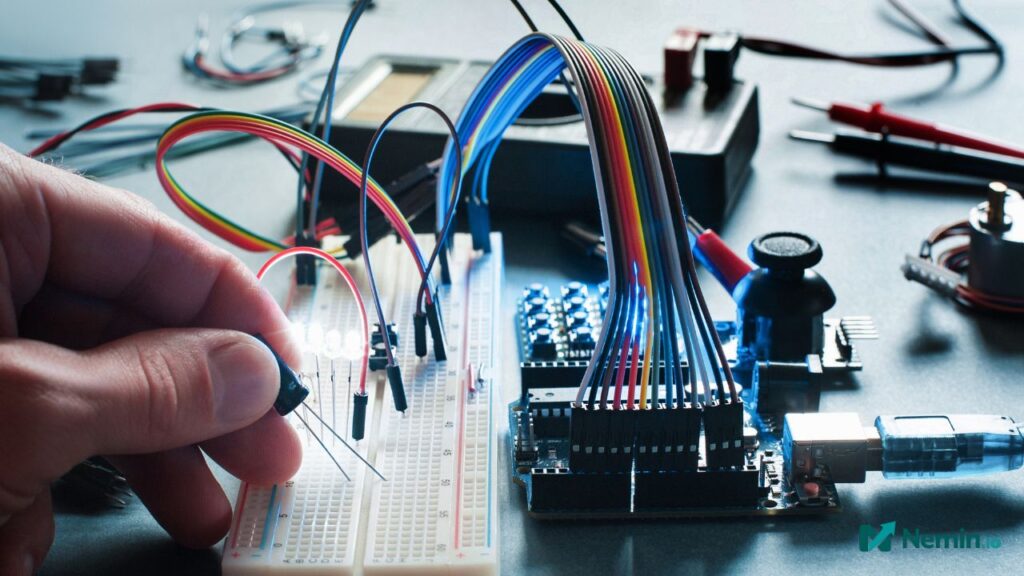
A production line can contain thousands of parts, yet one unavailable semiconductor, connector, sensor, capacitor, or power device can prevent a finished product from shipping. Electronic component sourcing is therefore more than a purchasing exercise. For critical components, procurement teams must balance availability, authenticity, quality, cost, lead time, traceability, lifecycle status, engineering requirements, and supplier resilience without compromising the approved product design.
That challenge becomes harder when supply tightens or a component approaches end of life. Buyers may encounter long lead times, allocation, unfamiliar distributors, excess inventory offers, substitutions, and parts whose provenance is difficult to establish. Strong electronic component sourcing combines procurement discipline with engineering, quality, operations, cybersecurity, and supplier management so urgency does not turn a short-term shortage into a long-term reliability problem.
Why Electronic Component Sourcing Is a Strategic Procurement Function
Electronic components are often inexpensive compared with the final products they enable. Their operational importance can nevertheless be enormous.
A low-cost integrated circuit may control a safety function or prevent a high-value industrial system from being completed. This creates a large difference between component purchase price and component business criticality.
Procurement teams should therefore classify components by risk rather than simply by spending.
A high-spend commodity with numerous qualified sources may deserve less shortage attention than a proprietary microcontroller purchased in relatively small quantities from one manufacturer.
What Electronic Component Sourcing Includes
Electronic component sourcing covers the process of identifying, evaluating, purchasing, receiving, verifying, and managing electronic parts needed for manufacturing, maintenance, repair, prototyping, or product development.
It can include:
- Semiconductors
- Microcontrollers and processors
- Memory
- Analog and power devices
- Capacitors
- Resistors
- Inductors
- Connectors
- Relays
- Sensors
- Displays
- Crystals and oscillators
- Electromechanical parts
- Circuit protection
- Communication modules
Different categories present different risks.
Why Critical Electronic Component Sourcing Is Different
A component becomes critical when its unavailability, failure, or nonconformance creates an unacceptable impact on the product or business.
Criticality can arise from safety, regulatory function, single-source status, long replacement qualification, firmware dependence, unique mechanical dimensions, specialized performance, or exceptionally long lead times.
Procurement should identify these parts early rather than discovering their importance after supply disappears.
Electronic Component Sourcing Starts With an Accurate BOM
The bill of materials is the foundation of procurement.
A poorly controlled BOM creates purchasing errors regardless of supplier quality.
Part numbers need to be complete and current, and approved alternatives should be clearly identified.
Control Manufacturer Part Numbers
A distributor stock code is not necessarily a sufficient technical identifier.
Whenever practical, electronic component sourcing should reference the manufacturer part number and relevant approved specification.
Small suffix differences can identify different temperature grades, packaging methods, lead finishes, memory configurations, voltage ratings, or other characteristics.
Never assume two nearly identical part numbers are interchangeable.
Maintain Revision Control
Engineering changes need to flow reliably into procurement systems.
Purchasing an older component revision after a design update can create excess inventory or manufacturing problems.
A controlled change process should identify when the old part can still be consumed and when it must no longer be purchased.
Record Approved Alternates
An alternate part should be approved through the company’s engineering and quality process before procurement treats it as interchangeable.
A datasheet comparison is only the first step.
Firmware, timing, thermal behaviour, EMC performance, mechanical fit, qualification requirements, regulatory approvals, and manufacturing processes may all need consideration.
Supplier Choice Defines Electronic Component Sourcing Risk
Where a component comes from can be just as important as what part number appears on its label.
Procurement teams typically have several possible supply channels.
| Source | Typical Advantage | Key Consideration |
|---|---|---|
| Component manufacturer | Direct provenance | Volume and account requirements |
| Authorized distributor | Traceability and manufacturer relationship | Price and availability |
| Approved specialist distributor | Additional supply options | Verify authorization and controls |
| Independent distributor | Can locate scarce stock | Greater provenance verification needs |
| Broker | Access to hard-to-find material | Counterfeit and traceability risk |
| Secondary market | Potential obsolete inventory | Requires rigorous authentication |
The most appropriate source depends on product risk and supply conditions.
Electronic Component Sourcing From Authorized Channels
Manufacturer-authorized distribution is generally an important route for reducing provenance uncertainty.
Authorized distributors source under formal relationships with manufacturers and can often provide technical support and traceability appropriate to their arrangements.
Procurement teams should verify authorization through current manufacturer or distributor information rather than assuming every large reseller is authorized for every brand.
Independent Electronic Component Sourcing
Independent distributors and brokers can become important when authorized channels have no stock.
They should not automatically be treated as illegitimate.
The risk profile is simply different.
Buyers need stronger due diligence around provenance, storage, inspection, testing, return rights, quality systems, and supplier history.
Avoid Emergency Electronic Component Sourcing Decisions
Shortages create pressure to abandon normal approval processes.
That is precisely when controls become most important.
A production manager’s urgent need should influence priority, not eliminate authentication and quality requirements.
Counterfeit Risk in Electronic Component Sourcing
Counterfeit electronic components can take several forms.
Parts may be remarked to represent a different grade, presented as new despite prior use, altered to obscure original markings, or falsely labeled as another manufacturer or device.
Some counterfeit parts can appear convincing.
Why Counterfeit Components Matter
A counterfeit device might fail incoming tests yet still create cost and delay.
More concerning are parts that pass initial manufacturing but later fail in service.
The consequences can include warranty claims, equipment downtime, safety problems, recalls, lost customers, and reputational damage.
Electronic component sourcing should therefore treat authenticity as a product-quality issue, not simply a purchasing concern.
Counterfeit Warning Signs
Potential warning signs include:
- Pricing far below normal market levels
- Large stock appearing during a severe industry shortage
- Unclear chain of custody
- Reluctance to provide photographs or traceability
- Inconsistent labels
- Altered packaging
- Unusual date codes
- Seller pressure for immediate payment
- Weak return rights
- Payment instructions unrelated to the supplier entity
- Technical specifications that do not match manufacturer records
No single sign proves counterfeiting. Multiple inconsistencies justify deeper investigation.
Electronic Component Sourcing Requires Traceability
Traceability helps establish where a component originated and how it moved through the supply chain.
The required depth depends on industry, product criticality, customer requirements, and applicable standards.
What Traceability Can Include
Documentation may include purchase records, manufacturer labels, packing lists, lot information, date codes, certificates, shipping records, and distributor documentation.
Critical electronic component sourcing should preserve the documentation needed by the organization’s quality system.
A certificate alone does not automatically prove authenticity.
Its credibility depends on issuer, chain of custody, and whether it can be independently verified.
Lot and Date Code Management
Date codes can help identify manufacturing periods, although coding practices vary by manufacturer.
Companies should establish policies regarding older stock based on component type, packaging, storage history, solderability, moisture sensitivity, and product requirements.
An old date code does not automatically make a component unusable.
Quality Systems for Electronic Component Sourcing
Supplier approval should include more than commercial terms.
Quality teams should understand how a supplier handles incoming material, storage, nonconformance, traceability, change control, and customer complaints.
Supplier Qualification
A risk-based supplier qualification process can consider:
- Quality certifications where relevant
- Manufacturer authorization
- Industry experience
- Traceability controls
- Counterfeit avoidance procedures
- Storage environment
- ESD controls
- Moisture-sensitive device handling
- Inspection capabilities
- Testing arrangements
- Nonconformance processes
- Business continuity
- Financial stability
Certifications can support confidence, but they do not eliminate the need to evaluate real performance.
Electronic Component Sourcing Supplier Audits
Higher-risk suppliers may justify audits or more detailed assessments.
An audit can examine whether documented procedures actually match operations.
Remote assessments can be useful, while onsite reviews may provide additional evidence where risk and economics justify them.
Incoming Inspection for Electronic Component Sourcing
Inspection requirements should reflect component criticality and source risk.
Parts from a well-controlled authorized channel may follow a different incoming process from obsolete material obtained through an unfamiliar independent source.
Packaging and Label Inspection
Check packaging against purchase requirements and known manufacturer conventions.
Look for damage, moisture exposure, broken seals where relevant, unexpected relabeling, and inconsistent information.
Inspection should be performed by trained personnel rather than relying on informal visual impressions.
Component Marking Inspection
Markings can be checked for consistency with manufacturer documentation.
Font, orientation, date information, logos, package construction, and surface condition can provide clues.
Sophisticated counterfeit devices can defeat simple visual checks, so high-risk electronic component sourcing may require laboratory testing.
Dimensional Inspection
Package dimensions, pin geometry, lead condition, and other physical measurements can be compared with manufacturer specifications.
Unexpected dimensional differences may identify the wrong part or a suspect device.
Laboratory Testing in Electronic Component Sourcing
When source risk is elevated, procurement and quality teams may use independent testing laboratories.
The correct test plan depends on component type and threat.
Electrical Testing
Electrical tests can determine whether key parameters align with specification.
The depth can range from basic functional checks to extensive parametric analysis.
Passing one electrical test does not necessarily prove that every component in a large lot is authentic.
Sampling plans matter.
X-Ray Inspection
X-ray can reveal internal package structures, bond wires, die characteristics, voids, or differences between samples without immediately destroying the component.
Interpretation requires expertise and reference information.
Decapsulation
Destructive physical analysis can expose the semiconductor die and internal markings.
This may provide strong authentication evidence when performed correctly.
Because the tested component is destroyed or altered, representative sampling becomes important.
Electronic Component Sourcing Test Plans Should Be Risk-Based
Testing every inexpensive resistor with advanced laboratory methods would be inefficient.
Conversely, accepting a critical obsolete semiconductor from an unknown broker with only a visual check can be inadequate.
The level of verification should reflect failure consequences, source confidence, quantity, availability, and component value.
Lead Times in Electronic Component Sourcing
Lead time is not simply a number listed in an ERP system.
It changes with manufacturer capacity, demand, raw materials, transportation, product lifecycle, and market conditions.
Verify Current Lead Times
Historical lead times can become misleading during shortages.
Procurement teams should obtain current information from suppliers and distinguish factory lead time from distributor stock availability.
An online stock figure should also be confirmed when a large purchase depends on it.
Understand Allocation
During constrained supply, manufacturers may allocate available production among customers.
A purchase order does not necessarily guarantee the requested delivery date if the terms permit schedule changes.
Electronic component sourcing teams should maintain regular communication around critical commitments.
Forecasting Electronic Component Sourcing Demand
Suppliers can plan more effectively when customers provide credible forecasts.
Forecasts do not need to be perfect to be useful, but chronic overstatement can damage trust.
Share Realistic Demand
Separate firm purchase orders from forecasts.
Provide expected demand with appropriate time horizons and update it when product plans change.
Procurement, sales, operations, and engineering should use aligned assumptions.
Avoid Panic Ordering
During shortages, companies sometimes place duplicate orders with multiple suppliers hoping that one will arrive.
If all orders eventually ship, the business can be left with excessive inventory.
This behaviour can also distort wider supply-chain signals.
Orders should reflect real needs and contractual commitments.
Lifecycle Management in Electronic Component Sourcing
Electronic components do not remain in production indefinitely.
Manufacturers introduce new products and discontinue older ones as technology and demand evolve.
Long-life industrial, aerospace, medical, transportation, and infrastructure products are especially exposed.
Monitor Product Change Notifications
Manufacturers can issue notices involving product changes, manufacturing locations, process modifications, packaging changes, or discontinuation.
Organizations should ensure relevant notifications reach engineering and procurement teams.
Electronic component sourcing should not discover obsolescence only when a purchase order is rejected.
End-of-Life Planning
When a critical component reaches end of life, possible responses can include a last-time buy, redesign, alternate qualification, or product transition.
Each option carries cost and risk.
A last-time buy requires a forecast of lifetime demand, storage planning, capital, and consideration of potential future failures or demand uncertainty.
Avoid Excessive Last-Time Buys
Buying ten years of stock may protect against immediate obsolescence while creating another problem.
Inventory can deteriorate, demand can disappear, products can be redesigned, and capital remains tied up.
Lifecycle decisions should use realistic scenarios.
Electronic Component Sourcing and Design Engineering
Procurement risk is partly created during product design.
An engineer who selects a unique part from one supplier can unintentionally create a future sourcing constraint.
Early procurement involvement can reduce this risk.
Design for Supply Resilience
When technically possible, engineers can consider components with multiple qualified sources, standard package formats, adequate market availability, and healthy lifecycle status.
This does not mean selecting generic alternatives at the expense of required performance.
Supply risk becomes another design input.
Preferred Parts Lists
Organizations producing multiple products can maintain preferred component families.
Standardization can reduce SKU count, consolidate spend, simplify inventory, and increase the number of products that can share stock.
Electronic component sourcing becomes easier when every design does not introduce entirely new components.
Managing Approved Alternatives
Alternate parts can reduce supply risk, but uncontrolled substitution can create quality problems.
A purchasing employee should not substitute one semiconductor for another simply because the distributor website labels it equivalent.
Engineering Qualification
Alternate qualification can consider:
- Electrical performance
- Pinout
- Package dimensions
- Thermal characteristics
- Timing
- Firmware
- EMC
- Reliability
- Regulatory implications
- Manufacturing process compatibility
- Environmental ratings
Testing requirements should match the product risk.
Document Electronic Component Sourcing Alternatives
Once approved, alternatives should be recorded clearly in the BOM or appropriate enterprise system.
Specify any restrictions.
An alternate may be approved for one product revision but not another.
Electronic Component Sourcing and Inventory Strategy
Inventory can protect operations from supply variability, but it consumes cash and creates obsolescence risk.
The right safety stock depends on demand, lead time, variability, criticality, and availability of alternatives.
Classify Critical Components
A procurement team can classify parts using multiple dimensions rather than spend alone.
| Factor | Higher-Risk Condition |
|---|---|
| Supplier count | Single source |
| Lead time | Long or volatile |
| Lifecycle | Mature or approaching EOL |
| Substitution | Requires major redesign |
| Product impact | Production stops without it |
| Quality consequence | Failure creates major risk |
| Demand | Highly variable |
| Market | Frequently constrained |
This helps direct management attention toward the parts capable of stopping production.
Strategic Buffer Stock
Additional inventory can be justified for particular high-risk components.
Its appropriate level should be calculated rather than chosen emotionally.
Review the buffer as demand, lead times, and product plans change.
Storage Requirements in Electronic Component Sourcing
Buying parts early only helps when they remain suitable for use.
Electronic components can be affected by moisture, electrostatic discharge, contamination, oxidation, packaging degradation, and inappropriate temperature or humidity.
Moisture-Sensitive Devices
Some semiconductor packages absorb moisture and require controlled handling before soldering.
Follow manufacturer packaging and industry guidance applicable to the device.
If moisture-barrier packaging has been compromised, a defined recovery or evaluation process may be necessary.
ESD Control
Electrostatic discharge can damage sensitive electronic devices.
The effects may be immediate or latent.
Electronic component sourcing processes should connect supplier handling with the manufacturer’s own ESD-controlled storage and production procedures.
Electronic Component Sourcing and Geopolitical Risk
Electronics supply chains are globally interconnected.
Fabrication, packaging, assembly, testing, distribution, raw materials, and equipment can be concentrated in different regions.
Disruptions can therefore propagate quickly.
Map More Than Tier-One Suppliers
A distributor may appear diversified while several products ultimately depend on the same semiconductor factory or region.
Where the information is available and risk justifies the effort, procurement teams should understand upstream dependencies.
True resilience requires more than multiple purchase orders.
Geographic Diversification
Diversifying supply across regions can reduce certain risks.
It can also increase logistics, qualification, cost, and supplier-management complexity.
Electronic component sourcing strategies need to balance resilience against operational practicality.
Cybersecurity and Electronic Component Sourcing
Modern electronic products can contain programmable devices, firmware, communication modules, and security-sensitive hardware.
Supply chain integrity can therefore intersect with cybersecurity.
Protect Procurement Accounts
Supplier portals and procurement email accounts can be targeted by fraudsters.
Attackers may impersonate suppliers and attempt to redirect payments.
Banking detail changes should be verified through an independently established contact method.
Hardware Trust
For security-sensitive products, organizations may need controls covering authorized component sources and firmware provenance.
Requirements vary considerably by industry.
Procurement should coordinate with product-security specialists rather than treating hardware security as a purely commercial question.
Electronic Component Sourcing Cost Analysis
Unit price remains important, but it should not dominate every decision.
A lower-priced part from a risky source can create authentication costs, additional inspections, delays, failures, and warranty exposure.
Calculate Total Acquisition Cost
Consider:
- Unit price
- Freight
- Duties and taxes where applicable
- Testing
- Incoming inspection
- Warehousing
- Financing of inventory
- Minimum quantities
- Scrap
- Quality failures
- Administration
- Expedites
- Obsolescence
Electronic component sourcing decisions become more rational when these costs are visible.
Beware of Spot-Market Pricing
Scarce components can sell at significant premiums in secondary markets.
Paying a premium may be economically reasonable if it prevents a far larger production loss, but the commercial decision should not weaken quality controls.
Document exceptional purchases and approvals.
Building an Electronic Component Sourcing Risk Dashboard
Procurement teams need a manageable way to monitor thousands of parts.
A risk dashboard can focus attention on a smaller subset of critical items.
Useful indicators can include supplier count, lead time, stock coverage, lifecycle status, forecast demand, open-order status, approved alternatives, supplier quality, and geographic exposure.
Use Data Carefully
ERP data can be outdated.
Supplier lead times change, old alternatives may no longer be qualified, and inventory can be reserved for another product.
Critical electronic component sourcing decisions should combine system data with current validation.
Common Electronic Component Sourcing Mistakes
Short-term procurement decisions can create long-term product risk.
Common mistakes include:
- Buying solely on lowest unit price
- Treating broker stock as equivalent to authorized stock
- Failing to verify manufacturer part-number suffixes
- Accepting uncontrolled substitutions
- Ignoring product lifecycle notices
- Relying on outdated lead times
- Overordering during shortages
- Failing to preserve traceability
- Using the same inspection level for every source
- Ignoring moisture and ESD storage requirements
- Depending entirely on one supplier
- Failing to involve engineering early
- Neglecting supplier financial health
- Trusting online inventory without confirmation
- Removing quality controls because production is urgent
Strong procurement processes make exceptions more controlled, not invisible.
Electronic Component Sourcing Best Practices
Critical-component procurement works best as a cross-functional discipline.
- Maintain an accurate, revision-controlled BOM.
- Use exact manufacturer part numbers.
- Prefer approved and traceable sources where practical.
- Verify manufacturer authorization.
- Risk-rank critical components.
- Monitor current lead times.
- Track lifecycle and discontinuation notices.
- Develop qualified alternatives before shortages occur.
- Apply enhanced testing to higher-risk sources.
- Preserve lot and supply-chain traceability.
- Audit high-risk suppliers where justified.
- Protect components from moisture and ESD.
- Share realistic forecasts with strategic suppliers.
- Maintain rational safety stock for critical parts.
- Include engineering and quality in sourcing exceptions.
- Monitor geopolitical and upstream concentration risks.
- Record the reasoning behind exceptional purchases.
These controls allow electronic component sourcing to support continuity without sacrificing product integrity.
Building Long-Term Electronic Component Sourcing Relationships
Supplier relationships matter most when supply becomes constrained.
A business that communicates accurate forecasts, pays according to agreed terms, resolves issues professionally, and shares meaningful product plans can be easier for suppliers to support.
This does not guarantee allocation during a shortage.
It does improve information flow.
Hold Strategic Supplier Reviews
For critical suppliers, periodic reviews can cover forecasts, quality, lead times, capacity, lifecycle plans, open orders, upcoming product changes, and business risks.
Meetings should produce actions rather than simply presentations.
Develop Multiple Paths to Supply
Resilience does not always mean qualifying several component manufacturers.
It can also involve approved distributors, alternate packages, redesign options, buffer stock, and contractual supply arrangements.
Electronic component sourcing should create contingency paths proportional to product risk.
The Future of Electronic Component Sourcing
Electronics procurement will remain exposed to rapid technological change, geopolitical uncertainty, increasingly connected products, and evolving semiconductor manufacturing capacity.
Data tools can improve visibility across supplier, lifecycle, inventory, and demand information.
Artificial intelligence may assist with risk detection, BOM analysis, alternative discovery, forecasting, and monitoring market signals.
Human engineering and quality approval remain essential.
An algorithm suggesting an alternate part cannot establish that the component is safe and functionally equivalent in a specific product.
The most resilient procurement organizations will combine better technology with stronger technical governance.
FAQ’s
What is electronic component sourcing?
Electronic component sourcing is the process of identifying, purchasing, verifying, and managing electronic parts from suitable suppliers while controlling cost, quality, availability, authenticity, and lifecycle risk.
Why is electronic component sourcing risky during shortages?
Shortages can push buyers toward unfamiliar suppliers, premium spot-market inventory, long lead times, and rushed substitutions, increasing counterfeit, traceability, quality, and excess-inventory risks.
How can procurement prevent counterfeit electronic components?
Prioritize traceable authorized channels, qualify suppliers, verify documentation, inspect incoming parts, and use risk-appropriate laboratory authentication when purchasing from higher-risk sources.
Should electronic component sourcing always use authorized distributors?
Authorized channels are generally valuable for provenance, but shortages and obsolete parts can require independent sources. Higher-risk channels should receive stronger due diligence and authentication controls.
How can electronic component sourcing reduce obsolescence risk?
Monitor lifecycle notices, identify critical single-source parts, qualify alternatives early, coordinate with engineering, and plan carefully for end-of-life purchases or redesigns.
What should procurement verify before approving an alternate component?
Verify electrical, mechanical, thermal, firmware, manufacturing, reliability, regulatory, and environmental compatibility through the organization’s engineering and quality approval process.
Conclusion
Electronic component sourcing is a strategic risk-management function because one seemingly inexpensive part can determine whether a much more valuable product ships, operates reliably, or remains supportable. Procurement teams need visibility beyond price and stock. Exact part numbers, approved suppliers, traceability, lifecycle status, current lead times, storage requirements, counterfeit exposure, qualified alternatives, and the consequences of component failure all need to inform purchasing decisions.
Effective electronic component sourcing also requires collaboration. Procurement cannot independently determine whether a semiconductor substitute is technically acceptable, while engineering cannot create a resilient design without understanding market availability and supplier risk. By connecting procurement with quality, engineering, operations, security, and finance, businesses can build a sourcing system that responds to shortages without abandoning controls. That combination of technical discipline, reliable suppliers, careful verification, and forward lifecycle planning provides a stronger foundation for keeping critical electronic products in production.