
Cold workshops, construction sites, agricultural buildings, warehouses, garages, and other workspaces sometimes need powerful temporary heat without a permanent heating system. Diesel space heaters can provide high...
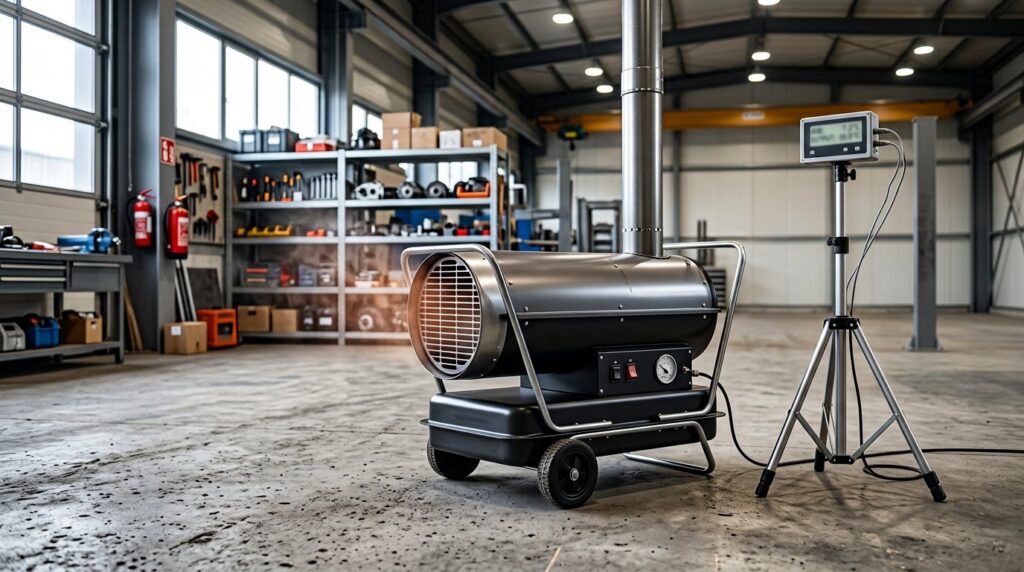
Cold workshops, construction sites, agricultural buildings, warehouses, garages, and other workspaces sometimes need powerful temporary heat without a permanent heating system. Diesel space heaters can provide high heat output in suitable environments, but selecting one requires more than comparing power ratings and fuel tank capacity. Combustion produces exhaust gases, including carbon monoxide, so heater type, ventilation, manufacturer instructions, clearances, fuel handling, electrical requirements, and the intended space all affect whether a particular unit can be used safely. A heater appropriate for a large ventilated construction area may be completely unsuitable for a small enclosed room.
Diesel heaters come in several configurations. Some discharge combustion products into the heated air, while indirect fired designs separate combustion gases and can vent them through an appropriate flue system.
Understanding that distinction is fundamental. Users should never assume that every product sold as a diesel heater is designed for occupied indoor environments.
This guide explains heater types, sizing, operating costs, ventilation, fuel storage, maintenance, and key safety considerations to check before purchase or hire.
What Are Diesel Space Heaters?
Diesel space heaters are fuel burning appliances designed to provide localized or temporary heating. They typically burn diesel or another manufacturer approved fuel to generate thermal energy and use airflow to distribute heat.
They are commonly found in construction, industrial, agricultural, and workshop environments.
Designs vary substantially.
Portable direct fired units often combine a combustion chamber, fan, fuel system, ignition system, and controls inside a compact body. Indirect fired units use a heat exchanger so combustion gases can be routed separately from heated supply air.
The correct product depends on the environment, occupancy, required heating capacity, and applicable safety requirements.
How Do Diesel Space Heaters Work?
A typical fan assisted heater draws fuel from a tank and introduces it into a combustion system.
After ignition, a fan moves air through or around the heated assembly. How combustion gases are handled depends on the design.
Direct fired equipment can introduce combustion products into the heated air stream.
Indirect fired equipment uses a heat exchanger to separate the exhaust from the supply air, provided the exhaust is correctly vented according to the manufacturer’s requirements.
This is why knowing the heater category matters more than simply knowing that it burns diesel.
Where Can Diesel Space Heaters Be Used?
Suitable applications depend on the exact heater.
Large, well ventilated construction areas may permit equipment that would be inappropriate for homes, offices, bedrooms, tents, vehicles, or enclosed workshops.
Manufacturers provide instructions concerning approved locations, ventilation, clearances, fuel, electrical supplies, and environmental conditions.
Those instructions should take precedence over generalized online advice.
Local fire, occupational safety, building, and environmental rules can also apply.
9 Essential Diesel Space Heaters Tips for Safer Operation
Combustion heating combines fuel, heat, electricity, and airflow. Careful equipment selection and operation are therefore essential.
1. Choose Diesel Space Heaters for the Actual Environment
Start by identifying where the equipment will operate.
Consider whether the area is indoors, partially enclosed, or outdoors. Determine whether people occupy the space continuously and whether ventilation can be reliably maintained.
Do not select equipment purely according to heat output.
A direct fired heater may offer powerful heating but can be inappropriate where combustion products would accumulate.
Check the manufacturer’s approved applications before purchasing, hiring, or operating any unit.
2. Size Diesel Space Heaters for the Heating Load
An oversized heater can create uncomfortable temperature swings and potentially unnecessary fuel use, while an undersized unit may run continuously without achieving the desired conditions.
Heating demand depends on more than floor area.
Ceiling height, insulation, air leakage, outside temperature, doors opening frequently, building materials, and desired indoor temperature all affect the load.
For large or unusual spaces, a heat loss calculation provides a stronger basis than a simple watts per square metre estimate.
Equipment suppliers or qualified heating professionals can assist with sizing.
3. Ventilate Diesel Space Heaters Correctly
Ventilation is critical for combustion equipment.
Carbon monoxide is colorless and odorless and can cause serious poisoning or death. Other combustion products and moisture may also affect indoor conditions.
Never rely on smell to determine whether air is safe.
Follow the heater manufacturer’s ventilation requirements exactly.
If safe ventilation cannot be maintained, choose another heating solution designed for the environment.
4. Position Diesel Space Heaters Away From Combustible Materials
Portable heaters generate high temperatures.
Keep required clearances from wood, cardboard, fabrics, fuels, dust, plastics, packaging, building materials, and other combustible items.
The appropriate distance depends on the specific appliance and direction of heat discharge.
Place the heater on a stable surface where it cannot easily be knocked over or struck by equipment.
Do not aim high temperature airflow at materials that could melt, ignite, deform, or dry excessively.
5. Use Only Approved Fuel in Diesel Space Heaters
Use the fuel types specified by the manufacturer.
Do not improvise with gasoline, solvents, waste oil, or unapproved fuel mixtures.
Using an incorrect fuel can change combustion behavior, damage equipment, create additional hazards, and invalidate warranty or certification conditions.
Fuel should be stored in appropriate approved containers and locations.
Local rules may govern how much fuel can be stored and how it must be separated from ignition sources.
6. Never Refuel Hot Diesel Space Heaters
Switch the appliance off and follow manufacturer instructions before refueling.
Allow sufficient cooling time as specified.
Spilling fuel onto hot components can create a serious fire risk.
Refueling should be performed in an appropriate location with ignition sources controlled.
Clean spills using suitable procedures and do not restart the equipment until any safety issue has been addressed.
7. Use Carbon Monoxide Protection With Diesel Space Heaters Where Appropriate
Carbon monoxide alarms can provide an important additional layer of protection in environments where combustion equipment is permitted.
They do not make an unsafe heater installation safe.
A detector cannot replace required ventilation, proper flue installation, maintenance, or compliance with manufacturer instructions.
Use alarms that meet applicable standards for your jurisdiction and install, test, and replace them according to manufacturer guidance.
Occupational environments may require additional monitoring measures.
8. Inspect Diesel Space Heaters Before Operation
A quick pre use inspection can identify obvious problems.
Check fuel lines, electrical cables, plugs, guards, wheels, housings, ducts, flues, air inlets, and other accessible components.
Look for leaks, damage, loose parts, excessive dirt, or modifications.
Do not operate a heater that appears damaged or has been altered outside manufacturer specifications.
Repairs involving combustion or electrical systems should be carried out by competent personnel.
9. Maintain Diesel Space Heaters According to the Manufacturer
Combustion equipment needs periodic maintenance.
Filters, nozzles, ignition components, combustion chambers, heat exchangers, fans, and fuel systems may require inspection or servicing depending on the model.
Maintenance intervals vary.
A heater producing unusual odors, smoke, soot, repeated shutdowns, or abnormal noise should not simply be forced to keep running.
Investigate the underlying cause and obtain qualified service where necessary.
Direct Fired Diesel Space Heaters
Direct fired units typically transfer a large proportion of combustion heat directly into the air stream.
This can make them effective for certain ventilated construction and industrial environments.
The tradeoff is that combustion products also enter that air.
When Are Direct Fired Diesel Space Heaters Appropriate?
Suitability depends on the manufacturer’s approved use and the ventilation available.
Open construction areas and certain large, well ventilated industrial spaces may be appropriate for specific units.
Occupied enclosed environments can present significant hazards.
Never interpret “portable” to mean “safe for every room.”
Always check the product manual and applicable workplace regulations before use.
Ventilation for Direct Fired Diesel Space Heaters
There is no universal safe ventilation opening that applies to every heater and building.
Required ventilation depends on appliance output, combustion characteristics, room volume, occupancy, and manufacturer instructions.
Do not guess.
If workplace air quality or carbon monoxide exposure is a concern, a qualified safety or heating professional should assess the installation.
Indirect Fired Diesel Space Heaters
Indirect fired heaters use a heat exchanger to separate combustion gases from the air being delivered to the heated space.
Exhaust is routed through an appropriate flue arrangement.
These units are often selected where clean heated air needs to be ducted into an occupied work environment.
Advantages of Indirect Diesel Space Heaters
Separating exhaust gases can make indirect heating suitable for applications where direct combustion products should not enter the occupied area.
However, safe operation still depends on correct exhaust installation and sufficient combustion air.
Heat exchangers must also remain in sound condition.
A damaged exchanger can compromise separation between combustion gases and supply air.
Regular inspection and maintenance are therefore important.
Installing Flues for Indirect Diesel Space Heaters
Flue systems must follow the appliance manufacturer’s requirements.
Improvised exhaust pipes can create excessive back pressure, leaks, condensation issues, or inadequate clearance from combustible materials.
Exhaust should terminate in an approved location.
Qualified installation may be required depending on the equipment and jurisdiction.
Never direct exhaust into another occupied or enclosed area.
Diesel Space Heaters for Construction Sites
Construction sites are one of the most common applications because permanent heating may not yet be available.
Temporary heat can support worker comfort and some building processes, but the heater should be selected around the stage of construction.
A building that was highly ventilated early in construction can become substantially more enclosed after windows and doors are installed.
Using Diesel Space Heaters During Building Work
Reassess ventilation whenever the building envelope changes.
Do not assume a heater arrangement remains safe simply because it was used earlier in the project.
Also consider how heat and combustion moisture affect building materials.
Certain drying, flooring, painting, plastering, and finishing processes can have temperature or humidity requirements set by product manufacturers.
The wrong heating method may interfere with those conditions.
Diesel Space Heaters Around Construction Materials
Maintain specified clearances from packaging, insulation, timber, solvents, coatings, adhesives, dust, and stored materials.
Construction layouts change frequently.
A heater that was safely positioned in the morning can become surrounded by combustible materials later as workers move supplies.
Assign responsibility for checking heater zones rather than relying on everyone to notice potential problems.
Diesel Space Heaters for Workshops and Garages
A workshop or garage can appear well suited to portable heating, but combustion hazards require careful consideration.
Vehicles, fuels, paints, aerosols, solvents, gas cylinders, dust, and other products can create flammable atmospheres.
Some work environments require specifically rated equipment.
Are Diesel Space Heaters Safe in Garages?
There is no universal yes or no answer.
It depends on the heater, garage ventilation, activities, stored materials, occupancy, and applicable codes.
A heater should not be used where flammable vapors or combustible dust can create an ignition hazard unless equipment is specifically approved for that environment.
For a typical enclosed residential garage, a direct fired diesel heater should not be casually used without confirming manufacturer and local safety requirements.
Diesel Space Heaters for Warehouses
Warehouse heating can be challenging because high ceilings and frequent door openings increase heat loss.
A portable heater may provide temporary or localized heat, but large facilities often benefit from a proper heating assessment.
Air movement also matters.
Sizing Diesel Space Heaters for Large Spaces
Calculate volume rather than looking only at floor area.
Heat loss through the building envelope and infiltration can dominate demand.
Multiple smaller heaters may sometimes provide better distribution than one large unit, but they also introduce additional fuel, electrical, ventilation, and supervision considerations.
For ongoing heating rather than temporary use, compare portable equipment with permanent systems on lifecycle cost and operational requirements.
Diesel Space Heaters Fuel Consumption
Fuel consumption is related to heat output, efficiency, operating conditions, and how the heater cycles.
Manufacturers normally provide rated fuel consumption data.
Use those specifications when estimating running cost.
Estimating Diesel Space Heaters Running Costs
A basic estimate can be calculated from hourly fuel consumption multiplied by the local fuel price and expected operating hours.
Actual consumption may differ if the heater cycles under thermostatic control.
Include electricity consumption, servicing, fuel transport, and labor associated with refueling if comparing total operating costs.
For rental equipment, hire charges and delivery should also be considered.
Improving Diesel Space Heaters Efficiency
Reducing unnecessary heat loss can be more effective than simply purchasing a larger heater.
Close openings where doing so does not conflict with required ventilation, improve appropriate temporary insulation, and direct heat toward the occupied or working zone.
Never reduce combustion ventilation to conserve heat.
Energy efficiency measures must remain compatible with safe appliance operation.
Diesel Space Heaters and Carbon Monoxide
Carbon monoxide is produced when carbon containing fuels burn, particularly when combustion is incomplete.
Exposure can cause headache, dizziness, nausea, weakness, confusion, loss of consciousness, and death.
Symptoms may initially be mistaken for illness or fatigue.
Carbon Monoxide Warning Signs Around Diesel Space Heaters
If a carbon monoxide alarm activates or people develop possible carbon monoxide symptoms, move to fresh air and follow local emergency guidance.
Do not remain inside attempting to diagnose the heater.
Emergency medical evaluation may be necessary depending on exposure and symptoms.
The equipment should not be used again until the cause has been properly investigated.
Carbon monoxide itself cannot be detected reliably by human senses.
Diesel Space Heaters Safety Around Children and Pets
Portable industrial heaters can have hot surfaces, powerful airflow, fuel, electrical cables, and combustion hazards.
They should generally not be accessible to children or pets.
Physical separation may be necessary.
Safe Clearances Around Diesel Space Heaters
Use the specific clearances stated by the manufacturer.
Do not construct an improvised enclosure around the heater unless the manufacturer explicitly permits it, as this may restrict airflow or create overheating.
Keep air inlets and outlets unobstructed.
Hot air discharge can remain hazardous well beyond the heater casing itself.
Electrical Requirements for Diesel Space Heaters
Many diesel heaters still require electricity to power fans, pumps, ignition systems, or controls.
Check voltage, frequency, plug type, current requirements, and grounding instructions.
Construction sites may have specialized temporary electrical systems.
Powering Diesel Space Heaters Safely
Use electrical supplies that comply with applicable requirements.
Extension leads should only be used when permitted and appropriately rated for the equipment and environment.
Protect cables from vehicles, water, sharp edges, and pedestrian traffic.
Do not defeat grounding or protective devices to make an incompatible power supply work.
A qualified electrician should address uncertain site electrical conditions.
Maintaining Diesel Space Heaters
Preventive maintenance supports reliable combustion and can reduce unexpected breakdowns.
Record servicing for equipment used commercially.
Rental users should also inspect units before operation rather than assuming rental equipment cannot develop faults.
Cleaning Diesel Space Heaters
Follow manufacturer procedures when cleaning fuel filters, air filters, fan assemblies, combustion areas, or exterior surfaces.
Disconnect power and allow cooling before maintenance where required.
Do not spray water or cleaning chemicals into electrical or combustion components unless specifically instructed.
Fuel systems need particular care to avoid spills and contamination.
Storing Diesel Space Heaters
Before long term storage, follow the manufacturer’s instructions concerning fuel.
Storage requirements can depend on appliance design and local fire regulations.
Keep the unit in a dry, protected location where it cannot be damaged.
Inspect again before returning it to service after an extended period.
Choosing Diesel Space Heaters to Buy or Hire
Hiring can make sense for temporary projects, emergency heating, or infrequent use.
Purchasing may be economical when equipment will be used regularly and the organization can maintain it properly.
Compare total costs rather than purchase price alone.
Features to Compare in Diesel Space Heaters
Useful specifications can include:
• Rated heat output
• Approved fuel types
• Direct or indirect firing
• Fuel tank capacity
• Rated fuel consumption
• Electrical requirements
• Thermostat compatibility
• Ducting capability
• Safety shutoff systems
• Dimensions and weight
• Noise information
• Manufacturer specified ventilation requirements
Safety certifications and conformity markings should be relevant to the jurisdiction where the equipment is used.
Avoiding Poor Quality Diesel Space Heaters
Buy or hire through reputable suppliers offering traceable product information, manuals, parts, and technical support.
Be cautious of equipment with missing identification plates or unclear manufacturer documentation.
Never assume a product is compliant simply because a marketplace seller describes it as certified.
Commercial operators should verify conformity and workplace suitability according to applicable local requirements.
Diesel Space Heaters Versus Electric Heating
Electric heaters do not produce combustion exhaust at the point of use, making them attractive for some enclosed environments.
However, they require sufficient electrical capacity and can be costly or impractical for very high heat demands.
Diesel equipment can provide substantially higher portable heat output in suitable settings.
Choosing Between Electric and Diesel Space Heaters
Compare heat demand, ventilation, electrical infrastructure, fuel logistics, occupancy, operating duration, noise, emissions, and total cost.
For enclosed occupied spaces where combustion equipment would be inappropriate, electric heating may simplify some safety considerations.
For large temporary construction environments with appropriate ventilation, diesel equipment can offer practical high output heating.
The site determines the better option.
Frequently Asked Questions
Are diesel space heaters safe indoors?
Some models can be used in specific indoor environments when manufacturer requirements are met, while direct fired units may be unsuitable for enclosed occupied areas. Ventilation is critical.
Do diesel space heaters produce carbon monoxide?
Fuel combustion can produce carbon monoxide and other exhaust gases. Correct heater selection, ventilation, maintenance and exhaust management are essential.
How much fuel do diesel space heaters use?
Consumption depends on heat output, design and operating conditions. Check the manufacturer’s rated fuel consumption and multiply it by expected runtime for an estimate.
Do diesel space heaters need electricity?
Many models require electricity for fans, ignition, pumps or controls even though diesel supplies the heat energy. Check the exact appliance specifications.
Can diesel space heaters be used in garages?
Only when the specific heater, ventilation, activities and stored materials make operation appropriate. Flammable vapors and enclosed spaces can create serious hazards.
What size diesel space heater do I need?
Size depends on room volume, insulation, air leakage, outside temperature and desired indoor conditions. Large spaces are best assessed using a heat loss calculation.
Conclusion
Diesel space heaters can deliver substantial temporary heat for construction sites, workshops, warehouses, and other appropriate environments, but safe operation depends on correct equipment selection rather than heat output alone. Direct and indirect fired heaters handle combustion gases differently, making ventilation and exhaust arrangements critical considerations. Users should follow manufacturer instructions for fuel, clearances, electrical supplies, servicing, and approved locations while maintaining protection against carbon monoxide exposure. When the heating load or installation is complex, professional assessment can help match the heater to the building without compromising safety for convenience.