
Gravity is usually the simplest way to move wastewater, but terrain, development layouts, basement levels, long transfer distances, and existing sewer elevations do not always...
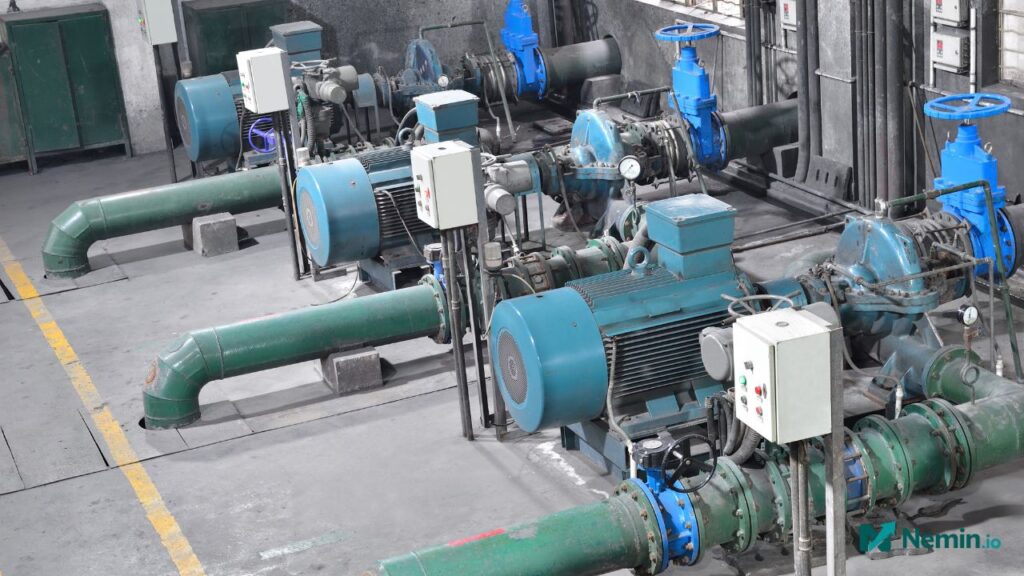
Gravity is usually the simplest way to move wastewater, but terrain, development layouts, basement levels, long transfer distances, and existing sewer elevations do not always allow gravity drainage throughout an entire system. A Sewage Pumping Station provides the mechanical lift required to transfer wastewater from a lower elevation to a higher sewer, treatment facility, or another point from which gravity flow can continue.
Modern stations combine much more than a pump in a chamber. Effective systems integrate hydraulic design, pump selection, wet-well geometry, level sensing, electrical controls, alarms, telemetry, access, ventilation, emergency storage, standby arrangements, and safe maintenance. When these components are engineered as one system, a Sewage Pumping Station can provide dependable wastewater transfer while reducing overflow, blockage, odor, energy, and maintenance risks.
What Is a Sewage Pumping Station?
A Sewage Pumping Station is an engineered facility that collects wastewater at a low point and uses one or more pumps to move it through a pressurized pipe, commonly called a rising main or force main, toward another part of the sewer network.
Stations vary enormously in scale.
A small private development may require a compact packaged system serving several properties. Municipal infrastructure can use much larger facilities handling substantial and variable wastewater flows.
Regardless of size, the operating principle remains similar. Wastewater enters a receiving chamber or wet well, liquid level rises, controls initiate pumping, and wastewater is discharged into the downstream system.
Why a Sewage Pumping Station Is Needed
Gravity sewers require sufficient gradient.
Excavating continually deeper sewers to preserve that gradient can become technically difficult or economically impractical. Groundwater, rock, existing infrastructure, road crossings, rivers, and site boundaries can create additional constraints.
A Sewage Pumping Station allows designers to overcome these elevation limitations.
Typical applications include:
- Low-lying residential developments
- Commercial sites
- Industrial premises
- Basement drainage
- Remote properties
- Highway or infrastructure projects
- Municipal sewer networks
- Sites with difficult topography
- Developments distant from suitable gravity connections
The exact design must reflect the wastewater characteristics and regulatory environment.
Sewage Pumping Station Versus a Sump Pump
A domestic sump pump generally handles groundwater or drainage water in applications such as basement protection.
A sewage pump is designed for wastewater that can contain solids and fibrous materials.
The systems should not be treated as interchangeable.
Pump construction, pipework, controls, chamber design, and maintenance requirements can differ substantially.
Sewage Pumping Station Versus a Lift Station
The terms pumping station and lift station are sometimes used interchangeably, particularly in wastewater engineering.
Terminology varies between countries and utilities.
The technical specification should therefore define the system rather than relying solely on its name.
How a Sewage Pumping Station Works
Wastewater normally reaches the station through gravity inlet sewers.
It enters the wet well, where level sensors monitor the amount of accumulated liquid.
When the programmed start level is reached, a pump operates.
The pump creates sufficient head to overcome elevation difference and hydraulic resistance in the discharge pipework.
Once the wet well reaches the designated stop level, the pump stops.
Sewage Pumping Station Duty Cycle
Pump operation should be designed around expected flow patterns.
A station serving homes experiences different daily flow patterns from one serving an industrial process.
Frequent motor starts can affect equipment life, while an excessively large wet well can increase wastewater retention time.
System sizing therefore requires a balance between storage, pump cycling, hydraulic performance, and wastewater condition.
Sewage Pumping Station Duty and Standby Pumps
Many critical installations use multiple pumps.
A common configuration has a duty pump handling normal flow and another unit available as standby or assisting during higher flow, depending on the control philosophy.
Pumps can alternate automatically to distribute operating hours.
The required level of redundancy depends on station criticality, flow, consequence of failure, storage, utility standards, and regulations.
Powerful Sewage Pumping Station Pump Technologies
Pump selection is central to station performance.
Wastewater contains solids, wipes, fibers, grit, grease, and other materials that can challenge equipment.
Submersible Sewage Pumping Station Pumps
Submersible pumps operate within the wet well and are widely used in wastewater applications.
This arrangement can reduce the need for a separate dry pump room.
Pumps are often installed using guide-rail systems that allow removal from above without requiring personnel to enter the wet well.
The precise installation should follow manufacturer and engineering requirements.
Dry-Well Pumps
Some larger Sewage Pumping Station designs separate pumps from wastewater within a dry space.
This can improve certain aspects of maintenance access but introduces different civil, ventilation, flooding, and safety considerations.
The most appropriate architecture depends on site and project requirements.
Grinder Pumps
Grinder pumps reduce certain solids before discharge and can be useful in specific low-flow or pressure-sewer applications.
They are not automatically the best choice for every sewage station.
Energy demand, maintenance, wastewater characteristics, and downstream system requirements should determine suitability.
Sewage Pumping Station Impeller Selection
The impeller transfers energy from the motor to the wastewater.
Different wastewater applications use different impeller geometries.
Solids Handling
A Sewage Pumping Station pump needs to manage the solids expected in the system without excessive blockage.
Passage size and impeller configuration are therefore important.
Manufacturers provide performance and solids-handling information for specific pump models.
Clogging and Modern Wastewater
Disposable wipes and fibrous materials can create serious blockage problems even when consumers describe them as flushable.
Modern pump designs can incorporate features intended to reduce ragging and clogging.
Good equipment design still cannot compensate for every inappropriate item entering a sewer network.
Sewage Pumping Station Sizing
Oversizing can be as problematic as undersizing.
A pump that is much larger than required may cycle inefficiently or operate away from its preferred hydraulic range.
An undersized station may fail to transfer peak flow adequately.
Calculate Design Flow
Engineers estimate wastewater flow based on the development or process served.
Calculations can consider population, fixture loading, industrial discharge, infiltration, peak factors, future development, and applicable utility requirements.
There is no reliable universal pump size for a given number of buildings.
Calculate Total Dynamic Head
A Sewage Pumping Station must overcome both static elevation difference and friction losses through pipes, fittings, valves, and other components.
This combined hydraulic requirement helps establish the pump operating point.
The selected pump needs to perform appropriately where the system curve and pump curve interact.
Check Minimum and Maximum Flow Conditions
The system should be evaluated across realistic operating conditions.
A station designed solely around maximum flow may perform poorly during long low-flow periods.
Conversely, average flow alone can underestimate peak requirements.
Sewage Pumping Station Wet-Well Design
The wet well temporarily stores wastewater and provides an environment in which pumps and level controls can operate reliably.
Its geometry affects more than storage volume.
Avoid Dead Zones
Poor geometry can allow solids to settle in areas where normal flow does not resuspend them.
Accumulated solids can create odor, reduced capacity, and maintenance problems.
Hydraulic design should encourage effective movement toward the pumps.
Control Retention Time
Wastewater that remains too long in a station can become septic, contributing to odor and corrosion problems.
An oversized chamber can therefore create operational issues.
Sewage Pumping Station design should coordinate storage with realistic inflow and pump cycles.
Emergency Storage
Some systems include storage above normal operating levels to provide response time during a pump, electrical, or downstream failure.
Required storage depends on project-specific standards and risk.
Emergency storage should never be used as an excuse for inadequate reliability.
Sewage Pumping Station Level Control
Reliable level sensing tells the control system when to start pumps, stop them, and raise alarms.
Different technologies suit different environments.
Float Switches
Floats are simple and widely used.
Wastewater environments can cause fouling or entanglement, so installation and maintenance matter.
Multiple floats may provide separate control and high-level alarm functions.
Pressure and Ultrasonic Sensors
Pressure-based and non-contact level technologies can provide continuous measurements.
Each has installation limitations.
Foam, condensation, turbulence, debris, gas, and chamber geometry can affect certain sensing methods.
Redundant Level Protection
Critical Sewage Pumping Station systems may use separate high-level alarm devices so a failure in the primary sensor does not eliminate warning capability.
The exact redundancy should follow the station’s risk analysis and applicable standards.
Sewage Pumping Station Control Panels
The control panel coordinates pumps, sensors, alarms, and communications.
Modern panels can provide substantially greater visibility than simple on-off control.
Automatic Pump Alternation
Alternating the lead pump can distribute running hours across available units.
Controls may also start additional pumps when inflow exceeds the capacity of one unit.
Logic should match the hydraulic design.
Variable Frequency Drives
Variable frequency drives can alter pump motor speed in suitable systems.
This can support controlled flow and energy management, but VFDs are not beneficial in every wastewater station.
Pump characteristics, minimum velocity requirements, solids behavior, electrical harmonics, and system hydraulics all need consideration.
Smart Sewage Pumping Station Controls
Modern controls can monitor run hours, starts, current, level, alarm history, power status, and other parameters.
Data can help maintenance teams identify emerging problems.
Remote monitoring does not eliminate the need for physical inspection.
Sewage Pumping Station Alarms
An alarm should provide enough warning for someone to respond before a developing problem becomes an overflow.
A local flashing light that nobody can see at night provides limited protection for a remote station.
High-Level Alarm
A high wet-well level is one of the most important alarms.
It can indicate pump failure, control failure, excessive inflow, blocked discharge, or another condition preventing normal drawdown.
The response procedure should be established before an alarm occurs.
Power Failure Alarm
A station cannot pump normally without energy unless backup power or another emergency arrangement is available.
Remote monitoring systems should account for how an outage will be communicated when normal power is lost.
Sewage Pumping Station Telemetry
Telemetry can communicate alarms and operating data to maintenance teams or control centers.
Communication paths can use cellular, radio, wired networks, or other technologies depending on infrastructure.
Critical systems should consider communications failure as its own risk.
Sewage Pumping Station Backup Power
Power resilience depends on how long the site can safely tolerate an outage.
A small private station and a major municipal station have different risk profiles.
Standby Generators
Generators can support continued pumping during electricity outages.
They require fuel, testing, maintenance, safe installation, and appropriate automatic or manual transfer arrangements.
A generator that has never been tested under load may not provide dependable resilience.
Portable Generator Connections
Some sites use connections allowing a portable generator to be brought to the station.
Response time, equipment availability, access, connector compatibility, and safe electrical procedures all need consideration.
Sewage Pumping Station Storage as Backup
Emergency wet-well storage can provide limited response time but cannot substitute indefinitely for pumping.
Operators need to know how much time remains at realistic inflow rates.
Sewage Pumping Station Rising Main Design
The pressurized discharge pipe carries wastewater from the pumps to its downstream discharge point.
Diameter influences velocity, friction, pump head, and solids behavior.
Velocity Matters
Very low velocities can allow solids to settle under certain conditions.
Excessive velocities increase friction losses and can contribute to wear or hydraulic problems.
Engineers should use relevant standards and project-specific calculations.
Air and Gas Management
High and low points along a force main can create hydraulic and operational issues involving air or gas.
Air-release or other valve arrangements may be required according to engineering design.
These components themselves need safe maintenance access.
Sewage Pumping Station Valves and Pipework
Valves allow isolation and help control reverse flow.
They need to be accessible for maintenance.
Check Valves
A non-return or check valve prevents wastewater from flowing backward when a pump stops.
A malfunctioning valve can cause repeated cycling or loss of effective capacity.
Isolation Valves
Isolation valves allow components to be serviced without affecting more of the system than necessary.
A valve is useful only when it remains operable.
Include valves in preventive maintenance.
Reliable Sewage Pumping Station Odor Control
Wastewater can produce unpleasant and potentially hazardous gases.
Odor management begins with good hydraulic design and appropriate retention time.
Hydrogen Sulfide
Hydrogen sulfide can form in wastewater systems under certain conditions.
It creates odor, corrosion, and serious occupational hazards at sufficient concentrations.
Professionals should assess gas risk using appropriate monitoring and safety procedures.
Ventilation
Stations require ventilation designed for their architecture and applicable standards.
Ventilation is particularly important where personnel could encounter enclosed or confined spaces.
Odor-control equipment may also be needed at sensitive sites.
Sewage Pumping Station Corrosion
Wastewater environments can be aggressive to concrete, steel, electrical components, coatings, and other materials.
Material selection should reflect expected conditions.
Corrosion-Resistant Materials
Stainless steels, coatings, plastics, protective linings, and other materials can be used where suitable.
No material is universally corrosion-proof.
Chemical exposure, temperature, mechanical wear, fabrication, and maintenance affect performance.
Inspect Protective Systems
Coatings and linings can deteriorate.
Inspection programmes should identify loss of protection before severe structural damage develops.
Sewage Pumping Station Energy Efficiency
Pumping can create significant lifetime energy consumption.
Efficiency should therefore be evaluated during design and operation.
Select Pumps Near Efficient Operating Regions
A pump should be selected around expected hydraulic conditions rather than solely by maximum capacity.
Operating far from a suitable range can increase energy use, vibration, or wear.
Manufacturer curves and engineering analysis help support selection.
Keep Sewage Pumping Station Hydraulics Clean
Blockages, worn impellers, obstructed pipework, and malfunctioning valves can change system performance.
Energy monitoring can sometimes reveal that equipment is working harder than expected.
Avoid Assuming VFD Means Efficient
A VFD can reduce energy under appropriate conditions.
It also adds electrical complexity and may create low-velocity operation that needs careful review in wastewater systems.
Efficiency is a system property rather than a feature added by one component.
Sewage Pumping Station Maintenance
Preventive maintenance is important because failures can create environmental, public-health, and property consequences.
A maintenance programme should be based on manufacturer recommendations, operating experience, station criticality, and applicable requirements.
Routine Sewage Pumping Station Checks
Typical checks may involve:
- Pump condition
- Run hours
- Starts
- Alarm operation
- Level sensors
- Valves
- Control panels
- Electrical systems
- Telemetry
- Wet-well condition
- Odor
- Leakage
- Pipework
- Backup power
The exact schedule depends on the station.
Pump Removal
Submersible pumps can often be retrieved using lifting equipment and guide systems.
Only trained personnel using suitable procedures and equipment should perform heavy lifting and maintenance.
Never improvise lifting from cables or components not designed for that purpose.
Sewage Pumping Station Blockage Prevention
Blockages remain a major operational concern.
The best strategy combines suitable pump design with responsible sewer use and effective maintenance.
Wipes and Ragging
Fibrous materials can wrap around impellers and reduce performance.
Public education can help reduce inappropriate sewer disposal.
Operators should also track blockage frequency because recurring problems may justify hydraulic or equipment review.
Fats, Oils and Grease
FOG can accumulate in wastewater systems.
Commercial food operations may require appropriate grease-management measures under local rules.
A Sewage Pumping Station should not be expected to correct upstream waste-disposal problems.
Sewage Pumping Station Safety
Wastewater stations can contain serious hazards.
These include biological exposure, toxic or flammable gases, electrical equipment, moving machinery, falls, lifting, traffic, and confined spaces.
Confined Space Hazards
Wet wells and some station chambers can qualify as confined spaces under applicable regulations.
Entry should only occur through an appropriate professional safety programme with hazard assessment, atmospheric testing, permits, rescue planning, and other required controls.
Never enter a sewage chamber simply to investigate a pump fault.
Electrical Safety
Water and electrical equipment require carefully designed protection and maintenance.
Qualified personnel should work on electrical systems.
Isolation and lockout procedures should prevent unexpected pump starts during maintenance.
Biological Exposure
Workers can encounter pathogens.
Appropriate PPE, hygiene procedures, vaccination policies where relevant, and exposure controls should form part of the occupational safety plan.
Sewage Pumping Station Resilience
Reliability is broader than having two pumps.
A station can still fail if both pumps depend on the same blocked discharge pipe, damaged control panel, flooded electrical enclosure, or unavailable power source.
Identify Common-Cause Failures
A risk review should consider what could disable multiple components simultaneously.
Examples include:
- Site flooding
- Electrical supply failure
- Control-system failure
- Rising-main blockage
- Communications loss
- Extreme inflow
- Access restrictions
- Fire
- Vandalism
Resilience measures should respond to credible site-specific scenarios.
Emergency Response Planning
Operators should know who receives alarms, who attends, what equipment is available, and how wastewater is managed if normal pumping cannot resume promptly.
Emergency plans should be tested periodically.
Sewage Pumping Station for Residential Developments
Private housing developments may use packaged pumping stations when gravity connection is impractical.
Designers should consider who will own and maintain the asset after construction.
Future Maintenance Access
A station placed beneath landscaping, parking, or an inaccessible corner can become difficult to service.
Maintenance vehicles may need access for pump lifting or wastewater removal.
Plan this before the development is built.
Noise and Odor
Residential installations should consider proximity to homes.
Good design, equipment selection, ventilation, and maintenance can reduce nuisance.
Sewage Pumping Station for Commercial and Industrial Sites
Commercial sites can have highly variable wastewater characteristics.
Restaurants, hotels, factories, healthcare buildings, and distribution centers may produce different flows and contaminants.
Understand the Wastewater
Pump selection should reflect solids, temperature, chemicals, grease, pH, and other relevant characteristics.
Industrial discharges may require pretreatment or regulatory permission.
A standard Sewage Pumping Station should not receive unsuitable chemicals merely because it can physically pump them.
Modern Sewage Pumping Station Monitoring
Remote monitoring can improve visibility and enable more proactive maintenance.
Data becomes useful when operators know what action it should trigger.
Useful Operating Data
Modern systems can record:
- Wet-well level
- Pump run time
- Number of starts
- Motor current
- Power status
- Alarm history
- Pump availability
- Flow where instrumentation exists
- Vibration in suitable systems
- Temperature
Trends can indicate declining performance before complete failure.
Predictive Maintenance
Analytics can potentially identify abnormal patterns.
For example, increasing pump runtime for similar wastewater volumes could suggest declining hydraulic performance.
Predictive systems do not diagnose every failure automatically.
Experienced maintenance personnel still need to investigate.
Sewage Pumping Station Best Practices
Reliable wastewater transfer depends on integrating hydraulics, electrical engineering, controls, maintenance, and safety.
- Calculate realistic average and peak flows.
- Model total dynamic head accurately.
- Select pumps for actual operating conditions.
- Provide appropriate redundancy.
- Design wet wells to limit solids accumulation.
- Control retention time.
- Use reliable level detection.
- Provide independent high-level warning where appropriate.
- Establish useful telemetry.
- Plan for power failure.
- Size rising mains for appropriate hydraulic performance.
- Make valves accessible.
- Consider odor and corrosion during design.
- Provide safe lifting and maintenance access.
- Monitor blockage history.
- Test alarm and backup systems.
- Maintain confined-space safety controls.
- Review common-cause failures.
- Keep drawings and operating information current.
These Sewage Pumping Station practices improve reliability more effectively than selecting pumps in isolation.
Common Sewage Pumping Station Design Mistakes
Oversized pumps are a common misconception. Bigger does not automatically mean more reliable.
Other problems can include oversized wet wells, inadequate emergency storage, poor level-sensor positioning, inaccessible valves, insufficient maintenance access, weak alarm communication, untested backup power, unsuitable pump hydraulics, and failure to consider wipes or grease.
Ignoring the downstream system is another major error.
A Sewage Pumping Station cannot be designed properly without understanding where its discharge goes and how the receiving system responds.
Selecting a Sewage Pumping Station Supplier
Supplier evaluation should consider engineering support, equipment reliability, parts availability, controls, commissioning, warranty, and long-term service.
Provide Complete Design Information
Suppliers may need:
- Design flow
- Static head
- Rising-main length
- Pipe diameter
- Wastewater characteristics
- Required storage
- Electrical supply
- Site constraints
- Preferred controls
- Applicable standards
Incomplete information can lead to inappropriate equipment selection.
Review the Complete Package
Do not compare suppliers solely by pump motor size.
Compare hydraulic performance, chamber, valves, controls, alarms, access, redundancy, telemetry, maintenance requirements, efficiency, and support.
The Promising Future of Sewage Pumping Station Technology
Future wastewater stations will increasingly combine durable mechanical equipment with better sensing, data analysis, remote communications, and energy management.
Smart controls can help utilities understand what happens between site visits.
More connected infrastructure also creates cybersecurity considerations.
Remote-control systems should use appropriate security architecture, access controls, updates, monitoring, and network design.
Digital capability should strengthen operational resilience rather than introduce unnecessary vulnerabilities.
FAQ’s
What does a Sewage Pumping Station do?
A Sewage Pumping Station collects wastewater at a low elevation and uses pumps to transfer it through pressurized pipework toward a sewer or treatment system at a higher elevation.
When is a Sewage Pumping Station required?
A Sewage Pumping Station is commonly used when topography, building levels, distance, existing sewer depth, or other constraints make a practical gravity-only drainage connection impossible.
How many pumps should a Sewage Pumping Station have?
The correct number depends on flow, reliability requirements, storage, station criticality, and applicable standards. Many important systems use duty and standby arrangements.
How is a Sewage Pumping Station sized?
Engineers consider expected wastewater flows, peak conditions, wet-well storage, static head, pipe friction, solids handling, pump curves, cycling, and downstream system requirements.
How often should a Sewage Pumping Station be maintained?
Maintenance frequency depends on equipment, wastewater characteristics, operating history, manufacturer recommendations, criticality, and regulatory requirements. Routine inspections and alarm tests are important.
Is a Sewage Pumping Station dangerous to enter?
Wet wells can contain severe confined-space, gas, biological, fall, and mechanical hazards. Entry requires trained personnel and appropriate professional safety procedures where applicable.
Conclusion
A Sewage Pumping Station enables wastewater networks to function where gravity alone cannot provide an effective route. The most reliable installations treat pumping as a complete system involving inflow, wet-well hydraulics, solids handling, pumps, rising mains, valves, controls, alarms, communications, power resilience, odor, corrosion, and safe maintenance. Correct sizing is particularly important because excessive capacity can create cycling and retention problems while insufficient capacity can increase overflow risk during peak conditions.
Modern Sewage Pumping Station performance also depends on what happens after commissioning. Routine inspections, blockage analysis, level-sensor maintenance, valve checks, pump monitoring, telemetry, tested backup arrangements, safe working procedures, and accurate operating records keep the system dependable throughout its service life. By integrating sound hydraulic engineering with resilient controls and maintainable infrastructure, wastewater operators can achieve effective transfer without relying on oversized equipment or reactive maintenance.