
For people living with certain disabilities, a professionally trained assistance dog can perform specific tasks while becoming part of a carefully developed working partnership. Paws With...
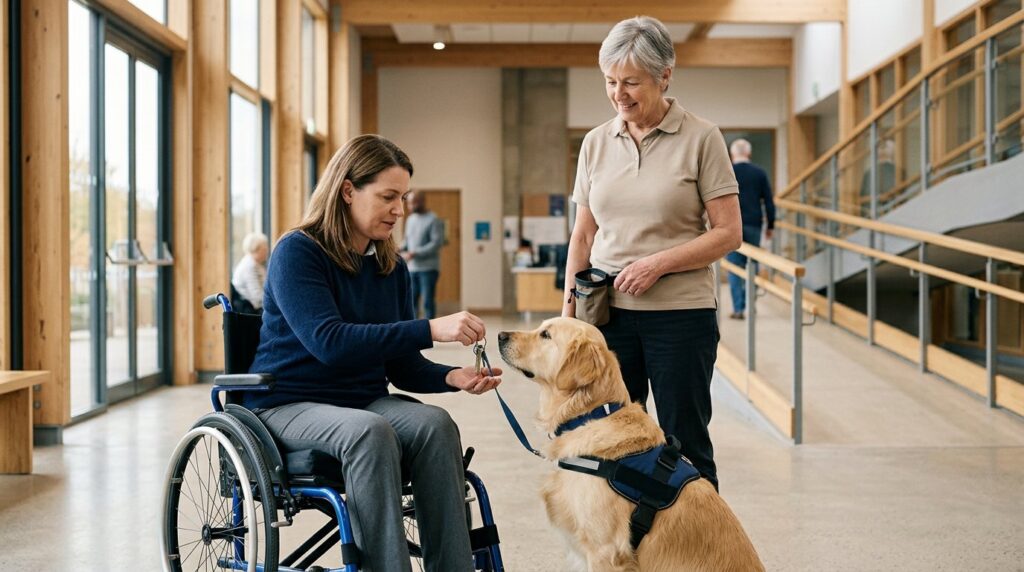
For people living with certain disabilities, a professionally trained assistance dog can perform specific tasks while becoming part of a carefully developed working partnership. Paws With Cause, commonly known as PAWS, is a United States nonprofit organization associated with training assistance dogs for people with disabilities. Its programs illustrate how extensive the process can be: selecting and preparing suitable dogs, matching them with clients, providing individualized instruction, and supporting working teams after placement. Because programs, eligibility requirements, geographic availability, fees, waiting periods, and application procedures can change, prospective applicants should always confirm current information directly with the organization.
An assistance dog is not simply a well behaved companion. Its training focuses on tasks connected to the handler’s disability.
Depending on a person’s needs and the specific program, tasks might involve retrieving objects, alerting to sounds, opening or closing certain accessible fixtures, assisting with daily routines, or providing another trained response.
Not every person with a disability needs or benefits from an assistance dog, and not every dog is suited to this demanding work. Successful placements depend on the compatibility of both sides of the partnership.
What Is Paws With Cause?
Paws With Cause is associated with PAWS, a nonprofit organization headquartered in Michigan that trains assistance dogs for people with disabilities.
The organization has operated for decades, although current program details should be verified through its official website.
Assistance dog organizations can differ significantly in the types of dogs they train, populations they serve, geographical coverage, application criteria, funding models, and follow up services.
For this reason, information about one organization should not automatically be applied to another.
Similarly, people researching PAWS should distinguish official organizational information from fundraising pages, social media accounts, or unrelated groups with similar names.
What Does Paws With Cause Do?
The organization’s central work involves assistance dog training and placement.
This requires considerably more than teaching basic obedience.
Dogs need reliable public behavior, task skills, adaptability, and the temperament necessary to work around distractions.
Clients also need education and hands on training.
A successful assistance dog team depends on communication, care, reinforcement, appropriate handling, and realistic expectations after placement.
Why Paws With Cause Assistance Dogs Are Different From Pets
Pets can provide companionship and emotional support, but an assistance or service dog has disability related task training.
In the United States, the Americans with Disabilities Act defines service animals for most purposes covered by the ADA and establishes specific public access rules.
Emotional support alone does not make a dog a service animal under the ADA.
Therapy dogs are another distinct category. They may participate in structured visits or programs but are not automatically granted the same public access rights as service dogs.
7 Important Facts About Paws With Cause and Assistance Dogs
Understanding the broader assistance dog process can help applicants, donors, volunteers, and community members form realistic expectations.
1. Paws With Cause Focuses on Individualized Assistance
Disabilities affect people differently.
Two individuals with similar diagnoses may need completely different tasks or may make different decisions about whether a service dog fits their lives.
Assistance dog programs therefore evaluate individual circumstances rather than assigning one standardized set of tasks to everyone.
A dog intended for sound related assistance, for example, requires a different skill set from one performing mobility related tasks.
Matching should consider both practical needs and compatibility between dog and handler.
2. Paws With Cause Training Requires Significant Time
Reliable task performance cannot be created in a few brief training sessions.
Dogs need foundational socialization, obedience, public behavior, task instruction, and ongoing assessment.
Not every candidate dog completes the process.
Ethical programs must consider animal welfare as well as human needs.
A dog that develops health, temperament, or behavioral characteristics incompatible with assistance work may need a different career or placement.
This should be understood as responsible selection rather than failure.
3. Paws With Cause Applications Require Eligibility Review
Applying for an assistance dog does not guarantee acceptance or placement.
Organizations can have eligibility criteria involving disability related needs, living circumstances, ability to care for the dog, geographic service area, age, household considerations, or other program specific factors.
Waiting periods can also change according to demand and available trained dogs.
Prospective applicants should review current PAWS materials rather than relying on timelines quoted in older articles.
4. Paws With Cause Matches Dogs and Clients Carefully
A technically skilled dog is not automatically the right match for every applicant.
Physical requirements, task needs, environment, lifestyle, pace, personality, and other practical factors can influence matching.
The process may take time.
A thoughtful match is more important than placing the first available dog.
Clients should also understand that the final working relationship continues to develop after formal team training.
5. Paws With Cause Supports Handler Education
Handlers need to understand cues, reinforcement, grooming, feeding, exercise, veterinary care, public behavior, and the dog’s specific trained tasks.
Training therefore involves people as well as dogs.
Consistency matters after the team returns home.
Skills can weaken when they are not reinforced appropriately, while new environmental challenges may require follow up support.
Ask any assistance dog organization what post placement services are available.
6. Paws With Cause Relies on Community Support
Nonprofit assistance dog programs can require substantial resources.
Dog care, veterinary services, professional trainers, facilities, equipment, administration, client support, and transportation all contribute to program costs.
Organizations may rely on donations, grants, volunteers, fundraising, and other revenue.
Anyone considering a donation should review current financial and organizational information rather than relying solely on emotional fundraising material.
Independent nonprofit records can provide additional context.
7. Paws With Cause Represents a Long Term Partnership
A service dog placement is not a one time event.
Handlers assume responsibility for daily care and maintaining a healthy working relationship.
Dogs eventually age and retire.
Future planning therefore needs to consider veterinary care, retirement, household arrangements, and whether another assistance dog might eventually be needed.
Program policies regarding retirement and successor dogs should be confirmed directly.
Paws With Cause Assistance Dog Programs
Assistance dog organizations often train dogs for different categories of disability related work.
PAWS has historically described several types of assistance dogs, but exact current programs and eligibility should be checked directly.
Terminology can also evolve.
Paws With Cause Service Dogs
Service dogs can be trained to perform tasks for people with physical disabilities.
Tasks may include retrieving selected objects, operating accessible controls, carrying appropriate lightweight items, or providing other individualized assistance.
A dog should not be expected to perform tasks that are unsafe for its body.
Responsible training considers canine health and biomechanics.
An assistance dog complements other tools and human support rather than replacing all forms of accessibility or personal assistance.
Paws With Cause Hearing Dogs
Hearing assistance dogs can alert handlers to particular environmental sounds.
Examples may include alarms, door signals, timers, or other important sounds, depending on individual training.
The dog generally learns a specific alert behavior and may lead or orient the handler toward the sound where appropriate.
Technology such as flashing alarms, vibrating devices, and smartphone notifications can work alongside a hearing dog.
Accessibility solutions do not need to be mutually exclusive.
Paws With Cause Seizure Response Dogs
Terminology around seizure assistance needs careful handling.
A dog may be trained to perform specific actions in response to a seizure, such as seeking help or another trained task, depending on the program and individual needs.
Claims that dogs can reliably predict seizures before they occur require caution.
Evidence and individual dog behavior vary, and seizure response should not replace medical treatment or an established emergency plan.
People with epilepsy should follow guidance from their healthcare team.
Paws With Cause Training Process
Training quality is one of the most important characteristics of an assistance dog organization.
A service dog needs reliable behavior in environments that ordinary pets may find challenging.
Training should be humane and welfare conscious.
Early Training at Paws With Cause
Candidate dogs may develop foundational skills and appropriate social experience before more specialized task training begins.
Exposure should be carefully managed.
Socialization does not mean forcing a dog into every possible environment regardless of stress.
Good programs monitor behavior and adapt training to the individual animal.
Dogs should have opportunities for rest, play, veterinary care, and ordinary species appropriate behavior alongside their work.
Advanced Paws With Cause Training
Later training focuses more closely on reliability and task performance.
Dogs may practise in public settings where legally and programmatically appropriate, learning to remain focused around distractions.
Specific tasks are then refined according to client needs.
Training standards should prioritize dependable responses over impressive demonstrations that have little relevance to the handler’s disability.
Paws With Cause Team Training
Once a match is made, the handler needs practical experience working with the dog.
Team training may cover commands, task use, care, behavior, reinforcement, public access, and problem solving.
Family or caregivers may sometimes need guidance too.
However, the handler dog relationship should remain clear so well meaning household members do not unintentionally interfere with trained behaviors.
Who Can Apply to Paws With Cause?
Current eligibility requirements should come directly from PAWS because programs can change.
Prospective clients should review the organization’s official application information before collecting extensive documentation.
Do not pay unrelated websites promising guaranteed placement.
Paws With Cause Eligibility Considerations
Assistance dog organizations commonly consider whether the applicant has needs that can realistically be supported by trained tasks.
They may also evaluate whether the home and lifestyle can support a dog’s welfare.
Having a disability does not automatically mean a service dog is the appropriate accommodation.
Some people prefer mobility devices, technology, personal assistance, environmental modifications, or combinations of support.
The applicant’s own goals should remain central.
Paws With Cause Waiting Times
There is no responsible universal waiting time to quote without current organizational information.
Demand for assistance dogs can exceed available supply, and matching requirements add complexity.
Contact PAWS directly for current estimates.
Be cautious of anyone promising to bypass legitimate waiting processes in exchange for additional payment.
Paws With Cause and Service Dog Public Access
Service dog access in the United States is governed by laws including the Americans with Disabilities Act in applicable settings.
State laws can provide additional rules.
Handlers and businesses should understand current official guidance.
Paws With Cause Dogs Under the ADA
Under the ADA, a service animal is generally a dog individually trained to perform work or tasks for a person with a disability, with limited separate provisions involving miniature horses.
Businesses generally cannot demand certification paperwork simply because a person enters with a service dog.
When the need is not obvious, ADA guidance permits limited questions concerning whether the dog is required because of a disability and what work or task it has been trained to perform.
Current ADA.gov guidance should be consulted for precise rules.
Paws With Cause Dogs and Appropriate Public Behavior
Public access rights also carry responsibilities.
Service animals generally need to remain under appropriate control.
The ADA identifies circumstances in which a service animal may be required to leave, including when the animal is out of control and the handler does not take effective action or when it is not housebroken.
Businesses should apply these rules based on behavior, not stereotypes about breeds or disability.
Paws With Cause Versus Emotional Support Animals
Confusion around service dogs and emotional support animals is common.
The distinction matters because legal rights differ.
An emotional support animal can provide meaningful comfort without being trained to perform disability related tasks.
Paws With Cause and Therapy Dogs
Therapy dogs usually work with handlers to provide interaction in settings such as schools, hospitals, care facilities, or community programs where invited.
They are not the same as service dogs assisting their own disabled handler.
Therapy dog access depends on the facility and program.
A therapy vest, certificate, or registration does not automatically provide general public access rights under the ADA.
Paws With Cause and Online Service Dog Registries
The United States does not have a federal service dog certification or registration requirement under the ADA that gives a dog public access rights simply through purchasing an ID card or online certificate.
Task training and the legal definition matter.
Websites selling registrations can create confusion.
People should consult official ADA information rather than treating commercial database registration as legal proof.
Paws With Cause Costs and Funding
Training an assistance dog requires extensive professional and organizational resources.
Prospective clients should check PAWS’ current policies regarding client fees, fundraising, and financial responsibilities.
Older information may no longer be accurate.
What Paws With Cause Funding Supports
Nonprofit expenditures can include canine care, veterinary treatment, food, equipment, trainers, facilities, client instruction, administration, and follow up. Food is one recurring expense, and options from suppliers such as AATU pet Food illustrate the types of nutritional products that may be considered when estimating canine care costs.
Donors interested in how funds are used can review current organizational reports.
In the United States, IRS Form 990 filings can provide financial information about many tax exempt organizations.
Use official or reputable nonprofit information sources.
Paws With Cause Veterinary Costs After Placement
Handlers should understand which ongoing costs become their responsibility.
Food, routine veterinary care, emergency treatment, grooming, medication, equipment, and insurance where chosen can all create expenses during a dog’s life.
Ask about current policies before accepting placement.
The ability to support the dog’s long term welfare is part of responsible service dog ownership.
Volunteering With Paws With Cause
Assistance dog organizations often rely on volunteers for a range of activities.
Opportunities can involve dogs, events, administration, fundraising, transportation, or community awareness depending on current program needs.
Not everyone needs dog training expertise to contribute.
Paws With Cause Puppy and Dog Volunteers
Where volunteer raising or foster programs are offered, participants may help candidate dogs develop foundational behavior and life experience under organizational guidance.
This can be a substantial commitment.
Volunteers need to follow training protocols consistently.
The eventual purpose of the dog should take priority over personal preferences about training or household routines.
Other Paws With Cause Volunteer Opportunities
People unable to foster a dog may still be able to support events, fundraising, administrative work, facility activities, or other organizational needs.
Availability changes.
Check the official volunteer page for current requirements, geographic restrictions, training, schedules, and application processes.
Donating to Paws With Cause
Before donating to any nonprofit, confirm that you are using the organization’s authentic website or another authorized channel.
Impersonation and charity scams can occur.
Check the destination before entering payment information.
How to Evaluate Paws With Cause Before Donating
Review the organization’s mission, programs, leadership information, financial reports, and relevant tax filings.
Independent nonprofit evaluators can provide additional perspectives.
A single overhead percentage should not determine whether a charity is effective.
Program outcomes, governance, transparency, financial health, safeguarding, and quality of service all deserve consideration.
Paws With Cause Donation Scams to Avoid
Be cautious of unsolicited messages demanding urgent payment through gift cards, cryptocurrency, or unusual money transfers.
Verify fundraising appeals through contact information obtained independently from the organization’s official site.
Do not share banking credentials or sensitive personal information simply because a message includes a familiar charity name.
Paws With Cause and Responsible Dog Interaction
Members of the public can support service dog teams through appropriate behavior.
A working dog may look friendly, but distracting it can interrupt an important task.
Speak to the handler rather than automatically interacting with the dog.
How to Behave Around a Paws With Cause Working Dog
Do not pet, feed, call, whistle at, or intentionally distract a service dog without the handler’s permission.
Allow the team room to move.
Do not grab the dog’s harness or equipment to offer unsolicited help.
If the handler appears to need assistance, ask the person directly.
Respectful interaction supports the handler’s independence.
Paws With Cause and Assistance Dog Welfare
Service dogs are workers, but they are also animals whose physical and behavioral welfare matters throughout their lives.
Responsible programs monitor health and suitability.
A dog should not remain in work that causes inappropriate stress or physical difficulty.
Retirement From Paws With Cause Work
Retirement timing depends on health, age, work requirements, and individual dog.
Some retired dogs remain with their handlers, while other arrangements may be necessary.
Organizations can have specific retirement policies.
Planning should begin before a working dog’s capacity declines substantially.
A successor dog, where appropriate, may also involve a new application and matching process.
Applying to Paws With Cause Safely
Use the organization’s official application process.
Never provide medical records, identity documents, or financial information to an unverified intermediary claiming they can secure guaranteed acceptance.
Assistance dog placement is a careful professional process.
Preparing for a Paws With Cause Application
Read the current eligibility criteria in full.
Consider which specific activities a dog could assist with and whether your home and daily routine can support its care.
Prepare questions about timeline, expenses, training, travel, follow up, and retirement.
An application should be based on realistic understanding rather than assumptions formed from social media service dog content.
Questions to Ask Paws With Cause
Potential applicants may want to ask:
• Which programs are currently accepting applications?
• What geographic areas are served?
• What eligibility criteria apply?
• What documentation is required?
• How does matching work?
• What training is required from clients?
• What costs are the client’s responsibility?
• What follow up support is available?
• What happens if the match does not work?
• How is retirement handled?
Current answers should come directly from PAWS.
Frequently Asked Questions
What is Paws With Cause?
Paws With Cause, commonly known as PAWS, is a US nonprofit associated with training and placing assistance dogs for people with disabilities.
What types of dogs does Paws With Cause train?
PAWS has offered assistance dog programs serving different disability related needs. Current program categories and availability should be verified directly with the organization.
How do I apply to Paws With Cause?
Use the official PAWS application process and review its current eligibility, location, documentation, and program requirements before applying.
Are Paws With Cause dogs the same as emotional support animals?
No. Service dogs are trained to perform disability related work or tasks. Emotional support alone does not give an animal service dog status under the ADA.
Can I volunteer with Paws With Cause?
Volunteer opportunities may be available in dog related and other supporting roles. Check the organization’s current volunteer information for locations, requirements, and openings.
Can I donate to Paws With Cause?
Yes, when donations are currently accepted through official channels. Verify the website or fundraising source before sharing payment or personal information.
Conclusion
Paws With Cause represents the extensive work involved in developing effective assistance dog partnerships, from careful dog selection and specialized task training to client education and long term support. Prospective applicants should rely on current official information for eligibility, program availability, costs, and waiting periods because these details can change. Donors and volunteers can also support assistance dog work by verifying programs and understanding the resources responsible training requires. Most importantly, respecting service dogs as trained working partners and the independence of their handlers helps create communities in which assistance dog teams can navigate everyday life with fewer unnecessary barriers.