
Good Lighting does much more than make a room bright enough to see. It influences how colors and materials appear, supports everyday tasks, emphasizes architectural details, affects...
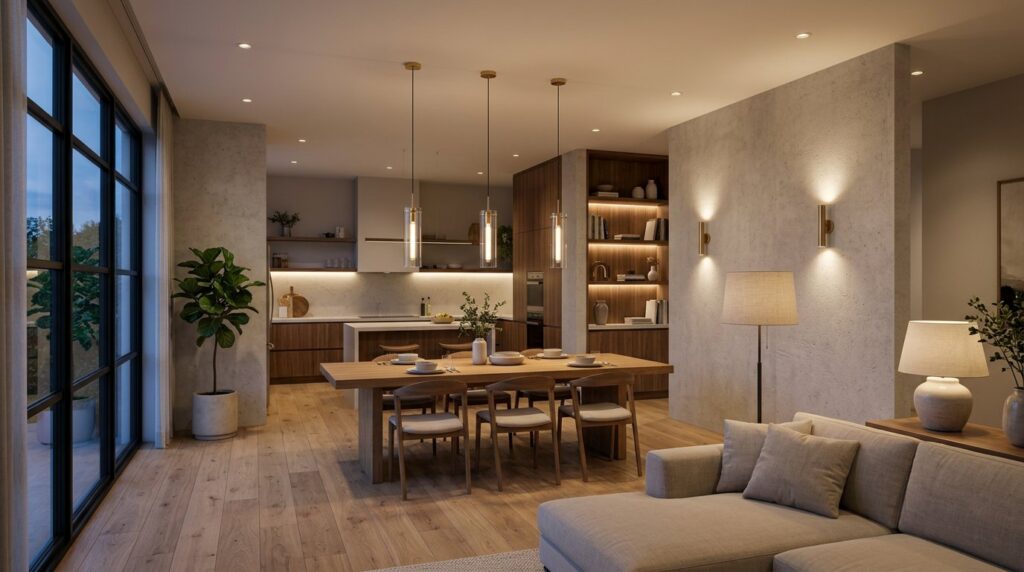
Good Lighting does much more than make a room bright enough to see. It influences how colors and materials appear, supports everyday tasks, emphasizes architectural details, affects visual comfort, and can change the atmosphere of an entire space. Effective residential light planning generally combines multiple sources rather than relying on one central ceiling fixture. By considering ambient illumination, task requirements, accent effects, color temperature, color rendering, controls, daylight, energy efficiency, and fixture placement together, homeowners can create spaces that function well during both bright mornings and quiet evenings.
A kitchen needs enough focused illumination for food preparation, while a bedroom usually benefits from softer options that can be adjusted before sleep. A bathroom has different safety requirements, and exterior fixtures need to withstand environmental exposure.
This means there is no single bulb, fixture, or brightness level suitable for every space.
Planning should begin with what people actually do in each room and then select fixtures capable of supporting those activities comfortably and safely.
Why Lighting Matters in Interior Design
Illumination helps define how a space is perceived.
Light striking a textured stone wall creates a different impression from broad diffuse illumination. A pendant over a dining table can visually establish the dining zone, while concealed light can emphasize cabinetry or architectural details.
The effect is both functional and aesthetic.
Poor placement can create glare, harsh shadows, dark work surfaces, or excessive contrast. Overlighting can be just as uncomfortable as insufficient illumination.
A balanced plan distributes light according to tasks and visual priorities.
Lighting Should Be Designed in Layers
Designers often describe three broad layers: ambient, task, and accent.
Ambient light provides general illumination throughout the room. Task light supports activities such as cooking, reading, working, grooming, or crafting. Accent light emphasizes artwork, textures, architectural features, or other focal points.
One fixture may contribute to more than one layer.
The useful principle is not rigid categorization but avoiding dependence on a single source.
Lighting Plans Should Start Before Decoration
Fixture locations can affect electrical wiring, ceilings, cabinetry, wall finishes, and furniture placement.
Planning early makes integration easier.
For a renovation or new build, determine likely furniture arrangements and major task areas before finalizing electrical points.
Moving wiring after plastering, cabinetry, or decorative finishes are complete generally creates additional cost and disruption.
9 Lighting Ideas for a Better Home
These principles can be adapted to different architectural styles and budgets.
1. Use Lighting Layers Instead of One Ceiling Fixture
A single bright ceiling fixture often creates uniform overhead illumination without addressing individual tasks.
Combine sources instead.
A living room might use recessed or ceiling fixtures for general illumination, a floor lamp beside a reading chair, table lamps for softer evening light, and discreet accents around artwork.
Different circuits or controls increase flexibility.
The room can then change according to activity rather than operating only in fully bright or completely dark modes.
2. Match Lighting to the Activity
Start with the people using the space.
Kitchen counters need clear task illumination, while television viewing benefits from avoiding strong glare on the screen.
A home office should provide comfortable desk illumination without placing bright sources directly in the user’s field of vision.
Bedrooms may need bedside reading lamps that one person can use without illuminating the entire room.
Function should determine placement before decorative symmetry.
3. Choose Lighting Color Temperature Carefully
Correlated color temperature, commonly expressed in kelvin, describes whether white light appears relatively warm or cool.
Lower values typically appear warmer, while higher values appear cooler.
Warm white illumination is common in residential living and sleeping areas.
Task environments may use different temperatures depending on design goals.
There is no universal best kelvin value. Consider materials, daylight, room purpose, and personal preference.
4. Evaluate Lighting Color Rendering
Two lamps with similar color temperatures can render objects differently.
Color rendering metrics provide information about how a light source reproduces colors compared with a reference.
CRI is commonly used, while other metrics can provide additional information.
High quality color rendering can be particularly valuable around food, artwork, clothing, makeup, timber, and richly colored interior finishes.
Do not select fixtures based on wattage alone.
5. Use Dimmable Lighting Where It Adds Value
Dimming can make a room more adaptable.
A dining area may need relatively bright light for cleaning or homework but softer illumination during dinner.
Compatibility matters.
Not every LED lamp, driver, and dimmer combination works smoothly together. Incompatible components can cause flickering, poor low level performance, buzzing, or limited dimming range.
Check manufacturer compatibility before installation.
6. Integrate Lighting With Daylight
Artificial illumination should work with natural light rather than ignore it.
Rooms with large windows may require little electric light during the middle of the day but considerably more after sunset.
Window orientation influences daylight color and intensity.
Controls can help adapt illumination over time.
In some applications, daylight sensors or smart systems can automatically adjust output, although automation should remain intuitive enough that occupants can override it when needed.
7. Use Accent Lighting Selectively
Accent illumination is most effective when there is something worth emphasizing.
Artwork, shelving, stone, textured walls, plants, or architectural features can become focal points through controlled light.
Avoid highlighting every surface.
If everything is emphasized, the room loses visual hierarchy.
Beam angle, distance, fixture direction, material reflectance, and intensity all influence the effect.
8. Improve Energy Efficiency With LED Lighting
LED technology can provide substantial energy savings compared with older incandescent technologies while offering long rated lifespans.
Actual performance varies by product.
Efficiency can be compared using lumens per watt rather than simply looking at wattage.
Rated lifespan also depends on operating conditions, driver quality, heat management, switching, and product design.
Choose reputable equipment with specifications appropriate to the installation.
9. Make Lighting Controls Easy to Understand
A sophisticated control system can become frustrating if nobody knows which switch operates which fixture.
Group controls logically.
Labels can help in complex homes, while scene controls can simplify spaces containing several circuits.
Smartphone control can add convenience but should not always be the only way to operate essential room lights.
Consider what happens if the internet, hub, or phone is unavailable.
Ambient Lighting for General Illumination
Ambient light provides the foundation for a room.
It can come from ceiling fixtures, recessed downlights, pendants, wall lights, indirect illumination, or combinations.
Uniformity is not always necessary.
Some variation can make interiors feel more comfortable and visually interesting.
Ceiling Lighting Options
Ceiling fixtures range from flush mounted fittings to chandeliers and pendants.
Choose scale in relation to the room and ceiling height.
Large fixtures can provide a strong focal point but need safe head clearance.
Very low ceilings may suit more compact designs.
For heavy fixtures, structural support needs to be appropriate.
Do not assume a standard electrical box or ceiling board can support any decorative fixture.
Recessed Lighting Design
Recessed downlights can provide clean architectural illumination but are frequently overused.
Rows of downlights across every ceiling can create glare and unnecessary energy use without improving specific tasks.
Position them according to walls, work surfaces, circulation, and architectural features.
Also consider insulation and fire safety requirements associated with the particular ceiling construction.
Task Lighting for Everyday Activities
Task illumination should place useful light where work occurs.
The source should minimize distracting shadows and glare.
Adjustability can be particularly valuable where users have different preferences.
Kitchen Lighting for Worktops
Overhead ceiling fixtures can leave kitchen counters in shadow when the user’s body blocks the light.
Under cabinet fixtures can illuminate work surfaces directly.
Continuous linear sources often create more even coverage than widely spaced individual points.
Color rendering matters around food.
Fixtures near sinks or other water sources also need appropriate electrical suitability for their installed location.
Home Office Lighting
Position desk lights so they do not create excessive screen reflections.
Ambient room illumination can reduce harsh contrast between a bright display and a dark surrounding room.
Users working on color critical photography or design may need more carefully controlled illumination.
Computer display settings should also complement the environment rather than operating at maximum brightness by default.
Accent Lighting for Architectural Detail
Accent fixtures typically work by creating a deliberate contrast between a focal element and its surroundings.
Track lights and adjustable downlights offer flexibility because aiming can be changed.
Linear LEDs can emphasize shelving or niches.
Artwork Lighting
Artwork can be sensitive to light exposure.
Some materials and pigments can fade over time, and UV is not the only relevant component of exposure.
Valuable or museum quality works may need specialist conservation lighting advice.
For ordinary residential artwork, choose fixtures that illuminate evenly without producing distracting glare.
Avoid placing heat producing equipment too close to sensitive objects.
Shelf Lighting
Integrated shelf illumination can create depth and highlight objects.
Plan cable routes and drivers before cabinetry is completed.
LED strips should be installed in suitable profiles where recommended for thermal management and visual diffusion.
A visible row of bright LED points may look less refined than a properly diffused linear effect.
Kitchen Lighting Planning
Kitchens combine general circulation with detailed tasks.
A successful plan may include ceiling, under cabinet, island, dining, and decorative sources.
Control these independently where useful.
Island Lighting
Pendant lights can visually anchor a kitchen island.
Height should provide adequate illumination without blocking views or creating collision risk.
There is no universal correct number of pendants.
Fixture width, island length, output, and design determine spacing.
Two substantial pendants may work better than three small ones in one kitchen, while another layout may benefit from linear illumination.
Lighting Inside Kitchen Cabinets
Internal lighting can improve visibility in deep cabinets, glass displays, or pantry areas.
Door activated controls can be convenient.
Select components suited to enclosed spaces and intended operating conditions.
For retrofit projects, battery solutions can reduce wiring work, although batteries require periodic charging or replacement.
Bathroom Lighting and Safety
Bathrooms require additional electrical planning because water increases electrical risk.
Regulations define where particular equipment can be installed.
These requirements vary by jurisdiction.
Mirror Lighting
Lighting from both sides of a mirror can reduce facial shadows compared with a strong overhead source alone.
Integrated mirror lighting is another option.
Look for good color rendering where the area is used for grooming or makeup.
Fixture brightness should remain comfortable at close viewing distances.
Shower Lighting
Fixtures installed in wet areas need ratings appropriate to their location.
IP ratings indicate resistance to ingress under defined test conditions, but the required rating depends on the installation zone and applicable electrical rules.
Use a qualified electrician.
Do not rely solely on a retailer description saying a fixture is “bathroom safe.”
Bathroom Lighting Controls
Consider separate controls for general, mirror, shower, and low level night illumination where useful.
A dim night setting can reduce the need for bright overhead light during late hours.
Electrical controls themselves must also comply with local rules concerning bathroom locations.
Professional installation is essential.
Bedroom Lighting for Comfort
Bedrooms benefit from flexibility.
Bright general light can help with cleaning and dressing, while softer sources create a calmer environment later in the evening.
Bedside controls add convenience.
Bedside Lighting
Wall mounted reading lights can free nightstand space.
Table lamps are easier to change later.
Whichever option you choose, position the light around the actual bed and preferred reading posture.
Adjustable heads can reduce disturbance to another person.
Avoid exposed high brightness lamps directly within normal sightlines.
Wardrobe Lighting
Integrated closet fixtures can make clothing colors and details easier to distinguish.
Sensors can switch lights on when doors open.
Ensure fittings and drivers are suitable for enclosed cabinetry and maintain required clearances from stored materials.
Heat management remains relevant even with efficient LED products.
Living Room Lighting
Living rooms serve many purposes: conversation, reading, television, entertaining, relaxation, and sometimes work.
One fixed lighting scene rarely suits all of them.
Use independent layers.
Lighting Around a Television
Avoid strong light directly reflecting in the screen.
Some people find low level illumination behind or around the television more comfortable than watching a bright display in a completely dark room.
Bias lighting intended for color sensitive viewing has more specific requirements.
For ordinary home use, balanced low level room illumination can reduce extreme visual contrast.
Decorative Lighting in Living Rooms
A sculptural pendant or chandelier can function as both illumination and visual object.
Make sure decorative fixtures still provide an appropriate contribution to the room.
A beautiful fixture with uncomfortable glare may need supplementary sources or different lamp characteristics.
Consider what the fixture looks like both switched on and off.
Outdoor Lighting
Exterior illumination supports entrances, paths, patios, landscaping, and security.
Outdoor fixtures face moisture, dust, temperature changes, insects, and physical exposure.
Use appropriately rated products.
Security Lighting
More brightness does not automatically create better security.
Poorly aimed floodlights can produce deep shadows and glare.
Motion sensors can activate light when needed while reducing unnecessary operation.
Position fixtures so they illuminate relevant areas without shining excessively into neighboring properties or the night sky.
Local nuisance light requirements may apply.
Landscape Lighting
Low level path lighting and focused landscape accents can create attractive outdoor environments.
Avoid excessive uplighting.
Dark sky conscious design aims to reduce unnecessary upward light and glare.
Outdoor electrical systems should use equipment, cabling, connections, and protection approved for exterior conditions.
Smart Outdoor Lighting
Timers, photocells, motion detectors, and smart controls can automate exterior use.
Combine controls logically.
For example, a photocell can establish that it is dark while a motion sensor determines whether additional illumination is needed.
Ensure essential entry lighting still has reliable operation if a smart platform becomes unavailable.
LED Lighting Explained
LEDs produce light through semiconductor technology rather than heating a filament.
Their efficiency and long potential service life have made them dominant in many residential applications.
Quality varies substantially.
Lumens Versus Watts in Lighting
Watts measure electrical power consumption.
Lumens describe luminous flux, which relates to the amount of visible light emitted.
With modern LEDs, wattage alone is a poor brightness comparison.
Compare lumen output and efficiency.
Fixture optics also matter because the same total lumens can be distributed broadly or concentrated into a narrow beam.
Lighting Color Temperature
Common residential LED options often range from warm to cooler white.
The preferred temperature depends on architecture, materials, time of day, and room use.
Consistency within connected spaces can create visual harmony.
Deliberately mixing temperatures can also work when each serves a clear purpose, but accidental mismatches often look distracting.
Color Rendering in LED Lighting
CRI provides one familiar indication of color rendering but does not describe every aspect of color quality.
Professional specifications may use additional measures such as TM 30 metrics.
For most homeowners, reputable high color rendering products can improve the appearance of skin tones, food, fabrics, and interior finishes.
View samples where visual quality is particularly important.
Smart Lighting Systems
Smart controls can provide dimming, schedules, scenes, remote operation, occupancy sensing, and integration with broader home automation.
Technology should solve a real problem rather than add complexity for its own sake.
Choosing Smart Lighting
Decide whether intelligence should live in the lamp, fixture, switch, or centralized control system.
Smart bulbs are simple to install but can become unavailable when someone turns off the physical switch supplying them.
Smart wall controls can provide more conventional interaction.
Check compatibility with dimmable loads, neutral wiring requirements, hubs, voice platforms, and local electrical systems.
Smart Lighting Privacy and Security
Connected devices can collect account and usage information and depend on vendor cloud services.
Use strong unique passwords and multifactor authentication where offered.
Keep firmware updated.
Review privacy policies and consider what functionality remains available if the vendor discontinues a product or cloud platform.
Energy Efficient Lighting
LEDs can substantially reduce lighting electricity demand compared with older inefficient sources.
Further savings can come from controls and avoiding unnecessary illumination.
Daylight can also reduce daytime demand.
Lighting Controls for Energy Savings
Occupancy and vacancy sensors can be useful in utility rooms, corridors, bathrooms, storage areas, and other spaces where lights are easily forgotten.
Timers suit predictable schedules.
Automation should not compromise safety.
Stairs and entrances, for example, need dependable illumination when occupants require it.
Lighting Installation and Electrical Safety
Electrical work can create fire and shock hazards when installed incorrectly.
Local rules determine which work homeowners can legally perform themselves.
When uncertain, use a qualified electrician.
Safe Lighting Fixture Installation
Confirm circuit capacity, fixture ratings, support requirements, earthing or grounding, wiring methods, and environmental suitability.
Heavy pendants or chandeliers may require dedicated structural support.
Never attach a substantial fixture only to decorative ceiling material.
Follow both electrical requirements and manufacturer instructions.
Lighting Around Insulation
Recessed fixtures can interact with ceiling insulation and air sealing.
Some products are designed for particular insulation contact conditions while others require clearances.
Covering an incompatible fixture can cause overheating.
Use the exact product’s installation instructions and applicable building requirements.
Common Lighting Mistakes
A frequent mistake is maximizing brightness instead of optimizing visibility and comfort.
Another is using only ceiling downlights.
Poor color temperature consistency and inadequate task illumination can also make an otherwise attractive room feel unfinished.
Avoid Lighting Glare
Glare occurs when a light source or reflection is excessively bright relative to surrounding conditions.
Use shielding, diffusion, appropriate beam angles, and thoughtful placement.
Glossy countertops, polished floors, glass, televisions, and mirrors can create secondary glare.
Evaluate the room from normal seated and standing positions.
Avoid Overlighting Small Rooms
Small spaces do not automatically need fewer lighting layers, but they rarely benefit from excessive high output fixtures.
Use lower outputs or dimming where appropriate.
Light colored walls can reflect substantial illumination.
Test design assumptions rather than calculating fixture numbers solely from room area.
Avoid Choosing Lighting by Appearance Alone
A fixture can look perfect in a showroom and perform poorly in your home.
Check dimensions, lumen output, beam angle, color temperature, color rendering, dimming, electrical requirements, and mounting.
For integrated LED fixtures, ask whether drivers or light engines are replaceable.
Repairability can influence long term ownership.
Frequently Asked Questions
What are the three main types of Lighting?
Ambient Lighting provides general illumination, task Lighting supports specific activities, and accent Lighting highlights architectural features, artwork, or decorative elements.
Which Lighting color temperature is best for a home?
There is no universal best temperature. Warm white is common in living spaces and bedrooms, while task areas can use different temperatures according to preference and design.
Is LED Lighting more energy efficient?
Generally, modern LED Lighting uses substantially less electricity than incandescent lighting for comparable useful light output, although efficiency varies between products.
How should Lighting be planned for a kitchen?
Combine ambient illumination with focused worktop Lighting, island or dining fixtures where appropriate, and optional decorative or cabinet Lighting on useful separate controls.
Can smart Lighting reduce electricity use?
It can when schedules, sensors, dimming, or automation prevent unnecessary use. Actual savings depend on how the system is configured and occupants’ previous habits.
When should a professional install Lighting?
Use a qualified electrician whenever required by local law or when work involves new circuits, uncertain wiring, wet areas, complex controls, or other electrical safety concerns.
Conclusion
Lighting works best when it is planned around people, tasks, architecture, and changing conditions rather than simply making every room as bright as possible. Combining ambient, task, and accent sources can improve flexibility, while thoughtful color temperature, color rendering, dimming, and fixture placement support visual comfort. Energy efficient LEDs and smart controls can add practical benefits when products are correctly specified and easy to operate. By coordinating the lighting plan with furniture, daylight, electrical requirements, and room function early, homeowners can create spaces that remain useful and visually balanced throughout the day.