
A temporary event space does not always need to begin with a conventional venue. Specialty event vehicles can transform trucks, trailers, buses, mobile stages, expandable...
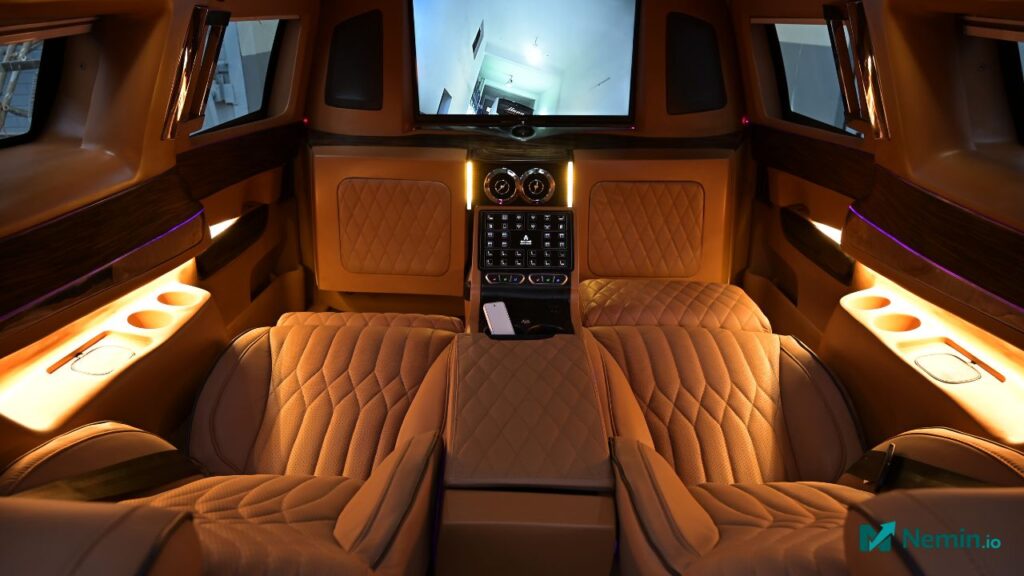
A temporary event space does not always need to begin with a conventional venue. Specialty event vehicles can transform trucks, trailers, buses, mobile stages, expandable units, and other purpose-built platforms into event environments that travel directly to audiences. Brands and organizations use these vehicles for experiential marketing, roadshows, product demonstrations, hospitality, mobile broadcasting, recruiting, training, and corporate programs where mobility is a fundamental part of the strategy.
Well-designed specialty event vehicles are more than transportation with graphics applied to the exterior. The strongest concepts combine vehicle engineering, interior design, event technology, accessibility planning, branding, logistics, staffing, power, connectivity, and site operations into one coordinated mobile experience.
Understanding the different vehicle formats and their operational requirements can help event teams determine whether a mobile venue is more appropriate than repeatedly building temporary experiences in conventional locations.
What Are Specialty Event Vehicles?
Specialty event vehicles are mobile platforms designed or converted to perform a specific event, marketing, hospitality, communication, or operational function. Depending on the project, the vehicle may become the central event environment or support a larger venue.
Some specialty event vehicles remain relatively compact and serve small groups. Others expand after arrival, creating stages, lounges, demonstration areas, broadcast facilities, classrooms, or interactive exhibition spaces.
The correct platform depends on what needs to happen inside and around the vehicle.
Common Types of Specialty Event Vehicles
Mobile event formats cover a wide range of applications. A program might use an enclosed trailer for product demonstrations, an expandable trailer for hospitality, or a purpose-built mobile stage for public programming.
The following comparison illustrates common options.
| Vehicle format | Typical use | Key planning consideration |
|---|---|---|
| Expandable event trailer | Hospitality and brand activations | Deployment space and site access |
| Mobile stage | Performances and presentations | Audience area and production requirements |
| Exhibition trailer | Product demonstrations and displays | Visitor flow and interior capacity |
| Tour bus conversion | VIP hospitality and roadshows | Parking and interior layout |
| Broadcast vehicle | Live media and production | Connectivity, power and technical systems |
| Mobile showroom | Product launches and sales demonstrations | Display design and customer experience |
| Training vehicle | Education and workforce programs | Seating, equipment and accessibility |
| Promotional truck | Sampling and experiential marketing | Permits, branding and tour logistics |
These categories can overlap. Specialty event vehicles are frequently customized around the objectives of a particular campaign rather than fitting neatly into one classification.
How Specialty Event Vehicles Differ From Ordinary Rentals
A standard rental vehicle primarily moves people or equipment. A specialty event platform is designed around what happens when it reaches its destination.
That difference can involve engineered expandable sections, integrated audiovisual systems, dedicated electrical distribution, climate control, branded interiors, display fixtures, hospitality areas, stages, storage, networking, and visitor circulation.
The Vehicle Is Part of the Experience
For mobile marketing, the exterior can create the first impression before a visitor enters.
Vehicle design, graphics, lighting, deployment configuration, staff interaction, and interior experience should therefore communicate the same brand story.
Why Specialty Event Vehicles Work for Experiential Marketing
Experiential marketing attempts to create direct interaction between an organization and its audience. Mobility can make that strategy more flexible because the experience can travel rather than expecting every audience to visit one permanent destination.
Specialty event vehicles can appear at corporate campuses, retail locations, sporting events, festivals, trade shows, universities, dealerships, conventions, or other suitable sites when permissions and logistics allow.
This flexibility can be particularly useful for multi-city campaigns.
Take the Experience Closer to the Audience
A conventional flagship event requires attendees to travel to a selected location. Mobile event vehicles reverse that relationship by bringing the activation closer to targeted markets.
A business launching a new product, for example, might take the same demonstration environment to customers in several cities.
Because specialty event vehicles can retain much of their physical configuration between stops, visual consistency may be easier to maintain than rebuilding an activation independently at each destination.
Create a Recognizable Touring Asset
Distinctive vehicles can become visible campaign assets both when deployed and, where legally and practically appropriate, while travelling.
Exterior graphics can reinforce campaign recognition, while the interior delivers a more detailed experience.
Vehicle branding should comply with applicable road, visibility, advertising, intellectual property, and site rules.
Specialty Event Vehicles for Product Launches
Products sometimes need to be experienced rather than simply described.
A technology company may want customers to interact with new hardware. A manufacturer may need to demonstrate equipment. A consumer brand might create an environment where visitors can test products.
Specialty event vehicles give these demonstrations a controlled physical setting.
Design the Interior Around the Product
The product should influence the vehicle rather than being added after the layout has already been determined.
Dimensions, electrical needs, heat output, ventilation, weight, security, demonstration procedure, visitor capacity, and accessibility can all affect design.
If products are particularly heavy or technically demanding, qualified engineering and vehicle specialists should assess installation requirements.
Keep Demonstrations Consistent Across Markets
Touring programs often involve different local teams, venues, and audiences.
Integrated displays, media systems, fixtures, and operating procedures can make the product presentation more repeatable from city to city.
Specialty event vehicles still require inspection and setup at every location. Travel can affect equipment, connections, displays, and stored materials, so pre-opening checks remain important.
Specialty Event Vehicles for Corporate Roadshows
Roadshows allow companies to meet customers, employees, investors, partners, or communities in several markets without creating a completely new event at every stop.
A mobile unit can function as the centerpiece of that tour.
Create a Repeatable Mobile Venue
Traditional roadshows may require hotels, conference rooms, shipping, local audiovisual services, and new setup at each destination.
Specialty event vehicles can centralize some of those requirements inside a touring asset.
The following comparison highlights the strategic differences.
| Planning factor | Mobile event vehicle | Conventional temporary venue |
|---|---|---|
| Location flexibility | Can travel between approved sites | Tied to individual venues |
| Brand consistency | Core environment travels with campaign | Requires recreation at each location |
| Setup requirements | Deployment still required | Often substantial local installation |
| Capacity | Limited by vehicle and exterior footprint | Potentially much larger |
| Weather exposure | Depends on indoor and outdoor design | Depends on venue type |
| Logistics | Requires route and vehicle planning | Requires venue and freight coordination |
| Scalability | Strong for targeted touring | Strong for large fixed gatherings |
Neither format is universally better. A mobile experience becomes valuable when mobility supports the program objectives.
Specialty Event Vehicles as Mobile Hospitality Spaces
Hospitality programs frequently require a comfortable, controlled environment close to a larger event.
Specialty event vehicles can create lounges, meeting rooms, VIP spaces, sponsor areas, or client hospitality environments where permanent facilities are unavailable or unsuitable.
Balance Comfort With Capacity
Vehicle interiors have finite space, so capacity planning matters.
Furniture, displays, service areas, storage, circulation, technology, and accessibility all compete for usable floor area.
A visually impressive interior that becomes uncomfortable at normal occupancy can weaken the guest experience.
Consider Indoor and Outdoor Areas Together
Expandable units, awnings, exterior decks, tents, barriers, furniture, and adjacent activation areas can extend the experience beyond the vehicle.
These elements may trigger additional site permissions, structural requirements, weather planning, accessibility considerations, or local permits.
Plan Guest Flow Before Finalizing the Design
Visitors need intuitive entry and exit routes.
If registration, demonstrations, refreshments, photography, and conversations all happen near the entrance, congestion can develop quickly.
Specialty event vehicles should be designed around the expected visitor journey rather than appearance alone.
Technology Inside Specialty Event Vehicles
Modern mobile experiences often depend heavily on digital technology.
Large displays, LED systems, interactive screens, sound systems, cameras, lighting, computers, networking, charging stations, sensors, and control systems may all be incorporated into specialty event vehicles.
Design Audiovisual Systems for Travel
Equipment installed in a moving vehicle experiences vibration and movement that fixed venue technology does not.
Mounting, cable management, protection, ventilation, storage, and equipment selection should account for transportation.
Technical systems should also remain accessible for inspection and maintenance.
Build Reliable Connectivity
Some event concepts depend on live demonstrations, cloud applications, registration tools, streaming, social content, or remote communications.
Site internet should not automatically be assumed to meet production requirements.
Specialty event vehicles may use suitable combinations of venue connectivity, cellular systems, satellite services, or other network solutions depending on location and technical needs.
Prepare an Offline Experience
Connectivity can fail despite careful planning.
Where possible, critical presentations, videos, demonstration assets, and registration workflows should have appropriate contingency options.
An offline mode can prevent a temporary network issue from stopping the entire experience.
Power Planning for Specialty Event Vehicles
Electrical planning is a core part of mobile event design.
Screens, lighting, air conditioning, computers, appliances, audio equipment, product demonstrations, and support systems can create substantial electrical demand.
Calculate the Real Electrical Load
Power needs should be determined from actual equipment rather than estimated casually.
Qualified technical personnel can assess load requirements, distribution, protection, grounding or earthing arrangements, and suitable power sources according to applicable standards.
Specialty event vehicles may connect to approved shore power at some sites while requiring generator or other power arrangements at others.
Consider Noise and Placement
Generators and mechanical systems can create noise that affects conversations, presentations, recording, or neighbouring areas.
Site planning should consider equipment location, ventilation, safe clearances, cable paths, and local restrictions.
Always Plan Power Redundancy Around Risk
Not every event requires a complete duplicate electrical system.
However, teams should identify which systems are critical and determine what happens if their primary power source becomes unavailable.
Contingency planning should reflect event importance and technical complexity.
Specialty Event Vehicles and Site Logistics
A concept that works beautifully in a rendering must also physically reach and operate at each site.
Vehicle dimensions, road access, turning areas, surface conditions, overhead clearances, parking restrictions, weight limitations, delivery windows, and deployment requirements all matter.
Conduct Site Surveys
For complex specialty event vehicles, a site survey can identify problems before arrival.
Teams may need to examine:
• Entrance width
• Turning space
• Surface stability
• Overhead obstructions
• Deployment clearance
• Power availability
• Network availability
• Emergency access
• Guest circulation
• Nearby structures
• Loading restrictions
• Permitting requirements
Photos and plans can help, but complicated locations may justify an in-person technical assessment.
Plan Routes Between Events
Tour routing affects more than driving distance.
Vehicle restrictions, driver hours, fuel, weather, maintenance, tolls, overnight parking, deployment time, and event schedules can influence whether a route is practical.
Specialty event vehicles should have sufficient time between engagements for safe transportation, inspection, and setup.
Permits and Compliance for Specialty Event Vehicles
Mobile events can involve several layers of regulation.
Vehicle operation, parking, temporary structures, electrical systems, fire safety, accessibility, food service, alcohol, signage, amplified sound, and public gatherings may each be subject to different requirements.
Requirements Change by Location
A permit accepted in one city does not automatically authorize the same activation elsewhere.
Touring teams should investigate requirements for each destination early in planning.
Property-owner approval does not necessarily replace permits required by local authorities.
Maintain Appropriate Vehicle Documentation
Commercial specialty event vehicles may be subject to transportation, registration, insurance, licensing, inspection, and operational requirements depending on their specifications and jurisdiction.
Qualified fleet professionals and legal advisers should determine what applies to a particular program.
Do Not Treat Compliance as a Final Checklist
Regulatory considerations can affect vehicle design itself.
If accessibility, fire safety, occupancy, electrical work, or deployment rules are considered only after fabrication, modifications can become expensive.
Early compliance planning is generally more efficient.
Accessibility in Specialty Event Vehicles
Mobile environments can present accessibility challenges because floor heights, stairs, limited interior dimensions, and temporary sites may create barriers.
Accessibility should therefore be considered during concept development.
Plan Accessible Entry
Depending on the vehicle, location, use, and applicable requirements, appropriate solutions may involve ramps, lifts, level access, or another properly designed approach.
The entrance is only part of accessibility.
Interior circulation, interaction heights, seating, visual content, captions, audio, and staff procedures may also need consideration.
Include Accessibility in the Visitor Journey
A visitor should be able to experience meaningful parts of the activation rather than simply enter it.
Specialty event vehicles should account for how guests interact with displays, demonstrations, staff, media, and hospitality features.
Accessibility professionals can provide project-specific guidance where requirements are complex.
Branding Specialty Event Vehicles
Branding should make a mobile asset recognizable without interfering with safe vehicle operation.
Exterior wraps, dimensional elements, digital displays, lighting, and deployable graphics can create substantial visual impact.
Design for Multiple Viewing Distances
A vehicle may be seen from across a parking lot before visitors approach it.
Large shapes, clear visual hierarchy, and legible brand elements can establish recognition at a distance, while detailed information can be presented closer to the experience.
Keep the Interior Connected to the Exterior
The visitor should not feel as though they have entered an unrelated environment after passing through the door.
Colors, materials, digital content, messaging, and staff presentation can provide continuity.
Specialty event vehicles work most effectively when exterior attraction leads naturally into the intended brand experience.
Renting Versus Building Specialty Event Vehicles
Businesses can rent, lease, modify, or commission custom mobile platforms.
The correct option depends on program duration, customization, budget, future use, and operational responsibilities.
| Decision factor | Rental or existing platform | Custom-built platform |
|---|---|---|
| Initial commitment | Generally lower | Generally higher |
| Development timeline | Often shorter | Usually longer |
| Customization | Limited by existing structure | Extensive possibilities |
| Short campaign suitability | Often strong | May be difficult to justify |
| Long-term repeated use | Depends on rental economics | Can be attractive when utilization is sufficient |
| Ownership responsibility | Usually more limited | Greater fleet responsibility |
| Brand uniqueness | Moderate to high | Potentially very high |
Businesses should compare total program economics rather than acquisition price alone.
Consider Total Cost of Operation
A custom platform can create expenses long after fabrication.
Storage, insurance, vehicle registration, transportation, maintenance, repairs, upgrades, drivers, technology replacement, cleaning, and refurbishment can all affect lifecycle cost.
Specialty event vehicles should therefore be evaluated as operational assets, not simply design projects.
Choosing a Specialty Event Vehicles Provider
The provider should understand both event experiences and mobile operations.
A visually creative supplier without sufficient vehicle knowledge may overlook transportation realities. A fleet provider without event experience may not understand visitor flow, branding, audiovisual requirements, or live activation needs.
Review Relevant Project Experience
Ask to see programs with comparable vehicle types, audience sizes, technologies, and touring requirements.
Discuss what the provider handled directly and which services were subcontracted.
That distinction helps establish responsibility for fabrication, graphics, transport, technology, staffing, deployment, and maintenance.
Clarify the Scope Before Contracting
A detailed scope can address design, engineering, fabrication, permits, insurance, transportation, staffing, setup, breakdown, storage, repairs, and post-program restoration.
Specialty event vehicles involve enough disciplines that unclear ownership can quickly create gaps.
Understand Support During the Tour
A mobile campaign needs more than a successful launch.
Ask who responds to mechanical issues, damaged graphics, failed technology, route changes, or last-minute site problems while the vehicle is travelling.
Ongoing support can be as important as initial fabrication.
Measuring Specialty Event Vehicles Performance
A memorable activation should still be connected to business objectives.
Metrics vary according to whether the campaign is designed for awareness, lead generation, sales demonstrations, recruitment, training, hospitality, or media.
Match Metrics to the Campaign Goal
Useful measures may include visitor numbers, qualified interactions, demonstrations completed, leads, meetings, registrations, content engagement, product trials, or follow-up activity.
Attendance alone does not reveal whether the right audience participated.
Specialty event vehicles should have a measurement plan before the first stop rather than adding metrics after the tour ends.
Measure Operational Performance
Teams can also track deployment time, downtime, equipment failures, route efficiency, maintenance incidents, and cost per stop.
Operational data can reveal ways to improve future tours even when audience results are already strong.
Common Specialty Event Vehicles Mistakes to Avoid
One mistake is designing an elaborate experience before confirming vehicle weight, dimensions, power, deployment space, and transportation requirements.
Another is overlooking the time required to travel safely between destinations.
Programs can also struggle when every feature depends on internet connectivity without an offline contingency.
Underestimating storage, maintenance, insurance, staffing, permits, and site fees can make a vehicle appear less expensive on paper than it is in operation.
Finally, avoid adding technology simply because it is impressive. Specialty event vehicles should use every major feature to support the visitor experience or business goal.
How Specialty Event Vehicles Support Scalable Touring Campaigns
Scalability does not necessarily mean making the vehicle larger.
A scalable mobile program has repeatable deployment procedures, technical standards, staff training, brand assets, site requirements, maintenance processes, and measurement systems.
These elements allow the same experience to operate more consistently across multiple markets.
Create a Standard Site Specification
A technical site document can tell future venues exactly what the activation needs.
It may cover vehicle dimensions, deployment footprint, electrical requirements, internet, operating hours, security, parking, accessibility, and local support.
Clear specifications can make specialty event vehicles easier to integrate into new locations.
Document Every Tour Stop
Teams should record problems, audience behavior, equipment performance, deployment times, and useful operational discoveries.
That information creates a feedback loop for the next location.
Over a long campaign, small improvements can make mobile operations noticeably more efficient.
FAQ’s
What are specialty event vehicles?
Specialty event vehicles are trucks, trailers, buses, mobile stages, showrooms, and other purpose-built platforms designed to deliver event, marketing, hospitality, training, or media experiences.
What are specialty event vehicles used for?
They are commonly used for roadshows, product launches, experiential marketing, mobile showrooms, corporate hospitality, demonstrations, training, broadcasting, and promotional tours.
Can specialty event vehicles travel to multiple cities?
Yes. Multi-city touring is a major use case, but route planning must account for vehicle regulations, travel time, setup, permits, maintenance, drivers, and individual site requirements.
Can specialty event vehicles include audiovisual technology?
Yes. Suitable vehicles can integrate displays, audio systems, lighting, cameras, interactive technology, computers, networking, and other AV systems designed for mobile use.
Should businesses rent or buy specialty event vehicles?
Rental can suit shorter campaigns or more standardized needs, while a custom platform may suit repeated long-term use. Total costs and operational responsibilities should be compared.
Are specialty event vehicles accessible?
They can incorporate accessibility features, but requirements depend on vehicle design, site conditions, use, and applicable regulations. Accessibility should be addressed early in planning.
Conclusion
Specialty event vehicles can turn a touring campaign into a consistent mobile destination by combining transportation, branding, event technology, hospitality, and audience interaction in one adaptable platform. Their value is strongest when mobility directly supports product demonstrations, customer engagement, corporate communication, training, or experiential marketing goals.
Successful specialty event vehicles require more than creative design. Careful attention to engineering, logistics, power, connectivity, accessibility, compliance, staffing, maintenance, and measurement helps transform an impressive vehicle into a practical event asset that can perform consistently from one destination to the next.