
In biomedical research, 3D cultures are experimental systems in which cells grow and interact within three dimensional arrangements rather than primarily across a flat two dimensional surface....
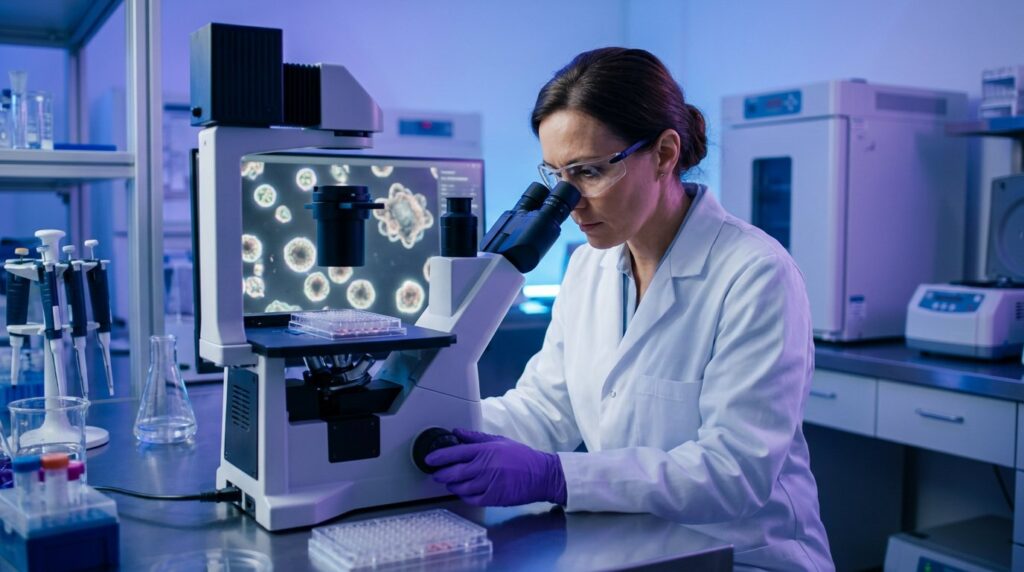
In biomedical research, 3D cultures are experimental systems in which cells grow and interact within three dimensional arrangements rather than primarily across a flat two dimensional surface. Depending on the model, cells may self assemble into spheroids or organoids, grow within extracellular matrix based materials or synthetic scaffolds, or be maintained in engineered culture devices. These approaches can reproduce selected aspects of tissue organization, cellular interactions, nutrient and oxygen gradients, and biological behavior that conventional two dimensional cultures may not capture as effectively.
Three dimensional cell culture has become important across cancer research, developmental biology, drug discovery, tissue engineering, regenerative medicine, toxicology, and disease modeling. Researchers can construct systems ranging from relatively simple multicellular aggregates to complex organoids derived from stem or progenitor cells.
However, greater structural complexity does not automatically make every three dimensional model more accurate. Model choice must be driven by the scientific question, validated outcomes, reproducibility, and the limitations of each experimental platform.
What Are 3D Cultures?
3D cultures are laboratory models that allow cells to organize and interact in three spatial dimensions.
Traditional two dimensional cell culture usually involves cells attaching to a relatively flat surface, such as a treated culture dish or flask. This environment has been extraordinarily valuable to biological research, but it can alter cell shape, polarity, signaling, differentiation, and interactions compared with cells organized within tissues.
Three dimensional models attempt to address selected limitations by creating more spatially relevant environments.
Common approaches include:
• Multicellular spheroids
• Organoids
• Scaffold based cultures
• Hydrogel based models
• Extracellular matrix supported cultures
• Air liquid interface models
• Tissue explants
• Bioprinted constructs
• Microfluidic culture systems
• Organ on chip platforms incorporating three dimensional tissues
These systems differ substantially in biological complexity and intended use.
How Do 3D Cultures Work?
A three dimensional culture provides conditions in which cells can grow upward, downward, and laterally rather than being restricted largely to a planar surface.
How this is achieved depends on the platform.
Some systems prevent cells from attaching to a conventional dish, encouraging them to aggregate. Others surround cells with a matrix or scaffold that provides physical support. Stem cell based systems can also use developmental signals that encourage cells to self organize into structures resembling aspects of particular organs.
Cell to Cell Interactions in 3D Cultures
Cells communicate through direct contact, secreted molecules, and their surrounding extracellular environment.
Three dimensional organization can change the number and orientation of these interactions.
This may influence:
• Gene expression
• Cell polarity
• Proliferation
• Differentiation
• Metabolism
• Drug responses
• Migration
• Survival
The effects depend on cell type and model design.
Nutrient and Oxygen Gradients
Larger three dimensional structures can develop gradients because cells closer to the exterior have different access to nutrients and oxygen than cells deeper inside.
This characteristic can be experimentally useful.
Tumor spheroids, for example, may contain regions with different proliferation, metabolic, and oxygen conditions.
Gradients Can Also Be a Limitation
The same gradients that make a model biologically interesting can make experiments harder to standardize.
If spheroids differ substantially in size, the conditions inside them may also differ.
Controlling dimensions and monitoring culture health can therefore be important for reproducible research.
3D Cultures vs 2D Cell Cultures
Two dimensional and three dimensional cultures should not necessarily be viewed as competing methods.
They answer different experimental questions.
Advantages of 2D Cell Culture
Traditional monolayer culture can offer:
• Straightforward observation
• Relatively low cost
• Easy sampling
• High experimental throughput
• Well established protocols
• Simpler imaging
• Easier access to individual cells
These advantages mean 2D culture remains valuable across modern research.
Advantages of 3D Cultures
Three dimensional systems can provide more complex spatial organization and cell interactions.
For selected research questions, they may reproduce aspects of in vivo biology more effectively than monolayers.
However, this benefit must be demonstrated for the specific model and endpoint.
Which Model Is Better?
Neither model is universally superior.
A simple biochemical question may be answered efficiently in 2D culture. A question involving tissue architecture, cell spatial organization, penetration of a therapeutic compound, or developmental processes may benefit from a three dimensional approach.
Many research programs use both.
9 Major Advances Enabled by 3D Cultures
The growth of three dimensional culture technology has expanded the range of biological questions that can be investigated experimentally.
1. More Complex Disease Models
Researchers can develop three dimensional systems that reproduce selected structural or cellular features of disease.
These models can support mechanistic research while retaining greater architectural complexity than many standard monolayers.
Disease Models Are Still Models
An organoid or spheroid does not reproduce an entire human organ or patient.
Immune systems, circulation, nerves, hormones, microbiota, mechanical forces, and interactions among distant organs can be absent or only partially represented.
Researchers must avoid overstating physiological equivalence.
2. Advanced Cancer Research
Three dimensional tumor cultures are widely studied because cancer biology involves complex interactions among cells and their surrounding environment.
Spheroids can help researchers investigate drug penetration, hypoxia, proliferation, invasion, and treatment response.
More sophisticated models can incorporate stromal or immune components.
3. Organoid Development
Organoids represent one of the most influential developments in three dimensional culture.
Depending on the tissue and protocol, stem or progenitor cells can organize into structures reproducing selected cellular and architectural characteristics of organs.
Organoids have been developed to model tissues including the intestine, brain, kidney, liver, lung, pancreas, and retina.
4. Drug Discovery and Screening
Three dimensional models can serve as an intermediate experimental platform between simpler cell assays and more complex preclinical models.
Researchers can compare therapeutic candidates under conditions that better reproduce selected aspects of tissue organization.
Predictive Value Requires Validation
A model should not be assumed to predict patient outcomes merely because it is three dimensional.
Its relevance must be validated against appropriate biological or clinical evidence.
5. Personalized Research Models
Patient derived cells can sometimes be used to produce organoids or other cultures.
These systems offer opportunities to study biological variation among individuals and diseases.
Clinical decision making based on such models requires substantial validation and appropriate regulatory frameworks.
6. Tissue Engineering
Three dimensional culture is central to many tissue engineering approaches.
Cells may be combined with scaffolds, hydrogels, biomaterials, and biological signals to investigate tissue formation and repair.
The long term objective in some research areas is developing functional replacement tissues, although clinical translation remains challenging.
7. Toxicology Research
Three dimensional models can be used to investigate cellular responses to chemicals, drugs, or environmental exposures.
Liver and other organ specific cultures are particularly relevant to research on metabolism and toxicity.
Such models must be validated for the particular toxicological question before substituting for established methods.
8. Developmental Biology
Organoids can help researchers investigate processes associated with tissue development and cell differentiation.
Controlled laboratory conditions allow selected signaling pathways and environmental influences to be examined experimentally.
9. Reduced Dependence on Some Animal Experiments
Advanced cell models can replace or reduce certain animal experiments in specific contexts.
They can also complement animal studies by helping researchers select hypotheses or compounds before moving to more complex models.
Three dimensional cultures cannot currently replace every animal or human study, and suitability depends on the scientific and regulatory question.
Types of 3D Cultures
The appropriate model depends on the cells, research objective, desired complexity, and available equipment.
Multicellular Spheroids
Spheroids are approximately spherical aggregates of cells.
They can be formed from one cell type or multiple cell populations depending on the model.
Tumor Spheroids
Cancer researchers use tumor spheroids to investigate aspects of solid tumor biology.
As spheroids grow, cells at different depths can encounter different microenvironmental conditions.
This provides opportunities to study therapeutic penetration and heterogeneous responses.
How Spheroids Differ From Organoids
Spheroids are generally cellular aggregates and do not necessarily reproduce complex organ specific architecture.
Organoids typically involve self organization and differentiation intended to reproduce selected features of a particular tissue or organ.
The terminology can overlap in some literature, so authors should define their models precisely.
Organoids
Organoids are self organized three dimensional cellular structures produced from stem cells, progenitor cells, or tissue derived cells under specific culture conditions.
They can reproduce selected aspects of tissue architecture and function.
Stem Cell Derived Organoids
Pluripotent stem cells can be guided through developmental programs using defined signals.
This can produce complex structures containing multiple cell types.
Adult Stem Cell Organoids
Tissue resident stem or progenitor cells can also form organoid cultures under appropriate conditions.
These are widely used in studies of epithelial tissues and disease.
Patient Derived Organoids
Cells from patient samples can sometimes generate cultures that retain selected characteristics of the original tissue.
This makes them interesting for cancer biology and precision medicine research.
Clinical application requires careful validation and should not be inferred from laboratory findings alone.
Scaffold Based 3D Cultures
Scaffolds provide a physical structure supporting cell attachment and organization.
They can be made from natural, synthetic, or combined materials.
Natural Scaffolds
Natural materials can provide biologically relevant components but may introduce variability.
Material source, composition, mechanical properties, and batch consistency can influence experimental outcomes.
Synthetic Scaffolds
Synthetic materials can offer more control over chemical and mechanical characteristics.
Researchers can modify properties such as stiffness, porosity, degradation, and surface chemistry.
Hydrogel Based 3D Cultures
Hydrogels are water rich polymer networks used extensively in tissue models.
Cells can be encapsulated within or cultured around these materials.
Why Matrix Properties Matter
Cells can respond to stiffness, composition, degradability, and other mechanical properties.
A matrix is therefore not simply an inert holder.
Its properties can influence experimental behavior and should be reported clearly.
Scaffold Free 3D Cultures
Scaffold free systems rely on cellular self assembly rather than a supporting biomaterial.
Methods can include low attachment culture, hanging drop approaches, and specialized aggregation platforms.
These systems can simplify some experiments but still require control over aggregate size and shape.
3D Cultures in Cancer Research
Cancer is particularly suited to three dimensional modeling because tumor behavior is influenced by spatial relationships and microenvironmental conditions.
Drug Penetration
A therapeutic compound may reach exterior cells more readily than those deep within a multicellular structure.
Three dimensional models can help researchers investigate this phenomenon.
Tumor Microenvironment
Advanced cultures can include cancer cells alongside fibroblasts, immune cells, endothelial components, or extracellular matrices.
This increases biological complexity but can also make experimental interpretation more difficult.
Cancer Models Cannot Replicate Every Patient Factor
Human tumors interact with whole body physiology.
No isolated culture fully reproduces circulation, systemic immunity, drug metabolism, endocrine effects, and all host responses simultaneously.
Findings therefore require appropriate validation.
3D Cultures in Drug Development
Drug development requires progressively stronger evidence as a candidate advances.
Three dimensional models can provide useful information at selected stages.
Compound Screening
Researchers can expose cultures to candidate compounds and measure relevant endpoints.
These may include viability, growth, morphology, biomarkers, or functional outcomes.
Combination Testing
Cancer research may evaluate combinations of therapeutic agents in three dimensional models.
Experimental findings do not establish clinical safety or efficacy.
Human treatment decisions require evidence from appropriately designed clinical research and regulatory review.
3D Cultures and Precision Medicine
Patient derived models have raised interest in testing how individual tumors or tissues respond to different interventions.
This concept is scientifically promising but technically demanding.
Potential Advantages
Patient derived cultures may capture some biological variation that immortalized cell lines do not.
This can support research into heterogeneous treatment responses.
Current Limitations
Turnaround time, culture success rate, cost, standardization, sampling bias, and clinical validation can all present challenges.
Researchers should distinguish experimental promise from established clinical utility.
3D Bioprinting and Cell Culture
Three dimensional bioprinting uses controlled deposition of cells, biomaterials, and other components to construct patterned biological structures.
It can provide spatial control that self assembled cultures may not offer.
Bioinks
Bioinks are materials designed to support cells during and after printing.
Their mechanical and biological properties can affect cell survival and tissue development.
Bioprinted Tissue Is Not Automatically an Organ
A printed structure resembling tissue geometrically does not necessarily reproduce complete organ function.
Creating stable vascularization, appropriate cellular organization, innervation, and long term function remains a major research challenge.
Organ on Chip and 3D Cultures
Organ on chip technologies combine cells with engineered microenvironments, frequently using microfluidics.
Some systems incorporate three dimensional cellular structures and controlled fluid flow.
Why Flow Matters
Living tissues experience mechanical forces and transport through blood, air, or other fluids.
Microfluidic systems can recreate selected aspects of these conditions more effectively than static culture in certain experiments.
3D Cultures and Regenerative Medicine
Regenerative medicine investigates ways to repair or replace damaged tissue.
Three dimensional culture can support studies of cell differentiation, biomaterials, transplantation, and tissue formation.
Translational Challenges
Moving from a laboratory model to human treatment requires evidence addressing safety, manufacturing quality, reproducibility, immune responses, long term function, and regulatory requirements.
Promising laboratory findings should not be represented as established therapy prematurely.
Advantages of 3D Cultures
Three dimensional models can offer several research advantages.
Potential benefits include:
• More realistic spatial organization
• Enhanced cell to cell interaction
• Tissue like gradients
• Greater architectural complexity
• Improved modeling of selected disease characteristics
• Opportunities for patient derived research
• Integration with biomaterials and microfluidics
• Potentially relevant drug response studies
These advantages are model dependent.
Limitations of 3D Cultures
Complexity introduces technical challenges.
Reproducibility
Organoids and spheroids can vary in size, morphology, cellular composition, and maturity.
Standardized protocols and meaningful quality controls are essential.
Imaging Challenges
Cells located deep inside three dimensional structures are harder to image than flat monolayers.
Advanced microscopy, tissue clearing, optical sectioning, or other techniques may be required.
Cost
Specialized matrices, growth factors, media, imaging systems, and analysis tools can make some three dimensional experiments relatively expensive.
Experimental Complexity
More variables can complicate interpretation.
If cells, matrix properties, oxygen gradients, and multiple signaling factors change simultaneously, identifying the mechanism behind an observed effect can become difficult.
Reproducibility in 3D Cell Culture
Reproducibility is essential for useful experimental models.
Researchers should document culture conditions thoroughly.
Important Variables
These can include:
• Cell source
• Passage number where applicable
• Starting cell number
• Culture medium
• Matrix composition
• Growth factors
• Culture duration
• Spheroid or organoid size
• Incubation conditions
• Imaging methods
• Analytical endpoints
Relevant biological and technical replicates should be included according to sound experimental design.
Quality Control for 3D Cultures
A culture’s appearance alone cannot establish that it represents the intended biological model.
Researchers may use morphology, molecular markers, functional assays, imaging, genomic methods, or other measurements for characterization.
Confirm Cell Identity
Cell line authentication and appropriate contamination monitoring remain important.
Mycoplasma and cross contamination can compromise experiments regardless of whether the culture is two or three dimensional.
Ethical Considerations
Some 3D models raise ethical questions, particularly when they use human stem cells, patient tissue, or increasingly complex neural systems.
Human Tissue
Research using human samples should follow applicable consent, ethics review, privacy, and governance requirements.
Researchers must handle genomic and health information appropriately.
Organoid Ethics
As organoid models become more sophisticated, ethical discussion continues around consent, biobanking, commercialization, transplantation, and particular types of neural models.
Policies should evolve alongside scientific capability.
The Future of 3D Cultures
The field is moving toward systems with greater standardization, complexity, and integration with other technologies.
Researchers are exploring improved vascularization, immune components, automated culture, high throughput screening, advanced imaging, machine learning analysis, and multi organ platforms.
Automation and High Throughput Models
Automation could reduce manual variability and allow larger experiments.
Standardized production may also make three dimensional models more practical for industrial screening.
Artificial Intelligence and 3D Culture Analysis
AI assisted imaging can help researchers classify structures, quantify morphology, track growth, and analyze large imaging datasets.
Algorithmic results still require appropriate validation, especially when automated measurements become the basis for biological conclusions.
Frequently Asked Questions
What are 3D cultures?
3D cultures are laboratory systems that allow cells to grow and interact in three dimensional structures rather than primarily on flat two dimensional surfaces.
What is the difference between 3D cultures and 2D cultures?
Two dimensional cultures generally grow cells across a flat surface, while three dimensional systems provide spatial organization that can reproduce selected aspects of tissue architecture and microenvironments.
What is a 3D cell spheroid?
A spheroid is a three dimensional aggregate of cells, often approximately spherical, used to study cellular interactions, gradients, drug responses, and other biological processes.
What is an organoid?
An organoid is a self organized three dimensional cellular structure designed to reproduce selected structural or functional characteristics of a particular tissue or organ.
Are 3D cultures better for drug testing?
They can provide more biologically relevant information for some questions, but no model is universally superior. Predictive value must be validated for the specific drug and endpoint.
Can 3D cultures replace animal testing?
They can replace or reduce some animal experiments and complement others, but they currently cannot reproduce every whole organism process needed for biomedical and regulatory research.
Conclusion
3D cultures have expanded the experimental possibilities of cell biology by introducing spatial organization, tissue like interactions, and more complex cellular environments. Spheroids, organoids, scaffolds, hydrogels, bioprinted tissues, and microfluidic systems now support research across cancer biology, drug discovery, development, and regenerative medicine. Their value depends on selecting and validating the right model rather than assuming three dimensional systems are automatically more accurate. As standardization, automation, and analytical technologies improve, 3D culture methods are likely to remain an important bridge between conventional laboratory experiments and more complex biological research.