
Travel technology is the collection of digital tools, platforms, and systems that help travelers find, compare, and book tours and trips. It makes tour discovery...

Travel technology is the collection of digital tools, platforms, and systems that help travelers find, compare, and book tours and trips. It makes tour discovery and booking easier by putting search, reviews, instant booking, and payments into one app, and by using artificial intelligence to recommend exactly the right tour. The online travel market is worth hundreds of billions of dollars, and these tools are the engine behind it.

Finding a great tour used to mean calling agencies, comparing brochures, and hoping for the best, and travel technology changed the entire experience. Digital tools changed all of that. Travel technology is the digital layer that connects travelers with tours, activities, flights, and hotels, and it has made tour discovery and booking dramatically easier for people in the United States and around the world. This guide explains how travel technology works, why it matters, the ten best tools, real data, and how to get the most from it.
Travel Technology Explained: What It Really Means
Travel technology, explained simply, is the software, platforms, and systems that power the modern travel experience. It includes online travel agencies, booking platforms, mobile apps, global distribution systems, payment systems, review sites, and artificial intelligence tools, and together these make up the stack travelers use every day.
These tools make tour discovery and booking easier in three connected ways. First, they give travelers a single place to search thousands of tours and activities from hundreds of operators. Second, they provide ratings, photos, and reviews that help travelers choose with confidence. Third, they complete the booking instantly, with secure payment, instant confirmation, and digital tickets, and that end to end flow is what makes them so valuable.
The scale is enormous. Online travel agencies alone moved hundreds of billions of dollars in bookings, and mobile apps now dominate how travelers book, which shows how deeply these tools are embedded in modern life.
Why Travel Technology Is Changing Tour Discovery and Booking
The shift has transformed tour discovery and booking because the way people plan trips changed, and several forces explain why these tools matter so much today.
Travelers expect digital everything. More than 80 percent of travelers book their trips online, and most start their planning on a phone, which makes travel technology the natural home for tour discovery and booking.
Choice is overwhelming. There are millions of tours and activities worldwide, and these platforms solve the discovery problem by filtering, ranking, and recommending, which turns an overwhelming catalog into a short list of great options.
AI is becoming mainstream. Around 40 percent of travelers globally now use AI tools for trip planning, and that number is climbing, which makes artificial intelligence a core part of modern travel technology.
Mobile is the default. Mobile apps influence the majority of last minute bookings, and travelers want to find and book a tour from anywhere, which is exactly what these apps deliver.
Personalization is expected. A large share of travelers prefer personalized recommendations, and these platforms use data and AI to serve tours that match each traveler’s interests, budget, and schedule.
The result is that these tools have become the standard way to discover and book tours, and businesses that use them well grow faster.
How Travel Technology Makes Tour Discovery Easier
Tour discovery is where these tools shine first, and several capabilities make finding the right tour dramatically easier.
Search and Filtering in Travel Technology
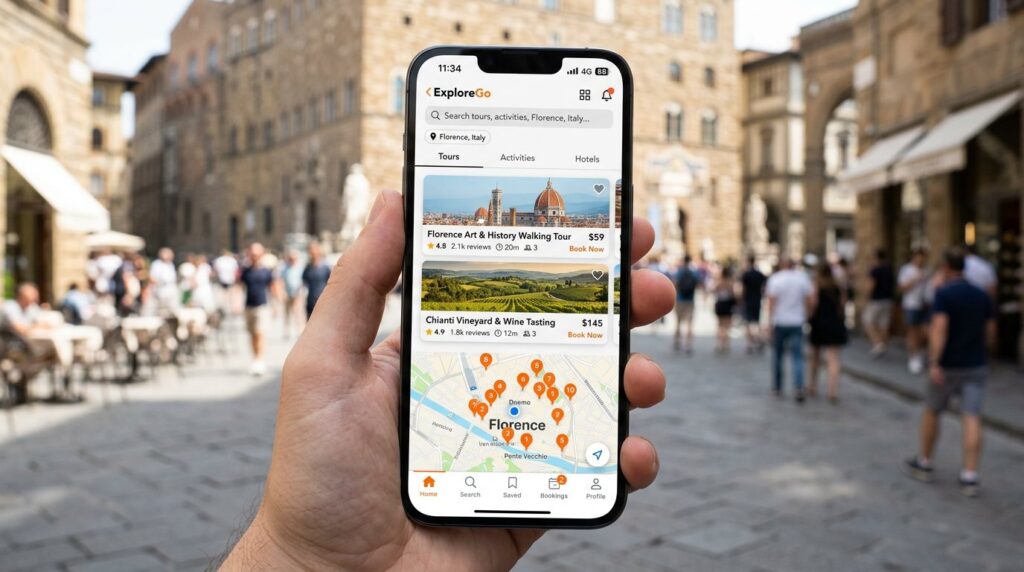
Travel technology platforms let travelers search by destination, date, price, duration, and activity type, and they filter millions of options in seconds. Instead of calling agencies one by one, travelers see every relevant tour in one place, which is tour discovery made easy.
Reviews and Ratings in Travel Technology
Ratings, photos, and verified reviews are built into these platforms, and travel technology gives travelers honest signals about quality before they book. A tour with thousands of strong reviews is easy to trust, and travel technology surfaces that social proof at the moment of decision, which reduces risk.
Maps and Location in Travel Technology
Modern platforms connect tours to maps, showing where a tour starts, what it covers, and what is nearby. Travelers can see the route, check proximity to their hotel, and plan their day, which makes these tools invaluable in unfamiliar cities.
AI Recommendations in Travel Technology
Artificial intelligence is the newest discovery engine. AI learns a traveler’s interests, past trips, and budget, then recommends tours they would never have found by scrolling, and this personalization is why the experience keeps improving.
How Travel Technology Makes Tour Booking Easier
Once a traveler finds the right tour, these tools make booking fast, safe, and flexible, which is the other half of why they matter.
Instant Booking in Travel Technology
Bookings are confirmed in real time. Availability is live, so a traveler sees what is actually open, and the booking is confirmed instantly, which removes the waiting and uncertainty that used to slow tour booking, a core win for travel technology.
Secure Payments in Travel Technology
Payments are built into the platforms, with cards, digital wallets, and buy now pay later options. Travelers pay securely in their own currency, and tour operators get paid reliably, which makes travel technology a trusted middle layer in tour booking.
Digital Tickets in Travel Technology
Tickets, vouchers, and confirmations arrive as QR codes in the apps, so travelers never print anything and never lose a paper voucher. The digital ticket is scanned at the tour, and that seamless flow is travel technology working at its best.
Flexible Policies in Travel Technology
Modern platforms include free cancellation and instant rescheduling, which gives travelers confidence to book early. Flexible policies reduce hesitation, and they are a major reason these tools convert browsers into bookers.

The 10 Best Travel Technology Tools for Tour Discovery and Booking
These ten tools form the modern stack, and each one makes tour discovery and booking easier for travelers and businesses.
1. Online Travel Agencies in Travel Technology
Online travel agencies are the biggest names in travel technology, connecting travelers to flights, hotels, tours, and activities in one place. They offer comparison, bundles, and reviews, and they are the first stop for most tour discovery and booking.
2. Tour and Activity Marketplaces in Travel Technology
Specialized marketplaces focus on tours and experiences, and they are built for exactly what this guide covers. Travelers browse thousands of tours with photos, ratings, and instant booking, and operators gain a global storefront.
3. Mobile Booking Apps in Travel Technology
Mobile apps are the fastest growing part of travel technology, with the majority of online bookings now happening on phones. Apps offer location aware suggestions, push notifications, and one tap booking, which makes them the easiest way to book a tour on the go.
4. AI Trip Planning Assistants in Travel Technology
AI assistants and chatbots plan with the traveler. They build itineraries, suggest tours, answer questions at any hour, and refine recommendations, which is why AI is the fastest evolving layer of the stack.
5. Review and Inspiration Platforms in Travel Technology
Review and inspiration sites fuel discovery before the search even starts. Travelers explore photos, itineraries, and guides, then move into booking platforms, and this inspiration layer is vital.
6. Dynamic Packaging Engines in Travel Technology
Dynamic packaging bundles flights, hotels, and tours into one trip at a better price. The engine assembles combinations in real time, which gives travelers convenience and value.
7. Payment and Fintech Solutions in Travel Technology
Payment platforms, digital wallets, and installment plans remove friction at checkout. Split payments and local currencies make tour booking easier, and these fintech tools are essential for global travelers.
8. Global Distribution Systems in Travel Technology
Global distribution systems are the older backbone, connecting agencies to live inventory across airlines, hotels, and tours, and they keep the industry connected.
9. Tour Operator Software in Travel Technology
On the business side, tour operator software helps operators manage availability, bookings, payments, and customers. This software powers the supply side of tour discovery and booking, and it lets small operators compete with giants.
10. Analytics and Personalization Tools in Travel Technology
Finally, analytics and personalization tools learn from every traveler. They segment audiences, predict demand, and tailor offers, which makes tour discovery more relevant and booking more likely, and they complete the loop.
Travel Technology Real-Time Data and Statistics
Travel technology sits at the center of a massive and growing market, and the numbers show why it matters.
| Metric | Figure |
|---|---|
| Online travel agencies market 2025 | About 663.7 billion dollars |
| Online travel agencies market 2026 | About 718.9 billion dollars |
| Online travel booking platform 2026 | About 702.67 billion dollars |
| Online travel booking platform 2030 | About 1,000.53 billion dollars |
| Online booking share of travelers | Over 80 percent |
| OTA share of digital travel sales | About 55 to 60 percent |
| Mobile app share of bookings | About 52 to 53 percent |
| Travelers using AI for trip planning | About 40 percent globally |
| US travelers using AI to plan trips | About 37 to 39 percent |
| Travelers who prefer personalized recommendations | About 65 percent |
North America is the largest region for online travel, and the United States leads the world in digital booking adoption, which is why these tools matter so much for US travelers and businesses. The trends are clear, mobile, AI, and personalization are reshaping the industry, and tour discovery and booking are easier today than at any point in history.
Travel Technology for Tour Operators and Agencies
These tools are not only for travelers, and the business side benefits just as much.
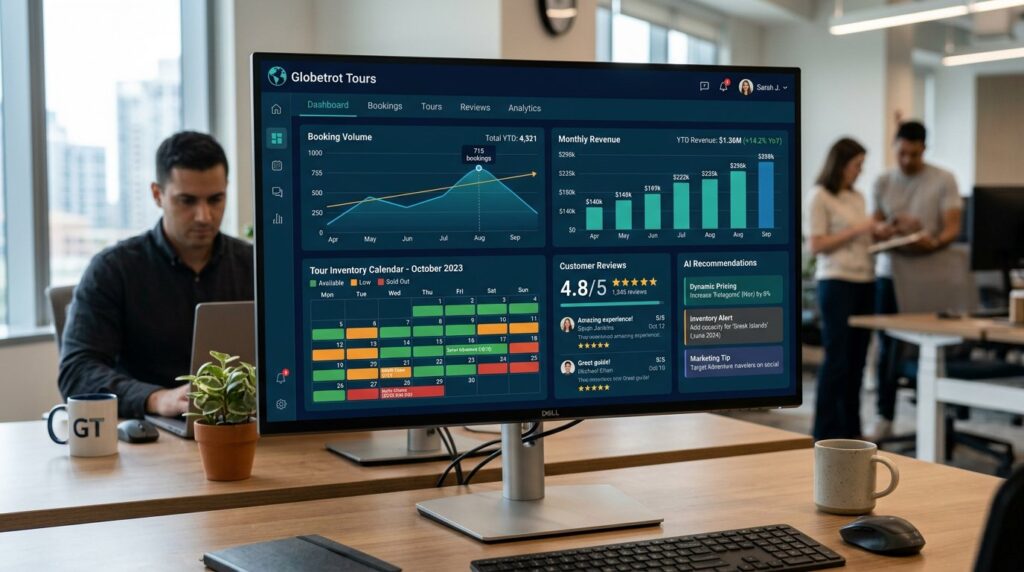
Tour operators use travel technology to manage inventory in real time, so availability is always accurate and double bookings disappear. Booking software handles payments, confirmations, and digital tickets automatically, which saves hours of admin work. Distribution through marketplaces and online agencies gives operators a global reach, and analytics show which tours sell, when, and to whom.
For small tour operators, these tools level the playing field. A one person operator can list tours on global platforms, accept payments, and manage customers affordably, which was impossible before the digital era. Agencies also use the tools to serve clients faster, build itineraries, and earn on bookings, and the dashboard above shows how they bring the whole business into one view.
Travel Technology Cost and Value Calculations
These tools deliver measurable value, and the math helps explain why businesses invest.
Calculation 1: The Cost of Manual Booking vs Travel Technology
A tour operator processing 100 bookings a month manually might spend 15 minutes per booking on calls, emails, and paperwork, which is 25 hours a month, or 300 hours a year. At 25 dollars an hour, that manual work costs about 7,500 dollars a year. Automation cuts the time to minutes and saves most of that cost.
| Booking Approach | Hours per Year | Cost at 25 Dollars per Hour |
|---|---|---|
| Manual booking process | About 300 hours | About 7,500 dollars |
| Automated with travel technology | About 50 hours | About 1,250 dollars |
| Savings | About 250 hours | About 6,250 dollars |
Calculation 2: Travel Technology and Conversion
These tools improve how many browsers become bookers. Instant booking, secure payments, and mobile optimization remove friction, and businesses using AI personalization report booking increases of up to 25 percent. For a tour operator doing 50,000 dollars a month, a 15 percent conversion lift adds about 7,500 dollars a month, or 90,000 dollars a year.
Calculation 3: The Value of a Digital Booking Channel
A tour operator that lists on online platforms reaches millions of travelers it could never reach alone. Even a modest share of that traffic typically pays for the platform fees many times over, which makes the investment obvious.
These calculations are estimates, but the direction is clear. These tools cut cost, lift conversion, and expand reach, which is why both travelers and operators win.
Travel Technology for US Travelers
For travelers in the United States, travel technology has made tour discovery and booking dramatically easier, and the experience keeps improving.
A US traveler planning a trip can open an app, search a destination, compare hundreds of tours by price and rating, read verified reviews, and book in under a minute, all from a phone. AI suggests tours that match their interests, and flexible policies let them book with confidence. When plans change, rescheduling or canceling is instant, and digital tickets mean nothing to print or lose.
US travelers also benefit from price comparison across platforms, so they know they are getting a fair deal, and loyalty programs and mobile deals add value. For the 72 percent of US travelers who prefer booking online, these tools are simply how tours get discovered and booked today.
Travel Technology for US Tour Businesses
For tour businesses in the United States, these tools are a growth engine.
Small operators use them to publish tours instantly, sell globally, and manage bookings without a large team. Established operators use them to scale, with dynamic pricing, analytics, and customer relationship tools that fill more seats at better prices. Agencies use them to serve travelers faster and earn more per booking.
US tour businesses that adopt travel technology report higher conversion, better customer satisfaction, and lower admin cost, and the market data shows the trend, with the online travel market growing at double digit rates. The question is no longer whether to use them, it is how to use them best, and this guide gives the roadmap.
Honest Challenges of Travel Technology
These tools are powerful, but they are not perfect, and an honest guide must cover the trade offs.
Fragmentation is a challenge. Travelers often compare across several platforms, and operators manage multiple channels, which can create confusion and extra work. Integration helps, but the ecosystem is not always seamless.
Data and privacy matter. These platforms collect a lot of traveler data, and businesses must protect it and follow privacy rules, which adds responsibility to the convenience.
Commission costs are real. Marketplaces and online agencies charge commissions, which cuts into operator margins, and smaller operators must price carefully.
AI is not always right. Recommendations can miss context, and travelers should verify details like meeting points and accessibility, because these tools support decisions but do not replace judgment.
None of these challenges means the tools are the wrong choice. It means travelers and operators should use them wisely, compare options, and keep the human touch.
How to Choose the Right Travel Technology
Choosing these tools, whether as a traveler or a business, is easier with a clear process.
For travelers, compare a few platforms before booking, check reviews and cancellation policies, and use AI suggestions as a starting point, not the final word. Verify meeting points and inclusions on the tour page, because listings are only as good as their details.
For tour operators, start with the essentials. Choose tools that handle online booking, payments, and digital tickets, and list on at least one major marketplace to gain reach. Use analytics to understand demand, and test different channels to see what converts. Train staff on the tools you adopt, and review results regularly as the industry evolves.
For agencies, automate booking and itinerary building, and pair it with personal service, because the combination of technology and human expertise is the strongest offer.
Frequently Asked Questions
These are the questions travelers and businesses ask most about travel technology.
- What is travel technology? Travel technology is the digital tools, platforms, and systems that help travelers find, compare, and book tours and trips, including apps, online agencies, and AI tools.
- How does travel technology make tour discovery easier? Travel technology makes tour discovery easier with search, filters, reviews, maps, and AI recommendations that narrow thousands of tours to the best options.
- How does travel technology make tour booking easier? Travel technology makes booking easier with instant confirmation, secure payments, digital tickets, and flexible cancellation policies in one place.
- Is travel technology safe to use for bookings? Yes, reputable travel technology platforms use secure payments and verified listings, but travelers should check reviews and cancellation policies before booking.
- How much do online travel agencies charge in travel technology? Online agencies earn commissions from operators, and travelers generally pay the same or similar prices while gaining comparison and convenience through travel technology.
- Do small tour operators need travel technology? Yes, travel technology lets small operators list tours globally, accept payments, and manage bookings without a large team, which levels the playing field.
- How is AI changing travel technology? AI in travel technology recommends tours, builds itineraries, answers questions, and personalizes offers, which makes tour discovery and booking faster and more relevant.
- What is the future of travel technology? The future of travel technology includes smarter AI, seamless mobile booking, digital identity for one click travel, and deeper personalization across the whole trip.
Conclusion
Travel technology has made tour discovery and booking easier than ever, and the data confirms its importance. The online travel market is worth hundreds of billions of dollars and growing at double digit rates, over 80 percent of travelers book online, and around 40 percent now use AI in their trip planning. For travelers in the United States, travel technology means searching thousands of tours in seconds, reading verified reviews, booking instantly with secure payment, and carrying digital tickets on a phone, and for tour businesses, it means global reach, automated operations, and higher conversion.
The honest picture matters too, because these tools work best when travelers verify details and operators choose wisely, and the combination of technology and human judgment is the winning formula. Whether you are a traveler planning your next adventure or a tour operator growing your business, understanding travel technology is essential, because it is how tours are discovered and booked today, and this guide gives you the foundation to use it well.