
Retrospective Risk Adjustment Coding is a vital process used by health plans, provider organizations, and coding teams to review past medical records and ensure all...
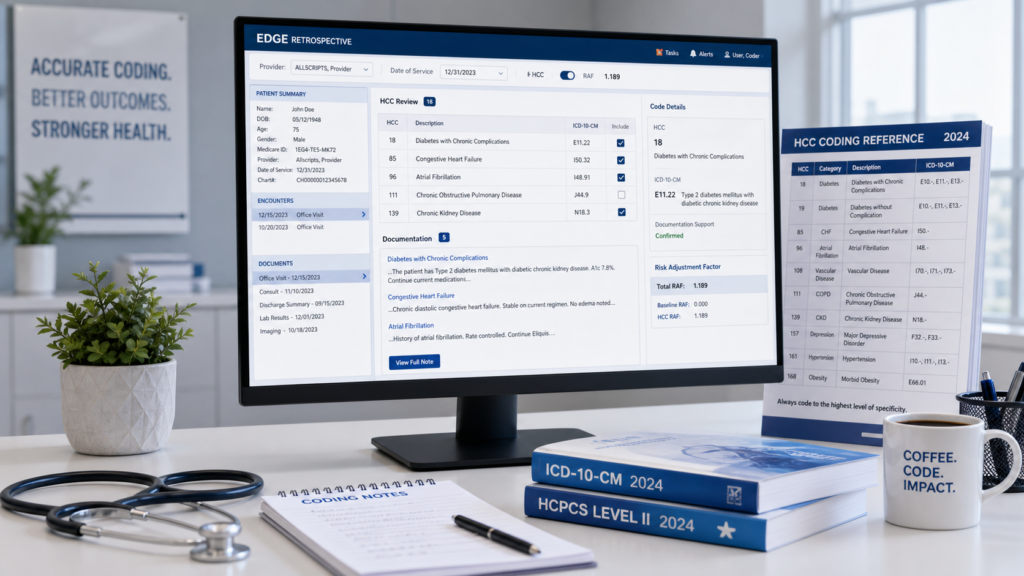
Retrospective Risk Adjustment Coding is a vital process used by health plans, provider organizations, and coding teams to review past medical records and ensure all supported diagnoses are properly coded for Hierarchical Condition Category (HCC) risk adjustment. By identifying previously missed or undocumented chronic conditions, this method helps organizations achieve more accurate Risk Adjustment Factor (RAF) scores, optimize reimbursement, and improve quality reporting.
What Is Retrospective Risk Adjustment Coding?
Retrospective Risk Adjustment Coding involves the systematic review of historical patient charts, claims data, and clinical documentation after the date of service. Coders or specialized teams analyze records from the previous year to capture HCC-eligible diagnoses that were either not documented or not coded during the original encounter.
This process is especially important in Medicare Advantage plans, where accurate risk adjustment directly impacts capitated payments from the Centers for Medicare & Medicaid Services (CMS). Unlike concurrent or prospective coding, retrospective reviews allow for a more thorough examination of complete medical records.
How Retrospective Risk Adjustment Coding Differs from Prospective Coding
While prospective risk adjustment coding occurs before or during a patient visit to improve real-time documentation, retrospective coding reviews care that has already been delivered.
Prospective coding focuses on prevention and education, whereas retrospective coding focuses on compliance, accuracy, and revenue recovery. Many organizations use both approaches together to create a comprehensive risk adjustment strategy that maximizes both clinical documentation improvement and financial performance.
7 Powerful Benefits of Retrospective Risk Adjustment Coding
Healthcare organizations that invest in high-quality retrospective risk adjustment coding typically experience significant advantages:
- Improved RAF Score Accuracy
Comprehensive chart reviews help capture all applicable HCC codes, leading to more accurate risk scores. - Increased Revenue Recovery
Properly documented diagnoses often result in substantial additional payments from Medicare Advantage and other risk-adjusted contracts. - Reduced Audit Risk
Thorough retrospective reviews strengthen compliance and decrease the likelihood of repayment demands during CMS audits. - Better Quality Reporting
Accurate coding supports improved performance in quality programs such as Stars Ratings and HEDIS measures. - Identification of Care Gaps
Reviews often reveal patients who need follow-up care for chronic conditions, supporting better population health management. - Enhanced Provider Documentation
Feedback from retrospective findings helps educate physicians on more effective documentation practices. - Competitive Advantage
Organizations with strong retrospective programs maintain healthier financial margins and more accurate risk profiles.
Best Practices for Effective Retrospective Risk Adjustment Coding
Successful programs follow several key principles. First, they establish clear coding guidelines aligned with CMS regulations. Second, they invest in experienced certified coders or specialized vendors with deep HCC expertise. Third, they implement robust quality assurance processes, including second-level reviews and regular audits.
Technology also plays a growing role. Many organizations now use natural language processing (NLP) and artificial intelligence tools to help identify potential coding opportunities within large volumes of medical records.
Common Challenges in Retrospective Risk Adjustment Coding
Despite its benefits, retrospective coding presents challenges. It can be time-intensive and resource-heavy. There is also a limited window to submit supplemental diagnoses to CMS, making timely execution critical. Additionally, organizations must maintain strict compliance to avoid upcoding or unsupported diagnoses that could trigger penalties.
Overcoming these challenges requires careful planning, proper staffing, and the right combination of technology and human expertise.
The table below summarizes key differences and considerations:
| Aspect | Retrospective Coding | Prospective Coding |
|---|---|---|
| Timing | After date of service | Before or during visit |
| Primary Goal | Accuracy and revenue optimization | Real-time documentation improvement |
| Volume of Records | High | Lower |
| Compliance Risk | Medium (if not properly managed) | Lower |
| Revenue Impact | Often significant recovery | Preventive revenue protection |
The Role of Technology in Modern Retrospective Programs
Leading organizations are increasingly combining skilled coding teams with advanced AI-assisted tools. These technologies can scan millions of pages of clinical documentation to flag potential HCC opportunities, allowing coders to focus their expertise on validation and provider queries. This hybrid approach improves both speed and accuracy while controlling operational costs.
Frequently Asked Questions
What is retrospective risk adjustment coding?
Retrospective risk adjustment coding is the process of reviewing past medical records to identify and submit previously undocumented HCC-eligible diagnoses to improve risk scores and reimbursement.
How does retrospective risk adjustment coding differ from prospective coding?
Retrospective coding reviews care already provided, while prospective coding focuses on improving documentation during or before patient encounters.
Why is retrospective risk adjustment coding important for Medicare Advantage plans?
It ensures accurate RAF scores, which directly determine capitated payments from CMS. Proper coding helps organizations receive appropriate compensation for the health status of their members.
What types of professionals perform retrospective risk adjustment coding?
Certified Risk Adjustment Coders (CRC), Certified Professional Coders (CPC), and physicians with specialized training typically perform this work.
Can AI completely replace human coders in retrospective risk adjustment?
No. While AI tools significantly improve efficiency by identifying potential codes, human oversight remains essential for accuracy, context, and regulatory compliance.
How far back can retrospective risk adjustment coding be performed?
CMS typically allows risk adjustment submissions for the current year plus the previous year. Organizations must meet strict deadlines for data submission.
Conclusion
Medical Disclaimer: This article is for informational and educational purposes only and is not intended as medical advice. The information provided should not be used to diagnose, treat, cure, or prevent any disease. Retrospective Risk Adjustment Coding involves complex regulatory requirements that can have significant compliance and financial implications. Always consult with a qualified healthcare professional, certified risk adjustment coding expert, or legal advisor before implementing any coding processes or making changes to your organization’s compliance or revenue cycle management strategies. Individual results and regulatory requirements may vary.
When executed correctly, retrospective risk adjustment coding serves as a powerful tool for improving both clinical documentation integrity and financial performance. Organizations that build efficient, compliant retrospective programs position themselves for long-term success in value-based care environments.