
Aluminum sliding doors have become a popular architectural choice for homeowners who want larger glass areas, abundant natural light, convenient access to outdoor spaces, and clean...
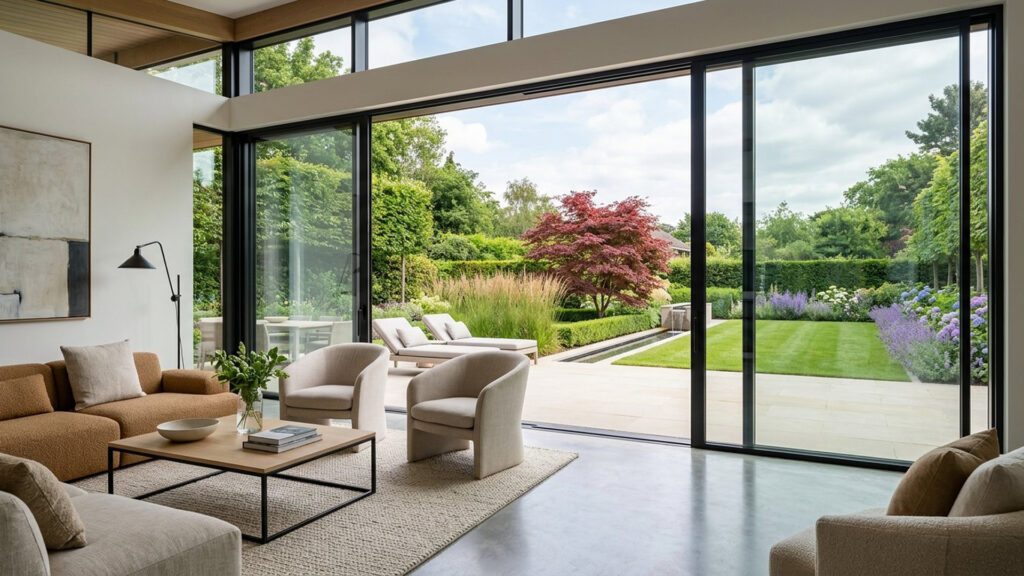
Aluminum sliding doors have become a popular architectural choice for homeowners who want larger glass areas, abundant natural light, convenient access to outdoor spaces, and clean contemporary lines. Their combination of strong frames and smooth sliding operation makes them suitable for patios, balconies, gardens, terraces, and other openings where saving usable floor space matters. Choosing the right system, however, requires more than comparing appearance. Glass specifications, thermal performance, security, weather resistance, hardware, installation quality, and maintenance all influence how well a sliding door performs over its service life.
This guide explains the most important benefits, limitations, specifications, costs, and buying considerations so homeowners can make an informed decision.
What Are Aluminum Sliding Doors?
Aluminum sliding doors are glazed door systems built around aluminum frames and panels that move horizontally along a track. Unlike hinged doors, they do not require clearance for a door leaf to swing inward or outward.
Most residential systems include one or more movable panels alongside fixed or additional sliding panels. Depending on the design and opening width, manufacturers may offer two panel, three panel, four panel, or multi panel configurations.
Aluminum is particularly well suited to this application because it provides substantial structural strength without requiring extremely bulky profiles. That characteristic can support relatively large glass panels while maintaining slim sightlines.
The actual performance of a door is determined by the entire system rather than aluminum alone. Frame construction, glazing, seals, drainage, rollers, locking hardware, manufacturing tolerances, and installation are all important.
9 Benefits of Aluminum Sliding Doors for Modern Homes
1. Aluminum Sliding Doors Maximize Natural Light
Large glazed panels allow daylight to travel deeper into living areas. Aluminum frames can often accommodate expansive glass surfaces while keeping frame sections relatively slim.
This can create a stronger visual connection between indoor rooms and gardens, patios, balconies, or other exterior spaces.
Natural light can also reduce the need for artificial lighting during some daylight hours. The actual effect on household energy consumption depends on orientation, climate, glazing, shading, building design, and occupant behavior.
2. They Save Valuable Floor Space
A sliding panel travels parallel to the wall or neighboring panel rather than swinging through the room. This makes sliding doors particularly useful where furniture, landscaping, pathways, or limited balcony dimensions make swing clearance inconvenient.
Homeowners can generally position furniture closer to the opening than they could with a conventional hinged door.
This space efficient operation is useful for:
• Patios and terraces
• Apartments and balconies
• Compact living rooms
• Kitchen and dining areas
• Garden entrances
• Poolside spaces
The benefit becomes particularly noticeable in smaller properties where every section of usable floor space matters.
3. Slim Frames Create a Contemporary Appearance
How Aluminum Sliding Doors Improve Sightlines
One reason aluminum is frequently used in contemporary architecture is its strength relative to its dimensions. Properly engineered aluminum profiles can create narrow visual lines around large glazed areas.
Slimmer visible frames place greater emphasis on the view rather than the surrounding structure.
Aluminum Sliding Doors and Minimalist Architecture
For minimalist residential designs, large uninterrupted glass areas can complement simple materials, open layouts, and clean geometric forms.
Frame finishes are available in numerous colors and textures. Depending on the manufacturer, options may include black, white, gray, bronze, metallic tones, and finishes intended to resemble other materials.
The appropriate design should complement the wider architecture rather than following appearance trends alone.
4. Aluminum Provides Good Durability
Aluminum does not rust in the same way as iron or conventional carbon steel because it naturally develops a protective oxide layer. Architectural aluminum systems commonly receive additional surface treatments, such as powder coating or anodizing, to improve appearance and environmental resistance.
This makes aluminum suitable for doors that experience regular exposure to sunlight, moisture, and changing temperatures.
Durability still depends heavily on product quality and environment. Properties near coastlines can expose frames and hardware to salt, while industrial environments may introduce additional contaminants. The manufacturer’s cleaning and maintenance requirements should therefore be followed.
A durable frame also does not guarantee durable hardware. Rollers, handles, locks, seals, and tracks have their own service requirements and may eventually need adjustment or replacement.
5. Modern Systems Can Deliver Strong Thermal Performance
Older metal frames gained a reputation for readily transferring heat because aluminum is naturally conductive. Modern high performance frames can address this weakness with thermal breaks.
A thermal break uses a less conductive material to separate interior and exterior portions of the aluminum profile, reducing direct heat transfer through the frame.
Glazing is equally important. Depending on climate and building requirements, an efficient system may incorporate double glazing, low emissivity coatings, gas filled cavities, warm edge spacers, or other performance features.
Energy Efficient Aluminum Sliding Doors
When evaluating energy efficiency, homeowners should compare independently tested whole product performance rather than relying on terms such as energy saving or insulated.
Relevant measures vary by country but may include U factor or U value, solar heat gain coefficient, air leakage, and other ratings defined by local standards.
Why Glass Matters as Much as the Aluminum Frame
The glass can represent most of the surface area of a large sliding door. Consequently, selecting an advanced frame but unsuitable glazing can compromise overall performance.
Climate and orientation matter as well. Glass specifications appropriate for a cool climate may not be the best solution for a hot climate with strong solar exposure. A qualified supplier or building professional can recommend specifications suitable for local conditions.
6. Aluminum Sliding Doors Can Support Effective Security
Security depends on the complete door assembly, not simply the frame material.
Quality sliding doors may incorporate multipoint locking mechanisms, reinforced keepers, robust handles, secure glazing methods, and designs intended to resist panels being removed from their tracks.
Security glass may also be appropriate in certain locations. Local building regulations can require safety glazing in doors and other areas where human impact is reasonably foreseeable.
Security Features to Look For
Buyers should assess:
• The locking mechanism
• Lock engagement points
• Glass specification
• Frame and panel construction
• Track design
• Handle quality
• Relevant security testing or certification
Choosing Secure Aluminum Sliding Doors
Ask suppliers for evidence supporting security claims. A vague description such as highly secure provides much less useful information than compliance with an applicable recognized testing standard.
Installation also matters. Even excellent locking hardware cannot compensate for a frame that has been inadequately fixed to the building structure.
7. Maintenance Requirements Are Generally Manageable
Aluminum frames typically do not need the recurring painting associated with some traditional frame materials when their factory finish remains in good condition.
Routine maintenance usually involves cleaning the frames and glass, clearing the track, inspecting drainage openings, and checking moving components.
Tracks are particularly important because accumulated grit and debris can interfere with roller movement. Forcing a difficult door can place unnecessary strain on hardware.
Homeowners should use cleaning products approved by the manufacturer because aggressive chemicals and abrasive tools can damage some finishes.
Coastal homes may require more frequent cleaning because airborne salt deposits can accumulate on exposed surfaces.
8. Large Panels Create Strong Indoor and Outdoor Connections
Wide sliding openings can help living spaces visually extend toward gardens and patios. This characteristic is particularly useful for open plan kitchens, dining rooms, family rooms, and entertainment areas.
Some configurations allow multiple panels to slide or stack, creating broader openings than a simple two panel door.
Threshold design deserves careful attention. Lower thresholds can improve the visual connection between indoor and outdoor surfaces, but drainage, waterproofing, accessibility, and weather resistance must remain properly addressed.
A visually seamless threshold should never be achieved by ignoring water management requirements.
9. Numerous Configurations Provide Design Flexibility
Aluminum systems can accommodate a wide range of residential applications, from comparatively modest openings to extensive glazed elevations.
Available configurations depend on manufacturer and engineering limits but can include several sliding panels, fixed panels, corner arrangements, and systems in which panels stack toward one side.
Homeowners may also be able to select different frame colors, handles, glazing specifications, opening directions, and threshold solutions.
This flexibility allows the product to be specified around architecture, climate, accessibility requirements, and intended use rather than appearance alone.
Aluminum Sliding Doors Versus Other Door Materials
Choosing a frame material requires balancing performance, maintenance, appearance, budget, and local environmental conditions.
Aluminum is valued for rigidity, narrow profiles, finish choices, and suitability for larger glazed systems. Vinyl based frames can provide strong thermal characteristics and may be cost effective, although frame dimensions and structural capabilities vary considerably between products.
Timber provides a natural aesthetic and can deliver good thermal characteristics but generally requires more attention to coatings and moisture protection. Composite systems combine materials to achieve specific combinations of appearance and performance.
There is no universally best material. A well engineered product made from one material can outperform a poorly specified product made from another.
How to Choose Aluminum Sliding Doors
Selecting doors based exclusively on price or frame color overlooks many characteristics that determine long term performance.
Important Aluminum Sliding Doors Specifications
Start with the size and configuration of the opening. Larger panels impose greater loads on frames, rollers, tracks, and supporting building elements. Manufacturers specify maximum panel dimensions and weights for particular systems.
Next, assess thermal performance and glazing. The specifications should suit the property’s climate, orientation, exposure, and applicable energy requirements.
Weather performance is especially important for exposed elevations. Ask for appropriate test information concerning air infiltration, water penetration, and resistance to wind pressure where these factors are relevant.
Questions to Ask Before Buying Aluminum Sliding Doors
Useful questions include:
• Is the frame thermally broken?
• What is the whole door thermal rating?
• What type and thickness of glass are supplied?
• What safety glazing is required?
• Which security features are included?
• Has the system undergone recognized performance testing?
• What finish is applied to the aluminum?
• What warranties cover the frame, finish, glass, and hardware?
• Who performs the installation?
• What routine maintenance does the manufacturer require?
Documented specifications make meaningful product comparisons substantially easier.
Glass Options for Aluminum Sliding Doors
Glass selection influences comfort, safety, privacy, sound control, solar performance, and energy efficiency.
Double glazed units use two panes separated by a sealed cavity. Depending on the system, specialized coatings and gas fills can further modify thermal performance.
Low emissivity glass incorporates a coating engineered to influence radiant heat transfer. Solar control glazing can be useful where excessive solar gain is a concern.
Laminated glass consists of layers bonded with an interlayer. When broken, fragments tend to remain attached to that interlayer. Toughened or tempered safety glass is heat treated and designed to break differently from ordinary annealed glass.
Requirements for safety glazing vary by jurisdiction. Homeowners should ensure the selected glass satisfies applicable building codes rather than assuming every available option is suitable for a door.
Acoustic glazing may help where traffic or neighborhood noise is important, but sound insulation depends on the complete assembly, seals, glass composition, installation, and surrounding construction.
Thermal Performance and Condensation
Because aluminum readily conducts heat, frame design has an important role in managing interior surface temperatures.
Thermally broken profiles can substantially improve the performance of aluminum frames compared with profiles that lack an effective thermal barrier. Better glazing can further improve whole door performance.
Condensation is more complicated than frame choice alone. It can occur when a surface becomes sufficiently cold relative to indoor air temperature and humidity.
Ventilation, indoor moisture production, external weather, glass performance, frame temperatures, and thermal bridging can all contribute.
When condensation is persistent, addressing excessive indoor humidity or ventilation may therefore be just as important as evaluating the door.
Weather Resistance and Drainage
Exterior sliding doors must handle rain and wind as well as everyday operation.
Quality systems are designed with seals and drainage paths that manage water reaching the outer portions of the door. Drainage openings must remain unobstructed to work as intended.
The required level of weather resistance depends on the installation. A sheltered patio door does not necessarily experience the same conditions as a high rise balcony or exposed coastal facade.
For demanding locations, request performance data appropriate to the project’s expected wind and rain exposure.
Professional Installation of Aluminum Sliding Doors
Even a high specification product can perform poorly when incorrectly installed.
The opening must be prepared correctly, and the frame needs appropriate alignment, support, fixing, sealing, and integration with surrounding waterproofing systems. Tracks that are not level can make doors difficult to operate and cause uneven loading on rollers.
Why Aluminum Sliding Doors Need Correct Alignment
Smooth operation depends on accurate geometry. If the frame is distorted during installation, panels may become difficult to slide, seals may not make consistent contact, and locks may fail to align correctly.
Waterproofing Around Aluminum Sliding Doors
Exterior junctions require suitable flashing and sealing strategies for the particular wall construction and climate. Sealant alone should not automatically be treated as a substitute for a properly designed water management system.
Installation should comply with manufacturer instructions and relevant local building requirements.
How to Maintain Aluminum Sliding Doors
A simple maintenance routine can preserve appearance and operation.
Clean glass and frames using suitable nonabrasive products. Remove dirt, leaves, hair, and grit from tracks before these materials interfere with roller movement. Keep drainage holes clear and periodically inspect visible seals.
Locks and rollers should operate smoothly without excessive force. Use only manufacturer approved lubricants where lubrication is specified, since inappropriate products can attract dirt or affect components.
Inspect finishes periodically, particularly in coastal environments. Any unusual corrosion, damaged seals, loose hardware, persistent water intrusion, or worsening operation should be investigated rather than ignored.
How Much Do Aluminum Sliding Doors Cost?
There is no reliable universal price because costs vary substantially by country, opening dimensions, panel configuration, system quality, glass type, finish, hardware, installation complexity, and structural work.
Large panels and specialized glass can increase material and installation costs. Premium thermally broken frames, enhanced security hardware, customized finishes, acoustic glazing, and sophisticated track systems may also raise the price.
For useful comparisons, obtain detailed quotes based on the same specifications. A lower quote may omit upgraded glass, installation work, finishing, or hardware included elsewhere.
The purchase price should not be the only consideration. Maintenance requirements, warranties, energy performance, hardware availability, and expected service life can all influence long term value.
Common Mistakes When Buying Aluminum Sliding Doors
One common mistake is choosing doors mainly by appearance. Thin sightlines are attractive, but weather, thermal, structural, and security performance deserve equal attention.
Another is assuming all aluminum products are equivalent. The quality of profiles, thermal barriers, rollers, locks, gaskets, finishes, and manufacturing can differ significantly.
Homeowners should also avoid overlooking thresholds and drainage. A flush appearance can be desirable, particularly for accessibility, but it requires careful detailing.
Finally, verify measurements and installation requirements before ordering. Large custom glazed doors can be difficult or expensive to modify after manufacturing.
Are Aluminum Sliding Doors Worth It?
Aluminum sliding doors can be a strong choice when a project calls for generous glazing, narrow frame profiles, space efficient operation, durability, and a contemporary appearance.
Their suitability ultimately depends on specification. In climates where thermal efficiency is important, thermally broken frames and appropriate insulating glass deserve priority. In exposed areas, weather testing and drainage become especially important. Homes with elevated security needs should prioritize verified locking and security performance.
Rather than purchasing by material name alone, evaluate the complete tested door system and the quality of its installation.
Frequently Asked Questions
Are aluminum sliding doors energy efficient?
Modern thermally broken aluminum sliding doors can provide good energy performance when combined with suitable insulating glass, seals, and professional installation.
How long do aluminum sliding doors last?
Service life varies according to product quality, environment, use, installation, and maintenance. Well maintained architectural aluminum and quality hardware can provide long term service.
Are aluminum sliding doors secure?
They can provide strong security when equipped with appropriate locks, secure glazing, robust tracks, and correct installation. Look for verified testing where available.
Do aluminum sliding doors require much maintenance?
Routine maintenance is generally straightforward and includes cleaning frames, keeping tracks and drainage paths clear, inspecting seals, and checking hardware operation.
Are aluminum sliding doors suitable for coastal homes?
They can be, but coastal exposure requires an appropriate frame finish, compatible hardware, and more frequent cleaning. Products should be specified specifically for the local environment.
Should aluminum sliding doors have a thermal break?
A thermal break is generally valuable where thermal performance matters because it reduces direct heat transfer between the interior and exterior aluminum sections.
Conclusion
Aluminum sliding doors combine expansive glazing, space efficient operation, durable frames, and flexible contemporary design. The best results come from selecting appropriate thermal performance, glazing, security, weather resistance, and hardware rather than focusing solely on appearance. Professional installation and regular maintenance are equally important for reliable long term performance. A carefully specified system can create an attractive and practical connection between indoor and outdoor living spaces.