
Modern patient discharge planning software helps healthcare organizations coordinate the complex clinical and operational work involved in moving patients from hospitals to appropriate post discharge settings. Depending...
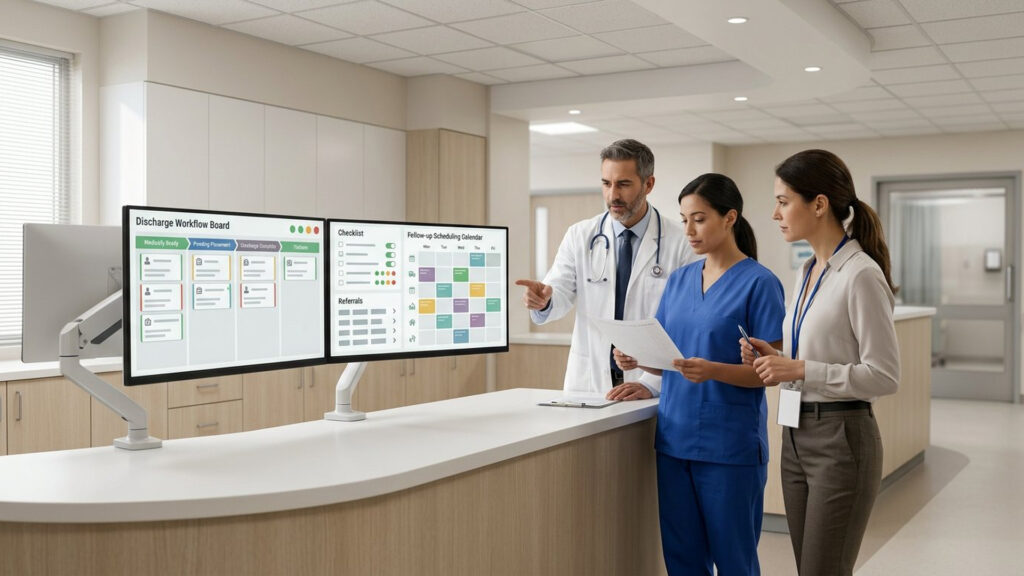
Modern patient discharge planning software helps healthcare organizations coordinate the complex clinical and operational work involved in moving patients from hospitals to appropriate post discharge settings. Depending on the system, it may centralize multidisciplinary tasks, referrals, patient education, follow up appointments, medication related workflows, transportation and communication with post acute providers. Technology cannot determine on its own whether a patient is medically ready for discharge or guarantee better outcomes, but appropriately designed software can make workflows more visible, standardized and measurable. For hospitals and health systems, choosing the right platform requires careful evaluation of clinical needs, interoperability, security, privacy, accessibility, usability and regulatory requirements.
What Is Patient Discharge Planning Software?
Patient discharge planning software is a healthcare technology solution designed to support the workflows required when a patient transitions from one care setting to another.
These transitions may include movement from an acute care hospital to home, home health services, rehabilitation, skilled nursing, outpatient care or another appropriate setting.
Discharge planning itself is much broader than generating discharge paperwork.
It may require contributions from physicians, nurses, pharmacists, case managers, social workers, therapists, patients, caregivers and external care providers.
A software system can provide a shared workflow for coordinating these responsibilities.
The exact functionality varies. Some solutions operate as dedicated care transition platforms, while others are modules within electronic health record systems or broader care management products.
9 Key Benefits of Patient Discharge Planning Software
The potential benefits depend on implementation, clinical processes and staff adoption. Software should therefore be viewed as an enabling tool rather than a standalone solution to discharge problems.
1. Patient Discharge Planning Software Centralizes Workflows
Discharge preparation often involves multiple departments completing interdependent tasks.
If information is distributed across spreadsheets, phone calls, paper notes, messages and separate systems, teams may have difficulty seeing what remains incomplete.
A centralized workflow can present outstanding tasks and relevant status information in one environment.
This can help team members identify barriers earlier.
2. Task Management Can Improve Coordination
A discharge plan may involve medication related actions, patient education, equipment arrangements, transportation, referrals and follow up appointments.
Software can assign or display responsibility for these tasks.
Workflow Automation in Patient Discharge Planning Software
Systems can potentially trigger notifications when defined events occur.
Automation Should Support Clinical Judgment
Automated workflows should not override clinical decision making. Rules need appropriate governance, testing and escalation processes, particularly when delays or incorrect recommendations could affect patient safety.
3. Referral Management Can Connect Post Acute Care
Some patients need additional services after leaving the hospital.
Depending on the patient and healthcare system, these can include home health, rehabilitation, skilled nursing, durable medical equipment or other community services.
Referral management tools can help care coordinators send necessary information, monitor responses and document referral status.
Sharing information with outside organizations must comply with applicable privacy, consent and information sharing requirements.
4. Discharge Barriers Can Become More Visible
A patient may be clinically progressing but remain unable to leave because another requirement has not been resolved.
Examples can include transportation, home support, equipment, placement, insurance authorization or other logistical issues.
Identifying Barriers With Patient Discharge Planning Software
Dashboards can surface unresolved workflow items.
Visibility Does Not Automatically Resolve a Barrier
Technology can show that an issue exists, but staff may still need to make phone calls, coordinate organizations, obtain authorization or develop an alternative plan.
5. Patient Education Can Be Better Organized
Patients and caregivers often receive substantial information when preparing to leave the hospital.
Software can support standardized distribution and documentation of relevant education materials.
Content may cover medications, appointments, wound care, activity, diet, symptoms requiring attention and other condition specific instructions as directed by clinical teams.
Materials should be understandable and accessible to the patient.
Language needs, disability accessibility and health literacy should form part of the design.
6. Follow Up Processes Can Be Coordinated
Depending on clinical needs, discharge may require primary care or specialist follow up, laboratory testing, therapy or other appointments.
A discharge planning platform can help staff track whether required follow up arrangements have been addressed.
However, scheduling functionality varies.
Integration with external organizations can also be difficult because healthcare providers may use different technology systems.
7. Standardized Processes Can Reduce Workflow Variation
Standardization can help organizations establish consistent discharge planning steps for relevant patient populations.
Checklists and workflows can support staff by making required actions visible.
They should remain flexible enough to account for individual circumstances.
A standardized workflow is not a substitute for individualized care planning.
8. Reporting Can Support Quality Improvement
Software can generate data about discharge processes.
Healthcare leaders might examine workflow duration, delayed tasks, referral turnaround, discharge destinations and other operational indicators.
Analytics From Patient Discharge Planning Software
Analytics can help identify repeated bottlenecks.
Association Does Not Always Mean Causation
If a metric changes after software implementation, the technology should not automatically receive all the credit or blame. Staffing, policies, patient mix, seasonal demand and other interventions can influence outcomes.
9. Interoperability Can Reduce Duplicate Data Entry
When appropriately integrated, a discharge platform may exchange information with EHRs and other clinical or administrative systems.
This can reduce the need for users to repeatedly enter the same information.
Poor integration can have the opposite effect.
A platform that creates a second disconnected record may add work and increase inconsistency.
Core Features of Patient Discharge Planning Software
Feature requirements should be derived from actual clinical workflows.
Buying the system with the longest feature list can result in unnecessary complexity.
Discharge Workflow Management
Workflow management provides a structured view of the steps associated with discharge.
Tasks may have owners, statuses, timestamps, dependencies or escalation rules.
Clinical organizations should determine which elements genuinely require hard stops and which should function as reminders.
Overuse of alerts can contribute to alert fatigue.
Multidisciplinary Care Coordination
Discharge rarely belongs to a single department.
A shared platform can allow appropriate team members to view relevant information according to their roles.
Role Based Access
Different staff members may require different permissions.
Apply Least Privilege Principles
Users should receive access appropriate to their responsibilities rather than broad access merely for convenience, subject to applicable healthcare and organizational requirements.
Electronic Health Record Integration
EHR integration is a major consideration for discharge technology.
An integration can allow relevant information to flow between systems rather than requiring users to search in multiple places.
The technical method depends on the participating products.
HL7 and Healthcare Interoperability
HL7 standards are widely used for healthcare information exchange.
Traditional HL7 messaging remains common in hospital environments.
FHIR, which stands for Fast Healthcare Interoperability Resources, provides modern standards and APIs for exchanging structured health information.
FHIR and Patient Discharge Planning Software
FHIR can support standardized exchange where participating systems implement compatible resources and workflows.
FHIR Does Not Make Integration Automatic
Different implementations, data models, workflows, terminology and organizational requirements can still require substantial integration and testing.
Referral Management and Post Acute Networks
Finding an appropriate post acute service can require communication with multiple organizations.
Software may provide referral workflows that display responses or other information useful to care coordinators.
Post Acute Care Referrals
The needs of the patient should remain central.
Factors such as clinical appropriateness, patient preferences, payer requirements, geographic availability and organizational policies can affect referral decisions.
Avoid Inappropriate Steering
Referral workflows should be configured consistently with applicable healthcare laws, patient choice requirements and organizational policies.
Transparency Matters
Organizations should understand how provider listings, rankings or recommendations are generated, especially when an algorithm influences which options staff or patients see first.
Medication Related Discharge Workflows
Medication reconciliation and discharge medication management are safety critical healthcare processes.
Software can support documentation, task tracking and communication.
Clinical decisions must remain under the control of appropriately qualified professionals.
Medication Reconciliation
Medication reconciliation generally involves creating and maintaining an accurate medication list across transitions of care.
Errors can occur when medications are added, discontinued, duplicated or changed.
Pharmacy Integration
Some platforms can connect with pharmacy related workflows or systems.
Technology Should Not Replace Clinical Review
Automated comparisons can assist clinicians but should not independently determine what medication a patient should take.
Patient and Caregiver Engagement
A technically complete plan can still fail if the patient does not understand what happens after leaving the hospital.
Communication should be clear and appropriately tailored.
Software may support patient facing instructions, reminders and educational resources.
Health Literacy
Medical terminology can create unnecessary barriers.
Patient facing information should use language appropriate to the audience while retaining clinical accuracy.
Language Access
Machine translation alone may not always be appropriate for critical medical communication.
Use Qualified Language Services When Required
Healthcare organizations should follow applicable policies and legal requirements for interpreter and translation services.
Patient Discharge Planning Software and Readmissions
Hospital readmissions are influenced by many clinical, social and system level factors.
Discharge planning is one part of this broader picture.
Software may help organizations consistently complete and monitor relevant transition processes, but it cannot responsibly guarantee a particular reduction in readmissions.
Measuring Readmission Outcomes
Hospitals evaluating a platform should define relevant baseline periods and comparison methods.
Account for Patient Risk
Patient populations can differ substantially.
Avoid Unsupported Vendor Claims
Claims such as guaranteed readmission reductions or specific clinical outcome improvements should be supported by credible evidence that is relevant to the organization’s setting.
Length of Stay and Discharge Efficiency
Delays in discharge can contribute to longer hospital stays in some cases.
A coordination platform may help identify nonclinical barriers and incomplete tasks earlier.
This can support operational efficiency where workflow fragmentation contributes to delay.
The relationship is not simple.
A patient’s appropriate length of stay is primarily determined by clinical circumstances and other legitimate care needs, not by a target generated by software.
Patient Discharge Planning Software for Case Managers
Case managers often coordinate complex transitions involving multiple organizations and requirements.
Software can provide a central location for tracking these activities.
A well designed system should reduce administrative friction rather than forcing case managers to perform duplicate documentation.
Case Management Dashboards
Dashboards can prioritize cases based on defined operational criteria.
Algorithmic Prioritization
Organizations should understand how priorities are calculated.
Prevent Automation Bias
Staff should be able to apply professional judgment when circumstances make an automated priority inappropriate.
Patient Discharge Planning Software for Nurses
Nurses play an important role in discharge education and care coordination.
A platform can support visibility into pending instructions, education and tasks.
Usability matters because nurses already interact with numerous clinical technologies.
Adding excessive clicks or redundant documentation can undermine adoption.
Nurses and frontline staff should therefore participate in product evaluation and workflow design.
Social Work and Complex Discharges
Some discharges involve housing, transportation, caregiving, financial, behavioral health or community resource considerations.
Technology can help document and coordinate these issues.
However, social circumstances cannot be reduced to simple checkboxes.
Complex discharge planning often requires skilled professional judgment and direct communication with patients, caregivers and community organizations.
Security Requirements for Patient Discharge Planning Software
Healthcare information is highly sensitive.
Security should be evaluated across the software lifecycle.
Relevant controls can include encryption, identity management, access controls, monitoring, secure software development, vulnerability management, backups and incident response.
Encryption
Encryption can protect data in transit and at rest when correctly implemented.
Key management is equally important.
Multifactor Authentication
MFA can reduce risks associated with compromised passwords.
Privileged Accounts Require Strong Controls
Administrative accounts can have extensive access and should receive additional safeguards appropriate to their risk.
HIPAA and Patient Discharge Planning Software
In the United States, organizations dealing with protected health information may have obligations under HIPAA and related rules depending on their roles and activities.
A software vendor claiming to be HIPAA compliant does not remove the healthcare organization’s own responsibilities.
Business Associate Agreements
Where a vendor acts as a business associate under HIPAA, an appropriate Business Associate Agreement may be required.
Compliance Depends on Implementation
Security functionality can support compliance.
Software Alone Cannot Guarantee HIPAA Compliance
Compliance involves technology, people, policies, contracts, risk management and operational practices. Organizations should involve qualified legal, privacy and security professionals.
Privacy Regulations Beyond HIPAA
Healthcare technology may also be subject to state, national or regional privacy frameworks.
For organizations outside the United States, requirements can differ substantially.
European organizations, for example, may need to consider the GDPR and relevant health data rules.
The applicable requirements depend on where the organization operates, where patients are located and how information is processed.
Patient Discharge Planning Software and AI
Artificial intelligence is increasingly being incorporated into healthcare technology.
Potential applications can include workflow prioritization, prediction, summarization and identification of potential discharge barriers.
Healthcare AI requires careful governance.
AI Risk Prediction
Predictive models may estimate probabilities based on available data.
They do not know with certainty what will happen to an individual patient.
Bias and Model Performance
Performance can differ across patient populations.
Human Oversight Is Essential
Organizations should validate clinically relevant models, monitor performance, evaluate bias and ensure qualified professionals retain responsibility for care decisions.
Accessibility and Inclusive Design
Healthcare software should work for users with varying physical and cognitive needs.
Staff interfaces can benefit from readable typography, clear navigation, keyboard accessibility and appropriate color contrast.
Patient facing resources need even broader consideration.
Disability Accessibility
Digital content should be designed according to applicable accessibility requirements and recognized standards where relevant.
Do Not Rely on Color Alone
Status indicators should use more than red or green color distinctions.
Inclusive Design Improves Usability
Accessible design can benefit many users, including people working under pressure or in visually demanding clinical environments.
Cloud Based Patient Discharge Planning Software
Cloud platforms can offer centralized deployment and flexible access.
They also introduce vendor and infrastructure considerations.
Hospitals should evaluate hosting arrangements, data residency, availability, backup, disaster recovery and subcontractor relationships.
Software as a Service
SaaS can reduce the need for healthcare organizations to operate certain application infrastructure internally.
Shared Responsibility
Cloud providers and customers control different aspects of security.
Understand Contractual Responsibilities
Service agreements should define security obligations, incident notifications, data handling and relevant availability expectations.
Implementation of Patient Discharge Planning Software
Technology implementation should begin with workflow mapping.
Understand how discharge currently operates before attempting to digitize it.
Otherwise, inefficient processes may simply be recreated electronically.
Pilot Deployment
Starting with a selected unit or patient population can help identify workflow problems before organization wide deployment.
Staff Training
Users need training specific to their responsibilities.
Provide Ongoing Support
Initial training alone may not be sufficient. New employees, software updates and process changes create continuing education needs.
Change Management
Discharge technology can alter responsibilities and communication patterns.
Clinical leadership and frontline involvement are therefore important.
Staff should understand why changes are occurring and how new workflows relate to patient care.
Feedback channels can help identify unintended consequences.
Implementation teams should be willing to modify workflows when evidence indicates that the original design is creating unnecessary burden.
Measuring Patient Discharge Planning Software Performance
Metrics should align with the organization’s goals.
Operational measures might include task completion timing, referral response times or identified delay categories.
Patient experience and safety measures may also be relevant.
Useful Evaluation Metrics
Organizations may consider:
• Time from discharge decision to completion
• Unresolved task frequency
• Referral turnaround times
• Follow up scheduling completion
• Patient education documentation
• Staff workflow burden
• User adoption
• Patient experience measures
• Appropriate quality outcomes
• System availability and incident rates
Metrics need clinical context.
Interoperability Questions to Ask Vendors
Integration claims need detailed investigation.
Ask which EHRs the platform has previously integrated with and what technical interfaces were used.
API Documentation
Mature vendors should be able to discuss integration architecture.
Data Export
Organizations should understand how their data can be retrieved.
Avoid Vendor Lock In
Contract termination should not make clinically or legally required data inaccessible. Define export formats, retention responsibilities and exit procedures in advance.
How to Choose Patient Discharge Planning Software
Begin with clinical and operational requirements instead of vendor demonstrations.
Document current pain points and determine which outcomes the organization intends to improve.
Then evaluate potential systems against those requirements.
Vendor Evaluation Checklist
Consider:
• Clinical workflow fit
• EHR interoperability
• Referral capabilities
• Task management
• Patient engagement tools
• Accessibility
• Reporting and analytics
• Security architecture
• Privacy controls
• User permissions
• Audit logging
• Implementation requirements
• Training and support
• Disaster recovery
• Data ownership and export
• Regulatory considerations
• Total cost of ownership
Reference discussions with comparable healthcare organizations can provide additional insight.
Patient Discharge Planning Software Cost
Pricing depends on hospital size, functionality, implementation complexity, integrations, users and vendor pricing models.
Expenses can include licence or subscription fees, implementation, interfaces, data migration, training, customization and ongoing support.
Internal staff time is also a real cost.
A low software price does not necessarily mean low total cost if integration and workflow changes require significant resources.
Questions to Ask a Patient Discharge Software Vendor
Request specific evidence rather than broad marketing claims.
Ask how the product handles downtime, failed integrations and security incidents.
Understand which workflows are configurable and which require custom development.
Also clarify:
• Where patient information is hosted
• Which subcontractors can access data
• How audit logs work
• How software updates are tested
• How users are authenticated
• What support is available during incidents
• How clinical safety concerns are escalated
• What evidence supports claimed outcomes
These details are particularly important for software incorporated into critical clinical operations.
Common Implementation Mistakes
One mistake is treating discharge as purely an administrative process.
Another is configuring software without meaningful frontline input.
Overautomation can create excessive alerts, while inadequate integration can increase duplicate documentation.
Organizations should also avoid measuring success exclusively through faster discharge.
An efficient transition must still be clinically appropriate, patient centered and consistent with applicable care standards.
GEO and Patient Discharge Planning Software
Generative search systems can surface healthcare technology content when it is clear, factual and well structured.
Useful pages should explain what the software does, who uses it, which systems it integrates with and how security and privacy are handled.
Specific information is more valuable than vague claims about transforming healthcare.
Building Trust for AI Powered Search
Publish transparent product documentation, interoperability information, security practices and evidence supporting measurable claims.
Cite Reliable Healthcare Sources
Authoritative governmental, standards and peer reviewed sources strengthen factual content.
Keep Product Information Current
Healthcare technology, regulations and interoperability standards evolve. Content should be reviewed regularly rather than published once and forgotten.
Frequently Asked Questions
What is patient discharge planning software?
Patient discharge planning software coordinates tasks, referrals, education, follow ups and other workflows involved in transitioning patients from hospitals to appropriate post discharge care.
Can patient discharge planning software integrate with an EHR?
Many platforms provide EHR integration using APIs, HL7, FHIR or other interfaces, but compatibility and implementation requirements vary between vendors and health systems.
Does discharge planning software reduce hospital readmissions?
It may support processes associated with better care transitions, but readmissions have many causes. Software alone cannot guarantee a reduction in readmission rates.
Is patient discharge planning software HIPAA compliant?
A platform can provide functionality designed to support HIPAA obligations, but organizational compliance depends on technology, policies, contracts, configuration and operational practices.
How does discharge planning software help case managers?
It can centralize patient status, outstanding tasks, referrals and transition barriers, helping case managers coordinate complex discharge workflows more efficiently.
What should hospitals look for in patient discharge planning software?
Hospitals should evaluate workflow fit, interoperability, security, privacy, referral management, accessibility, reporting, user experience, implementation support and total ownership cost.
Conclusion
Patient discharge planning software can help hospitals make care transition workflows more visible, coordinated and measurable across multidisciplinary teams. The strongest platforms integrate effectively with existing clinical systems while supporting referrals, task management, patient communication, security and appropriate reporting. Technology should complement professional judgment rather than independently determine discharge readiness or patient care. Careful vendor evaluation, frontline involvement and ongoing measurement are essential for implementing a system that supports efficient, patient centered transitions.