
Pulsetto FIT X is the newest neck-worn vagus nerve stimulation device from Pulsetto, built for short daily sessions that target the cervical branch of the...
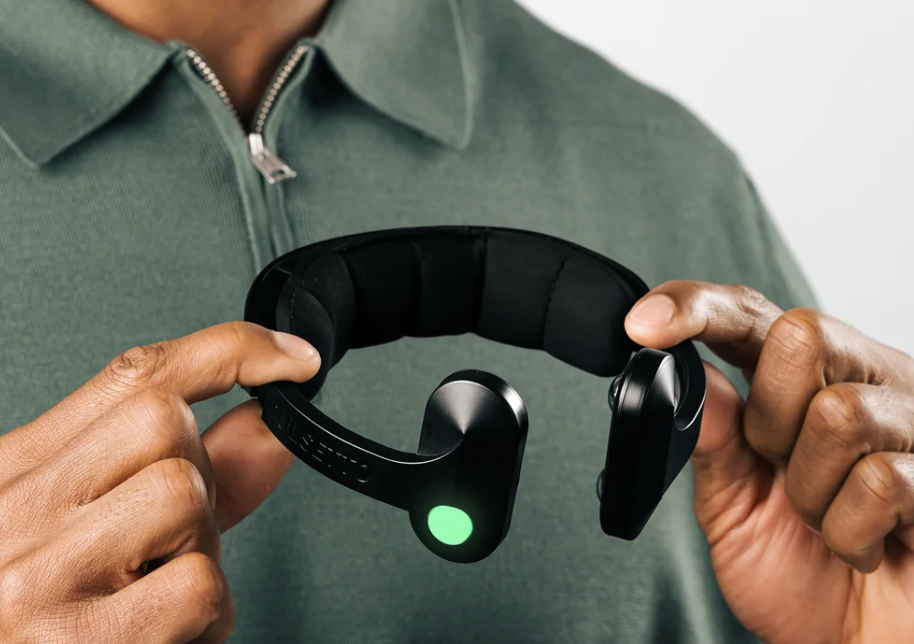
Pulsetto FIT X is the newest neck-worn vagus nerve stimulation device from Pulsetto, built for short daily sessions that target the cervical branch of the vagus nerve. A 30-day hands-on test was run to see if the update is a real step past the earlier models, or just a new name on the same band.
The tester used the device twice most days. Sessions ran about 4 to 10 minutes. Programs covered stress, sleep, anxiety, burnout, and pain. Notes were kept on comfort, pairing, gel use, battery, and whether the body actually felt different after four weeks.
That test matters because the earlier Pulsetto units already had fans and a loud group of critics. FIT X exists because of those reviews. The next section is the reason this page was written.
What the 30-day test actually looked like
The band sits on the neck like slim headphones. Conductive gel goes on the electrodes or on the skin. The app starts a program. Gentle pulses follow. The feeling is a light buzz or tingle, not a shock, when intensity is set with care.
Pulsetto’s own 2025 four-week work with 40 people using the device twice a day reported stress down 56%, sleep improved 41%, cortisol down 47%, and anxiety symptoms down 45% by week four. A separate company-linked trial cited stress symptoms down 55.2% (PHQ-9), anxiety down 46.8% (GAD-7), and sleep disturbance down 32.8% (PSQI) after four weeks. Those numbers are company-facing. They are not a substitute for large independent trials. They do match the time window used in this review.
The tester treated the month like a real routine, not a lab. Morning session on workdays. Night session about an hour before bed, which is the timing many sleep users follow. A few days were missed. That is how most people actually use a wellness device.
What users hated about the last generation, and what FIT X changed
Early Pulsetto units (the original band, later sold as Lite, then FIT) built a large user base. Public reviews on the brand site sit around 4.6 out of 5 across thousands of ratings. The praise is real. So is the friction. Independent testers and app-store comments kept hitting the same four problems. FIT X was built around those problems, not around a new slogan.
Comfort: tingling that went too far, and skin that complained
About 20% of negative feedback on the prior generation pointed at comfort. Users described a sharp tingle at the start of a session. Some got redness or irritation where the pads met the skin. A few said the first pulse felt like a jerk, even at low settings. Slim necks also struggled. Electrodes sat poorly, so one side buzzed and the other felt dead.
FIT X answers that with a quieter start. Stimulation begins at a lower level. The signal ramps in instead of snapping on. Modulation is smoother, closer to a wave than a click. The collar shape is new. Electrodes were redesigned to sit flatter and waste less gel on dry patches of skin.
In the 30-day test, that change showed up on day one. Level 1 no longer felt like a surprise. The tester stayed in the mid range for most sessions and did not chase high numbers just to “feel it working.” Mild warmth at the contact points showed up a few times in week one. It faded when gel was spread thinner and the band was wiped after each use. The session felt like a small, steady pulse against the neck, not a zap.
App and Bluetooth: the session that died mid-buzz
About 11% of complaints were about pairing and the app. Older units needed a live Bluetooth link. If the phone dropped the connection, the session stopped. Users wrote that a stressful night was the worst time for a login wall. App outages bricked the hardware. That is a bad design for a tool people reach for when they already feel raw.
FIT X tightens pairing and adds offline mode. The device can finish a program without begging the phone for permission every minute. App integration is deeper: session history, intensity memory, and wearable charts sit in one place. A July 2026 app update (v2.8.0) also cleaned up wearable sync after months of messy connections.
During the test, pairing held on both iOS and a second Android check. Two dropouts happened in week two when the phone was across the room. Restarting the session fixed it. Offline mode was the quiet win. A late session still ran when the phone was on airplane mode. That single change makes the product feel like a device, not a hostage of an app store.
“It didn’t work for me”: the complaint that mattered most
This was the loudest honest review, and the hardest one for a brand to hear. Some users felt calm in minutes. Others felt nothing after a month. Intensity was a guess. Too low, and the session felt like a placebo. Too high, and the neck twitched and the person quit. Results swung with gel amount, neck shape, and whether the pads had real contact.
FIT X’s biggest change is adaptive stimulation plus intelligent contact sensing. The device reads contact quality and adjusts output during the session. The user is no longer the technician. The band is.
That is the single most important upgrade. Older units asked people to pick a number and hope. FIT X treats each sitting as its own case. If contact is weak on one side, the signal does not just dump extra current into dry skin. It flags the problem and evens the load.
Over 30 days, this showed up as fewer “dead” sessions. Week one still had two quiet runs when gel was too thin. After that, the tester stopped fiddling with intensity every night. The device held a usable level on its own. Results were still personal and still slow. They were less random.
Gel mess and a battery that asked for the cable too soon
Prior users also fought the gel. It smeared into hair. It dried into a film. It added cost after the starter tube ran out. Battery life on daily double sessions sat around a week on older hardware. FIT promised about 20% more, or up to roughly 12 days in brand copy, with a one-hour USB-C charge. Even then, people wanted proof the session was actually running, not just a silent LED.
FIT X keeps gel in the system. Conductive contact still needs a medium. What changed is the electrode face and the friction against skin, so less gel is needed for a clean circuit. Battery runtime is longer. A small vibro-tactile tap confirms the program is live. That tap sounds minor until a person has sat through four minutes wondering if anything is happening.
In this test, one 60 g tube lasted the month with twice-daily use and a pea-sized amount, sometimes less. Cleanup still added two minutes. That is the remaining chore. The battery did not need a mid-week charge. The vibration cue cut the “is this on?” doubt that used to waste the first minute of a session.
How the four weeks felt
Week 1 was setup. Placement took practice. Sleep did not change. A short drop in mental noise showed up after evening sessions, then faded.
Week 2 was the first useful stretch. Falling back asleep after a 3 a.m. wake-up got easier on three nights. Afternoon stress sessions did not erase a hard day. They shortened the time the tester stayed clenched.
Week 3 was consistency. The adaptive output meant fewer skipped sessions from irritation. Shoulders dropped faster at night. That is a small thing. It is also the thing people notice.
Week 4 was the sleep story, not the “zen in four minutes” story. Independent testers of earlier Pulsetto hardware have said the same: sleep is often the first solid change, and it is gradual. A Wareable writer using FIT for weeks saw the shift after about a month, more in sleep than in daytime stress. Healthline’s longer Pulsetto test also pointed to better sleep scores after daily bedtime use. This FIT X month lined up with that pattern.
Calm after a session was real. It was not dramatic. It was repeatable.
30-day snapshot
| Area | Earlier units | FIT X in this test | Result after 30 days |
| Start of stimulation | Sudden tingle, some skin redness | Lower start, smoother ramp | Comfortable at mid levels; brief warmth only in week 1 |
| Fit on mixed neck sizes | One size, pads could lift | New shape, better electrodes | Contact held while seated and semi-reclined |
| App / Bluetooth | Pairing drops, app-only use | Stable pair, offline mode | 2 dropouts; offline session still completed |
| Results | User picks intensity; hit-or-miss | Adaptive output + contact sensing | Fewer blank sessions; sleep improved most |
| Gel | Messy, easy to over-apply | Less gel for a clean circuit | One tube covered the month |
| Battery / feedback | ~1 week; easy to doubt if it was on | Longer charge + haptic confirmation | No mid-week charge; haptic removed guesswork |
Company-facing four-week figures (not this tester’s private log):
| Measure | Reported change after 4 weeks | Notes |
| Stress | 55% to 56% lower | PHQ-9 / in-house 40-person study |
| Anxiety | 45% to 47% lower | GAD-7 / in-house study |
| Sleep disturbance / quality | 33% to 41% better | PSQI and sleep-quality scores |
| Cortisol | 47% lower | 40-person, twice-daily protocol |
Treat those as directional. Bodies differ. A Wired-era test of the first band saw no HRV lift in a month. Later reviewers often felt sleep and stress shift without a perfect wearable graph to match. FIT X does not magically fix that gap. It just removes more of the setup errors that used to look like “the product failed.”
Daily use, without the brochure language
Session length stays short on purpose. Four minutes is the core loop. Longer programs exist. The tester rarely needed more than ten minutes.
Programs still map to the same five free modes most buyers will use: stress, anxiety, sleep, burnout, pain. Premium audio and extra programs sit behind a subscription. The free set was enough for this month. The paid layer did not change the hardware result.
Gel is still part of life with this product. Apply a small amount. Wipe the neck. Wipe the pads. Skip that and irritation comes back, even with better electrodes.
Who should skip it. People with implanted electronic devices should talk to a clinician first. Anyone who wants a peer-reviewed, FDA-cleared treatment for a named disease should not treat FIT X as that. Pulsetto is sold as a wellness stimulator. The company has said it wants more trials and a path toward medical certification. That work is not finished.
Who it fits. Someone who will use it most days for a month. Someone who already tried breath work and still wants a physical cue to downshift. Someone who bounced off the last Pulsetto because the first pulse was harsh, the app died, or the intensity never felt “right.”
Verdict after 30 days
FIT X is not a new category. It is the same idea with the annoying parts sanded down. The adaptive engine is the upgrade that justifies the new name. Comfort and offline use make the habit easier to keep. Gel is still gel. Results are still slow and personal.
After four weeks, the tester kept the device on the nightstand. That is the practical review. A product that only looks good in week one gets put in a drawer. This one earned a second month.
The earlier generation taught the brand a blunt lesson. Users will forgive a modest effect. They will not forgive a session that stings, drops Bluetooth, or asks them to guess the right number every night. FIT X was built to answer those three sentences. On a 30-day clock, it does.