
Packaging has to accomplish several jobs before a customer even touches the product inside. It can protect surfaces, communicate essential information, support brand recognition and...
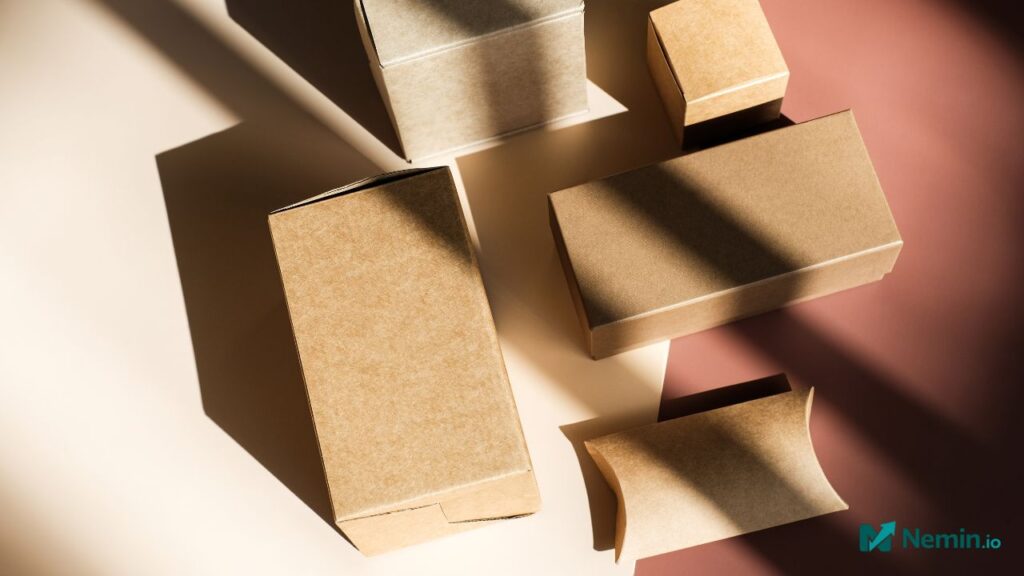
Packaging has to accomplish several jobs before a customer even touches the product inside. It can protect surfaces, communicate essential information, support brand recognition and influence how a product looks on a retail shelf or during unboxing. Custom paper packaging covers provide businesses with a flexible way to add a tailored outer layer, sleeve, wrap or protective paper-based component without relying entirely on generic packaging.
From food and cosmetics to gifts, apparel, books and eCommerce products, custom paper packaging covers can be adapted to different dimensions, printing requirements and presentation goals. Their effectiveness depends on more than attractive graphics, however. Paper grade, board thickness, coating, structural design, print method, product weight and distribution conditions all need to work together for packaging to perform reliably.
What Are Custom Paper Packaging Covers
Custom paper packaging covers are paper or paperboard components designed around the dimensions, protection requirements and visual identity of a particular product or package.
The term can encompass several packaging formats. Depending on the supplier and application, a cover may function as an outer sleeve, wrap, paperboard shell, carton cover or branded layer around another package.
Unlike generic packaging, custom paper packaging covers can be manufactured according to specified dimensions and printed with brand colors, product information, artwork and other required details.
The level of customization varies by manufacturer. Some suppliers specialize in simple printed sleeves, while others can develop complete structural packaging solutions using different substrates, finishes and converting processes.
How Custom Paper Packaging Covers Work
The process usually begins with the product.
A packaging supplier needs to understand its dimensions, weight, shape, fragility, distribution method and presentation requirements before recommending a suitable paper material or structure.
A structural design or dieline can then establish how the cover will be cut, folded and assembled.
Artwork is applied to the approved template before printing and finishing.
Depending on the design, custom paper packaging covers may include folds, tabs, glued areas, windows, perforations or inserts.
A physical prototype or production sample can help confirm fit before a large manufacturing run begins.
Why Businesses Use Custom Paper Packaging Covers
Standard packaging is practical when appearance and fit are not major considerations. Customization becomes useful when packaging is part of the customer’s product experience.
Retailers need products to communicate quickly on crowded shelves. Direct-to-consumer businesses need packaging that survives distribution while presenting the brand appropriately when opened.
Custom paper packaging covers can create a visually consistent exterior around products that might otherwise look generic.
Businesses can also use the printable surface for instructions, product information, barcodes and other required content, subject to applicable labeling rules.
Customization should still have a functional purpose. Adding material solely for decoration can increase cost, weight and waste without improving the package.
7 Powerful Benefits of Custom Paper Packaging Covers
The exact benefits depend on the product and packaging structure. A well-designed paper solution should balance protection, appearance, manufacturing practicality and cost.
1. Custom Paper Packaging Covers Strengthen Brand Presentation
Packaging is one of the few brand touchpoints physically delivered with the product.
Consistent colors, typography and graphic elements can make packaging easier for customers to associate with a particular company.
Custom paper packaging covers provide a printable surface for building that identity.
This can be especially useful when several products use similar primary containers. A custom outer cover or sleeve can distinguish individual variants without requiring an entirely different container for each one.
Brand presentation should remain clear rather than overcrowded. A strong design gives important information space to stand out.
2. Custom Paper Packaging Covers Can Improve Product Protection
Paper packaging is sometimes viewed entirely as a decorative element, but appropriate paperboard structures can also provide physical protection.
The necessary strength depends on product weight and distribution conditions.
Custom paper packaging covers may help guard against scratches, dust and light surface contact. More robust paperboard structures can provide additional rigidity.
They should not be assumed to replace protective shipping packaging for fragile or heavy products.
A supplier should assess the complete packaging system, including inserts, primary packaging, outer cartons and distribution environment.
Where protection is important, prototypes can be tested before production.
3. Custom Paper Packaging Covers Create a Better Fit
Poorly fitting packaging can make a product appear unfinished and may allow unnecessary movement.
Custom dimensions help align the packaging more closely with the actual item.
Custom paper packaging covers can be designed around products with specific width, height and depth requirements.
A more appropriate fit can also help businesses avoid using unnecessarily oversized covers.
Measurements need to be accurate. Small dimensional errors can create assembly difficulties once material thickness, folding and manufacturing tolerances are considered.
For that reason, packaging engineers or experienced manufacturers should review specifications before full production.
4. Custom Paper Packaging Covers Offer Flexible Printing
Paper and paperboard provide versatile printing surfaces.
Depending on material, quantity and design, suppliers may offer offset, flexographic or digital printing.
Custom paper packaging covers can include photographs, illustrations, brand graphics, care instructions, product descriptions and other appropriate information.
Color reproduction depends on the substrate and printing process.
Uncoated kraft material, for example, produces a different appearance from a bright coated board.
Businesses requiring strict brand-color consistency should discuss proofs, color standards and substrate behavior with the printer before production.
5. Custom Paper Packaging Covers Can Enhance Unboxing
Unboxing does not need to involve elaborate luxury packaging.
A thoughtful outer layer can make the customer experience feel more deliberate while helping organize the product presentation.
Custom paper packaging covers can hide plain inner packaging, hold components together or create a cleaner reveal.
This can be useful for gifts, cosmetics, confectionery, apparel and direct-to-consumer products.
However, additional layers should provide enough functional or communication value to justify the extra material.
Effective packaging design considers customer experience alongside cost and environmental impact.
6. Custom Paper Packaging Covers Support Product Information
Packaging often needs to communicate more than a logo.
Depending on the product and jurisdiction, businesses may need to provide ingredients, warnings, instructions, recycling guidance, responsible-party information or other mandatory details.
Custom paper packaging covers provide additional printable area when the primary product container has limited space.
Regulatory requirements differ significantly across food, cosmetics, pharmaceuticals, toys and other product categories.
The packaging manufacturer generally should not be treated as the final authority on a company’s legal labeling obligations.
Businesses should verify applicable requirements with appropriate regulatory guidance or professional advisers.
7. Custom Paper Packaging Covers Can Provide Material Flexibility
Paper packaging is available in numerous material grades and constructions.
Businesses can choose options based on rigidity, print requirements, appearance, product contact, finishing and other functional needs.
Custom paper packaging covers might use kraft paper, solid bleached paperboard, recycled-content board or other suitable substrates.
Environmental claims require care.
Paper is not automatically sustainable merely because it is paper. Raw material sourcing, recycled content, coatings, inks, manufacturing, transport and end-of-life infrastructure all affect environmental performance.
Businesses should obtain evidence before making specific recyclable, compostable or recycled-content claims.
Materials Used for Custom Paper Packaging Covers
Material selection influences nearly every aspect of packaging performance.
A premium appearance does not necessarily require the thickest board available. The correct substrate should meet structural and visual requirements without unnecessary material use.
Common options can include kraft grades, coated paperboard, uncoated board and recycled-content paperboard.
| Material consideration | Why it matters | Questions to ask |
|---|---|---|
| Thickness | Influences rigidity and folding | Is it appropriate for product weight |
| Surface | Affects print appearance | Coated or uncoated |
| Fiber source | Relevant to sourcing goals | Is certification available |
| Recycled content | Supports defined material targets | What percentage is verified |
| Coating | Changes durability and finish | Does it affect recyclability |
| Color | Influences printed artwork | White, natural or specialty shade |
| Food suitability | Important for relevant uses | Is it approved for intended contact |
Material specifications should always be discussed in relation to the actual product.
Kraft Custom Paper Packaging Covers
Kraft packaging is popular for its natural brown appearance and recognizable paper texture.
It can work well for brands seeking a simple, understated visual style.
Custom paper packaging covers made from kraft substrates can be printed, although ink colors interact with the brown base differently from white paperboard.
White ink or additional production techniques may be needed for certain designs, depending on the printing process.
Kraft appearance alone does not establish recycled content or environmental performance. Businesses making sustainability claims should verify the specific material composition.
Coated Paperboard Covers
Coated paperboard provides a smoother printing surface and can support detailed graphics and vibrant colors.
It is often used where visual presentation is a priority.
Custom paper packaging covers produced from coated board can support various finishing techniques depending on the material and supplier.
Coating specifications can influence the package’s end-of-life options.
If recyclability is important to the project, ask the converter about the entire material construction rather than considering only the base paper.
Printing Custom Paper Packaging Covers
Printing decisions should be made after the structural design and substrate are sufficiently developed.
Artwork created without an accurate dieline can require substantial revisions later.
Custom paper packaging covers may be produced through different printing technologies depending on order quantity, budget, color requirements and design complexity.
Digital printing can be useful for suitable shorter runs or variable designs. Offset and flexographic printing may offer advantages for other applications and production volumes.
There is no single best printing method for every package.
The supplier should recommend an approach based on the complete specification.
Color Management for Custom Paper Packaging Covers
A design viewed on a backlit monitor does not necessarily reproduce identically on paper.
Material color, ink, coating and print process all influence the final result.
Businesses ordering custom paper packaging covers should request an appropriate proofing process for color-sensitive projects.
Physical production samples can be particularly valuable when exact appearance is important.
Brand teams should provide relevant color references rather than expecting a manufacturer to identify exact brand colors from a low-resolution file.
Finishing Options for Custom Paper Packaging Covers
Finishing can change both the appearance and tactile qualities of a package.
Available choices depend on the printer and substrate.
Potential options include embossing, debossing, foil effects, specialty coatings, die-cut windows and selective decorative treatments.
These features can create visual hierarchy and highlight important brand elements.
They also add manufacturing steps and cost.
Custom paper packaging covers should not accumulate premium finishes simply because every option is available.
A restrained finish applied to one meaningful element can sometimes produce a stronger design than several competing effects.
Lamination and Coatings
Surface treatments can improve appearance or provide resistance to scuffing and handling, depending on their specification.
They may also change how easily packaging can be processed in existing recycling systems.
If environmental performance matters, discuss coatings and laminates with the packaging supplier before approving the design.
Avoid printing unsupported claims such as fully recyclable without assessing the completed package and relevant local collection infrastructure.
Designing Custom Paper Packaging Covers
Strong packaging design begins with hierarchy.
The customer should be able to identify the brand and understand the product without working through excessive visual clutter.
Custom paper packaging covers can use front, back and side panels differently.
The primary panel can concentrate on product identity while secondary panels contain instructions and supporting information.
Structural design is equally important.
Artwork should not place critical text across folds, glued areas or cut lines.
Printers normally provide bleed and safe-area specifications that artwork must follow.
Design for the Actual Product
A packaging concept can look excellent as a flat graphic while failing once wrapped around the product.
Always test the three-dimensional result.
Custom paper packaging covers should be assessed for opening, closing, product removal, storage and display.
Consider which panel faces the customer on a shelf or after delivery.
Retail packaging may also need barcodes positioned where they remain easy to scan.
Practicality should guide visual design rather than being addressed only after artwork is complete.
Custom Paper Packaging Covers for eCommerce
eCommerce packaging faces different conditions from packaging placed directly on a retail shelf.
Products can encounter conveyor systems, stacking, vibration and repeated handling during delivery.
Custom paper packaging covers used for branding may therefore need additional outer shipping protection.
A decorative sleeve should not be assumed to function as a shipping carton unless it was specifically designed and tested for that purpose.
Online retailers should think in layers.
The product packaging can create the presentation, while an appropriate shipping system protects it throughout distribution.
Optimizing both can prevent damage without using unnecessary packaging.
Custom Paper Packaging Covers for Retail Products
Retail packaging has to communicate in a crowded environment.
Customers may compare several products within seconds.
Custom paper packaging covers can help establish product families through consistent color systems, typography and structural formats.
At the same time, individual variants need to remain easy to distinguish.
Retailers may impose their own packaging, barcode or display requirements.
Businesses should understand those specifications before placing a large manufacturing order.
A packaging design that works perfectly for direct online sales may require modifications for physical retail distribution.
Custom Paper Packaging Covers for Food
Paper packaging used with food requires additional attention.
The requirements depend on whether the material has direct or indirect food contact, the nature of the food and applicable regulations.
Custom paper packaging covers around separately sealed products may have different functional requirements from paper that directly contacts food.
Grease, moisture and temperature can also influence material performance.
Businesses should communicate the intended application accurately to suppliers so appropriate materials can be recommended.
Food packaging labels must also comply with applicable regulations for the intended market.
Custom Paper Packaging Covers for Cosmetics
Cosmetics often use secondary paperboard packaging to protect and present bottles, jars and tubes.
This outer packaging provides space for branding and required product information.
Custom paper packaging covers can also help differentiate variants within a broader cosmetic range.
Fit is particularly important because glass containers and premium finishes can be damaged when allowed to move excessively.
Inserts or internal structures may be needed.
Cosmetic labeling rules vary by jurisdiction, so businesses should verify required information before final artwork receives production approval.
Custom Paper Packaging Covers and Sustainability
Packaging sustainability should be assessed using specific evidence rather than broad assumptions.
Paper has potential advantages, including renewable fiber sources and established recycling streams in many locations, but actual performance depends on the package.
Businesses can consider material reduction, responsible fiber sourcing, recycled content and design for end-of-life.
Custom paper packaging covers should also be sized appropriately so material is not used merely to create an oversized appearance.
Where relevant, suppliers may provide certifications or technical statements supporting specific material claims.
Environmental messaging printed on the package should accurately reflect that evidence.
How to Order Custom Paper Packaging Covers
A clear specification helps manufacturers provide meaningful quotations.
Start with exact product dimensions, package quantity and intended use.
Then define the desired substrate, printing, colors and finishes where known.
If you are unsure, provide functional requirements rather than guessing at a material.
A packaging supplier can recommend suitable options.
Useful information for quotation requests includes
- Product dimensions
- Product weight
- Desired cover style
- Required quantity
- Paper or board preference
- Number of print colors
- Artwork requirements
- Finishing options
- Delivery destination
- Required completion date
- Relevant product-contact requirements
- Special regulatory considerations
Custom paper packaging covers with complex structures may require prototyping before final production.
Minimum Order Quantities and Pricing
Custom manufacturing usually involves setup costs.
Printing plates or tooling may be required for some production methods, while other methods can support smaller runs more economically.
Minimum order quantities vary significantly between manufacturers and specifications.
The unit price for custom paper packaging covers generally depends on dimensions, material, order volume, printing, finishing, tooling and delivery.
The lowest unit price does not always produce the lowest total cost.
Ordering excessive packaging purely to reach a cheaper unit rate can create storage expenses and obsolete stock if branding or product information later changes.
Requesting Samples Before Production
Samples are one of the most valuable steps in custom packaging development.
A structural sample can confirm fit even before final printed production.
For custom paper packaging covers, test how easily the cover is assembled, applied and removed.
Check whether it stays securely in place and whether important graphics align correctly.
Where possible, evaluate the package under realistic storage and shipping conditions.
A mistake caught during sampling is generally easier to resolve than one discovered after thousands of units have been produced.
Choosing a Custom Paper Packaging Covers Supplier
Supplier selection should consider capability as well as price.
Ask whether the manufacturer has experience with the required package style, paperboard and print process.
Review physical samples of comparable work where possible.
Quality-control processes, lead times and communication also matter.
For products requiring specific material certifications or food-contact suitability, request appropriate documentation.
A reliable custom paper packaging covers supplier should explain manufacturing limitations rather than approving an unsuitable specification simply to secure an order.
Mistakes to Avoid With Custom Paper Packaging Covers
The first mistake is designing packaging before accurately measuring the product.
Another is selecting paper based solely on appearance without considering structural performance.
Businesses can also underestimate the effect of coatings and finishes on production cost or recycling characteristics.
Avoid ordering a large volume before approving structural and print samples.
Custom paper packaging covers can also become unnecessarily expensive when designs contain multiple decorative processes that add little customer value.
Finally, do not make environmental, regulatory or performance claims unless the finished packaging supports them.
Building Better Packaging With Custom Paper Packaging Covers
Successful packaging balances several requirements at once.
It must fit the product, perform its protective role, communicate clearly, support production and remain appropriate for the available budget.
Custom paper packaging covers create significant design flexibility, but that flexibility works best within clear constraints.
Start with product protection and customer needs.
Then establish brand communication and regulatory information.
After those foundations are clear, decorative printing and finishes can enhance the experience without compromising functionality.
This sequence helps businesses create packaging that looks intentional because it is well engineered, not merely because it contains expensive effects.
FAQ’s
What are custom paper packaging covers
Custom paper packaging covers are paper or paperboard sleeves, wraps or outer components designed to fit specific products while providing branding, information or protection.
Which materials are used for custom paper packaging covers
Common options include kraft paper, coated paperboard, uncoated board and recycled-content materials. The appropriate choice depends on product and performance requirements.
Can custom paper packaging covers be fully printed
Yes. Suitable covers can support custom graphics, colors, product information and branding using printing processes appropriate to the material and production quantity.
Are custom paper packaging covers recyclable
Some paper-based packaging can be recyclable, but coatings, laminates, adhesives and local recycling systems affect the finished package. Verify claims for the specific construction.
How much do custom paper packaging covers cost
Pricing depends on dimensions, material, printing, finishes, tooling, order quantity and shipping. A detailed specification is required for an accurate quotation.
Should I order samples of custom paper packaging covers
Yes. Structural or production samples can help verify fit, appearance, assembly and material performance before committing to a large manufacturing run.
Conclusion
Custom paper packaging covers can combine product presentation, brand communication and appropriate protection within a flexible paper-based format. Businesses can customize dimensions, materials, graphics and finishes for retail, eCommerce, food, cosmetics and many other applications. The strongest results come from treating packaging as a functional system rather than decorating a generic paper structure after it has already been selected.
Before ordering custom paper packaging covers, define the product requirements, obtain accurate measurements, select materials carefully and approve appropriate samples. Printing, structural design, distribution conditions, regulatory information and end-of-life considerations should all be reviewed before mass production. A well-planned cover can strengthen product presentation while remaining practical to manufacture, use and distribute.