
The geotextile membrane price in Kenya depends on material, fabric type, mass per unit area, roll dimensions, tensile and hydraulic properties, application, manufacturer, quantity and delivery location....
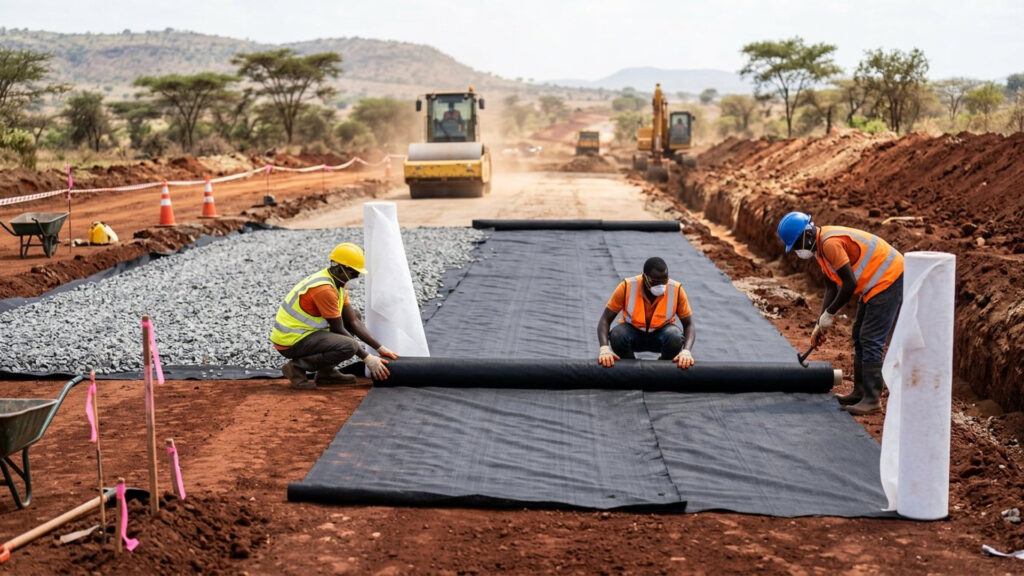
The geotextile membrane price in Kenya depends on material, fabric type, mass per unit area, roll dimensions, tensile and hydraulic properties, application, manufacturer, quantity and delivery location. Geotextiles are widely used in Kenyan road construction, drainage, landscaping, erosion control, retaining structures and other civil engineering projects where separation, filtration, reinforcement or protection is required. Comparing products based only on price per roll can be misleading because roll areas and technical performance can differ substantially. For engineered works, the project specification should determine the required product before contractors compare quotations, while current supplier prices should be confirmed because resin costs, exchange rates, freight and availability can change.
What Is a Geotextile Membrane?
A geotextile is a permeable synthetic textile designed for use with soil, aggregate and related geotechnical materials.
Although buyers often search for geotextile membrane, the word membrane can cause confusion.
Conventional geotextiles are permeable. They allow water to pass through under designed conditions while performing functions such as filtration and separation.
Geomembranes, by contrast, are low permeability barrier materials commonly used for containment or waterproofing.
The distinction is critical.
A contractor needing an impermeable pond liner should not purchase ordinary permeable geotextile because a seller casually describes it as a membrane.
Common Geotextile Materials in Kenya
Many geotextiles are manufactured from polypropylene or polyester polymers.
The precise polymer, fiber construction and manufacturing method influence properties.
For important civil works, material descriptions should be supported by a technical data sheet.
Statements such as strong geotextile or heavy duty membrane are not adequate engineering specifications.
Typical Geotextile Membrane Price in Kenya
There is no single reliable nationwide price for geotextiles.
Suppliers may price material per square metre, per roll or by project quantity.
Prices can change according to fabric weight, grade, brand and current import or manufacturing costs.
As a broad buying principle, lighter general purpose nonwoven fabrics normally cost less per square metre than heavier products using more polymer and designed for demanding applications.
Specialized high strength woven geotextiles can also cost more despite having a lower or different GSM than some heavy nonwoven products because performance is not determined by mass alone.
For accurate 2026 budgeting, request current Kenyan quotations using the exact technical specification and calculate the effective price per square metre.
9 Smart Factors Affecting Geotextile Membrane Price in Kenya
These factors explain why two rolls of apparently similar fabric can have very different prices.
1. Geotextile Membrane Price in Kenya Depends on GSM
GSM means grams per square metre.
It expresses the mass of fabric per unit area.
For products with similar materials and construction, heavier fabrics generally use more material and therefore often cost more.
Geotextile GSM in Kenya
Commonly marketed products may span a wide range of GSM values according to application.
GSM Does Not Define Engineering Performance Alone
Two 300 GSM geotextiles can have different tensile strength, puncture resistance, opening size and permeability. Engineers should specify performance properties relevant to the project rather than relying solely on GSM.
2. Woven and Nonwoven Geotextiles Have Different Prices
Woven geotextiles are created through organized interlacing of yarns or tapes depending on product design.
Nonwoven geotextiles use fibers bonded mechanically, thermally or through other manufacturing processes.
Woven Geotextile Membrane Price in Kenya
Woven materials are commonly associated with applications requiring substantial tensile properties and separation.
Product Type Must Match the Function
Choosing woven simply because it sounds stronger can be inappropriate when the primary requirement is filtration or another function better served by a particular nonwoven specification.
3. Roll Size Changes the Headline Price
One supplier may quote a roll containing twice the area of another.
Comparing only roll price can therefore produce the wrong conclusion.
Geotextile Roll Price in Kenya
Multiply width by length to determine nominal roll area in square metres.
Compare Price Per Square Metre
Then adjust for delivery, VAT, required overlaps and installation waste when evaluating project cost.
4. Tensile Strength Can Influence Cost
Reinforcement applications can require specific tensile behavior.
High strength woven geotextiles are engineered to carry defined loads.
A product should not be selected for structural reinforcement because it merely appears thick.
5. Puncture Resistance Matters Under Aggregate
Installation can expose geotextiles to sharp stone and construction equipment.
Nonwoven products used for protection may be specified partly according to puncture related performance.
Heavy Duty Geotextile Membrane
Marketing terms should be translated into test values.
Ask for Applicable Test Standards
Technical data should identify the test method used for each stated property so products can be compared properly.
6. Hydraulic Properties Affect Filtration Products
A filtration geotextile needs to allow appropriate water flow while retaining soil particles according to design requirements.
Relevant properties can include characteristic opening size and permeability or permittivity, depending on the specification system.
Drainage Geotextile Price in Kenya
A cheap fabric that clogs or allows unacceptable soil migration can undermine the drainage system.
Hydraulic Design Needs Engineering
Filtration selection should consider soil characteristics and expected water conditions.
7. Quantity Can Influence Unit Pricing
Large road or infrastructure projects purchase much greater quantities than residential landscaping jobs.
Suppliers may provide project pricing for bulk orders.
Wholesale Geotextile Price in Kenya
Minimum order quantities can apply.
Factor in Unused Material
Buying additional rolls solely to receive a lower unit price is not economical if much of the material remains unused.
8. Imported Product Costs Depend on Exchange Rates
Some geotextiles sold in Kenya are imported.
Final price can therefore reflect currency exchange, ocean freight, customs, inland transport and distributor margins.
Locally available stock may have different pricing from a special order product.
9. Delivery Location Affects Total Cost
Large geotextile rolls can be bulky even when relatively light for their area.
Transportation to remote construction sites can add meaningfully to cost.
Delivered Geotextile Membrane Price in Kenya
A Nairobi warehouse price may not represent the cost in Kisumu, Mombasa, Nakuru, Eldoret or a remote road project.
Request Delivered Quotations
Compare the price of having compliant material physically available at the site.
Woven Geotextile Membrane Price in Kenya
Woven geotextiles can provide high tensile properties relative to their mass.
They are commonly used where separation and reinforcement are important.
Road Construction
Woven materials can help separate aggregate layers from weaker subgrade soils when specified appropriately.
Reinforcement
Some engineered products provide tensile reinforcement.
Not Every Woven Fabric Is Structural Reinforcement
Obtain strength and strain data for the exact product.
Nonwoven Geotextile Membrane Price in Kenya
Nonwoven geotextiles are widely used for filtration, drainage, separation and protection.
Needle punched nonwoven materials are common in civil works.
Filtration
Water can pass through the textile while the fabric helps retain soil under appropriately designed conditions.
Protection
Heavy nonwoven geotextiles can protect geomembranes against puncture from underlying materials.
Separation
Some nonwoven products can help keep dissimilar material layers apart.
Select by Specification
Different functions can require different properties even when the material looks similar.
100 GSM Geotextile Price in Kenya
Relatively lightweight geotextiles may be marketed for landscaping and lighter duty applications.
Whether 100 GSM material is appropriate depends on the project.
It should not automatically be substituted into an engineered road or drainage specification solely because it is inexpensive.
Lightweight Fabric
Lower material mass can reduce cost.
Installation Damage
Thin products may be more susceptible to certain installation stresses.
Follow Project Requirements
Use specified properties rather than assuming a light fabric is sufficient because the site looks uncomplicated.
200 GSM Geotextile Price in Kenya
Two hundred GSM nonwoven fabric is commonly encountered in various markets.
It can be used in several filtration, separation or landscaping applications where its tested properties are appropriate.
Compare Data Sheets
Products at the same mass can differ substantially.
Check Puncture Properties
This can matter beneath angular aggregate.
Compare Hydraulic Performance
Filtration applications also require water flow characteristics appropriate to the soil.
300 GSM Geotextile Price in Kenya
Three hundred GSM products are heavier and can provide greater mechanical robustness than lighter products of a similar manufacturing family.
Protection Applications
They may be considered around geomembrane protection in some designs.
Civil Engineering
Actual suitability depends on project specifications.
Weight Does Not Replace Design
A 300 GSM fabric should not be selected simply because another project successfully used the same nominal weight.
400 GSM and 500 GSM Geotextile Prices in Kenya
Heavier nonwoven geotextiles can be used in demanding protection and civil engineering applications.
They typically cost more per square metre than lighter equivalents within the same product family.
Puncture Protection
Additional mass can contribute to mechanical protection.
Installation Handling
Heavier products can also require more effort to position.
Plan Roll Handling
Large heavy rolls may require mechanical equipment and safe lifting procedures.
Geotextile Roll Sizes in Kenya
Roll width and length vary by manufacturer.
Large widths reduce the number of longitudinal joints on major projects but can complicate transport and installation.
Calculating Roll Area
For a roll measuring 4 metres by 50 metres, nominal area is 200 square metres.
Usable Project Coverage
Actual coverage can be less because adjacent sheets may need overlaps.
Include Overlap in Quantity Estimates
Do not order using project surface area alone without considering installation details.
How to Calculate Geotextile Quantity
Start with the area requiring coverage.
For regular rectangular sections, multiply length by width.
Add Overlaps
The required overlap depends on the application, subgrade conditions, construction method and design.
Irregular Areas
Curves and structures increase cutting waste.
Obtain a Contractor Quantity Takeoff
Large projects should calculate material from construction drawings rather than a rough site estimate.
Geotextile for Road Construction in Kenya
Road applications are among the most important uses for geotextiles.
Separation
A geotextile can help prevent aggregate from mixing with a weak subgrade.
Reinforcement
Certain products can improve mechanical behavior within an engineered design.
Filtration
Water movement and soil retention may also matter.
Roads Need Engineering Specifications
A roll labeled road fabric should not be accepted without verifying the required mechanical and hydraulic performance.
Geotextile for Drainage
French drains, subsoil drains and other systems may use geotextile as a filter.
Filter Function
The material permits water movement while controlling soil migration.
Geotextile Wrapping
The position of fabric relative to soil, aggregate and drainage pipe needs careful design.
Avoid Creating a Clogged System
Using an inappropriate fabric can impair drainage rather than improve it.
Geotextile Under Gravel
Geotextile is often installed beneath gravel driveways, paths and similar aggregate surfaces.
Separation Function
The fabric can help limit mixing between stone and subgrade.
Weed Control
Geotextiles can suppress some weed growth physically, but weed seeds can still germinate in organic material accumulating above the fabric.
Do Not Treat Geotextile as Permanent Weed Elimination
Its principal engineering function may be separation rather than herbicide free weed prevention.
Geotextile for Landscaping
Landscaping applications include paths, drainage and selected soil separation functions.
Landscape Fabric Versus Engineering Geotextile
Products sold as landscape fabric can differ substantially from civil engineering geotextiles.
Verify Intended Use
A lightweight garden fabric should not replace specified infrastructure material.
Buy the Appropriate Grade
Overengineering a simple flower bed can also create unnecessary cost.
Geotextile for Erosion Control
Geotextiles can contribute to erosion control systems, but exposed slopes and water channels require appropriate design.
Water Flow
High velocity water creates substantial forces.
UV Exposure
Some geotextiles are intended to be covered rather than permanently exposed to sunlight.
Check UV Requirements
Long term ultraviolet exposure can degrade susceptible polymers.
Geotextile for Retaining Walls
Geotextiles can support drainage and separation in retaining wall systems.
They should not be confused automatically with geogrids used for soil reinforcement.
Behind Wall Drainage
Filter fabric can help prevent soil from migrating into drainage aggregate.
Structural Reinforcement
Engineered retaining structures may require geogrid or other reinforcement designed for tensile loads.
Geotextile and Geogrid Are Not Interchangeable
The products have different structures and primary functions.
Geotextile Versus Geomembrane
This distinction is essential.
Geotextile
Permeable textile used for filtration, separation, reinforcement or protection.
Geomembrane
Low permeability sheet used as a barrier.
Pond Liners
Ponds generally use an appropriate geomembrane when liquid containment is required.
Geotextile May Protect the Liner
A nonwoven geotextile can be installed beneath or around a geomembrane as protection according to the design.
Geotextile Versus Geogrid
Geogrids have open grid like structures designed principally for reinforcement.
Geotextiles are continuous permeable fabrics.
Road Stabilization
Some designs use geogrid, geotextile or both.
Soil Conditions Matter
There is no universal rule that one is always superior.
Follow Geotechnical Design
Material selection should reflect subgrade, aggregate and loading conditions.
Geotextile for Waterproofing
Ordinary geotextile is not a waterproof barrier because it is intentionally permeable.
This is a common purchasing mistake.
Protection Layer
A nonwoven geotextile may protect a waterproof geomembrane.
Separate Functions
One layer provides protection while another provides containment.
Do Not Substitute Fabric for a Liner
If impermeability is required, specify the correct barrier product.
Polypropylene Geotextile
Polypropylene is widely used because of its useful chemical and physical characteristics.
Common Applications
It appears in both woven and nonwoven products.
Environmental Suitability
Performance depends on stabilization, construction and exposure.
Verify the Exact Product
Polypropylene alone does not establish tensile strength or filtration performance.
Polyester Geotextile
Polyester is another polymer used in geotextile manufacturing.
Its properties differ from polypropylene in ways that may matter for certain applications.
Product Design Matters
The polymer is only one part of performance.
Soil Chemistry
Long term chemical exposure can matter in demanding projects.
Consult Project Specifications
Material selection for permanent infrastructure should follow engineering requirements.
Geotextile Tensile Strength
Tensile strength describes resistance to pulling forces under defined test conditions.
The test method is important.
Units
Manufacturers can report values in kilonewtons per metre or other forms depending on testing.
Compare Like Tests
A tensile number from one test method cannot always be compared directly with another.
Read the Data Sheet
Technical documentation should identify both value and standard.
Puncture Resistance
Puncture resistance is especially important when fabric will contact angular aggregate or protect liners.
Installation Damage
Dumping large rocks directly onto an unsuitable geotextile can tear it.
Protection During Placement
Construction techniques affect survival.
Strong Material Still Needs Correct Installation
No geotextile is immune to abusive construction practices.
Geotextile Permeability
Permeability describes the movement of water through material under defined conditions.
Filter design also considers soil characteristics.
Apparent Opening Size
Opening size relates to the soil particles the textile can retain.
Hydraulic Compatibility
High water flow alone is not sufficient.
Filtration Requires Balance
The fabric needs to allow appropriate flow while controlling unacceptable soil loss.
Geotextile Installation
Installation quality has a direct effect on performance.
Prepare the Subgrade
Remove objects likely to damage the textile where required.
Roll Out Fabric
Avoid unnecessary wrinkles.
Overlap Sheets
Follow design requirements.
Place Aggregate Carefully
Avoid moving the fabric out of position.
Limit Direct Construction Traffic
Heavy equipment should not travel directly on exposed geotextile unless the product and project method explicitly permit it.
Geotextile Overlap
Overlap requirements vary according to application and subgrade conditions.
There is no safe universal overlap dimension for every project.
Soft Ground
Greater movement can require different detailing.
Sewing or Joining
Some applications use sewn seams.
Follow Project Drawings
The designer’s requirements should govern installation.
Geotextile Membrane Price in Nairobi
Nairobi is a major distribution market for Kenyan construction products.
Buyers can compare suppliers and obtain samples or technical sheets.
Warehouse Price
A quoted amount may apply only to collection.
Delivery
Transport to the construction site may be separate.
Confirm VAT
Determine whether listed prices include applicable tax before comparing suppliers.
Geotextile Price in Mombasa
Mombasa projects can face coastal environmental conditions and different logistics.
Port Access
Imported product supply can affect local availability.
Coastal Infrastructure
Material specification should address actual engineering exposure.
Do Not Select by Location Alone
The same city can contain roads, drainage, landscaping and marine related projects requiring very different geotextiles.
Geotextile Price in Kisumu
Transport and local stock affect pricing in western Kenya.
Supplier Inventory
Specialized GSM or strength grades may require ordering from larger distribution centers.
Freight
Large rolls consume vehicle space.
Compare Delivered Cost
A slightly higher local unit price can be cheaper than transporting a single roll long distance.
Geotextile Price in Nakuru and Eldoret
Construction and agricultural infrastructure projects can create varied demand for geosynthetic products.
Buyers should compare locally available stock against Nairobi delivered quotations.
Technical Support
For engineered projects, supplier ability to provide certificates and data sheets can be valuable.
Batch Documentation
Large contracts may require material traceability.
Price Is Not the Only Tender Criterion
Compliance with specification should be verified before accepting the lowest bid.
Imported Versus Locally Available Geotextiles
Country of origin alone does not determine quality.
Imported Products
May offer specialist grades.
Local Distribution
Can provide shorter lead times.
Certification
Technical properties should be supported regardless of origin.
Evaluate the Product, Not the Flag
Performance data and quality consistency are more informative than assumptions about manufacturing country.
How to Compare Geotextile Prices in Kenya
Convert quotations into comparable units.
Price Per Square Metre
Divide the roll price by nominal roll area.
Then include relevant transportation and taxes.
Performance Requirements
Discard products that do not meet the project specification before comparing cost.
The Cheapest Noncompliant Product Has No Real Value
Replacing failed buried material can cost far more than the original purchase.
Geotextile Installation Cost in Kenya
Material price is only part of a complete installed cost.
Labor
Large rolls need handling and placement.
Equipment
Mechanical lifting may be necessary.
Site Preparation
Subgrade work can add costs.
Aggregate
Most applications require other materials.
Calculate the Whole System
Comparing geotextile alone provides an incomplete project budget.
How to Choose a Geotextile Supplier in Kenya
Look for suppliers that can provide technical information rather than only a roll price.
Ask for a Data Sheet
It should identify relevant properties and testing.
Product Identification
Roll labels should correspond with documentation.
Traceability Matters for Major Projects
Contractors may need certificates showing the supplied batch matches the approved material.
Questions to Ask a Kenyan Geotextile Supplier
Ask:
• Is the product woven or nonwoven?
• Which polymer is used?
• What is its GSM?
• What are the roll dimensions?
• What is the tensile strength?
• Which tensile test method was used?
• What is the puncture resistance?
• What are its filtration properties?
• Is UV exposure permitted?
• Which application is it designed for?
• Can you provide the technical data sheet?
• Is there a product certificate?
• Does the price include VAT?
• Is delivery included?
• What quantity discounts are available?
• What is the lead time?
For engineered projects, submit the data to the relevant engineer for approval.
Common Geotextile Buying Mistakes
Buying solely by GSM is one of the most common mistakes.
Another is confusing a geotextile with an impermeable geomembrane.
Customers also compare roll prices without checking roll area.
Using landscaping fabric for a road project or substituting geotextile for structural geogrid can create serious performance problems.
The specification must come before the price comparison.
Geotextile Quality Control
Large projects may require material testing or certification.
Manufacturer Data
Review declared properties.
Independent Testing
Some specifications require testing by an appropriate laboratory.
Test the Relevant Property
A tensile test cannot prove hydraulic filtration performance, and GSM alone cannot prove tensile capacity.
Storage Before Installation
Geotextiles should be stored according to manufacturer instructions.
UV Exposure
Long storage in direct sunlight can affect certain products.
Damage
Keep rolls away from sharp equipment.
Contamination
Mud or chemicals can compromise installation.
Protect the Roll Packaging
Keep material properly stored until needed.
Geotextile Service Life
Long term durability depends on polymer, manufacturing quality, installation damage, chemical environment and exposure.
Buried Applications
Geotextiles are often protected from direct UV exposure after installation.
Permanent Projects
Design life requirements can be substantial.
Avoid Unsupported Lifespan Claims
Manufacturers should provide relevant durability information rather than arbitrary promises that every fabric lasts a specific number of years.
Sustainability Considerations
Geotextiles can sometimes reduce aggregate requirements or improve infrastructure performance, potentially creating environmental benefits at a system level.
Their production also uses polymer materials and energy.
Lifecycle Evaluation
Sustainability should consider the full engineering system.
Recycled Materials
Some products may incorporate recycled content.
Verify Environmental Claims
Specific certifications or environmental documentation are more reliable than generic eco friendly labels.
GEO and SEO for Geotextile Membrane Price in Kenya
Buyers increasingly use AI powered search tools when preparing construction budgets.
Price content needs clear dates because rapidly changing material costs can make fixed figures unreliable.
Useful GEO Information
AI systems can better interpret content that distinguishes:
• Woven and nonwoven geotextiles
• GSM and engineering performance
• Geotextile and geomembrane
• Roll price and square metre price
• Material cost and installed cost
These distinctions also help human buyers avoid incorrect quotations.
Frequently Asked Questions
What is the geotextile membrane price in Kenya?
Prices vary by GSM, woven or nonwoven construction, roll size, tensile properties, brand and delivery. Request current 2026 quotations for the exact specification.
How much is a roll of geotextile in Kenya?
Roll prices depend heavily on width, length and material grade. Compare cost per square metre rather than roll price alone.
What is the difference between woven and nonwoven geotextile?
Woven geotextiles use organized yarn or tape structures and can provide high tensile performance, while nonwoven materials are widely used for filtration, drainage, separation and protection.
Is geotextile membrane waterproof?
Conventional geotextile is permeable and therefore is not a waterproof barrier. A geomembrane is used when low permeability containment is required.
Which GSM geotextile should I use?
The correct GSM depends on application, but engineering performance cannot be selected by GSM alone. Tensile, puncture and hydraulic requirements should also be specified.
Where can I buy geotextile in Kenya?
Construction material suppliers and geosynthetic specialists supply geotextiles in Nairobi and other Kenyan markets. Request technical data and verify compliance before ordering.
Conclusion
Geotextile membrane price in Kenya varies with GSM, fabric construction, roll dimensions, mechanical properties, quantity and delivery location. Buyers should first determine whether they need woven geotextile, nonwoven geotextile, geogrid or an impermeable geomembrane because these products perform different functions. For engineered projects, verified tensile, puncture and hydraulic specifications should take priority over appearance or price per roll. Comparing compliant products by delivered cost per square metre provides a far more reliable basis for purchasing geotextiles for Kenyan construction and infrastructure projects.