
An AI game agent is fundamentally changing what it means to make a game. For decades, game development has been one of the most technically demanding and...
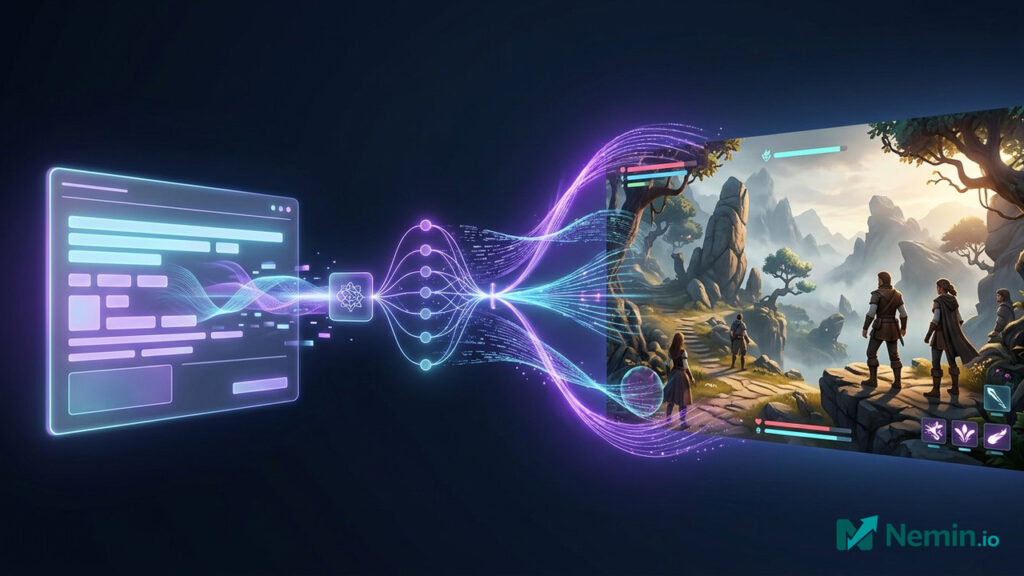
An AI game agent is fundamentally changing what it means to make a game. For decades, game development has been one of the most technically demanding and resource-intensive creative disciplines in existence, requiring coordinated teams of programmers, artists, designers, writers, sound engineers, and quality assurance specialists working over months or years to bring even a moderately complex game to life. The emergence of AI game agents, systems capable of interpreting natural language instructions and autonomously executing the multistep technical and creative processes required to produce playable game content, is compressing that timeline dramatically and opening game creation to people who have never written a line of code.
Understanding how an AI game agent moves from a simple text prompt to a finished, playable game experience requires examining the distinct stages of that process and the intelligent systems operating at each one. This article provides a complete, authoritative explanation of that journey and what it means for the future of game development.
What Is an AI Game Agent and How Does It Differ From Traditional Game Development Tools
An AI game agent is an autonomous or semi-autonomous artificial intelligence system capable of understanding creative and technical instructions expressed in natural language and translating those instructions into functional game elements, mechanics, environments, characters, and code. It operates differently from traditional game development tools in a fundamental way: rather than providing a developer with instruments to build a game manually, an AI game agent acts as an intelligent collaborator or autonomous builder that interprets intent and generates output.
Traditional game engines such as Unity and Unreal Engine are extraordinarily powerful tools, but they require deep expertise to operate effectively. Every asset, every line of code, every behavior tree, and every physics parameter must be configured by a skilled human operator. An AI game agent introduces a layer of intelligent interpretation between human intent and technical execution, allowing creators to describe what they want in natural language and receive functional game content in return.
This distinction does not eliminate the value of human creativity and direction. The most effective applications of AI game agents treat the technology as a capable collaborator that handles technical implementation while the human creator focuses on vision, narrative, experience design, and quality judgment. The result is a development process that is faster, more accessible, and capable of exploring a far wider range of creative possibilities than traditional workflows allow.
7 Stages an AI Game Agent Moves Through From Text Prompt to Playable Game
Stage 1. Natural Language Understanding and Intent Parsing
The process begins when a creator inputs a text prompt describing the game they want to build. This prompt might be as simple as a brief description of genre, setting, and core mechanic, or as detailed as a multi-paragraph design document covering narrative structure, visual style, character abilities, and progression systems.
The AI game agent applies natural language processing and large language model capabilities to parse this input and extract structured intent. It identifies genre conventions, gameplay mechanics implied by the description, environmental requirements, character archetypes, and design constraints. This parsed intent becomes the foundation for every subsequent stage of the generation process.
The quality of this initial parsing stage determines how well the finished game reflects the creator’s vision. Advanced AI game agents apply contextual understanding that goes beyond keyword matching, recognizing that a prompt describing a game about exploration and survival implies specific mechanics, pacing conventions, and environmental design principles even when those details are not explicitly stated.
Stage 2. Game Design Document Generation
Once the creator’s intent has been parsed, the AI game agent generates a structured game design framework that articulates the core loop, progression system, win and loss conditions, player abilities, enemy behaviors, environmental zones, and narrative context. This stage translates abstract creative intent into a concrete design specification that can guide all subsequent content generation.
This generated design document serves as the internal blueprint the agent uses to maintain consistency across all the elements it produces. It ensures that the combat system aligns with the progression mechanics, that the environmental design supports the intended gameplay experience, and that narrative elements are coherent with the world and characters being generated.
Stage 3. Procedural Environment and World Generation
With a design blueprint established, the AI game agent begins constructing the game world. Procedural generation algorithms create terrain, architecture, level layouts, and environmental details according to the design parameters established in the previous stage. Advanced AI game agents apply learned design principles to produce environments that are not merely random but structurally coherent and gameplay-supportive.
This means that a dungeon crawler environment will feature interconnected rooms with appropriate spatial flow, choke points, and exploration incentives. An open-world survival game will generate biomes with ecological logic, resource distribution patterns that create meaningful player decisions, and landmark structures that provide navigational reference points. The AI game agent applies domain knowledge about what makes game environments engaging to produce worlds that feel intentional rather than algorithmically arbitrary.
Stage 4. Character and Asset Creation
Simultaneously or sequentially, the AI game agent generates the visual and functional assets required to populate the game world. This includes player character models, enemy archetypes, non-player characters, weapons, items, environmental props, and user interface elements. Modern AI game agents with multimodal capabilities can generate both the visual representations of these assets and the underlying data structures that define their properties and behaviors.
Character generation extends beyond visual appearance to include behavioral programming. An AI game agent can define enemy behavior trees, pathfinding logic, combat patterns, and dialogue systems based on the character archetypes established in the design document. This functional character generation is what distinguishes a true AI game agent from a tool that produces only visual assets without the underlying game logic.
Stage 5. Mechanics Implementation and Code Generation
The mechanics of a game, the rules governing how player input translates into game state changes, how physics operates, how scoring or progression is tracked, and how the various systems interact, must be implemented as functional code. This is the stage that has historically represented the highest technical barrier to game creation.
An AI game agent with code generation capabilities translates the design specifications established in earlier stages into executable game logic. It writes the scripts, functions, and systems that make the game actually work, implementing collision detection, input handling, inventory systems, combat resolution, save and load functionality, and every other technical system the design requires.
The quality of this code generation stage varies significantly across different AI game agent systems. The most capable systems produce clean, well-structured code that integrates coherently across all game systems. Less capable systems may produce functional code for individual features that fails when those features interact with each other, requiring significant human debugging and integration work.
Stage 6. Audio and Narrative Integration
A complete game experience requires audio design and narrative content in addition to visual and mechanical elements. AI game agents capable of operating across these domains can generate ambient soundscapes, music that responds to gameplay states, sound effects aligned with game actions, and narrative content including dialogue, item descriptions, environmental storytelling, and quest structures.
Narrative integration at this stage involves more than simply generating text. The AI game agent must maintain consistency between narrative content and the game world it has generated, ensuring that story elements reference the correct locations, characters, and events established in earlier stages. This coherence across creative domains is one of the more challenging aspects of AI game agent operation and one of the clearest differentiators between systems of different capability levels.
Stage 7. Playtesting Simulation and Iterative Refinement
Before delivering a finished playable game, advanced AI game agents run internal playtesting simulations that evaluate the game’s balance, difficulty curve, progression pacing, and mechanical coherence. These simulations use AI-driven play agents that explore the game space, identify impossible challenges, locate exploitable mechanics, and flag inconsistencies in rule implementation.
The results of these simulations feed back into the refinement process, allowing the AI game agent to adjust enemy difficulty parameters, modify resource availability, correct logical errors in quest chains, and rebalance progression systems before the human creator encounters these issues. This automated quality assurance capability represents one of the most practically valuable aspects of AI game agent technology, dramatically reducing the debugging burden on human developers.
Why AI Game Agents Are Reshaping the Game Development Industry
The implications of AI game agent technology extend well beyond making game development faster for existing developers. They represent a fundamental democratization of a creative medium that has historically been accessible only to those with rare and expensive technical skills or the resources to hire teams who possess them.
Independent creators, writers, educators, and designers who have game concepts they lack the technical ability to realize can now work with AI game agents to bring those concepts to life. Small studios can produce games of a scope that would previously have required much larger teams. Established developers can use AI game agents to rapidly prototype concepts, generate content variations, and explore design directions that would be prohibitively time-consuming through traditional workflows.
This accessibility does not diminish the importance of human creative vision and judgment. The games that AI game agents produce from minimal input reflect the limitations of that input. The most compelling results come from creators who engage deeply with the process, providing rich creative direction, evaluating outputs critically, and iterating toward a refined experience with the same creative intelligence they would apply to any other creative discipline.
Conclusion
An AI game agent represents one of the most significant developments in the history of game creation, compressing a process that once required years and large teams into a workflow that can move from text prompt to playable experience in hours or days. The seven stages examined in this article, from natural language parsing and design document generation through world building, asset creation, code implementation, narrative integration, and automated playtesting, collectively constitute a new kind of creative infrastructure that is already reshaping how games are conceived, built, and delivered. For developers, designers, and creative professionals navigating this rapidly evolving landscape, understanding what AI game agents can do, how they do it, and where human judgment remains irreplaceable is the foundation for using this technology to its fullest potential.
Frequently Asked Questions
Q1. What is an AI game agent and what can it build?
An AI game agent is an intelligent system that interprets natural language prompts and autonomously generates functional game elements including environments, characters, mechanics, code, and narrative content to produce playable games.
Q2. Do you need programming experience to use an AI game agent?
No. AI game agents are specifically designed to allow creators without programming expertise to produce functional games by expressing their ideas in natural language rather than code.
Q3. How accurate are AI game agents at translating a text prompt into the intended game?
Accuracy depends on the specificity of the input and the capability of the system. More detailed and structured prompts generally produce outputs that more closely reflect the creator’s intent.
Q4. Can an AI game agent produce a complete commercial-quality game?
Current AI game agents can produce impressive playable experiences but most commercial releases still require significant human creative direction, refinement, and quality assurance to reach professional release standards.
Q5. What game genres work best with AI game agent technology?
Genres with well-established structural conventions such as platformers, dungeon crawlers, survival games, and role-playing games tend to produce the most coherent results because the AI can draw on extensive training data about those genre patterns.
Q6. How do AI game agents handle game balancing and difficulty?
Advanced AI game agents use internal simulation and playtesting agents to evaluate balance and difficulty, adjusting parameters based on simulated play data before delivering the finished game to the human creator.