
Understanding environmentally responsible lawn care helps you grow a healthy, usable yard while protecting soil, water, wildlife, and air quality. The goal is not a...
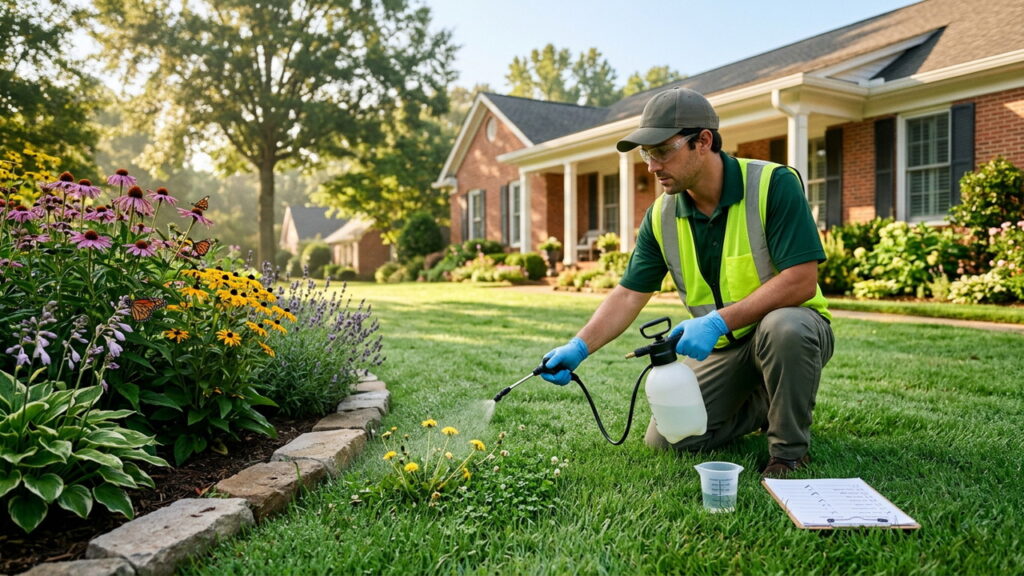
Understanding environmentally responsible lawn care helps you grow a healthy, usable yard while protecting soil, water, wildlife, and air quality. The goal is not a perfect carpet of grass. It is a set of practical choices in mowing, watering, feeding, and pest control that add up over time.
This guide covers the core principles, a simple yearly routine, safer ways to manage weeds and pests, and when to consider lawn alternatives. It is general and educational. Climate, grass type, and local rules matter, so confirm key details with your regional cooperative extension office.
Key Takeaways About Environmentally Responsible Lawn Care
- Environmentally responsible lawn care starts with healthy soil, because strong soil grows strong grass with fewer inputs.
- Mowing higher and leaving clippings on the lawn is one of the easiest changes to make.
- Water deeply and less often, preferably early in the morning, and follow local watering rules.
- A soil test shows what your lawn needs, so you avoid guessing and overapplying fertilizer.
- Prevent problems with dense turf, then treat only the specific problem, and only when needed.
- Natural or organic products can still cause harm if misused, so always follow the label.
- Battery-powered or manual tools reduce noise and local emissions.
- Replacing part of your lawn with native plants or other low-input groundcovers can cut water use and support pollinators.
What Is Environmentally Responsible Lawn Care?
Environmentally responsible lawn care is a way of maintaining turf that reduces harm to the environment while keeping the yard healthy and functional. It focuses on building living soil, using water wisely, limiting chemical inputs, choosing suitable plants, and supporting local wildlife.
You may also hear it called eco-friendly, sustainable, or low-impact lawn care. The names differ, but the ideas are similar. Work with natural processes first, and use stronger tools only when a real problem calls for them.
Quick Answer: What Is Environmentally Responsible Lawn Care?
Environmentally responsible lawn care means maintaining a lawn in ways that protect water, soil, air, and wildlife. In practice, that includes mowing high, watering deeply, feeding based on a soil test, treating pests only when necessary, using low-emission tools, and replacing some turf with native plants.
Who Should Use Environmentally Responsible Lawn Care?
Almost any property owner can benefit, including homeowners, renters with yard duties, landlords, schools, churches, and small businesses. It is especially useful if you have children or pets, a yard near a stream, lake, or storm drain, or high summer water bills.
Professionals can use the same ideas. Many lawn companies now offer lower-input programs, and asking for one is a good way to get started.
Core Principles of Environmentally Responsible Lawn Care
The table below summarizes the main ideas. Each one is explained in the sections that follow.
| Principle | What It Means | Simple First Action |
|---|---|---|
| Build healthy soil | Living, well-structured soil supports deep roots | Get a soil test and add compost |
| Use less water | Match watering to real need | Water deeply, early in the day |
| Feed only what is needed | Avoid excess nutrients that run off | Use slow-release products based on test results |
| Prevent before treating | Dense turf crowds out many weeds | Mow higher and overseed thin spots |
| Cut emissions and noise | Lower fuel use and local pollution | Switch to battery or manual tools |
| Support wildlife | Provide food and shelter | Add native flowers and reduce spraying |
Mowing for Environmentally Responsible Lawn Care
How you mow affects root depth, weed pressure, and water needs. It costs nothing to change, which makes it the best place to start.
Mowing Height in Environmentally Responsible Lawn Care
Taller grass shades the soil, grows deeper roots, and helps block weed seeds from sprouting. Many cool-season grasses do well at roughly 2.5 to 4 inches. Warm-season grasses such as Bermuda and zoysia often prefer shorter cuts, and recommended heights vary by variety.
Follow the one-third rule, which means never removing more than about one third of the blade height in a single mowing. Check your regional extension service for the ideal height for your grass type.
Grasscycling as Part of Environmentally Responsible Lawn Care
Grasscycling means leaving clippings on the lawn. They break down quickly and return nutrients to the soil, which can reduce how much fertilizer you need. They also keep yard waste out of landfills.
Clippings should be short enough to settle into the grass. Mow when the lawn is dry, and avoid cutting too much at once. If clumps form, rake them thin or mow again in a different direction.
Mower Blade Care in Environmentally Responsible Lawn Care
Sharp blades cut cleanly, while dull blades tear grass and leave ragged tips that lose more water and invite disease. Sharpen your blade at least once a season, or more often on a large lawn. A clean cut is a small but real step toward a healthier lawn.
Watering in Environmentally Responsible Lawn Care
Outdoor watering is a major share of household water use in many areas, and a good portion can be wasted through overwatering or evaporation. Smarter watering is a core part of responsible lawn care.
Deep and Infrequent Watering for Environmentally Responsible Lawn Care
Frequent shallow watering encourages shallow roots. Deep, less frequent watering pushes roots down, which makes grass more resilient in dry spells. A common guideline is about one inch of water per week, including rainfall, but the right amount depends on climate, soil, and grass type.
To measure it, place a few empty cans on the lawn and see how long your sprinklers take to fill them. Then adjust your schedule to match local advice.
Timing and Tools for Environmentally Responsible Lawn Care Watering
Early morning is usually best, because less water evaporates and grass has time to dry. Evening watering can leave grass wet overnight, which may encourage fungus in some conditions.
Consider these tools:
- Rain sensors that pause irrigation after rain.
- Smart controllers that adjust schedules to weather. Look for WaterSense labeled models.
- Drip irrigation for garden beds and shrubs.
- Regular checks for leaks, broken heads, and spray that hits pavement.
Check your city or water provider for watering restrictions or rebates before buying equipment.
Drought and Dormancy in Environmentally Responsible Lawn Care
Many cool-season lawns can turn brown and go dormant in summer heat and often recover when conditions improve. Light, occasional watering during dormancy can help the crown survive in long dry periods.
Accepting some seasonal color change is part of responsible lawn care. A brown lawn in a drought is not always a dead lawn.
Soil and Fertilizer in Environmentally Responsible Lawn Care
Healthy soil is the foundation of environmentally responsible lawn care. It holds water, feeds roots, and supports helpful microbes and earthworms.
Start With a Soil Test for Environmentally Responsible Lawn Care
A soil test reports pH and nutrient levels and may recommend specific amounts to apply. Many cooperative extension offices and private labs offer testing, and instructions on how to collect a sample are usually provided.
Without a test, you may apply nutrients your lawn does not need. Excess nitrogen and phosphorus can run off into storm drains and waterways, where they contribute to algae growth.
Choosing Fertilizer for Environmentally Responsible Lawn Care
Fertilizer labels show three numbers for nitrogen, phosphorus, and potassium. Some areas restrict phosphorus on established lawns unless a soil test shows a need, so check local rules.
Practical rules for responsible feeding:
- Use slow-release or organic-based products, which feed grass gradually.
- Apply the amount on the label, not extra.
- Do not apply before heavy rain or on frozen ground.
- Sweep any product off driveways and sidewalks back onto the grass.
- Keep a buffer zone near streams, ponds, and storm drains.
Compost and Aeration in Environmentally Responsible Lawn Care
Topdressing with a thin layer of screened compost, often around a quarter to half inch, can improve soil structure and biology. Core aeration relieves compaction, which helps water and air reach roots, especially on heavily used lawns or clay soils.
For cool-season grasses, early fall is usually a good time to aerate and overseed. Warm-season grasses are typically treated in late spring or early summer.
Weeds and Pests in Environmentally Responsible Lawn Care
A few weeds are normal. Environmentally responsible lawn care focuses on prevention and a realistic tolerance level, not a perfectly uniform lawn.
Integrated Pest Management for Environmentally Responsible Lawn Care
Integrated pest management, often called IPM, is a step-by-step approach that uses the least risky method that works. The usual sequence is below.
- Identify the problem correctly, since the wrong diagnosis wastes time and money.
- Decide how much damage you can accept.
- Improve growing conditions, such as mowing height, watering, and soil health.
- Use physical methods, like hand-pulling or digging.
- Try biological options where suitable.
- Use targeted products only if needed, and follow the label exactly.
Common Lawn Problems and Lower-Impact Responses
| Problem | First Step | Lower-Impact Option | Note |
|---|---|---|---|
| Broadleaf weeds | Mow higher and overseed | Hand-pull or spot treat | Spot treatment uses far less product than blanket spraying |
| Crabgrass | Thicken the lawn in fall | Timely overseeding and correct mowing | Pre-emergent timing matters, so check local advice |
| Grubs | Confirm by checking the soil | Treat only if numbers pass your extension threshold | Not every lawn needs grub control |
| Moss | Check shade, drainage, and pH | Improve light and drainage, then overseed | Moss often signals a growing condition problem |
| Fungal spots | Water in the morning and improve airflow | Adjust care before using any treatment | Many issues fade with better practices |
Pollinators and Pesticides in Environmentally Responsible Lawn Care
Some insecticides can harm bees and other beneficial insects. Avoid spraying plants in bloom, including dandelions and clover, and never apply products when pollinators are active unless the label allows it.
Weeds like clover and dandelion also provide early food for bees. Tolerating a few of them can be a helpful and low-effort part of responsible lawn care.
Natural Does Not Always Mean Safe in Environmentally Responsible Lawn Care
Organic and natural products can still irritate skin, harm aquatic life, or damage plants if misused. Vinegar, for example, can burn desirable plants as well as weeds. Corn gluten meal has shown mixed results as a weed preventer.
Read labels, store products safely, keep children and pets away from treated areas as directed, and ask your local hazardous waste program how to dispose of leftovers.
Tools and Equipment for Environmentally Responsible Lawn Care
Gas-powered small engines produce local air pollution and noise. Switching tools is one of the more visible changes you can make.
Battery and Manual Tools in Environmentally Responsible Lawn Care
Battery-powered mowers, trimmers, and blowers are quieter and produce no exhaust at the point of use. Their overall impact depends partly on how your electricity is generated. Reel mowers suit small lawns and need no fuel.
Choose tools that match your lawn size, and use one battery platform across tools if possible. Recycle spent batteries through approved programs, not household trash.
Fuel Handling and Maintenance in Environmentally Responsible Lawn Care
If you still use gas equipment, keep it tuned, use fresh fuel, and store fuel in approved containers. Avoid spills, and fuel the mower on a hard surface, not on grass.
Rake or mulch leaves instead of blowing them for long periods, which cuts noise and fuel use. Always follow the safety instructions in your equipment manual.
Grass Choice and Lawn Alternatives in Environmentally Responsible Lawn Care
The right plant in the right place needs less water and fewer products. Choosing suitable grass is a big part of responsible lawn care.
Choosing Grass Types for Environmentally Responsible Lawn Care
Grass types differ in their tolerance for heat, cold, shade, and drought. Tall fescue, for example, is often chosen for its deep roots in many cool-season regions, and warm-season grasses are common in the South. Regional extension services publish recommended varieties for your area.
When overseeding, pick seed suited to your climate and sun exposure. A mix of compatible varieties can improve resilience.
Reducing Lawn Area With Environmentally Responsible Lawn Care in Mind
You do not have to remove your whole lawn. Many people keep a smaller turf area for play and replace the rest with other plantings.
| Option | Best For | Consideration |
|---|---|---|
| Native plant beds | Pollinators and low maintenance | Needs careful plant selection and initial weeding |
| Clover or clover blends | Low-traffic areas and soil nitrogen | Not ideal for heavy foot traffic |
| Groundcovers | Shade and slopes | Choose non-invasive species |
| Rain gardens | Low spots and runoff areas | Needs correct placement and design |
| Mulched beds with trees | Shade and erosion control | Keep mulch off tree trunks |
Local Rules and Environmentally Responsible Lawn Care Alternatives
Some neighborhoods and cities have rules about lawn height, front yard plantings, or rainwater collection. Check homeowner association rules and city codes before making large changes. Rainwater collection rules also vary by state.
Leaves, Wildlife, and Environmentally Responsible Lawn Care
Shredded leaves can feed the soil when mowed into the lawn in thin layers. In garden beds, leaves make free mulch. Leaving some leaf litter and plant stems over winter provides shelter for beneficial insects.
You can provide water for birds and insects with a shallow dish and stones. These small additions make a yard more alive without adding much work.
A Seasonal Routine for Environmentally Responsible Lawn Care
Timing varies by region and grass type, so treat this table as a general outline and check local advice.
| Season | Key Tasks |
|---|---|
| Spring | Test soil, clean and sharpen tools, begin mowing high, fix irrigation leaks |
| Summer | Water deeply, keep mowing high, spot treat problems, accept some dormancy |
| Fall | Aerate and overseed cool-season lawns, topdress with compost, mulch leaves |
| Winter | Plan changes, order seed and plants, service equipment, protect soil from erosion |
Hiring a Pro for Environmentally Responsible Lawn Care
DIY is fine for most lawns, but a professional can help with large properties, persistent problems, or tricky diagnoses. Ask clear questions before you sign anything.
Questions to Ask About Environmentally Responsible Lawn Care Services
- Do you hold the state license required for pesticide application, if applicable?
- Do you start with a soil test and a written plan?
- Do you use integrated pest management?
- Which products do you plan to use, and why?
- How do you notify customers before and after treatments?
- Do you offer lower-input or organic options?
Red Flags in Environmentally Responsible Lawn Care Marketing
- Vague claims such as green or natural with no details about products.
- Calendar-based spraying with no inspection.
- Guarantees of a weed-free lawn.
- No written plan or reluctance to share product labels.
- Pressure to sign long contracts quickly.
7 Tips for Environmentally Responsible Lawn Care
| Tip | Why It Helps |
|---|---|
| 1. Mow higher and keep blades sharp | Builds deeper roots and crowds out weeds |
| 2. Leave clippings on the lawn | Returns nutrients and reduces waste |
| 3. Water deeply in the morning | Saves water and strengthens roots |
| 4. Test soil before feeding | Prevents overapplication and runoff |
| 5. Treat problems only when needed | Reduces chemical use and protects beneficial insects |
| 6. Use battery or manual tools | Lowers noise and local emissions |
| 7. Replace some turf with native plants | Cuts water needs and supports wildlife |
Pros and Cons of Environmentally Responsible Lawn Care
Pros of Environmentally Responsible Lawn Care
- Lower water use can reduce utility bills over time.
- Less runoff means healthier local streams and lakes.
- Healthier soil usually makes a more resilient lawn.
- Quieter equipment is easier on neighbors and your own ears.
- Pollinators and birds benefit from a more diverse yard.
Cons of Environmentally Responsible Lawn Care
- Results can take a full season or more to show.
- You may need to accept a few weeds or occasional brown patches.
- Some tools and plantings cost more upfront.
- Native or alternative plantings may need careful planning and initial effort.
- Local rules or neighborhood expectations may limit your options.
Common Mistakes in Environmentally Responsible Lawn Care
- Cutting grass too short and too often.
- Watering lightly every day.
- Fertilizing without a soil test.
- Applying products before heavy rain.
- Assuming organic means safe in any amount.
- Treating for grubs or weeds without confirming the problem.
- Removing the whole lawn at once with no plan for erosion or weeds.
- Ignoring local rules about plantings and watering.
Trust and Transparency in Environmentally Responsible Lawn Care Guidance
This article is educational and based on general public knowledge about lawn care. It does not recommend specific brands, and it cannot account for your local climate, soil, grass type, or regulations. Your cooperative extension office is the best source for tailored advice.
Laws, product labels, and recommendations change. Read and follow every product label, check local watering and fertilizer rules, and confirm any claims before you act. If a pesticide exposure occurs, contact Poison Control in the US at 1-800-222-1222 or call 911 in an emergency.
FAQ’s
What is environmentally responsible lawn care?
It is lawn maintenance that protects soil, water, air, and wildlife through smart mowing, watering, feeding, and pest management.
Is environmentally responsible lawn care more expensive?
It can cost more upfront for tools or plantings but may reduce water, fuel, and product costs over time. Actual savings vary.
How often should I water for environmentally responsible lawn care?
Many lawns do well with deep watering about once or twice a week, but needs vary by climate, soil, and grass type.
Do I have to stop using all pesticides?
Not necessarily. The aim is to use them only when needed, in targeted ways, and exactly as the label directs.
When is the best time to start environmentally responsible lawn care?
You can start any time with mowing and watering changes. Early fall is often ideal for overseeding cool-season lawns.
Can I keep my lawn green and still be eco-friendly?
Yes, in most regions. Healthy soil, suitable grass, and smart watering can keep a lawn attractive with fewer inputs.
Conclusion
Environmentally responsible lawn care comes down to a few habits. Mow high, water deeply, feed only what a soil test supports, treat problems in a targeted way, and use quieter tools. These steps protect local water and wildlife while keeping your yard healthy and useful.
You do not have to change everything at once. Pick two or three changes this season, watch how your lawn responds, and add more over time. Check your local extension office for advice suited to your area, and enjoy a greener yard in every sense.