
Fitting an EZ Rider kit can turn an ordinary bicycle into an electric one, but in the UK the law cares about how the finished...
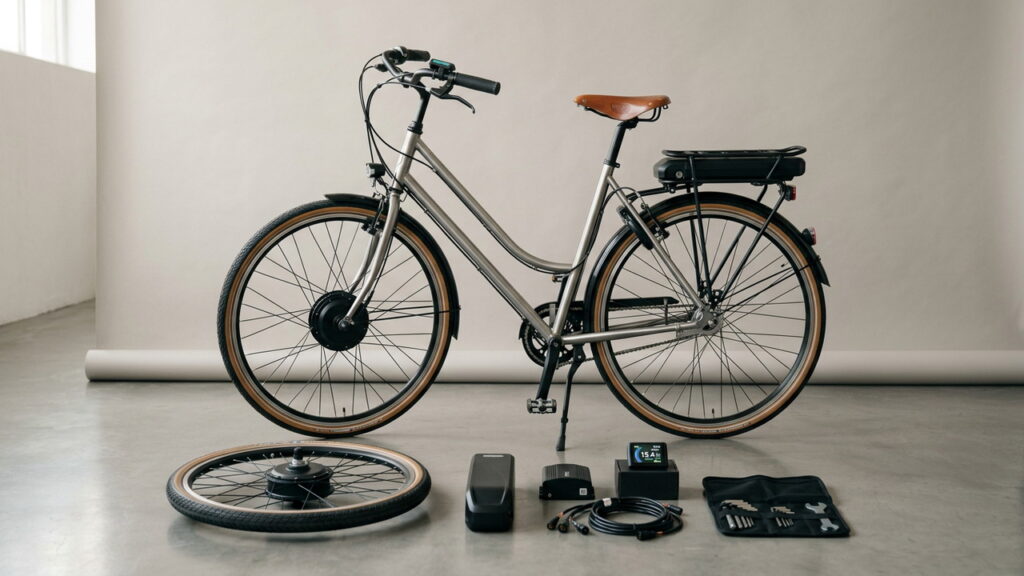
Fitting an EZ Rider kit can turn an ordinary bicycle into an electric one, but in the UK the law cares about how the finished bike behaves, not just the badge on the box. A conversion that stays within the rules is treated like a normal bicycle. One that goes beyond them is treated as a motor vehicle.
This guide explains the 250W road rules, how they differ from off-road systems, and how to check a kit before you buy. It is general information, not legal advice, and it does not state this kit’s power, speed, price, or compatibility. Always confirm those details with the seller.
Key Takeaways About EZ Rider Kit Legality
- An EZ Rider kit is legal on UK roads only if the finished bike meets the electrically assisted pedal cycle (EAPC) rules.
- The motor’s maximum continuous rated power must not exceed 250 watts.
- Motor assistance must cut out at 15.5 mph (25 km/h).
- The bike must have pedals that can propel it, and the rider must be at least 14.
- Peak power is not the same as continuous rated power, so read the specification carefully.
- A higher-powered or unrestricted setup is generally for private land only, with the landowner’s permission.
- Derestricting a road-legal kit can turn the bike into an unregistered motor vehicle.
- Rules can differ in Northern Ireland and can change, so check current government guidance.
What Is an EZ Rider Kit?
An EZ Rider kit, in this guide, means an electric bike conversion kit. Such kits usually include a motor, a battery, a controller, and a way to control assistance. You fit them to a bicycle you already own instead of buying a ready-made e-bike.
I cannot verify the exact contents or specifications of any particular EZ Rider kit. Contents, motor ratings, and speed settings differ between products and versions. Treat the seller’s technical sheet and the label on the motor as your source of truth.
Quick Answer: Is an EZ Rider Kit Legal in the UK?
An EZ Rider kit is legal for road use in the UK if the converted bike has a motor with a continuous rated power of 250W or less, assistance that stops at 15.5 mph, working pedals, and a rider aged 14 or over. If any of those limits is exceeded, the bike is treated as a motor vehicle and needs the registration, tax, insurance, licence, and approvals that go with it.
Who Is an EZ Rider Kit For?
A conversion kit suits riders who already have a bike they like and want help with hills, headwinds, or longer commutes. It can also appeal to people who want to keep a familiar frame or spread the cost.
It is less suitable if you want a high-speed machine for public roads, because the law limits what counts as a bicycle. It also needs care if your bike is old, very light, or has weak brakes, since extra assistance changes how the bike behaves.
Are EZ Rider Kit Conversions Legal in the UK?
Yes, a conversion can be legal. The UK does not ban conversions. It sets limits on the finished bike, and a bike that stays inside them is treated as an ordinary pedal cycle. That means no licence, no registration, no road tax, and no compulsory insurance.
| Requirement for an EAPC | What It Means in Practice |
|---|---|
| Maximum continuous rated power of 250W | The motor’s rated output, not a peak figure |
| Assistance cuts out at 15.5 mph (25 km/h) | The motor must stop helping above this speed |
| Pedals that can propel the bike | It must be usable as a pedal cycle |
| Rider aged 14 or over | A minimum age applies |
| Required information shown on the bike | Motor power or manufacturer, plus battery voltage or maximum speed |
The 250W Limit and Your EZ Rider Kit
The legal figure is the motor’s maximum continuous rated power. Sellers sometimes advertise a higher peak or nominal figure, and the two are not the same thing. If a kit is listed with a number above 250W, find out what that number means before you assume it is road legal.
Ask the seller to confirm the continuous rated power in writing. If the answer is vague, treat that as a warning sign.
The 15.5 mph Cut-Off and Your EZ Rider Kit
Assistance must stop when the bike passes 15.5 mph. You can still go faster by pedalling or going downhill, but the motor must not help. A kit with adjustable speed limits is only road legal if it is set at or below this limit.
Do not rely on a setting you can change in seconds. If the kit can easily be switched to a higher limit, make sure it is left in a compliant mode on public roads.
Pedals, Throttles, and the EZ Rider Kit
The bike must have pedals that can propel it. Pedal assist, where the motor helps while you pedal, is the simplest route to compliance. Throttle rules are less clear-cut, so check current government guidance and the kit’s specification before you rely on a throttle.
If you want to use a throttle on public roads, confirm with the seller how it behaves and whether it limits assistance at low speeds.
Age and Display Rules for an EZ Rider Kit Bike
Riders must be at least 14. The bike should also show the motor’s power output or manufacturer, plus battery voltage or maximum speed. A converted bike may not come with this information, so ask whether the kit supplies a label and attach it clearly.
250W Road Rules vs Off-Road Systems for EZ Rider Kit Users
The difference is where you ride. A road-legal system stays inside EAPC limits and can be used on roads and cycle paths. An off-road system exceeds those limits and is meant for private land only.
| Feature | Road-Legal 250W Setup | Off-Road System |
|---|---|---|
| Motor rating | 250W continuous or less | Often higher |
| Assistance limit | Stops at 15.5 mph | Often unrestricted |
| Public road use | Yes, as a pedal cycle | Not unless fully approved, registered, taxed, and insured |
| Licence and insurance | Not required | Required if treated as a motor vehicle |
| Where to ride | Roads and cycle paths | Private land with permission |
Using an Off-Road EZ Rider Kit Setup on Private Land
On private land, the EAPC rules do not apply in the same way. You still need the landowner’s permission, and you should consider insurance and safety. A friendly farm track is not automatically open to your bike.
Do not ride an over-limit bike on public roads, pavements, footpaths, or bridleways. The land you cross matters as much as the bike.
Public Rights of Way and the EZ Rider Kit
A compliant EAPC can often be used on cycle tracks and bridleways, but footpaths are generally for walkers, and local rules, signs, and byelaws vary. An over-limit bike is a motor vehicle and is generally not allowed on those routes.
Check local signs and council guidance before you ride somewhere unfamiliar.
What Happens if an EZ Rider Kit Exceeds the Limits?
If a converted bike exceeds the EAPC limits, it is legally treated as a motor vehicle, often as a moped or motorcycle. That brings requirements such as type approval, registration, tax, insurance, a suitable licence, and a motorcycle helmet.
Riding without them can lead to penalties, and insurance may be invalid if something goes wrong. Meeting these requirements is difficult for a home conversion, so most owners are better off staying within the 250W road rules or using the kit off-road only.
Derestricting and Your EZ Rider Kit
Some owners remove speed limiters or change settings to get more assistance. On a public road, this is where many riders go wrong. The bike would no longer meet the EAPC rules, even though it is the same bike that was legal before.
If you want more performance, use it only on private land and be honest about the bike’s status if you sell it.
How to Check an EZ Rider Kit Before You Buy
Check the facts before you spend money. The table below works as a buying checklist.
| What to Check | Why It Matters | How to Verify |
|---|---|---|
| Continuous rated power | Must be 250W or less for road use | Ask the seller for written confirmation |
| Speed cut-off | Must stop assistance at 15.5 mph | Check the specification and test the bike |
| Pedal assist or throttle | Affects compliance | Read the product description carefully |
| Battery safety evidence | Reduces fire risk | Look for recognised testing and a reputable supplier |
| Warranty and returns | Protects you if there is a fault | Read the terms before paying |
| Compatibility | Frame, brakes, and wheel size must suit | Ask the seller and a bike shop |
Reading the Specification of an EZ Rider Kit
Look for the motor’s rated power, voltage, maximum assisted speed, and battery capacity. If these details are missing or unclear, ask for them. A seller who cannot say how the kit meets UK limits is not a safe choice.
Be careful with claims like “road legal” with no detail. The finished bike is what counts, and some sellers state a kit is legal when it can be set up in a way that is not.
Battery and Charger Safety for an EZ Rider Kit
Lithium batteries can be a fire risk if they are poor quality, damaged, or charged badly. Use the charger supplied with the kit, avoid cheap replacements, and do not charge unattended or overnight in escape routes.
Look for evidence of recognised safety testing, such as compliance with relevant battery standards, and replace any damaged battery. Local fire services publish current safety advice, so check it.
Compatibility Checks for an EZ Rider Kit
Not every bike suits every conversion. Frame strength, brake type, fork design, and wheel size all matter. Extra weight and speed put more demand on brakes and wheels.
Have a bike shop check brakes, tyres, and spokes. If your bike has weak brakes, upgrade them before you add motor assistance.
Fitting and Riding With an EZ Rider Kit
A good fit makes a conversion safer and more reliable. If you are not confident with tools and wiring, a qualified bike mechanic can fit it.
Installation Tips for an EZ Rider Kit
Follow the instructions supplied with the kit and keep wiring tidy and protected from water and rubbing. Check that the wheel is secure in the dropouts and that torque arms or fixings are used where specified. Test the brakes and motor cut-off before riding in traffic.
Run a short test in a quiet area and check that assistance stops when you brake or stop pedalling, as the kit design intends.
Everyday Riding Rules for an EZ Rider Kit Bike
A compliant converted bike follows normal cycling rules. That means lights and reflectors in the dark, no riding on pavements, and obeying the Highway Code. Riding while unfit through drink or drugs is an offence on a bicycle too.
A helmet is not a legal requirement for an EAPC, but it is a sensible precaution. Extra speed makes a crash more serious.
Insurance and Responsibility With an EZ Rider Kit
Insurance is not compulsory for a compliant EAPC, but it is worth checking whether your home or bike insurance covers an electric conversion, theft, and liability. Some policies exclude modified bikes or set limits on battery value.
If you sell a converted bike, be honest about the kit and its settings. Selling a bike that you know is not road legal can create problems.
7 Tips for Using an EZ Rider Kit Legally
| Tip | Why It Helps |
|---|---|
| 1. Confirm continuous rated power is 250W or less | Keeps the bike inside the EAPC limit |
| 2. Check assistance stops at 15.5 mph | Meets the speed rule |
| 3. Keep the kit in a compliant mode on public roads | Avoids accidental offences |
| 4. Ride off-road systems on private land only | Prevents motor vehicle breaches |
| 5. Buy from sellers who give written specifications | Gives you proof if there is a dispute |
| 6. Use certified chargers and check battery condition | Reduces fire risk |
| 7. Have brakes and wheels checked before fitting | Makes the bike safer at higher speeds |
Pros and Cons of an EZ Rider Kit
Pros of an EZ Rider Kit
- You keep a bike you already know and like.
- A conversion can cost less than buying a complete e-bike, though prices vary.
- Assistance makes hills and longer rides easier.
- A compliant setup needs no licence, tax, or compulsory insurance.
Cons of an EZ Rider Kit
- Legal compliance depends on the finished bike, so you need to check it yourself.
- Fitting can be fiddly, and mistakes can affect safety.
- Not every bike suits a conversion.
- Battery safety needs attention.
- Over-limit settings can turn the bike into a motor vehicle.
Common Mistakes With an EZ Rider Kit
- Assuming a kit is road legal because the seller says so.
- Confusing peak power with continuous rated power.
- Derestricting the motor and riding on public roads.
- Riding an off-road setup on bridleways or footpaths.
- Using a cheap or damaged battery or charger.
- Skipping brake and wheel checks before fitting.
- Ignoring local rules in Northern Ireland or on specific routes.
Trust and Transparency in EZ Rider Kit Guidance
This article is independent and educational. It is not written or endorsed by any kit maker, and it is not legal advice. It uses general public knowledge about UK electric bike rules and does not state any product’s specifications, prices, or approvals.
Laws, guidance, and product details can change. Check the current government guidance on electric bikes, confirm all technical details with the seller, and speak to a solicitor or the relevant authority if you are unsure. If you are in an accident or emergency, call 999.
FAQ’s
Is an EZ Rider kit legal in the UK?
It can be, if the finished bike has a 250W continuous rated motor, assistance that stops at 15.5 mph, working pedals, and a rider aged 14 or over.
Do I need a licence or insurance for an EZ Rider kit bike?
Not for a compliant EAPC. If the bike exceeds the limits, it is a motor vehicle and the usual requirements apply.
Can I use an off-road EZ Rider kit on public roads?
Not unless the bike meets all motor vehicle requirements. Over-limit setups are generally for private land with permission.
Is peak power or rated power what counts?
The legal limit is the maximum continuous rated power. Peak figures can be higher and do not describe legality.
Can I ride a converted bike on bridleways?
A compliant EAPC can often use bridleways, but check local rules and signs. Over-limit bikes are generally not allowed.
What happens if I derestrict my kit?
The bike may no longer be an EAPC and could be treated as an unregistered, uninsured motor vehicle on public roads.
Conclusion
An EZ Rider kit can be a practical and legal way to go electric in the UK, as long as the finished bike stays within the 250W rated power limit, the 15.5 mph assistance cut-off, and the pedal and age rules. Check the specification in writing, keep the settings compliant on public roads, and save any higher-powered use for private land with permission.
Spend time on the basics before you ride. Choose a reputable seller, use safe batteries and chargers, and have your brakes and wheels checked. If you are unsure about a specific setup, confirm the current rules with official guidance before you go out on the road.