
Knowing when and how to approach HVAC repair can save you money, protect your comfort, and keep your household safe. Heating and cooling systems usually...
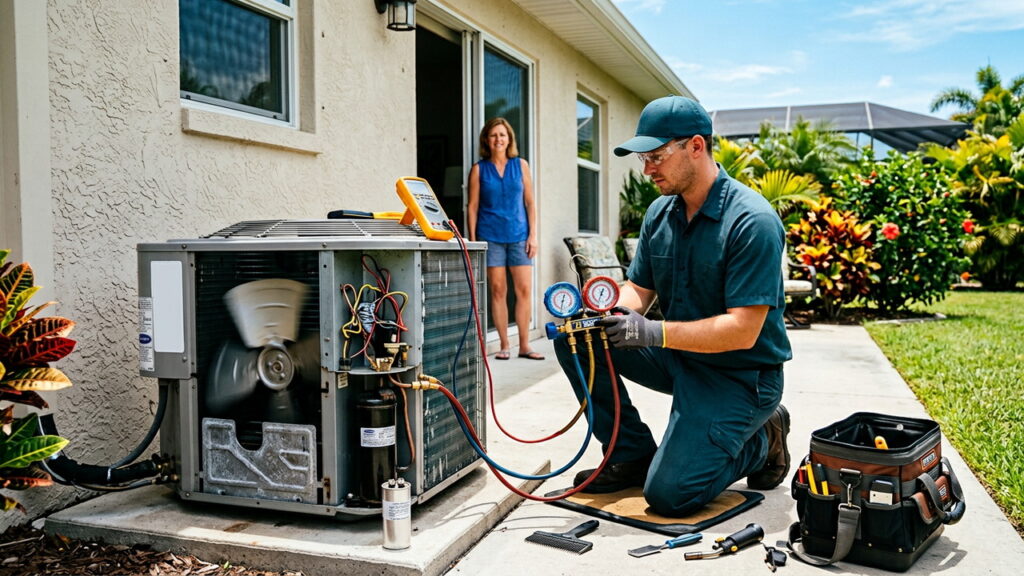
Knowing when and how to approach HVAC repair can save you money, protect your comfort, and keep your household safe. Heating and cooling systems usually give warning signs before they fail, but many people ignore them until the hottest or coldest day of the year.
This guide covers common problems, simple checks you can do yourself, when to call a professional, repair versus replacement, and how to choose a technician. It is general and educational, and it does not quote prices. Systems and local rules vary, so confirm details with a licensed professional.
Key Takeaways About HVAC Repair
- HVAC repair covers heating, ventilation, and air conditioning equipment, including furnaces, heat pumps, air conditioners, thermostats, and ductwork.
- Many faults start with simple causes such as a dirty filter, a tripped breaker, or a wrong thermostat setting.
- Regular maintenance lowers the chance of a breakdown and reduces the need for emergency HVAC repair.
- Never ignore gas smells, burning smells, or a carbon monoxide alarm. Leave the building and call 911 or your gas utility.
- Hire licensed, insured technicians and get a written estimate before any major repair begins.
- In the US, handling refrigerant requires certification, so refrigerant work is not a DIY task.
- Repair versus replacement depends on age, repair history, efficiency, and the cost of the fix.
- For a large repair, a second opinion is often worth the time.
What Is HVAC Repair?
HVAC repair is the diagnosis and fixing of faults in the systems that heat, cool, and ventilate a building. HVAC stands for heating, ventilation, and air conditioning. The work covers furnaces, boilers, heat pumps, air conditioners, thermostats, ducts, and air quality equipment.
A typical visit starts with questions and a diagnosis. Technicians use gauges, meters, and visual checks to find the cause, then repair or replace the faulty part. Good HVAC repair addresses the root cause, not just the symptom, so the same fault does not return next week.
Quick Answer: What Is HVAC Repair?
HVAC repair is the process of finding and fixing faults in a home or business heating and cooling system. It includes diagnosis, parts replacement, cleaning, electrical or refrigerant work, and final testing. The best approach is to act early, use a licensed technician, and get the cost in writing.
Who Needs HVAC Repair?
Homeowners, renters, landlords, and business owners all depend on comfortable, safe indoor air. Anyone who notices weak airflow, strange noises, rising energy bills, or uneven temperatures may need HVAC repair.
Property managers and small business owners need extra care, because downtime affects tenants, staff, and customers. A planned repair is almost always calmer than an emergency one.
Common Signs You Need HVAC Repair
Systems rarely fail without warning. The table below lists frequent signs and what they may mean. It is general guidance and not a diagnosis.
| Sign | Possible Cause | Urgency |
|---|---|---|
| Weak or uneven airflow | Dirty filter, blocked vents, duct leaks, failing blower | Moderate |
| Air is not cool or warm enough | Thermostat fault, refrigerant leak, ignition problem | High |
| Strange noises such as banging or squealing | Loose parts, worn belts or bearings, motor trouble | High |
| System turns on and off often | Dirty filter, thermostat issue, sizing problem | Moderate |
| Unusual smells | Dust burn-off, mold, electrical overheating, gas | Varies, can be urgent |
| Water around the unit | Clogged drain line, frozen coil | High |
| Rising energy bills with no usage change | Declining efficiency or a hidden fault | Moderate |
| Carbon monoxide alarm sounds | Possible combustion problem | Emergency |
Heating Problems That Call for HVAC Repair
Common heating faults include a furnace that will not ignite, a blower that runs without warm air, and a heat pump that struggles in cold weather. Dirty filters, failed igniters, dirty flame sensors, and thermostat problems are frequent causes.
Gas appliances need extra care. If you smell gas, do not touch switches or use a phone inside. Leave at once and call 911 or your gas utility from outside.
Cooling Problems That Call for HVAC Repair
An air conditioner that runs but does not cool may have a frozen coil, a failed capacitor, a dirty outdoor coil, or a refrigerant leak. Refrigerant is not used up like fuel, so low levels point to a leak that needs a professional repair.
If you see ice on the indoor coil or refrigerant lines, switch the cooling off and let it thaw. Do not chip the ice, and call a technician if it returns.
Airflow and Ductwork Issues in HVAC Repair
Weak airflow does not always mean the equipment is failing. Leaky or crushed ducts, closed vents, and dirty filters can all reduce comfort. A technician can test airflow and inspect ducts to find the real source.
Simple Checks Before You Book HVAC Repair
A few safe checks can solve minor problems or give the technician useful information. Do not open electrical panels or gas components, and stop if anything feels unsafe.
| Check | What to Do | Why It Helps |
|---|---|---|
| Thermostat settings | Confirm mode, temperature, and fresh batteries | Rules out simple setting errors |
| Air filter | Inspect it and replace it if dirty | Dirty filters restrict airflow and strain the system |
| Breaker and switch | Check the breaker and the service switch near the unit | A tripped breaker can stop the system |
| Vents and registers | Make sure they are open and unblocked | Restores airflow balance |
| Outdoor unit | Clear leaves, grass, and debris around it | Improves heat exchange |
| Condensate drain | Look for standing water or an overflow | A clogged drain can shut the system down |
Thermostat and Power Checks Before HVAC Repair
Start with the thermostat. A wrong mode, a dead battery, or a schedule you forgot can mimic a breakdown. Then check whether the breaker has tripped.
If a breaker trips again right after you reset it, do not keep resetting it. That points to an electrical fault that needs a professional.
Filters, Vents, and Outdoor Units Before HVAC Repair
A clogged filter is one of the most common causes of poor performance. Many filters need changing every one to three months, but it depends on the type, pets, and dust, so follow the manufacturer’s guidance.
Keep outdoor units clear of plants and debris. Turn the power off before you clean around the unit, and never spray into electrical parts.
Common HVAC Repair Problems and Fixes
The table below shows typical problems, likely causes, and who should handle the fix. It is a general guide, since every system is different.
| Problem | Typical Cause | Typical Fix | DIY or Pro |
|---|---|---|---|
| AC not cooling | Dirty coil, failed capacitor, refrigerant leak | Clean, replace part, or repair leak | Pro for most causes |
| Furnace not heating | Dirty flame sensor, failed igniter, filter issue | Clean or replace part | Filter is DIY, the rest is pro |
| Short cycling | Dirty filter, thermostat fault, sizing issue | Replace filter, adjust or repair controls | Filter is DIY, the rest is pro |
| Frozen coil | Low airflow or low refrigerant | Thaw, fix airflow, repair leak | Pro if it returns |
| Water leak | Clogged condensate line or pan problem | Clear line, repair pan or pump | Simple clearing can be DIY, otherwise pro |
| Loud noises | Worn motor, belt, or loose parts | Tighten, lubricate, or replace | Pro |
| Weak airflow | Duct leaks, dirty blower, closed vents | Seal ducts, clean blower | Pro for ducts and blower |
AC Not Cooling Properly and HVAC Repair
When an air conditioner struggles, a technician will check airflow, electrical components, refrigerant pressure, and coil condition. Capacitors and contactors are common failures and are often relatively quick fixes.
Capacitors can hold a charge even when power is off, so they are not a DIY part. Leave electrical components to a trained professional.
Furnace Not Heating and HVAC Repair
Modern furnaces run through a sequence of safety checks before they ignite. A failure at any step, such as a dirty flame sensor or a faulty igniter, can stop heat. A technician will test each stage and also check the venting for safety.
Never bypass safety switches or controls. They exist to prevent fires and carbon monoxide problems.
Heat Pump Issues and HVAC Repair
Heat pumps provide both heating and cooling, so one fault can affect both seasons. Frost on the outdoor unit in winter can be normal, because the unit runs defrost cycles. Heavy ice buildup or no heat at all deserves a service call.
Thermostat and Control Problems in HVAC Repair
Smart and programmable thermostats can fail or be set up incorrectly. If a system behaves oddly, a technician can check wiring, power, and settings. Replacing a thermostat is sometimes simple, but wiring mistakes can damage equipment, so follow the instructions or ask a professional.
Safety Risks That Make HVAC Repair Urgent
Some problems should not wait for a convenient appointment. Treat these as urgent.
- A smell of gas, or a hissing sound near gas lines.
- A carbon monoxide alarm, or symptoms such as headache, dizziness, and nausea shared by several people.
- Burning smells, smoke, or visible scorching near equipment.
- Water near electrical parts.
- Repeated breaker trips tied to the system.
For gas smells, smoke, or a carbon monoxide alarm, leave the building and call 911 or your gas utility from outside. In the US, Poison Control at 1-800-222-1222 can advise on suspected exposure.
Install carbon monoxide alarms on each level and near sleeping areas, and test them regularly. Have fuel-burning appliances inspected on a regular schedule.
Repair or Replace in HVAC Repair Decisions
The hardest question is often whether to fix or replace. The table below shows how common factors tend to point.
| Factor | Leans Toward Repair | Leans Toward Replacement |
|---|---|---|
| System age | Relatively young and well maintained | Near or past typical lifespan |
| Repair history | First or minor fault | Frequent breakdowns |
| Cost of repair | Small compared with replacement | A large share of replacement cost |
| Efficiency | Bills are stable | Bills keep rising |
| Comfort | Works evenly | Hot and cold spots, noise, humidity problems |
| Refrigerant type | Current refrigerant | Older refrigerant that is costly to service |
Age and Repair History in HVAC Repair
Many furnaces and air conditioners last somewhere around 15 to 20 years, but lifespan varies with quality, climate, and maintenance. A system near the end of its life and facing a costly repair may be a candidate for replacement.
A common rule of thumb says to consider replacing an older unit when a repair costs about half of a new system. It is only a guideline, so ask your technician for both options in writing.
Efficiency and Comfort in HVAC Repair Decisions
Newer equipment is often more efficient, which can lower running costs. Ask a technician to compare the likely operating cost of your current system against a new one.
Older air conditioners that use R-22 refrigerant can be costly to service, because it was phased out of new production in the US in 2020. Availability and cost depend on your area, so ask for a clear explanation.
How to Choose an HVAC Repair Company
A good company is as important as a good repair. Use the checklist below when you compare options.
| What to Check | Why It Matters | How to Verify |
|---|---|---|
| State or local license | Confirms legal authority where required | Look up the license with your licensing board |
| Insurance | Protects your property and the workers | Ask for a certificate of insurance |
| Refrigerant certification | Required in the US for handling refrigerant | Ask for the technician’s EPA Section 608 certification |
| Written estimate | Prevents surprises | Request scope, parts, labor, and timeline |
| Warranty on labor and parts | Shows confidence in the work | Get the terms in writing |
| Reviews and references | Shows patterns of service | Read many reviews and ask neighbors |
| Emergency availability | Matters in extreme weather | Ask about hours and call-out terms |
Licensing, Insurance, and Certification for HVAC Repair
Licensing rules differ by state and city, so check what applies in your area. Some places license HVAC contractors, while others set requirements differently.
Industry certifications, such as NATE, can show training but are not a legal requirement. Treat them as one signal among several, and verify any claim directly.
Red Flags in HVAC Repair Services
- Pressure to decide on the spot or a deal valid only today.
- A demand for full payment upfront or cash only.
- Vague estimates with no parts or labor listed.
- Refusal to show a license or proof of insurance.
- Claims that a system is dangerous with no test results to show you.
- Quotes far below every other bid.
Questions to Ask Before HVAC Repair
- Are you licensed and insured, and can I see proof?
- How do you charge for diagnosis, and is it credited toward the repair?
- What is the cause of the problem, and can you show me?
- What are my repair options, and what do you recommend?
- Is the part under manufacturer warranty, and is labor covered?
- How long will the repair take?
Understanding HVAC Repair Costs
Costs vary widely by region, equipment, and the nature of the fault, so this guide does not quote figures. It does explain how pricing usually works so you can compare quotes fairly.
| Pricing Model | How It Works | What to Watch For |
|---|---|---|
| Diagnostic or service call fee | A charge to visit and find the cause | Ask whether it is credited toward the repair |
| Flat rate | A set price for a defined repair | Check exactly what is included |
| Time and materials | Hourly labor plus parts | Ask for an estimated number of hours |
| Maintenance plan | Regular visits for a fixed fee | Read what is covered and what is not |
| After-hours rate | Higher rate for urgent calls | Confirm the rate before they arrive |
What Affects HVAC Repair Pricing
- The type and age of the equipment.
- The part that failed and how easy it is to obtain.
- Access to the unit, such as attics or tight crawl spaces.
- Refrigerant type and the amount needed.
- Time of day and season, since demand peaks in extreme weather.
- Your location and local labor market.
Getting a Clear HVAC Repair Estimate
For anything beyond a simple fix, ask for a written estimate that lists the work, parts, labor, and any taxes or fees. It should also say how surprises will be handled and approved.
Compare scope as well as price. A lower quote that leaves out parts or a warranty is not really lower.
Warranties and HVAC Repair
Check whether your equipment is still under a manufacturer warranty before approving a repair. Many warranties cover parts but not labor, and some require proof of regular maintenance.
Keep invoices, model numbers, and service records. They help with warranty claims, insurance, and resale.
Preventing the Need for HVAC Repair
Maintenance is the cheapest form of repair. A little care each season reduces breakdowns and extends equipment life.
| Season | Key Tasks |
|---|---|
| Spring | Schedule a cooling tune-up, replace the filter, clear debris from the outdoor unit |
| Summer | Check the filter monthly, keep vents open, watch for water around the unit |
| Fall | Schedule a heating tune-up, test thermostat and carbon monoxide alarms |
| Winter | Keep outdoor units clear of snow and ice, replace the filter, listen for new noises |
Seasonal Maintenance That Reduces HVAC Repair
A professional tune-up usually includes cleaning, testing electrical connections, checking airflow, inspecting the burner or refrigerant system, and checking safety controls. Ask what your visit includes before you book.
Between visits, keep filters clean, seal obvious duct leaks, and make sure drains stay clear. These habits cost little and prevent many common faults.
Indoor Air Quality and HVAC Repair
Dust, mold, and poor ventilation can point to equipment or duct problems. If you notice musty smells or heavy dust, ask a technician to inspect coils, drain pans, and ducts. Humidity control and filtration upgrades can also be discussed during a visit.
HVAC Repair for Business Owners
For a business, a failed system can mean lost sales, uncomfortable staff, and spoiled stock. Plan around your busiest periods and ask about priority service.
Many owners choose a maintenance agreement that includes regular inspections and faster response times. Compare what each plan covers, and keep a record of all service for compliance and insurance.
If you rent your space, check your lease to see who is responsible for repairs, and report problems in writing.
7 Tips for Smarter HVAC Repair
| Tip | Why It Helps |
|---|---|
| 1. Act on warning signs early | Small faults are cheaper than breakdowns |
| 2. Check the filter, thermostat, and breaker first | Solves simple problems quickly |
| 3. Never DIY gas, refrigerant, or electrical work | Prevents injury and damage |
| 4. Verify license and insurance | Protects you and your property |
| 5. Get a written estimate and compare scope | Avoids surprises |
| 6. Ask for repair and replacement options | Supports a fair decision |
| 7. Keep up with seasonal maintenance | Reduces future breakdowns |
Pros and Cons of Professional HVAC Repair
Pros of Professional HVAC Repair
- Faults are diagnosed accurately, so the real cause is fixed.
- Safety checks reduce fire and carbon monoxide risks.
- Warranties on parts and labor give you recourse.
- Equipment can last longer when it is serviced correctly.
- Efficiency often improves after a proper tune-up.
Cons of Professional HVAC Repair
- It costs more than doing small jobs yourself.
- Peak seasons can mean waiting for an appointment.
- Quotes vary, so comparing them takes effort.
- An older system may need repeated fixes before replacement makes sense.
Common Mistakes in HVAC Repair
- Ignoring small symptoms until the system fails.
- Skipping filter changes.
- Resetting a tripping breaker again and again.
- Hiring based only on the lowest quote.
- Trying DIY work on refrigerant or electrical parts.
- Approving a major job with no written estimate.
- Not asking about warranty coverage before paying.
- Waiting for peak summer or winter to book a tune-up.
Trust and Transparency in HVAC Repair Guidance
This article is independent and educational. It does not recommend any company, and it is not a substitute for advice from a licensed HVAC technician, your local building department, or your equipment manufacturer. It uses general public knowledge and does not state prices or local legal requirements.
Equipment, codes, and licensing rules differ by location and change over time. Always follow your manufacturer’s instructions, and confirm licensing and permit rules with your local authority. For gas smells, smoke, fire, or a carbon monoxide alarm, leave the building and call 911.
FAQ’s
What does HVAC repair include?
It includes diagnosing faults and repairing or replacing parts in heating, cooling, and ventilation equipment, plus testing afterward.
How do I know if I need HVAC repair?
Weak airflow, strange noises, uneven temperatures, rising bills, or a system that cycles often are common signs.
Is HVAC repair worth it for an older system?
Sometimes. Compare the repair cost, the system’s age, and its efficiency, and ask for replacement options in writing.
How much does HVAC repair cost?
It varies by equipment, fault, and location. Get a written estimate and compare scope as well as price.
Can I do HVAC repair myself?
Simple tasks like changing a filter are fine. Gas, refrigerant, and electrical work should be left to licensed professionals.
How do I find a reliable HVAC repair technician?
Verify the license and insurance, read reviews for patterns, and compare written estimates from two or three companies.
Conclusion
Good HVAC repair starts long before a breakdown. Watch for warning signs, do the simple safe checks, and call a licensed professional when the problem involves gas, refrigerant, or electrical parts. Ask for a written estimate and for both repair and replacement options, so the decision is based on facts.
Regular maintenance is the best way to avoid emergency calls, and it keeps your system running more efficiently. Find a trusted technician before the next heat wave or cold snap, and you will have help ready when you need it.