
Maintaining responsive stopping power is the single most important safety responsibility for any motorist navigating busy commuter routes and unpredictable weather. Scheduling timely Brake Repair...
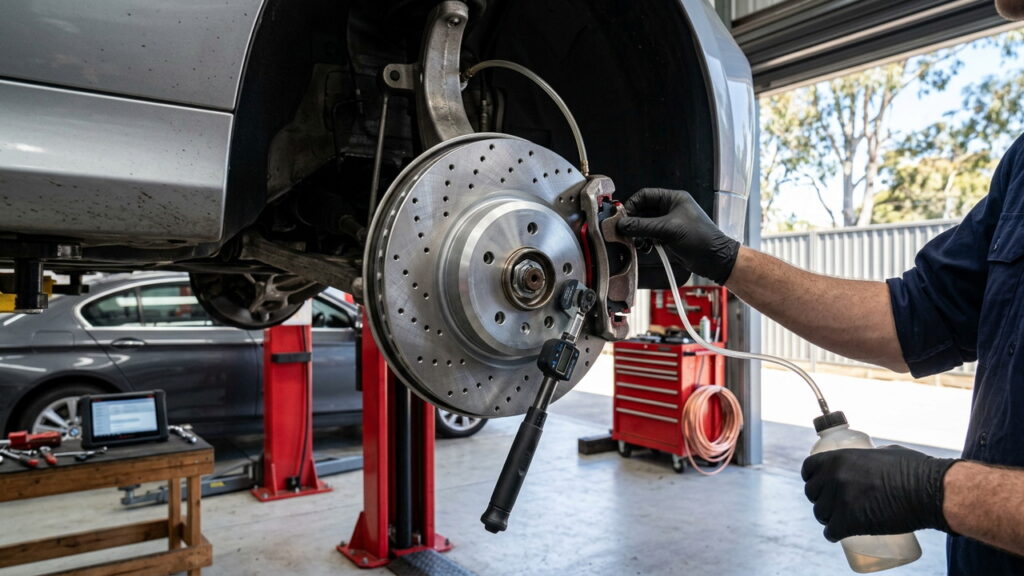
Maintaining responsive stopping power is the single most important safety responsibility for any motorist navigating busy commuter routes and unpredictable weather. Scheduling timely Brake Repair in Newcastle ensures your vehicle’s hydraulic callipers, friction pads, and disc rotors perform reliably whenever traffic slows down unexpectedly.
Ignoring subtle dashboard alerts or faint metallic noises can quickly turn a routine pad change into an expensive mechanical overhaul. Understanding how braking systems wear down and how to evaluate local automotive specialists empowers you to protect your passengers and reduce long-term maintenance costs.
Why Timely Brake Repair in Newcastle Protects Drivers on Busy Local Roads
Driving across Newcastle presents a demanding mix of congested inner-city intersections, fast-flowing arterial bypasses, and steep residential inclines. Every time a driver approaches a busy roundabout or slows down on a bridge approach, the braking system converts immense kinetic energy into thermal energy through friction. Booking preventative brake repair in Newcastle keeps these high-temperature components within safe operating tolerances throughout the year.
Seasonal moisture, road grit, and coastal air exposure also accelerate corrosion on exposed cast-iron discs, hydraulic lines, and calliper guide pins. When moisture settles on untreated metal surfaces overnight, surface rust forms and increases friction material abrasion during your morning commute. Proactive brake repair in Newcastle removes this oxidation buildup and verifies that protective dust boots and hydraulic seals remain completely intact.
How Urban Stop-Start Traffic Accelerates Friction Material Wear
Frequent acceleration and deceleration during peak commuter hours place continuous pressure on front and rear brake pads. Unlike steady motorway cruising where brakes are applied sparingly, urban stop-start driving prevents disc rotors from cooling down efficiently between applications. Consequently, drivers who commute daily through central corridors require brake repair in Newcastle much sooner than motorists who primarily travel long rural distances.
Repeated heat cycles can cause low-quality friction compounds to glaze over, creating a hardened, crystalline surface that reduces stopping friction. Glazed pads often produce an annoying squeal and require firmer pedal effort to bring the vehicle to a complete halt. Arranging a professional inspection for brake repair in Newcastle allows technicians to measure remaining pad depth in millimetres and check for thermal glazing before stopping distances lengthen.
Navigating Steep Gradients and Wet Weather Braking Demands
Steep hills and winding suburban streets force drivers to ride their brakes to control downhill speed, which transfers significant heat directly into the calliper pistons and brake fluid. If the hydraulic fluid has absorbed moisture over time, this intense heat can cause the fluid to boil and create compressible vapour bubbles inside the lines. Securing thorough brake repair in Newcastle ensures your hydraulic system is flushed with fresh, high-boiling-point fluid that resists brake fade on steep descents.
Wet weather further complicates stopping performance by introducing a thin film of water between the brake pad and the spinning rotor surface. Grooved or heavily worn discs struggle to wipe this water film away rapidly, leading to a momentary delay when you first press the pedal in heavy rain. Prioritising routine brake repair in Newcastle guarantees that your rotors maintain crisp contact surfaces for immediate wet-weather grip.
Early Warning Signs That Require Professional Brake Repair in Newcastle
Modern vehicles engineer multiple mechanical and electronic warning mechanisms into their braking assemblies so drivers can address wear before total failure occurs. Recognising these early physical cues allows you to book brake repair in Newcastle at the first sign of component fatigue rather than waiting for an annual roadworthy or MOT inspection. Paying close attention to how your vehicle sounds, feels, and responds under deceleration saves money by protecting secondary components like callipers and wheel bearings.
- High-pitched metallic squealing when applying light pedal pressure indicates that the built-in steel wear tab is contacting the rotor surface.
- Harsh, coarse grinding noises during braking confirm that the friction material has worn away completely and the metal backing plate is scoring the disc.
- A soft, spongy, or sinking brake pedal points to trapped air in the hydraulic lines, degraded brake fluid, or a leaking master cylinder seal.
- Rhythmic pulsing through the brake pedal or shaking in the steering wheel signals uneven rotor thickness or lateral disc runout.
- The vehicle pulling noticeably to the left or right under braking suggests a seized calliper piston, stuck slider pin, or contaminated pad on one side.
- Amber or red dashboard warning lights indicate low hydraulic fluid levels, triggered electronic pad wear sensors, or Anti-lock Braking System (ABS) faults.
- A burning chemical odour near the wheels after a short drive reveals a dragging brake pad or a stuck parking brake cable overheating the hub assembly.
Auditory Clues From High-Pitched Squealing to Metallic Grinding
Brake manufacturers attach a small spring-steel tab to the edge of the brake pad backing plate to act as an acoustic alarm when friction thickness drops to approximately two to three millimetres. When you hear this consistent high-pitched squeal with the windows down, you have a brief window to arrange brake repair in Newcastle before metal-on-metal contact begins. Addressing the noise at this stage usually means you only need new pads rather than an entire set of replacement discs.
If that initial squeal turns into a deep, rumbling grind, the friction compound has been completely exhausted. Every single stop with bare metal backing plates gouges deep concentric grooves into the cast-iron rotor face and superheats the calliper hardware. Seeking immediate brake repair in Newcastle the moment grinding starts prevents catastrophic loss of stopping power and protects your callipers from thermal seizure.
Pedal Feel Changes and Steering Wheel Judder Under Deceleration
A healthy brake pedal should feel firm, progressive, and predictable within the first few centimetres of downward travel. If your foot sinks closer to the floor mat or requires pumping to build pressure, hydraulic integrity has been compromised and requires urgent brake repair in Newcastle. Technicians use pressure gauges and leak-down tests to isolate whether the issue stems from perished rubber flexi-hoses, weeping wheel cylinders, or internal master cylinder bypass.
Steering wheel vibration during medium-speed braking—such as slowing down on an exit slip road—is commonly caused by Disc Thickness Variation (DTV). Uneven transfer of friction material onto a hot rotor creates microscopic high spots that push the calliper pistons back and forth thousands of times per minute. Booking precision brake repair in Newcastle allows a mechanic to measure rotor runout with a dial indicator and restore smooth, judder-free deceleration.
Core Mechanical Services Included in Brake Repair in Newcastle
A comprehensive braking service involves far more than simply sliding new pads into a dirty calliper bracket. When you schedule professional brake repair in Newcastle, qualified technicians inspect the entire friction and hydraulic loop from the master cylinder reservoir down to the hub mounting flange. Every moving point must be cleaned, lubricated with high-temperature synthetic grease, and torqued to exact manufacturer specifications.
Neglecting small hardware details—such as corroded anti-rattle shims or dry slider pins—causes new brake pads to wear down at an angle within a few thousand miles. Reputable workshops performing brake repair in Newcastle treat the braking system as an integrated precision assembly where clean mating surfaces are mandatory.
Front and Rear Brake Pad and Disc Rotor Replacement Standards
Because weight transfers forward whenever a vehicle decelerates, the front brakes handle roughly seventy percent of the total stopping load. Consequently, front pads and vented discs wear out significantly faster than rear components and represent the most frequent request for brake repair in Newcastle. Technicians measure both the remaining friction pad depth and the steel rotor thickness using calibrated digital micrometres.
Every brake disc has a minimum safe thickness stamped directly into its outer edge or central hat by the manufacturer. Once a rotor wears down to or below this minimum millimetre rating, it loses its ability to dissipate heat safely and must be replaced during brake repair in Newcastle. Installing fresh discs alongside new pads ensures full-surface contact, quiet operation, and maximum thermal capacity during emergency stops.
Hydraulic Brake Fluid Flushing and Calliper Piston Servicing
Hydraulic brake fluid operates inside a sealed system, yet it gradually absorbs microscopic moisture through rubber hoses and reservoir seals over time. Water contamination lowers the fluid’s boiling point and triggers internal rust inside expensive ABS modulator valves and calliper bores. Including a complete hydraulic flush every two years as part of your brake repair in Newcastle protects these internal components from premature corrosion.
Calliper pistons and guide pins must also retract smoothly the instant you lift your foot off the brake pedal. When rubber dust boots split or harden, road grime enters the bore and causes the piston to stick, keeping the pad pressed against the spinning disc. Skilled technicians conducting brake repair in Newcastle strip down the calliper carriers, wire-brush the pad abutments, and replace worn slider bushings so the brakes release cleanly.
Understanding DOT 4 and DOT 5.1 Boiling Points and Moisture Absorption
Automotive glycol-based brake fluids are classified by Department of Transportation (DOT) standards according to their dry and wet boiling temperatures. Standard DOT 4 fluid features a dry boiling point around 230 degrees Celsius, which drops drastically to 155 degrees Celsius once moisture saturation reaches three percent. Workshops specialising in brake repair in Newcastle use electronic conductivity testers to measure exact water content in your fluid reservoir within seconds.
Vehicles equipped with advanced stability control systems or heavy towing packages often require low-viscosity DOT 4 LV or high-performance DOT 5.1 fluid. Using the wrong fluid specification can sluggishly delay ABS valve actuation during icy weather or corrupt internal rubber seals. Always verify that your provider for brake repair in Newcastle refills the hydraulic circuit with the exact fluid grade specified in your vehicle owner’s manual.
Electronic Parking Brake Calibration and ABS Sensor Diagnostics
Modern cars increasingly replace traditional mechanical handbrake cables with motorised Electronic Parking Brake (EPB) actuators mounted on the rear callipers. Attempting to force an electronic rear calliper piston backward with a standard clamp will shatter the internal worm-drive gear and ruin the assembly. Professional brake repair in Newcastle utilizes OBD-II diagnostic scan tools to command the rear callipers into service mode before retracting the pistons safely.
Wheel speed sensors mounted directly adjacent to the brake hubs also play a vital role in governing Anti-lock Braking and traction control systems. Metallic dust from worn brake pads or corroded reluctance rings on the hub can disrupt sensor voltage signals and trigger dashboard fault codes. A complete appointment for brake repair in Newcastle includes cleaning the sensor tips and clearing stored diagnostic trouble codes after mechanical reassembly.
Comparing Brake Component Lifespans and Service Intervals
Understanding how long individual braking parts typically last helps you budget accurately and avoid unexpected roadside breakdowns. While aggressive driving styles and heavy cargo loads shorten component longevity, standard engineering benchmarks provide a clear baseline for scheduling brake repair in Newcastle. The table below outlines the expected service life, minimum safety thresholds, and failure indicators for essential braking hardware.
| Braking Component | Typical Lifespan Range | Minimum Safe Threshold | Primary Symptom of Wear or Failure |
|---|---|---|---|
| Front Brake Pads | 25,000 to 40,000 miles | 3.0 mm friction material | High-pitched squealing or dashboard wear warning light |
| Rear Brake Pads or Shoes | 40,000 to 60,000 miles | 3.0 mm pad / 1.5 mm shoe | Longer pedal travel or reduced handbrake holding power |
| Front Brake Discs (Rotors) | 50,000 to 70,000 miles | Stamped minimum mm spec | Steering wheel vibration, deep lip on outer disc edge |
| Rear Brake Discs or Drums | 60,000 to 80,000 miles | Stamped minimum mm spec | Pulsing brake pedal or scraping noise from rear hubs |
| Hydraulic Brake Fluid | Every 24 months or 24,000 miles | Less than 3% moisture content | Spongy pedal feel and reduced braking efficiency on hills |
| Brake Callipers & Hoses | 75,000 to 100,000+ miles | Zero fluid leaks or cracks | Vehicle pulling to one side or visible fluid on inner tyre |
Reviewing these thresholds during every routine oil service keeps you ahead of sudden component degradation. Whenever a part approaches its minimum measurement, booking preventative brake repair in Newcastle preserves the rest of the braking system from knock-on damage.
10 Proven Steps to Secure Trustworthy Brake Repair in Newcastle
Selecting the right automotive workshop makes the difference between a quiet, long-lasting repair and a frustrating cycle of noisy brakes and repeat garage visits. Because braking safety leaves zero margin for error, motorists should follow a structured evaluation process before handing over their keys. Use these ten proven steps to secure dependable, high-value brake repair in Newcastle.
- Request a Physical Micrometre Inspection: Ask the technician to measure your existing pads and discs with a calliper gauge and share the exact millimetre readings alongside the manufacturer’s minimum specifications.
- Verify Technician Qualifications and Accreditation: Choose a garage for brake repair in Newcastle that employs certified mechanics accredited by recognised industry bodies and motor trade associations.
- Demand an Itemised Written Quote Upfront: Ensure your estimate clearly separates the cost of brake pads, disc rotors, fitting kits, hydraulic fluid, labour hours, and applicable taxes before authorising any spanner work.
- Confirm Brake Component Brand and Material Grade: Ask the workshop to specify the exact brand of replacement parts they install so you avoid unbranded budget pads that dust heavily and squeal.
- Ensure Hub Flange Cleaning is Standard Practice: When booking brake repair in Newcastle, confirm that mechanics wire-brush rust scale off the wheel hub face before mounting new discs to prevent lateral runout.
- Check Electronic Brake Fluid Testing Procedures: Make sure the garage tests your brake fluid’s boiling point or moisture percentage rather than relying purely on visual colour inspection.
- Ask About Calliper Hardware and Slider Servicing: Verify that the service includes new stainless-steel pad shims and fresh silicone lubrication on the calliper guide pins to prevent uneven pad taper.
- Inquire About Torque Wrench Wheel Tightening: Reputable specialists performing brake repair in Newcastle tighten wheel lug nuts with a calibrated torque wrench rather than over-tightening them with an impact gun, which warps new rotors.
- Review Parts and Labour Warranty Coverage: Select a repairer that backs their brake repair in Newcastle with a written minimum twelve-month or 12,000-mile warranty covering both material defects and workmanship.
- Request Old Parts Inspection Upon Collection: A transparent mechanic will gladly show you the worn pads and scored rotors removed from your vehicle to validate the work completed.
Following this checklist eliminates guesswork and builds a trusted relationship with a reliable local garage. Drivers who insist on documented measurements and proper hub preparation consistently experience smoother, quieter performance after brake repair in Newcastle.
Workshop Garage vs Mobile Mechanics for Brake Repair in Newcastle
Motorists today can choose between visiting a traditional brick-and-mortar service centre, booking a main franchise dealership, or hiring an on-site mobile brake technician. Each service model offers distinct advantages depending on the complexity of the fault, your daily work schedule, and the age of your vehicle. Evaluating how these providers execute brake repair in Newcastle helps you pick the most practical option for your situation.
| Service Provider Type | Typical Turnaround Time | Equipment & Diagnostic Capability | Cost Structure | Best Scenario for Drivers |
|---|---|---|---|---|
| Independent Local Garage | Same day (2 to 4 hours) | Full hydraulic lifts, brake rollers, OBD scanners | Competitive mid-range labour rates | Complete pad, rotor, calliper, and ABS repairs |
| Mobile Brake Mechanic | 1 to 2 hours at your driveway | Trolley jacks, portable scan tools, hand tools | Lower overheads, zero recovery fees | Straightforward front or rear pad and disc swaps |
| Franchise Main Dealership | Half day to full day | Manufacturer-specific software, OEM parts stock | Premium hourly labour and OEM part prices | Vehicles under manufacturer warranty or complex EVs |
| Fast-Fit National Chain | 1 to 3 hours (walk-in or booked) | Multi-bay lifts, high stock of common brake parts | Fixed-menu pricing and seasonal offers | Urgent same-day replacements on popular car models |
When to Choose a Dedicated Workshop With Hydraulic Lifts and Lathes
Complex hydraulic issues, seized calliper bolts, and stubborn corroded hub assemblies are always best handled inside a fully equipped workshop. A permanent garage providing brake repair in Newcastle gives technicians access to two-post hydraulic lifts, high-pressure brake bleeding rigs, and rolling-road brake testing rollers. These calibrated rollers measure exact braking force imbalance across each axle to guarantee your car passes official roadworthy inspections.
Furthermore, older vehicles exposed to winter road salt often suffer from seized bleed nipples or rusted steel brake pipes that require fabrication on the spot. Choosing an established workshop for brake repair in Newcastle ensures that if a corroded bolt snaps or a hidden hose leak appears, the mechanics have the heavy tooling and parts network to resolve it immediately.
When On-Site Mobile Technicians Offer Practical Convenience
If your vehicle simply requires a routine front or rear pad and disc change and you have a flat, off-street driveway or workplace car park, a mobile specialist is a convenient choice. Mobile vans dedicated to brake repair in Newcastle carry diagnostic computers to wind back electronic parking brakes alongside quality OE-equivalent friction parts. You save time by working from home while the mechanic completes the replacement right outside your door.
Mobile brake repair in Newcastle is also an excellent solution when your brakes are grinding severely and you want to avoid driving the vehicle through traffic to a garage. By having the technician come directly to the stationary car, you eliminate the risk of causing further thermal damage to your callipers or getting stranded mid-journey.
Pros and Cons of OEM Versus Aftermarket Parts for Brake Repair in Newcastle
When comparing quotes for brake repair in Newcastle, you will frequently encounter a choice between Original Equipment Manufacturer (OEM) parts and aftermarket alternatives. OEM parts are identical to the components fitted on the factory assembly line, whereas aftermarket parts are produced by independent braking specialists like Brembo, Bosch, Pagid, Textar, or Ferodo. Understanding the trade-offs between friction formulations—such as ceramic, semi-metallic, and low-metallic organic compounds—helps you tailor your brake feel and budget.
Pros of OEM and Premium Branded Brake Components:
- Engineered to match the exact friction coefficient, pedal bite, and noise suppression profiles designed by the vehicle manufacturer.
- High-carbon coated brake discs resist unsightly rust buildup on the central rotor hat and cooling vanes in damp Newcastle weather.
- Premium ceramic and OE-formulated pads include chamfered edges, noise-damping backing shims, and pre-installed electronic wear sensors.
- Longer structural service life and superior resistance to thermal warping during sudden emergency motorway braking.
- Backed by comprehensive nationwide manufacturer warranties that protect against premature disc judder or pad delamination.
Cons of Budget or Economy Aftermarket Brake Components:
- Cheaper semi-metallic compounds often generate excessive black brake dust that rapidly coats alloy wheels and requires frequent cleaning.
- Economy pads frequently lack multi-layer rubberised anti-squeal shims, increasing the likelihood of annoying high-frequency harmonic vibrations.
- Uncoated budget cast-iron rotors develop orange surface corrosion around the hub within weeks of installation in wet climates.
- Softer friction materials wear down faster in heavy urban stop-start traffic, requiring another booking for brake repair in Newcastle sooner.
- Inconsistent metallurgy in low-tier rotors can lead to hot spots and pedal pulsation after just a few hard stops.
Discussing these material options openly with your mechanic ensures you get the best balance of longevity and price. Most reputable independent specialists offering brake repair in Newcastle recommend OEM-equivalent parts made by the very same tier-one manufacturers that supply the car factories, giving you factory quality without dealership retail markup.
Average Cost Breakdown and Factors Influencing Brake Repair in Newcastle
The total cost of brake repair in Newcastle varies significantly depending on your vehicle’s weight class, rotor diameter, and parking brake technology. A compact city hatchback uses smaller, solid steel rear discs that are inexpensive to manufacture and quick to install. Conversely, a heavy seven-seat SUV or commercial transit van requires oversized vented rotors, multi-piston callipers, and heavy-duty friction pads capable of arresting over two tonnes of moving mass.
Electric vehicles (EVs) and plug-in hybrids also present unique servicing requirements during brake repair in Newcastle. Because regenerative electric motors handle the majority of gentle slowing down, mechanical friction brakes on EVs are used less often and frequently suffer from severe disc corrosion rather than pad wear. Specialised cleaning and corrosion-resistant discs are often required to keep hybrid and electric braking systems functioning smoothly.
| Brake Service Type | Compact & Mid-Size Cars (Estimated Range) | SUVs, Estates & Light Vans (Estimated Range) | Average Workshop Labour Time |
|---|---|---|---|
| Front Brake Pads Only | £110 to £180 | £140 to £230 | 1.0 to 1.5 hours |
| Rear Brake Pads Only (Standard / EPB) | £100 to £175 | £130 to £220 | 1.0 to 1.5 hours |
| Front Pads and Discs (Complete Axle) | £220 to £360 | £290 to £480 | 1.5 to 2.5 hours |
| Rear Pads and Discs (Complete Axle) | £200 to £340 | £270 to £450 | 1.5 to 2.5 hours |
| Hydraulic Brake Fluid Flush & Bleed | £55 to £95 | £65 to £110 | 0.5 to 1.0 hour |
| Single Brake Calliper Replacement | £160 to £280 | £210 to £360 | 1.0 to 2.0 hours |
Always bear in mind that brake pads and brake discs must be replaced in matched axle pairs—both front wheels together or both rear wheels together. Replacing components on only one side of an axle creates dangerous uneven friction that will pull the car violently sideways during an emergency stop. Any professional technician performing brake repair in Newcastle will strictly enforce axle-pair replacement to uphold road safety standards.
Essential Post-Service Habits After Completing Brake Repair in Newcastle
Your responsibility for your vehicle’s braking performance does not end the moment you drive away from the workshop. Freshly installed brake pads and machined disc rotors require a controlled bedding-in period so the two surfaces can mate together microscopically. Following proper post-service driving habits right after completing brake repair in Newcastle prevents thermal shock and maximises the lifespan of your new investment.
During the first two hundred miles of driving, the flat surface of the new pad gradually conforms to the surface profile of the rotor while transferring a microscopic, even layer of friction material onto the cast iron. If a driver slams on the brakes aggressively while the parts are brand new, resin binders inside the pad can overheat and cause uneven friction spots. Taking a gentle, measured approach after brake repair in Newcastle guarantees whisper-quiet operation and optimal stopping bite for tens of thousands of miles.
Proper Bedding-In Procedures for Fresh Pads and Discs
When you first collect your car after brake repair in Newcastle, you may notice the pedal feels slightly softer or requires marginally more pressure for the first few miles. This is completely normal as the microscopic high points on the pads wear into full contact with the rotor faces. Leave extra following distance behind the vehicle in front of you and use smooth, progressive pedal applications rather than sudden last-second stops.
Avoid holding your foot firmly on the brake pedal while stationary at traffic lights immediately after a long downhill descent when the brakes are very hot. Keeping a stationary pad clamped tightly against a scorching-hot rotor imprints pad material onto one spot of the disc, leading to future brake judder. Instead, shift into neutral and engage the parking brake or allow the discs to cool evenly through moderate urban driving after your brake repair in Newcastle.
Driving Techniques That Extend Braking System Longevity
Adopting smoother, anticipatory driving habits dramatically reduces how often you need to pay for brake repair in Newcastle. Looking further ahead down the road allows you to lift off the accelerator pedal early and let natural engine braking slow the car before you approach red lights or roundabouts. Coasting in gear reduces thermal stress on your front rotors and cuts fuel consumption at the same time.
Additionally, unloading unnecessary heavy items from your boot and rinsing road salt off your wheels during winter washes helps preserve your braking hardware. Every kilogramme of extra weight in the vehicle increases the kinetic energy your brakes must absorb during every stop. Combining smart driving habits with annual inspections ensures every brake repair in Newcastle delivers maximum safety and value.
FAQ’s
How often should I book a professional inspection for brake repair in Newcastle?
You should have your brake pads, discs, and hydraulic fluid inspected every 10,000 miles or at least once every twelve months during your routine vehicle service. Drivers who navigate heavy city traffic or steep hills daily benefit from a quick visual check every six months.
Can I replace just the brake pads without changing the discs during brake repair in Newcastle?
Yes, you can replace only the brake pads provided your existing disc rotors remain safely above the manufacturer’s stamped minimum thickness and show no signs of warping, deep scoring, or severe edge corrosion. A qualified mechanic will measure the discs with a micrometre to confirm whether they can be safely reused.
How long does a standard front pad and disc replacement take at a local garage?
A standard front or rear axle pad and rotor replacement typically takes between ninety minutes and two and a half hours for a professional technician to complete. Appointments for brake repair in Newcastle that also require hydraulic fluid flushing or seized calliper replacement may take up to half a day.
Why do my brakes squeak slightly in the morning even after recent brake repair in Newcastle?
Light morning squeaking over the first two or three stops is usually caused by overnight condensation creating a microscopic film of surface flash rust on the cast-iron discs. Once you apply the brakes a few times on your drive, the pads wipe the moisture and rust film cleanly away.
Is it safe to drive my car if the red brake warning light illuminates on the dashboard?
No, a red brake dashboard warning light indicates either critically low hydraulic brake fluid or an engaged parking brake sensor fault and requires immediate attention. You should stop safely as soon as possible and arrange recovery or mobile brake repair in Newcastle rather than risking hydraulic failure on the road.
Do electric and hybrid vehicles still need regular brake repair in Newcastle?
Yes, although regenerative braking slows electric and hybrid vehicles down and extends pad thickness life, the mechanical discs and calliper sliders frequently seize up from underuse and corrosion. Regular stripping, cleaning, and lubrication during brake repair in Newcastle prevents EV callipers from sticking and failing annual safety tests.
Conclusion
Staying proactive with your vehicle’s braking system protects you, your family, and fellow road users across every journey. By recognising early warning signs like metallic squealing, pedal vibration, or spongy hydraulic response, you can schedule timely brake repair in Newcastle before minor friction wear escalates into costly calliper or rotor failure.
Partnering with an accredited workshop or skilled mobile technician who uses quality OEM-equivalent components, tests brake fluid moisture accurately, and cleans hub surfaces properly guarantees lasting peace of mind. Treat your brakes with the preventative care they deserve, and your vehicle will reward you with smooth, confident, and reliable stopping power in all driving conditions.