
Designing a peaceful, welcoming nursery begins with selecting textiles that protect your newborn's delicate skin while celebrating their unique arrival. Investing in high-quality Personalized Baby...
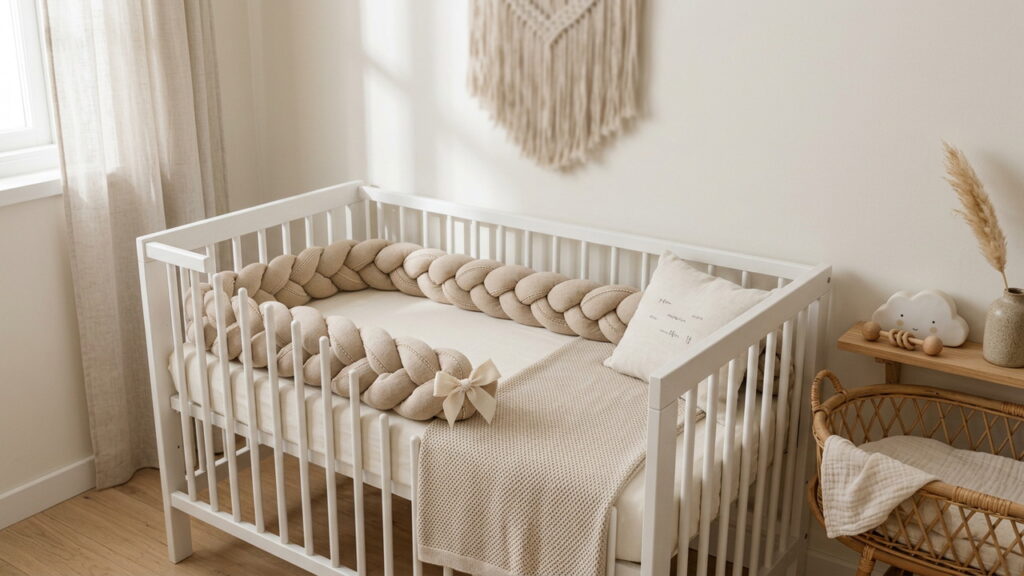
Designing a peaceful, welcoming nursery begins with selecting textiles that protect your newborn’s delicate skin while celebrating their unique arrival. Investing in high-quality Personalized Baby Bedding allows parents and gift-givers to blend custom name designs, heirloom monograms, and soothing nursery palettes with strict pediatric sleep safety standards.
While decorative nursery inspiration photos often showcase overflowing cribs filled with plush pillows and heavy quilts, real-world infant care requires a much more disciplined approach to crib configuration. Understanding how breathable organic fibers, non-toxic printing methods, and secure mattress dimensions work together empowers families to curate a custom sleep sanctuary that is both photograph-ready and clinically safe.
What Is Personalized Baby Bedding and Why Modern Parents Prioritize Safe Custom Linens
In the juvenile textile industry, Personalized Baby Bedding refers to custom-made nursery linens—including fitted crib sheets, bassinet covers, tailored crib skirts, milestone swaddles, and supervised tummy-time quilts—that are individually printed or embroidered with a child’s name, initials, birth details, or bespoke artwork. Unlike mass-produced department store sets, custom nursery linens are crafted to order using targeted fabric weights and family-selected typography.
Modern parents and baby shower gift-givers prioritize Personalized Baby Bedding because it transforms functional everyday essentials into lasting family keepsakes. Furthermore, boutique customization platforms allow parents to specify certified organic cottons and hypoallergenic bamboo weaves that support infant thermoregulation far better than synthetic wholesale polyester blends.
Balancing Nursery Aesthetics and AAP Safe Sleep Guidelines With Personalized Baby Bedding
According to the American Academy of Pediatrics (AAP) and the Consumer Product Safety Commission (CPSC), the safest sleep environment for an infant under twelve months old is a firm, flat mattress covered only by a tightly fitted sheet inside a bare crib. Choosing Personalized Baby Bedding enables parents to honor this life-saving bare-crib rule without leaving the nursery looking sterile or unfinished. When the fitted crib sheet itself features a custom repeating name pattern or watercolor botanical motif, the mattress becomes the visual centerpiece of the room without introducing loose fabric hazards.
Decorative elements that accompany sets of Personalized Baby Bedding—such as monogrammed quilts, fleece stroller blankets, and embroidered lumbar pillows—still serve valuable roles outside of unsupervised infant sleep. Parents routinely drape custom quilts over the back of a nursery glider chair, lay them on the floor for supervised daytime tummy time, or save them for the transition to a toddler bed after the child’s first birthday.
Why Custom Fitted Crib Sheets Lead Modern Trends in Personalized Baby Bedding
Historically, multi-piece bedding bundles relied on thick padded crib bumpers and heavy comforters to showcase nursery themes. Since federal safety regulations banned padded crib bumpers due to suffocation and entrapment risks, custom fitted sheets have become the undisputed anchor of Personalized Baby Bedding. A well-engineered fitted sheet showcases the baby’s name clearly from above during monthly milestone photos while remaining completely flat under the infant’s back.
Parents also need multiple backup sheets in active rotation to handle inevitable midnight diaper leaks and spit-up incidents. Ordering a coordinated three-pack of Personalized Baby Bedding fitted sheets—pairing one bold focal name sheet with two subtle monogrammed or tonal coordinating prints—ensures the nursery maintains its cohesive aesthetic even on laundry day.
Core Components and Textile Options Included in Personalized Baby Bedding Sets
Navigating custom nursery catalogs is much easier when you understand the functional role of each individual textile piece. Reputable makers of Personalized Baby Bedding allow buyers to purchase standalone sheets or build modular bundles tailored to their exact crib style and baby developmental stage. Evaluating how each item is constructed ensures every piece in your bundle serves a safe, practical purpose.
Fitted Crib Sheets, Milestone Blankets, and Crib Skirts in Personalized Baby Bedding
The foundation of any collection of Personalized Baby Bedding is the standard fitted crib sheet, which must be cut specifically to wrap a standard 28-by-52-inch crib mattress or a 24-by-38-inch mini-crib mattress. High-grade sheets feature eight-to-nine-inch deep corner pockets and a fully encased, heavy-duty elastic band that runs around the entire perimeter rather than just the four corners. Full-perimeter elastic prevents the sheet from popping off the mattress corners when an active infant kicks or rolls.
Tailored crib skirts (also known as dust ruffles) and milestone swaddle blankets round out the most functional bundles of Personalized Baby Bedding. Because a crib skirt sits beneath the mattress support board and hangs toward the floor, it adds tailored color and hides under-crib storage without ever entering the baby’s sleep zone. Meanwhile, lightweight personalized muslin or jersey swaddle blankets provide a soft surface for newborn hospital announcement photos and supervised nursing sessions.
Selecting Organic Cotton, Bamboo Viscose, and Muslin for Personalized Baby Bedding
Newborn skin is roughly thirty percent thinner than adult skin and absorbs environmental moisture and chemical residues rapidly. Because babies spend twelve to sixteen hours a day sleeping directly against their mattress cover, selecting breathable, natural fibers for Personalized Baby Bedding is essential for preventing heat rash and eczema flare-ups. Natural cellulosic fibers allow excess body heat to escape through the weave, reducing the risk of infant overheating during sleep.
Synthetic microfiber and low-grade polyester sheets trap body heat and static electricity against the baby’s head and back. When customizing Personalized Baby Bedding, parents should prioritize long-staple combed cotton percale for crisp durability, interlock cotton jersey for gentle T-shirt softness, or bamboo viscose for silky, moisture-wicking cooling in warmer climates.
Understanding GOTS and OEKO-TEX Certifications in Personalized Baby Bedding
Marketing terms like “natural” or “eco-friendly” are largely unregulated on general e-commerce marketplaces unless backed by independent third-party textile testing. When shopping for Personalized Baby Bedding, look specifically for the Global Organic Textile Standard (GOTS) certification or the OEKO-TEX Standard 100 Product Class I label. Product Class I is the strictest tier of OEKO-TEX testing, reserved exclusively for textile articles designed for babies and toddlers under thirty-six months old.
These rigorous laboratory certifications verify that every thread, elastic band, and dye formulation used in your Personalized Baby Bedding is completely free from formaldehyde, heavy metals, phthalates, optical brighteners, and carcinogenic aromatic amines. Verifying certification numbers gives parents total peace of mind that saliva contact during teething will never expose their baby to harmful chemical runoff.
Comparing Non-Toxic Dye Sublimation and Embroidery on Personalized Baby Bedding
Customizing nursery fabrics involves two primary application methods: fiber-reactive digital textile printing and precision mechanical embroidery. For fitted crib sheets and newborn swaddles within Personalized Baby Bedding, water-based pigment or fiber-reactive printing is always the safest choice because the ink bonds molecularly into the yarn with zero raised texture. The printed name feels just as smooth and breathable as the surrounding unprinted cotton, leaving nothing to scratch a newborn’s cheek.
Mechanical thread embroidery adds gorgeous three-dimensional texture to Personalized Baby Bedding heirloom blankets, crib skirts, and nursery throw pillows. However, any embroidered baby blanket must feature a soft, protective fabric backing—or double-sided lining—that covers the dense bobbin stitches on the reverse side so tiny fingers and toes never get snagged in loose thread loops.
Comparing Fabric Types and Breathability Standards for Personalized Baby Bedding
Choosing the right base fabric depends on your local climate, nursery room temperature, and how frequently you plan to machine-wash the linens. While bamboo viscose excels in humid summer weather, heavyweight organic cotton percale withstands years of hot-water sanitizing cycles. The comparison table below breaks down the performance, breathability, and safety profiles of the top five textiles used in Personalized Baby Bedding.
| Textile Fiber Type | Breathability & Thermal Profile | Best Application in Personalized Baby Bedding | Wash Durability & Pilling Resistance | Safety & Certification Benchmark |
|---|---|---|---|---|
| 100% GOTS Organic Cotton Percale | High airflow; crisp, cool matte weave that softens with every wash | Standard & mini fitted crib sheets, tailored crib skirts, toddler pillowcases | Exceptional; handles 100+ warm washes without pilling or stretching | GOTS Certified Organic & OEKO-TEX Class I |
| Bamboo Viscose / Rayon Spandex Knit | Ultra-breathable; 3 degrees cooler than cotton with high moisture wicking | Fitted bassinet & crib sheets for warm climates or hot sleepers; stretch swaddles | Moderate; requires cold gentle wash and low tumble dry to prevent pilling | OEKO-TEX Standard 100 Class I verified |
| Double-Gauze Organic Cotton Muslin | Maximum open-weave ventilation; lightweight and airy | Newborn receiving blankets, burp cloths, and summer fitted sheets | High; crinkle texture hides wrinkles and grows softer over time | GOTS & CPSIA lead/phthalate free |
| Combed Cotton Interlock Jersey | Cozy four-way stretch; moderate warmth similar to a soft cotton T-shirt | All-season fitted crib sheets, changing pad covers, and nursing covers | Good; retains stretch recovery when dried on low heat | CPSIA compliant & water-based pigment inks |
| Minky Plush / Sherpa Micro-Fleece | Low airflow; high thermal insulation for out-of-crib warmth | Supervised floor tummy-time mats, stroller blankets, and toddler bed throws | High; resists fading and shrinking, though high heat can mat pile fibers | Strictly for supervised out-of-crib or 12+ month use |
Reviewing these textile characteristics prevents parents from accidentally ordering a heavy, non-breathable plush fabric for an infant sleep surface. Reputable studios producing Personalized Baby Bedding clearly label which fabrics are engineered for fitted sleep sheets versus out-of-crib decorative warmth.
10 Best Proven Tips to Select Safe and Durable Personalized Baby Bedding
Ordering custom nursery items requires careful attention to mattress measurements, ink chemistry, and typography contrast because personalized merchandise generally cannot be returned for buyer’s remorse. Taking a methodical approach before clicking checkout ensures your custom pieces arrive looking exactly as envisioned. Follow these ten proven steps to select safe, long-lasting Personalized Baby Bedding.
- Verify Exact Crib or Bassinet Mattress Dimensions First: Measure your mattress length, width, and depth in inches before ordering Personalized Baby Bedding, as standard cribs (28″ x 52″), mini-cribs (24″ x 38″), and oval bassinets require completely different sheet patterns.
- Prioritize Water-Based Zero-Feel Printing for Fitted Sleep Sheets: Select Personalized Baby Bedding crib sheets printed with OEKO-TEX certified water-based inks rather than raised vinyl transfers or thick embroidery directly in the center sleep zone where the baby’s head rests.
- Check for Full 360-Degree Encased Elastic and Deep Pockets: Confirm that fitted sheets in your Personalized Baby Bedding order use continuous encased elastic with at least eight-inch corner pockets so the fabric stays drum-tight under mattress tension.
- Reserve Embroidered Quilts and Plush Blankets for Out-of-Crib Use: Use monogrammed quilts and minky blankets from your Personalized Baby Bedding collection for supervised floor play, stroller walks, or chair decor until your child transitions to a toddler bed after twelve months of age.
- Choose Pre-Shrunk or Shrinkage-Compensated Natural Fabrics: Natural cotton shrinks three to five percent during its first laundry cycle, so ensure your Personalized Baby Bedding provider cuts their sheet patterns slightly oversized to guarantee a safe post-wash fit.
- Test Font Legibility on Cursive and Script Character Combinations: Preview your baby’s exact name in the design tool before finalizing Personalized Baby Bedding, checking that capital cursive letters like G, I, J, Q, and Z remain easily readable from across the room.
- Inspect Embroidery Backing Coverage on Keepsake Blankets: When purchasing stitched Personalized Baby Bedding blankets, choose double-layered designs where the backside of the embroidery is fully enclosed between two fabric layers to prevent finger entanglement.
- Order Coordinated Multi-Sheet Bundles to Avoid Dye-Lot Shifts: Buy at least two or three fitted sheets at the same time when ordering Personalized Baby Bedding so the background ivory, sage, or blush tones come from the exact same production calibration run.
- Avoid Loose Pom-Pom Trims, Tassels, and Beaded Accents: Keep all Personalized Baby Bedding free from small detachable ribbons, buttons, or pom-pom fringes that could detach during washing and create an infant choking hazard.
- Double-Check Spelling, Accents, and Monogram Initial Order: Read your proof character-by-character before submitting your Personalized Baby Bedding order, paying special attention to traditional three-letter monogram placement where the last name initial sits larger in the center.
Following this ten-point safety and quality checklist guarantees that your nursery linens satisfy both pediatric sleep guidelines and heirloom craftsmanship standards. Parents who verify mattress dimensions and ink certifications upfront enjoy years of safe use from their Personalized Baby Bedding.
Safety Red Flags and Crib Hazards to Avoid When Buying Personalized Baby Bedding
Online marketplaces are flooded with third-party overseas vendors selling multi-piece nursery sets that look charming in staged catalog photos but violate fundamental US and international infant safety rules. Knowing what to reject immediately protects your baby from preventable sleep hazards. Watch for these seven critical red flags when evaluating sellers of Personalized Baby Bedding.
- Bundles That Include Padded Crib Bumpers or Braided Crib Liners: Padded bumpers and plush braided crib rails are banned under the federal Safe Sleep for Babies Act because they pose severe suffocation, strangulation, and entrapment hazards.
- Fitted Sheets With Shallow Pockets or Corner-Only Elastic Straps: Cheap sheets that only stitch thin elastic across the four corners easily slip off the mattress when an infant moves, creating dangerous loose fabric inside the crib.
- Stiff Plastic Heat-Transfer Vinyl (HTV) Iron-Ons on Sleep Surfaces: Low-end sellers often iron thick rubbery vinyl lettering onto blank sheets, which can peel off in the wash or crack into sharp, non-breathable flakes against a newborn’s face.
- Strong Chemical or Vinegar Odors Upon Unboxing: A harsh chemical smell indicates unwashed direct-to-garment pretreatment fluids or low-grade synthetic dyes that have not been properly steamed, washed, and neutralized.
- Unlined Metallic Thread Embroidery Directly Against Baby Skin: Metallic gold or silver embroidery threads are coarse and abrasive; if used on Personalized Baby Bedding without a soft cotton lining barrier, they will irritate sensitive newborn skin.
- Long Decorative Crib Bow Ties Exceeding Seven Inches: Crib skirts or canopy accessories attached with long satin ribbons inside the crib rails create an entanglement risk once a baby learns to pull up to a standing position.
- Missing CPSIA Tracking Labels and Fiber Content Tags: Legitimate manufacturers of Personalized Baby Bedding are required by the Consumer Product Safety Improvement Act (CPSIA) to include permanent tracking information and exact fiber percentages.
Eliminating any vendor that exhibits these warning signs immediately narrows your search to trustworthy, safety-certified juvenile textile studios. Authentic craftsmanship in Personalized Baby Bedding never compromises physical safety for decorative flair.
How to Coordinate Personalized Baby Bedding With Popular Nursery Design Themes
Because the crib is the largest piece of furniture in most nurseries, the pattern and color palette of your bedding anchor the entire room’s interior design. Choosing a timeless aesthetic allows the room to grow effortlessly from the newborn stage through early childhood without needing to repaint walls or replace rugs. The table below illustrates how to style Personalized Baby Bedding across five enduring nursery design themes.
| Nursery Design Theme | Recommended Typography & Monogram Style | Ideal Color Palette | Coordinating Pieces in Personalized Baby Bedding |
|---|---|---|---|
| Botanical & Woodland Sage | Classic serif first name paired with soft hand-lettered middle name | Eucalyptus green, warm oatmeal, terracotta, and soft ivory | Botanical leaf fitted sheet, linen crib skirt, sage knit stroller blanket |
| Classic Heirloom Monogram | Traditional 3-letter interlocking vine or diamond frame monogram | French blue, crisp white, dove grey, or soft antique rose | Piped percale crib skirt, solid white sheet with corner monogram, quilted sham |
| Modern Minimalist Neutral | Clean architectural sans-serif in subtle tonal contrast | Warm sand, camel, charcoal, off-white, and natural oak | Minimalist repeating name sheet, waffle-weave throw, muslin changing cover |
| Whimsical Celestial & Cloud | Rounded modern script with delicate star or crescent moon accents | Dusty slate blue, muted mustard gold, cloud white, and pewter | Starry sky name crib sheet, double-gauze milestone blanket, plush play mat |
| Vintage English Floral & Toile | Ornate calligraphic script or vintage oval crest frame | Mauve blush, mossy green, buttercream, and dusty cornflower | Watercolor floral name sheet, ruffled linen crib skirt, heirloom lumbar pillow |
Typography, Monogram Etiquette, and Color Harmony in Personalized Baby Bedding
Achieving a high-end designer look with Personalized Baby Bedding comes down to balancing pattern scale and typography contrast. If your nursery wallpaper or area rug already features a busy, large-scale pattern, choose a subtle tonal crib sheet where the baby’s name is printed in a soft shade just two steps darker than the background fabric. Conversely, if your nursery walls are painted a solid neutral shade, a bold all-over botanical or geometric name sheet provides a striking focal point.
When ordering a traditional three-letter monogram on Personalized Baby Bedding, etiquette follows two distinct conventions depending on layout. If all three initials are embroidered at the exact same height, they follow standard first-middle-last order (such as J-A-S for James Alexander Smith). If the center initial is enlarged in a traditional heirloom crest, the surname initial goes in the center flanked by the first name initial on the left and the middle name initial on the right (J-S-A).
Transitioning Personalized Baby Bedding From Newborn Bassinets to Toddler Beds
Smart nursery planning stretches your textile investment across multiple developmental stages. During the first three to five months when many infants sleep in a bedside bassinet or portable playard, parents use custom mini-sheets and lightweight swaddles from their Personalized Baby Bedding collection while displaying the matching full-size crib sheet and quilt in the main nursery. Once the baby moves into the full-size crib, the deep-pocket fitted sheets take center stage for the next two years.
Most standard 28-by-52-inch convertible cribs transform directly into toddler beds using the exact same mattress. That means the fitted crib sheets and tailored crib skirts from your Personalized Baby Bedding set continue fitting the toddler bed perfectly until age three or four. At that twelve-to-eighteen-month toddler milestone, you can finally bring the matching monogrammed quilt and toddler pillowcase down from the glider chair and place them onto the bed for cozy sleep.
Pros and Cons of Investing in Custom Personalized Baby Bedding
Before allocating your nursery budget or registry funds toward bespoke linens, it is helpful to weigh the emotional and material benefits against practical ordering constraints. Custom made-to-order manufacturing operates very differently from grabbing an off-the-shelf two-pack at a big-box retailer. Below are the primary pros and cons of investing in custom Personalized Baby Bedding.
Pros of Investing in Custom Personalized Baby Bedding:
- Creates an unmistakable, photo-ready nursery focal point for birth announcements and monthly milestone photography.
- Provides superior textile quality, typically utilizing 100% GOTS organic cotton, OEKO-TEX certified bamboo, and water-based non-toxic inks.
- Eliminates the need for unsafe crib bumpers or loose blankets by turning the safe, tight-fitting crib sheet itself into custom decor.
- Transitions seamlessly from a full-size infant crib to a convertible toddler bed using the exact same 28-by-52-inch mattress dimensions.
- Serves as a cherished, high-sentiment keepsake that parents can store in a memory box long after the child outgrows the nursery.
Cons and Practical Considerations:
- Requires two to four weeks of custom printing or embroidery production lead time, making it unsuitable for last-minute overnight shipping needs.
- Custom-monogrammed and name-printed items are final sale and cannot be returned or exchanged if parents change their mind on the baby’s name before birth.
- Carries a higher per-sheet investment ($38 to $65 per custom sheet) compared to generic, uncertified mass-market multipacks.
- Cannot be handed down directly to younger siblings if every single sheet is printed with the first child’s full given name rather than a shared family surname monogram.
Parents who want hand-me-down flexibility often use a clever hybrid strategy when ordering Personalized Baby Bedding: they customize one flagship crib sheet and milestone blanket with the baby’s first name while monogramming the pricey heirloom crib skirt and quilt with the shared family last-name initial.
Budgeting, Ordering Timelines, and Care Instructions for Personalized Baby Bedding
Planning when to order custom nursery pieces ensures everything is washed, pressed, and placed on the crib before the thirty-sixth week of pregnancy. Because artisan sewists and boutique print houses produce each order individually, factoring in production queues prevents pre-delivery stress. The table below outlines typical pricing tiers, custom production lead times, and safe usage windows across core categories of Personalized Baby Bedding.
| Custom Bedding Item | Average Retail Price Range | Custom Production Lead Time | Ideal Age & Safe Usage Stage |
|---|---|---|---|
| Custom Fitted Crib Sheet (Cotton / Bamboo) | $38 to $68 per sheet | 5 to 12 business days | Birth to 4 years (Safe for unsupervised sleep on firm mattress) |
| Custom Bassinet or Mini-Crib Fitted Sheet | $28 to $48 per sheet | 5 to 10 business days | Birth to 5 months (Bassinet) / Birth to 2 years (Mini-Crib) |
| Personalized Muslin or Jersey Swaddle Set | $32 to $55 (with matching hat/bow) | 5 to 10 business days | Newborn hospital photos, swaddling (until rolling), nursing cover |
| Embroidered Heirloom Stroller / Floor Blanket | $65 to $130 | 10 to 18 business days | Supervised tummy time & stroller walks (0–12m); bed use (12m+) |
| Tailored Monogrammed Crib Skirt / Dust Ruffle | $75 to $145 | 2 to 4 weeks | Birth to 3 years (Sits safely below mattress support deck) |
| Complete 3-to-4-Piece Personalized Nursery Set | $160 to $320+ | 2 to 4 weeks | Coordinated nursery setup across infant and toddler stages |
Baby Shower Gifting Etiquette and Registry Planning for Personalized Baby Bedding
A custom-named crib sheet or embroidered heirloom blanket is consistently voted one of the most memorable gifts at any baby shower because it shows thoughtful advance planning. However, gift-givers should follow one golden rule before ordering Personalized Baby Bedding: confirm with the expectant parents that the baby’s name is 100 percent finalized and verify the exact spelling of both first and middle names. If the parents are keeping the name a secret until birth or are still deciding between two options, gift a dedicated shop credit or customize the linen with the family’s last name initial instead.
When expectant parents build their own baby registry, adding Personalized Baby Bedding items eight to ten weeks before the baby shower gives friends and family plenty of time to place custom orders. Many modern registries allow parents to pre-enter the desired font, color palette, and exact name spelling directly into the registry note field so guests can order with zero guesswork.
Washing, Stain Removal, and Heirloom Preservation for Personalized Baby Bedding
Proper laundry care preserves the vibrant water-based inks, soft fiber hand-feel, and elastic recovery of your custom nursery linens across hundreds of washes. Before placing any new Personalized Baby Bedding into the crib, wash it once in cold water on a gentle cycle using a fragrance-free, dye-free liquid baby detergent. Avoid liquid fabric softeners and scented dryer sheets, as waxy softener coatings coat natural fibers, reduce bamboo breathability, and can irritate sensitive newborn skin.
When treating protein stains from breastmilk, formula, or diaper blowouts on Personalized Baby Bedding, rinse the fabric immediately in cold water—never hot water, which cooks protein stains permanently into cotton yarns. Apply an enzyme-based, baby-safe stain spray, wash on cold with similar soft textiles (keeping rough Velcro bibs or metal zippers in a separate load to prevent snags), and tumble dry on low heat. Once your child outgrows the crib, washing the favorite sheet and embroidered blanket one final time and storing them in an acid-free cotton archival bag preserves your Personalized Baby Bedding for the next generation.
FAQ’s
Is Personalized Baby Bedding safe for newborns to sleep on in a crib?
Yes, Personalized Baby Bedding is completely safe for newborn sleep when limited to a single, tightly fitted crib or bassinet sheet made from breathable cotton or bamboo with non-toxic water-based inks; decorative quilts, pillows, and plush blankets should be kept out of the crib for the first 12 months.
What is the best fabric for Personalized Baby Bedding crib sheets?
The best fabrics for Personalized Baby Bedding crib sheets are 100% GOTS-certified organic cotton percale or jersey for durability and breathability, and OEKO-TEX certified bamboo viscose for silky, moisture-wicking temperature regulation on sensitive or eczema-prone skin.
Are the inks and dyes used on Personalized Baby Bedding non-toxic for teething babies?
Reputable studios craft Personalized Baby Bedding using OEKO-TEX Standard 100 Class I and CPSIA-compliant water-based pigment or fiber-reactive dyes that contain zero formaldehyde, lead, phthalates, or harsh chemical residues, making them safe for direct newborn skin and mouth contact.
What size are standard Personalized Baby Bedding fitted crib sheets?
Standard Personalized Baby Bedding fitted crib sheets measure 28 inches wide by 52 inches long with an 8-to-9-inch deep pocket to fit full-size crib and toddler bed mattresses, while custom mini-crib sheets measure 24 inches by 38 inches.
How far in advance should I order Personalized Baby Bedding for a nursery or baby shower?
You should order Personalized Baby Bedding 3 to 5 weeks before your target baby shower date or third-trimester nursery setup to allow 1 to 3 weeks for custom printing or embroidery production plus shipping and pre-washing time.
How do I wash Personalized Baby Bedding without fading the custom name or shrinking the sheet?
Wash Personalized Baby Bedding inside-out in cold water on a gentle cycle using mild, fragrance-free detergent without bleach or fabric softener, and tumble dry on low heat or line dry to preserve color vibrancy and elastic fit.
Conclusion
Creating a dreamy, custom-tailored nursery never requires compromising on pediatric sleep safety. By centering your design around breathable, certified organic Personalized Baby Bedding—featuring tightly fitted water-based printed crib sheets alongside heirloom embroidered blankets reserved for supervised play and toddler years—you give your child the healthiest possible start.
Take the time to measure your mattress depth accurately, verify OEKO-TEX Class I and GOTS textile certifications, and select timeless typography that complements your nursery palette. With thoughtful selection and gentle laundry care, your investment in Personalized Baby Bedding will provide safe daily comfort throughout infancy and remain a treasured family keepsake for decades to come.