
Choosing thermal living room curtains can be a practical way to improve comfort around windows while also updating the appearance, privacy and light control of your main...
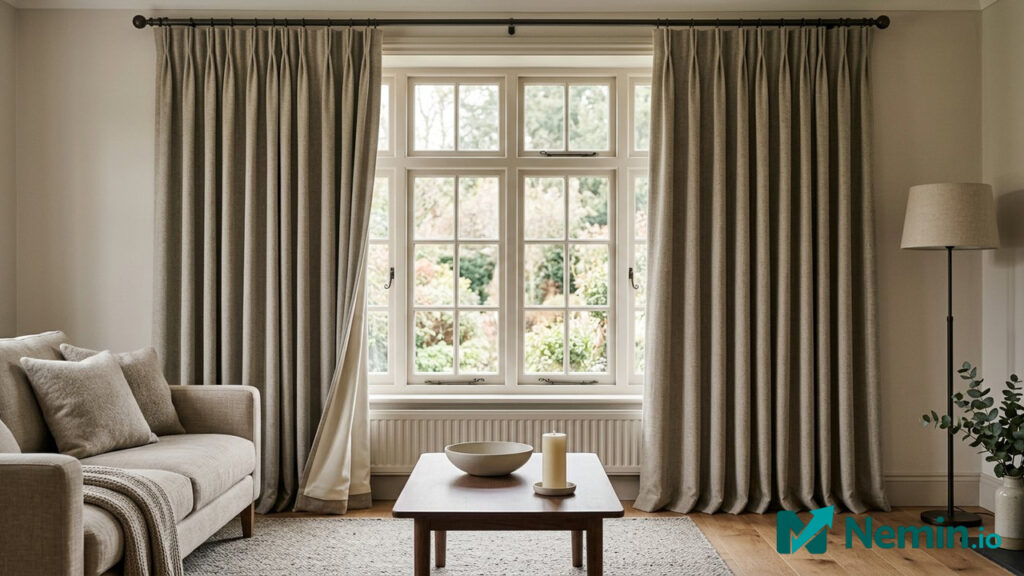
Choosing thermal living room curtains can be a practical way to improve comfort around windows while also updating the appearance, privacy and light control of your main living space. Thermal curtains are designed with dense fabrics, insulating linings or multiple layers that can help reduce heat transfer around windows when they are correctly sized and fitted. They cannot replace efficient glazing, appropriate insulation or a properly maintained heating system, but thoughtful curtain selection can complement these measures while giving a living room a warmer and more finished appearance.
The living room is particularly suitable for thermal curtains because it is often occupied for long periods, especially during cooler evenings. Large windows, patio doors and older glazing can make areas near glass feel noticeably colder, while direct summer sunlight may also contribute to unwanted heat gain. Curtains provide a flexible layer that can be opened when daylight or solar warmth is desirable and closed when privacy, shading or additional insulation is preferred.
Not every product marketed as thermal performs identically. Fabric weight, lining construction, dimensions and installation can all affect results. Understanding these factors makes it easier to distinguish a genuinely useful window treatment from a curtain that is primarily decorative.
What Are Thermal Living Room Curtains?
Thermal living room curtains are window coverings designed to provide greater resistance to heat transfer than lightweight, unlined decorative curtains. They commonly achieve this through tightly woven fabrics, substantial linings, multiple textile layers or combinations of these features.
Some products combine thermal and blackout properties, although these terms do not mean exactly the same thing. Blackout describes the curtain’s ability to block light, while thermal performance concerns heat transfer. A curtain can provide both functions, but buyers should check the manufacturer’s specifications rather than assuming one automatically guarantees the other.
The curtains work most effectively when they create substantial coverage around the window. Warm interior air can otherwise circulate behind a curtain and against cold glass, reducing the benefit of the additional textile layer.
How Thermal Living Room Curtains Help Manage Heat
Windows are an important part of a building’s thermal envelope. Their performance depends on glazing type, frame construction, seals, installation and other factors. Adding a well-fitted curtain creates an additional layer between the room and window surface.
During colder weather, closing curtains can reduce direct exposure to a cold window and limit some air movement around it. During warmer periods, curtains can also shade a room from direct sunlight, although external shading can be more effective at preventing solar energy from entering through the glass in the first place.
Thermal curtains therefore work best as part of a broader approach to indoor comfort rather than as a standalone solution to major heat-loss problems.
Thermal Curtains Versus Ordinary Curtains
The main differences generally involve construction and intended function. Ordinary curtains may be selected largely for colour, texture and privacy, while insulated products typically incorporate additional materials or denser construction.
| Feature | Thermal Curtains | Standard Unlined Curtains |
|---|---|---|
| Construction | Often dense, lined or multilayered | Usually simpler and lighter |
| Insulation purpose | Specifically intended to reduce heat transfer | Primarily decorative and privacy-focused |
| Light control | Often medium to high | Varies widely |
| Fabric weight | Commonly heavier | Often lighter |
| Draping | Usually substantial | Can be light or flowing |
| Seasonal usefulness | Useful for both cold-weather insulation and shading | Depends mainly on fabric |
| Installation needs | Good coverage is especially important | More forgiving when purely decorative |
Actual performance varies by product, so construction and manufacturer information matter more than marketing terminology alone.
7 Benefits of Thermal Living Room Curtains
The strongest reason to choose thermal curtains is that one window treatment can perform several jobs at once. A carefully selected pair can support comfort, privacy and interior design without making the room look purely functional.
The seven principal benefits are reduced heat transfer around windows, improved winter comfort, useful summer shading, stronger light control, increased privacy, potential acoustic softening and a more substantial decorative finish. The scale of each benefit depends on the room, glazing and curtain construction.
1. Thermal Living Room Curtains Can Support Winter Comfort
Sitting close to a cold window can feel uncomfortable even when the thermostat shows a reasonable room temperature. Cold glazing can influence radiant comfort, while drafts caused by poor seals can make the problem worse.
Thermal living room curtains add a textile barrier between occupants and the window. When properly fitted and closed, they can make the area feel more comfortable, particularly around large expanses of glass.
However, curtains should not be used to hide damaged seals, defective frames or significant drafts that require repair. If air is visibly or noticeably entering around a closed window, investigate the underlying problem.
2. They Can Help With Summer Shading
Dense curtains can reduce direct sunlight entering a living room when closed during sunny periods. This can be useful on windows that receive intense solar exposure.
Timing matters. Closing curtains before strong sunlight reaches the room can be more useful than waiting until the interior has already become hot. Once outside temperatures drop later in the day, opening windows may help with ventilation where doing so is safe and appropriate.
Curtains are only one shading option. Blinds, shutters, awnings and other solutions may suit particular buildings better.
3. Better Control Over Daylight
Many insulated curtains use dense fabric and linings that also reduce incoming light. This can improve screen visibility when watching television or using a projector.
Light reduction varies considerably. If you need near-blackout conditions, look for a product specifically described and tested for that purpose rather than relying on the word thermal.
For rooms where daylight is important, curtains can simply remain open during daytime hours and close when insulation or privacy becomes the priority.
4. Greater Privacy
Living rooms facing streets, footpaths or neighbouring properties may require evening privacy. Once interior lights are switched on, uncovered windows can make rooms particularly visible from outside.
Substantial curtains provide straightforward privacy when fully closed. For daytime privacy without losing much natural light, they can also be combined with suitable sheers, blinds or other layered window treatments.
5. Some Acoustic Softening
Thick textile surfaces can absorb some reflected sound inside a room. This may reduce the hard, echoing character of spaces containing large areas of glass, hard flooring and limited soft furnishings.
Thermal living room curtains should not, however, be treated as soundproofing. External noise enters through multiple paths, including glazing, frames, walls and ventilation openings. Specialist acoustic treatment is required where substantial noise reduction is the objective.
6. A More Finished Interior Appearance
Floor-length curtains can visually soften windows and make a living room appear more complete. Dense fabrics such as velvet-look textiles, heavy woven materials and substantial blends can create an especially luxurious effect.
Colour and texture influence the result just as much as thermal construction. Neutral curtains can integrate quietly with existing décor, while stronger colours make the window treatment a focal feature.
7. Flexible Seasonal Control
Unlike permanent building components, curtains can be adjusted instantly throughout the day. You can open them to welcome daylight and sunlight, then close them when privacy or additional thermal resistance is more useful.
That flexibility is one reason thermal living room curtains work well alongside efficient glazing rather than competing with it. Each component performs a different role.
How to Choose Thermal Living Room Curtains
The best thermal curtain is not simply the thickest product available. Correct dimensions, construction, colour, header style, practical care requirements and compatibility with the window all matter.
Begin by measuring the window and surrounding wall rather than selecting a curtain based purely on photographs. Decide how high the curtain will hang and where it should finish before purchasing.
Look Closely at Curtain Construction
A thermal curtain may consist of a decorative face fabric and insulating lining, or it may use several bonded or separate layers. Product construction varies substantially between manufacturers.
Read specifications rather than judging by appearance alone. If measurable performance claims are important to your decision, look for clearly explained testing or technical information from the manufacturer.
Avoid assuming that a heavier curtain automatically has a specific insulation value unless evidence supports that claim.
Best Materials for Thermal Living Room Curtains
A range of fabrics can work for insulated curtains because lining and overall construction can matter as much as the face material.
| Material or Construction | Main Advantage | Consideration |
|---|---|---|
| Heavy woven fabric | Substantial appearance and good drape | Can require strong hardware |
| Velvet or velvet-look fabric | Rich texture and visually warm finish | Care requirements vary |
| Polyester blends | Broad choice and often straightforward maintenance | Quality varies significantly |
| Cotton blends | Natural-looking surface with practical blends available | Thermal performance depends heavily on lining |
| Multilayer curtains | Designed around functional layers | Can be heavier and bulkier |
| Thermal-lined curtains | Decorative front with functional backing | Check cleaning instructions before purchase |
There is no single universally best material. Choose according to construction, room requirements and reliable product information.
Thermal Living Room Curtains With Separate Linings
A separate thermal lining can be useful when you already have decorative curtains that you want to retain. Compatible linings may attach behind existing panels and provide additional weight and coverage.
Check whether the original pole, track and fixings can safely support the combined weight. Adding substantial lining to an already heavy curtain can significantly increase the load on the hardware.
Separate linings can also make future style changes easier because the decorative curtain and functional layer are not necessarily one permanent unit.
Measuring for Thermal Living Room Curtains
Measurement is one of the most important parts of the buying process. Curtains that barely cover the glass can leave significant gaps at the sides and top.
Measure according to the specific pole or track and the curtain heading you intend to use. Manufacturers and made-to-measure suppliers may provide different measuring instructions, so follow the instructions associated with the chosen system.
Curtain Width Matters
Curtains usually need greater combined fabric width than the bare width of the window because fabric must form folds when closed. The required fullness depends on curtain heading, fabric and intended appearance.
Do not simply buy panels whose combined flat width exactly matches the window opening. That may produce inadequate fullness and coverage.
Made-to-measure suppliers can normally specify the appropriate calculations for their heading styles.
Curtain Length Matters Too
Long curtains generally provide better coverage than panels ending halfway down a window. Floor-length designs are popular in living rooms because they provide visual continuity and substantial coverage.
The correct finish depends on the room. Curtains can sit just above the floor, touch it lightly or intentionally pool, although pooling requires more maintenance and may not suit homes with pets, young children or high dust levels.
Avoid placing fabric where it creates a safety hazard.
Measure Thermal Living Room Curtains Around the Entire Opening
Effective coverage involves more than the glass itself. Consider the top, sides and bottom of the opening as well as nearby architectural features.
Where practical, allowing curtains to extend beyond the window can reduce gaps. A track or pole that extends beyond the frame also allows panels to stack away from more of the glazing when opened, preserving daylight.
Always check for obstructions such as radiators, furniture, window handles, vents and doors before deciding dimensions.
Thermal Living Room Curtains and Radiators
Radiators beneath windows create an important installation consideration. Long curtains hanging directly in front of an operating radiator can interfere with heat distribution into the room.
The right solution depends on the heating arrangement and window position. Shorter curtains, blinds, alternative radiator placement or another window-treatment configuration may sometimes be more appropriate.
Do not block heating equipment or ventilation openings contrary to manufacturer or professional guidance.
Avoid Trapping Heat Behind the Curtains
If a curtain hangs over a radiator, a proportion of the rising warm air may travel behind the fabric toward the window rather than circulating efficiently through the living room.
This can undermine the reason for using thermal living room curtains in the first place.
Plan the entire window and heating arrangement together rather than considering the curtain as an isolated decorative item.
Thermal Living Room Curtains for Large Windows
Large expanses of glazing can make a room bright and visually impressive, but they also demand substantial window treatments.
For wide windows, curtain weight quickly becomes important. Poles, brackets, tracks and wall fixings need to be appropriate for the combined weight and span.
Very wide installations may benefit from professional measurement and fitting.
Curtains for Bay Windows
Bay windows can be more complicated because they involve multiple angles and often limited clearance.
Specialist tracks can follow the shape of the bay, allowing curtains to cover more of the glazed area. Another approach is to treat individual sections separately.
The best solution depends on the architecture, furniture placement and desired appearance.
Thermal Living Room Curtains for Patio Doors
Patio and sliding doors require insulation without obstructing regular access. Curtains need enough width to cover the glazed opening while stacking conveniently when doors are in use.
Door handles and opening mechanisms also need clearance.
For frequently used doors, choose hardware that allows smooth operation because heavy curtains can become frustrating if they are difficult to draw several times each day.
Choosing the Right Colour
Thermal performance is only part of the decision because curtains occupy a large visual area.
Neutral shades such as warm white, oatmeal, taupe, grey and beige can create a quiet backdrop. Dark blue, forest green, burgundy or charcoal can introduce greater depth, while muted colours can bridge traditional and contemporary interiors.
Order fabric samples when possible. Colours can look significantly different under daylight, lamps and different screen settings.
Should Thermal Living Room Curtains Be Dark?
They do not have to be. Thermal properties primarily depend on overall construction rather than simply choosing a dark colour.
Dark curtains can create a dramatic interior, but they may visually dominate a small room. Lighter colours can maintain a brighter decorative effect while still incorporating an appropriate thermal lining.
Select the colour according to the room’s design and the curtain’s verified construction.
Thermal Living Room Curtains and Blackout Curtains
Thermal and blackout are overlapping but distinct categories.
A blackout curtain is designed primarily to limit light. A thermal curtain is designed to provide an insulating effect around the window. Manufacturers may combine these functions in one multilayer product.
| Requirement | Thermal Curtain | Blackout Curtain | Combined Product |
|---|---|---|---|
| Reduced heat transfer | Primary purpose | Not necessarily | Often |
| Strong light blocking | Varies | Primary purpose | Often |
| Evening privacy | Yes when opaque and closed | Yes | Yes |
| TV glare control | Usually helpful | Strong | Strong |
| Decorative options | Wide range | Wide range | Wide range |
| Best selection method | Check thermal construction | Check light-blocking specification | Verify both claims |
Choose according to the problem you actually need to solve rather than relying on product labels alone.
When a Combined Curtain Makes Sense
A combined thermal and blackout design may suit media-focused living rooms, street-facing rooms and spaces where both temperature comfort and strong light control matter.
However, some living rooms benefit from softer daylight. In that case, layered window treatments can provide greater flexibility.
For example, sheers can remain closed for filtered daytime privacy while heavier thermal living room curtains are opened until evening.
Layering Thermal Living Room Curtains
Layering is both decorative and practical. A common arrangement combines lightweight sheers close to the window with substantial curtains on the room side.
This provides several levels of control without making the main curtains perform every function.
During the day, sheers can diffuse daylight where suitable. At night, heavier curtains can close for privacy and additional insulation.
Thermal Curtains With Blinds
Blinds and thermal curtains can also work together. The blind provides precise light control while curtains soften the interior and add another layer around the window.
Make sure the components can operate without interfering with one another. Deep curtain folds, projecting blind mechanisms and window handles all require appropriate clearance.
Installing Thermal Living Room Curtains Properly
High-quality curtains can underperform if installed poorly. Large gaps, insufficient width and weak hardware can all reduce practical usefulness.
Heavy curtains also require secure fittings. Wall construction determines which fixings are appropriate, and unsuitable hardware can fail under load.
If you are uncertain about fixing into a particular wall, use a competent installer.
Hang Curtains With Good Window Coverage
Where the room allows, position the curtain hardware so the panels extend beyond the window rather than ending exactly at its edges.
This improves coverage when curtains are closed and creates more space for fabric to stack when open.
The exact dimensions depend on the window, wall space, heading and chosen system. There is no universal measurement that suits every property.
Thermal Living Room Curtains Need Suitable Hardware
Heavy lined panels place more stress on tracks and poles than lightweight decorative curtains.
Check the hardware’s suitability for the curtain weight and span. Wide windows may need additional brackets or specialist tracks.
Smooth operation matters as well. Curtains that are difficult to move are less likely to be opened and closed according to changing conditions, reducing their practical value.
Can Thermal Living Room Curtains Reduce Energy Bills?
This question needs careful wording. Insulating window treatments can reduce heat transfer around windows, which may contribute to reduced heating or cooling demand under suitable conditions.
However, it is not responsible to promise a particular percentage saving without evidence specific to the curtain, window, climate, building and occupant behaviour.
Energy consumption depends on many factors, including building insulation, glazing, heating efficiency, thermostat settings, weather and household habits.
Think of Curtains as One Part of the Building
If the home has severe drafts, poorly maintained windows or inadequate insulation elsewhere, curtains cannot solve those structural issues.
A more effective strategy is to improve obvious building defects while using thermal living room curtains as an additional controllable layer.
For households concerned about high energy consumption, professional home energy assessment may identify improvements with greater impact.
Using Thermal Living Room Curtains Throughout the Year
Thermal curtains should not be regarded as winter-only products.
Their ability to shade windows can also be useful during warm weather, particularly where direct sunlight contributes to uncomfortable indoor temperatures.
Seasonal use is mainly about changing how and when the curtains are operated.
Winter Use
During sunny winter periods, opening curtains can allow useful daylight and solar warmth into the room where appropriate. As outside conditions become colder and daylight fades, closing them can add coverage across the window.
Do not leave curtains closed against windows that need ventilation simply to pursue insulation. Moisture management and ventilation remain important for indoor air quality and condensation control.
Summer Use
Close curtains before intense sunlight reaches windows that tend to overheat the room.
Once direct sunlight has passed, opening them restores daylight. Natural ventilation can also help when outdoor conditions are cooler than indoors and windows can be opened safely.
Thermal living room curtains provide flexibility because their position can be changed in seconds as conditions change.
Thermal Living Room Curtains in Different Interior Styles
Functional window treatments do not need to look utilitarian.
Modern homes can use clean, plain curtains with subtle texture and simple tracks. Traditional living rooms may suit pleated headings, deeper colours and richer textiles, while Scandinavian-inspired spaces can use light neutral fabrics with discreet thermal linings.
The objective is to integrate the functional layer into the existing interior.
Contemporary Living Rooms
Choose restrained colours, simple headings and curtains that fall cleanly toward the floor. Ceiling-mounted or discreet tracks can create a streamlined appearance where the building allows them.
A textured neutral fabric can add depth without becoming visually busy.
Traditional Living Rooms
Heavier fabrics can complement timber furniture, period features and layered decorative schemes.
Velvet-look surfaces, woven patterns and structured headings can reinforce the room’s character. Thermal lining remains largely hidden, so functional performance does not dictate the visible style.
Small Living Rooms
Large amounts of dark fabric can make some compact rooms feel visually enclosed, although this depends on the wider design.
Lighter thermal living room curtains can maintain an airy appearance. Mounting curtains so that panels stack mostly beyond the glazing can also maximise daylight when they are open.
Ready-Made Versus Made-to-Measure Thermal Living Room Curtains
Ready-made products are widely available and can provide a practical solution when windows correspond reasonably well with standard sizes.
Made-to-measure curtains offer more control over dimensions, fabric, heading, lining and finish. They can be particularly useful for unusual windows.
| Option | Advantages | Considerations |
|---|---|---|
| Ready-made | Convenient and often lower initial cost | Limited sizes and finishes |
| Made-to-measure | Precise dimensions and broader customisation | Usually more expensive and takes longer |
| Existing curtains plus lining | Retains current décor and can add function | Hardware must support added weight |
| Custom track and curtains | Useful for bays and unusual windows | Professional fitting may be beneficial |
Measure carefully before choosing either route. A cheaper curtain that fits poorly may not provide the coverage you wanted.
Caring for Thermal Living Room Curtains
Thermal linings can have different cleaning requirements from ordinary fabrics.
Some curtains are machine washable, while others require dry cleaning, gentle spot treatment or specialist care. Washing an unsuitable lined curtain may damage the backing, alter dimensions or affect its finish.
Always check the care label or manufacturer’s instructions.
Regular Maintenance
Vacuuming curtains gently with an appropriate upholstery attachment can reduce accumulated dust. Follow the fabric supplier’s recommendations and avoid pulling delicate surfaces.
Periodically check tracks, poles and brackets for loosening, especially with heavy curtains.
Smoothly operating hardware helps prevent unnecessary strain on both the curtain and its fittings.
Common Mistakes When Buying Thermal Living Room Curtains
One of the most common mistakes is buying based on colour before measuring the window. Another is assuming every curtain described as heavy, blackout or lined automatically provides the same thermal performance.
Installation mistakes can also reduce usefulness.
Avoid selecting panels that barely cover the window, installing inadequate hardware, blocking radiators or vents, or ignoring door and handle clearance.
Avoid Relying on Unsupported Performance Claims
Marketing language such as energy saving, insulating or temperature regulating should be interpreted alongside supporting product information.
Where a seller quotes specific percentages or performance values, look for an explanation of how they were measured.
Thermal living room curtains can be useful without requiring exaggerated claims. Their value comes from sensible construction, appropriate fit and practical everyday use.
Are Thermal Living Room Curtains Worth Buying?
They can be worthwhile for living rooms where occupants want a combination of comfort, privacy, light control and decorative improvement.
They are particularly attractive for large windows or rooms where lightweight existing curtains provide little coverage. They may also be useful for renters who cannot make substantial alterations, provided installation is permitted by the tenancy agreement.
The decision ultimately depends on the existing windows and what you want the curtains to accomplish.
When Thermal Curtains Make the Most Sense
Thermal living room curtains are especially worth considering when:
- The room has large areas of glazing.
- Seating is positioned near windows.
- Evening privacy is important.
- Direct sunlight creates glare.
- You want a substantial floor-length window treatment.
- Existing curtains are lightweight or unlined.
- You want flexible shading in warmer weather.
- Replacing the windows is unnecessary or outside the current budget.
If a window is broken, severely drafty or incorrectly installed, repair the underlying problem rather than expecting curtains to compensate for it.
How to Buy Thermal Living Room Curtains With Confidence
Begin with the window rather than the product catalogue. Measure carefully, identify nearby radiators and furniture, decide how the curtains need to open, and determine whether daylight, privacy, insulation or blackout performance is the strongest priority.
Then compare construction and practical characteristics.
| Buying Factor | What to Check |
|---|---|
| Dimensions | Width, drop and total window coverage |
| Thermal construction | Lining, layers and manufacturer information |
| Header | Compatibility with the chosen track or pole |
| Weight | Suitability of existing hardware |
| Light control | Whether blackout performance is actually needed |
| Colour | Appearance in daytime and artificial lighting |
| Care | Washing, dry-cleaning or specialist requirements |
| Window access | Handles, doors and opening mechanisms |
| Heating | Radiators, heaters and ventilation openings |
| Installation | Suitable brackets, track and wall fixings |
This approach makes comparison easier because it focuses attention on characteristics that affect real-world use.
Getting More From Thermal Living Room Curtains
Once installed, use the curtains actively rather than treating them as permanent wall decoration.
Open them when daylight and beneficial sunlight are wanted. Close them when the outside temperature falls, evening privacy is needed or direct sunlight is making the room uncomfortable.
These simple behavioural changes cost nothing and allow the window treatment to serve several purposes.
Combine Curtains With Sensible Home Improvements
Curtains work best alongside functioning windows and a well-maintained home.
Repair failed seals and damaged hardware where necessary. Address significant drafts appropriately and maintain heating systems according to professional guidance.
Thermal living room curtains then become an additional comfort measure rather than a cosmetic attempt to hide a larger building problem.
Thermal Living Room Curtains Work Best When Fit Comes First
The central purchasing lesson is simple: excellent fabric cannot compensate fully for poor coverage.
A well-sized curtain that extends around the opening creates a more effective textile barrier and usually looks more substantial. Correct dimensions also help the fabric form attractive folds rather than appearing stretched across the window.
Prioritise fit first, construction second and decorative details alongside both.
FAQ’s
Do thermal living room curtains really work?
Thermal living room curtains can provide an additional insulating layer around windows and reduce direct exposure to cold glass. Their effectiveness depends on construction, fit, glazing and how they are used.
Should thermal living room curtains touch the floor?
Floor-length curtains can provide substantial coverage and a polished appearance, but they do not always need to touch the floor. Consider heating equipment, flooring, cleaning and safe operation when selecting the drop.
Are thermal living room curtains the same as blackout curtains?
No. Thermal curtains primarily address heat transfer, while blackout curtains primarily reduce light. Some products are specifically constructed to provide both functions.
What fabric is best for thermal living room curtains?
There is no single best fabric. Dense woven textiles, velvet-style materials and other fabrics paired with effective thermal linings can work well, depending on overall construction and fit.
Can thermal living room curtains help during summer?
Yes. Closing suitable curtains before strong direct sunlight reaches a window can provide useful interior shading and help limit solar heat entering the occupied space.
How should I measure for thermal living room curtains?
Measure the intended pole or track arrangement, required finished width and curtain drop according to the supplier’s instructions. Allow enough width for appropriate fullness and coverage around the window.
Conclusion
Thermal living room curtains combine practical window coverage with privacy, light management and interior style. The best results come from choosing appropriate construction and ensuring generous coverage rather than simply buying the heaviest fabric available. Consider the glazing, curtain dimensions, lining, hardware, radiator position and daily use before making a decision.
Well-chosen thermal living room curtains can become a useful additional layer in a comfortable home, particularly around large or exposed windows. They will not replace efficient glazing, proper insulation or necessary repairs, but when correctly fitted and used at appropriate times, they can make a living room feel more comfortable while giving the space a polished, cohesive finish
Pingback: Best Husband Pillow: 9 Amazing Picks for Superior Comfort
Pingback: Bone-Inlay Majesty: 9 Powerful CEO Office Design Ideas
Pingback: Prolux Cleaning: 9 Powerful Tips for Spotless Carpets
Pingback: Qualify for a Free Boiler Upgrade: 7 Powerful Money Wins