
Showing up for a child is not limited to attending school performances, birthdays or important milestones. It is the repeated experience of having a dependable adult...
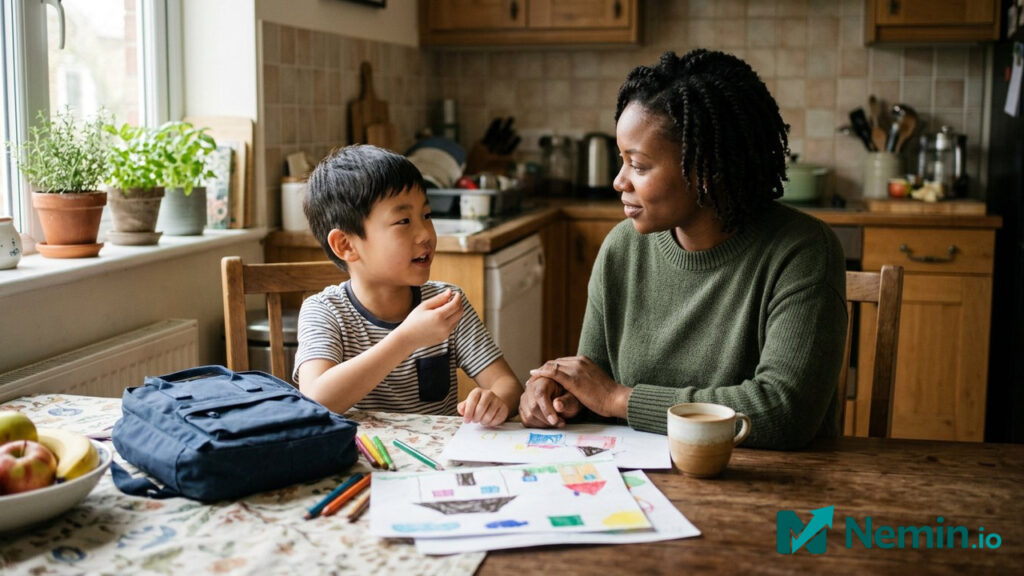
Showing up for a child is not limited to attending school performances, birthdays or important milestones. It is the repeated experience of having a dependable adult listen, respond, keep reasonable promises, provide comfort and remain interested in the child’s everyday world. Parents, guardians, grandparents, relatives, teachers and other trusted adults can all offer this kind of steady presence. Research on child development broadly supports the importance of responsive, stable relationships, but showing up does not require perfection or constant availability. What matters is building a pattern in which a child has good reason to expect care, attention and appropriate support.
Children notice presence in surprisingly ordinary places. They notice who asks how something went after knowing they were nervous about it. They notice whether an adult looks away from a phone when they are trying to explain a problem. They notice who remembers the name of a friend, turns up when promised and remains calm enough to listen when something has gone wrong.
These moments may appear small to adults because they occur between work, meals, school runs and other responsibilities. For children, however, repeated interactions help shape what relationships feel like. Reliable adults can provide a secure base from which children explore their surroundings, develop skills and manage challenges.
Showing up is therefore less about creating memorable performances of parenting and more about becoming reliably present in ways a particular child can recognize.
What Does Showing Up for a Child Really Mean?
Showing up means being emotionally and practically available often enough that a child experiences the relationship as dependable. It includes listening, following through where possible, noticing changes, creating appropriate boundaries and responding when the child needs help.
Physical presence is part of this, but it is not the whole definition. An adult can sit in the same room while remaining emotionally unavailable. Conversely, a parent working away from home may preserve meaningful connection through predictable calls, messages and routines.
The key is responsiveness. Children communicate needs differently according to age, temperament and circumstances, so effective presence requires attention to the individual rather than following one universal formula.
Showing Up Is Not the Same as Being Available Every Minute
Adults have jobs, responsibilities, relationships, health needs and limits. Children also benefit from growing independence rather than having an adult intervene in every situation.
A dependable relationship does not require uninterrupted access. It requires enough consistency that temporary absence does not automatically feel like abandonment or indifference.
When an adult cannot provide attention immediately, a specific response can be more reassuring than a vague dismissal. Telling a child that you need ten minutes to finish something and then returning as promised communicates both a boundary and reliability.
Presence Has Several Different Forms
Showing up can happen through practical care, emotional attention, encouragement and physical attendance. Different moments require different combinations.
| Form of Presence | What It Can Look Like | What the Child May Experience |
|---|---|---|
| Emotional presence | Listening without immediately dismissing feelings | Being taken seriously |
| Practical presence | Helping with a difficult task or routine | Dependability |
| Physical presence | Attending an event when reasonably possible | Interest and support |
| Protective presence | Responding to safety or wellbeing concerns | Security |
| Encouraging presence | Recognising effort and progress | Motivation |
| Boundary-setting | Providing clear, appropriate limits | Predictability |
| Repair | Returning after conflict and discussing what happened | Relationships can recover |
| Everyday attention | Talking during meals, walks or journeys | Regular connection |
Healthy relationships usually contain many of these forms rather than relying on one dramatic gesture.
Why Showing Up Matters During Childhood
Childhood develops within relationships. Children learn not only from formal instruction but from repeated interactions with the adults around them.
Responsive caregiving has been studied extensively in developmental psychology. Concepts such as attachment, serve-and-return interaction and stable supportive relationships describe different aspects of how adult responsiveness can contribute to development.
This should not be turned into a simplistic formula where every missed event causes harm or every attentive moment guarantees a particular outcome. Children develop within complex family, biological, social and environmental contexts.
Showing Up Can Support Trust
Trust develops through experience.
When adults generally do what they say, respond to meaningful needs and explain unavoidable changes, children accumulate evidence that the relationship is dependable.
Broken promises occasionally happen in every family. The important part is how adults handle them. Acknowledging the disappointment and explaining what happened can be more constructive than pretending the promise was unimportant.
Predictability Can Support a Sense of Security
Children cannot control most aspects of their world. Adults determine where they live, when they go to school, what routines look like and many of the rules around them.
Reasonable predictability can make that world easier to navigate.
Showing up at expected times, maintaining basic routines and communicating changes in age-appropriate ways can help reduce unnecessary uncertainty without making family life rigid.
9 Powerful Ways Showing Up Can Strengthen a Child’s World
The impact of presence is usually cumulative. One conversation rarely transforms a relationship, but hundreds of ordinary interactions can establish a durable pattern.
Nine areas are particularly useful for understanding how showing up can influence family connection: trust, communication, confidence, emotional learning, resilience, belonging, school engagement, help-seeking and relationship repair.
1. Showing Up Builds a Pattern of Reliability
Children learn reliability through repetition rather than explanation.
If an adult repeatedly says, “I will come back after dinner,” and actually returns, the child receives evidence that words can be trusted. The same principle applies to pickups, conversations, activities and everyday responsibilities.
Reliability does not mean making promises about circumstances you cannot control. In fact, careful promises are often better than ambitious ones that repeatedly fail.
2. Children Learn That Their Thoughts Are Worth Hearing
Attentive listening communicates interest even when the subject seems trivial to an adult.
A detailed story about playground rules, a video game or a drawing may be a child’s way of practising communication and inviting connection. Consistently dismissing small conversations can make it harder to expect openness during bigger ones.
Showing up for ordinary stories creates a foundation for more difficult communication later.
3. Presence Can Support Confidence
Encouragement is most useful when it is specific and grounded.
Instead of praising every outcome as amazing, adults can notice persistence, preparation, courage or improvement. This helps children connect confidence with their own actions rather than depending entirely on applause.
A child does not need to win for an adult’s presence to matter.
4. Showing Up Helps Children Learn About Emotions
Children learn emotional language partly through interaction.
An adult can help a child identify disappointment, frustration, embarrassment, excitement or worry without assuming every uncomfortable feeling needs to disappear immediately.
Appropriate emotional validation does not mean agreeing with every interpretation or behaviour. A feeling can be acknowledged while a harmful action is still limited.
5. Reliable Adults Can Support Resilience
Resilience should not be confused with making children handle everything alone.
Facing manageable challenges while knowing that appropriate support is available can help children practise problem-solving and recovery.
Showing up means resisting both extremes: abandoning a child to difficulties they cannot manage and removing every obstacle before they encounter it.
6. Everyday Presence Can Build Belonging
Belonging often comes from repeated family rituals rather than expensive experiences.
A weekly breakfast, bedtime conversation, regular walk or shared joke can become part of a child’s sense of home.
Consistency matters more than spectacle. A routine that genuinely fits family life is more sustainable than elaborate traditions adults cannot maintain.
7. Showing Up Can Support School Engagement
Adults can demonstrate that education matters by showing interest in learning rather than focusing solely on grades.
Ask what a child found interesting, confusing or difficult. Attend relevant meetings when possible and communicate appropriately with educators if concerns arise.
Academic pressure should remain proportionate. Presence is not the same as monitoring every mark.
8. Children May Become More Willing to Ask for Help
A child who expects calm listening may be more likely to approach an adult when something feels wrong.
This is particularly important as children become older and increasingly private. Adults cannot force disclosure, but they can create conditions in which seeking help feels safer.
Showing up consistently before a crisis can make those conditions stronger.
9. Showing Up Makes Relationship Repair Possible
Parents and children disagree. Adults become impatient, misunderstand situations and occasionally react poorly.
Healthy relationships are not defined by the complete absence of conflict.
Repair matters. Returning to a conversation, taking responsibility where appropriate and listening to the child’s perspective teaches that conflict does not automatically end connection.
Showing Up Through Everyday Attention
Major events are memorable, but everyday attention occupies far more of childhood.
Morning routines, car journeys, dinner preparation and bedtime create repeated opportunities for conversation. These interactions do not need to become formal emotional check-ins.
Often, children talk most easily while doing something else.
Make Ordinary Moments Count
A practical goal is to notice opportunities already present in the day rather than continually adding new activities.
Useful moments can include:
- Eating one regular meal together when schedules allow
- Asking about something the child mentioned earlier
- Reading together
- Walking a pet
- Cooking or preparing lunches
- Talking during a drive
- Sharing music
- Completing a small household task together
- Having a brief bedtime conversation
None of these needs to happen every day. The purpose is regular, genuine contact rather than a parenting performance.
Put Distractions Down Sometimes
Phones are part of modern work and family life, so unrealistic rules about eliminating devices are unlikely to help.
Instead, create selected periods when the child receives undivided attention. Even ten focused minutes can feel different from half an hour of conversation repeatedly interrupted by notifications.
Showing up is partly about signalling, “For this moment, what you are saying has my attention.”
Showing Up Through Listening
Listening is not passive. It requires resisting the temptation to decide what the child needs before hearing the complete story.
Adults frequently move directly into problem-solving because they want to help. Sometimes that is useful. At other times, the child primarily wants to be understood.
A simple question about whether they want advice or just want someone to listen can be surprisingly effective with older children.
Listen Before Correcting
A child’s version of events may be incomplete, emotionally coloured or factually mistaken.
Listening does not require accepting everything as objectively true.
It means understanding what the child believes happened before responding. Once they feel heard, there is often more room to discuss another perspective.
Showing Up Does Not Mean Agreeing With Everything
Children need adults, not permanent agreement.
A parent can say no, impose a consequence or challenge an interpretation while remaining respectful and connected.
The message is that disagreement does not remove care.
Showing Up at School Events and Milestones
Performances, sports days, exhibitions, graduations and competitions can matter because children often associate them with being witnessed.
When attendance is realistically possible and meaningful to the child, being there can communicate interest.
Yet many parents cannot attend every event because of work schedules, illness, caring responsibilities, transport or other circumstances.
When You Cannot Attend
Avoid making promises you are uncertain you can keep.
If attendance is impossible, communicate clearly and show interest in another way. Ask about the event afterwards, look at photographs where appropriate or arrange a separate moment to recognise what happened.
Showing up emotionally can still matter when physical presence is genuinely impossible.
Avoid Turning Attendance Into Pressure
A parent at the sidelines should not make the child’s performance primarily about adult expectations.
Children may already feel nervous about competitions or performances.
Support can mean watching without providing constant instructions, accepting mistakes and recognising effort regardless of outcome.
Showing Up for Children at Different Ages
Children’s need for dependable relationships does not disappear as they grow, but the form of presence changes significantly.
A young child may actively seek physical proximity and repetitive play. A teenager may appear to want little interaction while still noticing whether adults remain available.
Respecting developmental changes is part of staying connected.
Showing Up for Young Children
Young children often connect through play, touch, repetition and routines.
Following the child’s attention during play can create valuable interaction. Adults do not always need to control the activity or turn it into a lesson.
Simple responsiveness can be powerful: the child points, speaks or acts, and the adult notices and responds.
Showing Up for School-Age Children
School-age children develop friendships, interests and growing independence.
This is a useful stage for asking open questions and showing interest in their developing world without interrogating them.
Practical support with routines can continue while children gradually take greater responsibility for their belongings, homework and time.
Showing Up for Teenagers
Teenagers need autonomy, but autonomy is not the same as not needing adults.
Availability can become quieter. Driving them somewhere, making food late in the evening or sitting nearby without demanding conversation may create opportunities for connection.
Respect reasonable privacy while remaining attentive to safety and wellbeing.
Showing Up When a Child Is Struggling
Children sometimes face problems that require more than ordinary reassurance.
Bullying, persistent anxiety, depression, self-harm concerns, abuse, eating difficulties, major behavioural changes or significant school avoidance should be taken seriously.
Showing up in these situations can include obtaining qualified professional help rather than trying to manage everything within the family.
Know When Support Needs to Expand
An adult does not need to have every answer.
Depending on the situation, support may involve a doctor, mental-health professional, school safeguarding team, counsellor or appropriate specialist service.
If there is an immediate danger to a child or another person, contact the appropriate emergency or child-protection service in your location.
Do Not Promise Absolute Secrecy
When children share serious safety concerns, adults may need to involve someone who can help.
Rather than promising never to tell anyone, explain that private information will be treated carefully but safety sometimes requires additional support.
Trust is better protected through clear boundaries than promises an adult later has to break.
Showing Up After a Difficult Day
Children often release strong emotions at home because home is where they finally stop managing themselves for school or other settings.
This can look like irritability, silence, tears or an argument over something that appears minor.
Adults can remain curious without allowing harmful behaviour.
Connection Before Investigation
A hungry, exhausted child may not be ready for detailed questions immediately.
Food, quiet time or familiar routine can sometimes make later conversation easier.
Showing up means noticing the child’s state and choosing an appropriate moment rather than demanding immediate disclosure.
Showing Up Through Boundaries
Boundaries can be part of dependable caregiving.
Children generally need to know what is expected and what happens when limits are crossed. Rules that change unpredictably according to adult mood can be harder to understand.
Effective boundaries should be developmentally appropriate and reasonably consistent.
Warmth and Limits Can Coexist
An adult can acknowledge frustration while maintaining a rule.
For example, understanding that a child is angry about screen limits does not require removing the limit.
Showing up involves staying engaged through uncomfortable reactions rather than using withdrawal of affection as punishment.
Showing Up When You Have More Than One Child
Families with several children face a practical limitation: attention cannot always be equal at every moment.
Different ages and needs naturally require different amounts of support at different times.
Fairness does not necessarily mean identical treatment.
Create Small Individual Moments
Individual attention does not require elaborate one-to-one outings.
A brief walk, helping prepare a snack or talking before bed can give each child a sense of direct connection.
Where possible, avoid making siblings compete for evidence of who is loved most.
Showing Up as a Separated or Divorced Parent
Family separation can make consistency more logistically complicated.
Children may move between homes, schedules may change and parents may have limited control over each other’s routines.
Within those constraints, predictable communication and reliable arrangements can matter greatly.
Keep Adult Conflict Away From the Child
Children should not become messengers in adult disputes where this can reasonably be avoided.
Avoid asking them to carry hostile messages or pressure them to take sides.
Showing up means protecting their relationship with trusted caregivers rather than making them responsible for resolving adult conflict.
Keep Promises Realistic
If a visit or call depends on factors outside your control, be careful about certainty.
When plans change, explain in age-appropriate terms and reconnect as soon as reasonably possible.
Repeated unexplained absence can feel very different from an unavoidable change followed by communication and repair.
Showing Up as a Grandparent or Other Trusted Adult
Parents are not the only people capable of providing stable supportive relationships.
Grandparents, aunts, uncles, older siblings, teachers, coaches and family friends can sometimes become important trusted adults.
Their role should respect parental boundaries and safeguarding expectations.
One Stable Adult Can Matter
Children benefit from networks of dependable relationships.
A trusted adult can listen, encourage interests and provide perspective without attempting to replace a parent.
Where a child reveals a serious safety concern, appropriate safeguarding responsibilities take priority over informal confidentiality.
Showing Up Without Spending Much Money
Presence can easily become confused with experiences and purchases.
Expensive holidays, tickets and gifts may be enjoyable, but they are not substitutes for everyday responsiveness.
Many meaningful activities cost little or nothing.
Low-Cost Ways of Showing Up
| Activity | What It Provides | Cost Level |
|---|---|---|
| Reading together | Attention and shared experience | Low or none |
| Walking | Conversation and movement | None |
| Cooking | Cooperation and practical learning | Usually low |
| Playground visit | Play and attention | Usually none |
| Drawing | Shared creativity | Low |
| Library visit | Reading and exploration | Usually none |
| Board or card games | Interaction and fun | Low if already owned |
| Watching a chosen film | Shared leisure | Depends on access |
| Gardening | Conversation and practical activity | Low to moderate |
| Talking before bed | Predictable connection | None |
The activity is simply the setting. The quality of interaction matters more than its price.
Showing Up When Work Is Demanding
Working parents can experience guilt when schedules limit time with children.
The practical answer is not necessarily adding more activities to an already exhausted household. Predictable connection may be more sustainable.
Children can learn that work responsibilities and loving relationships coexist.
Quality and Consistency Both Matter
The phrase “quality time” can become an excuse for very little actual contact, while focusing only on quantity ignores whether adults are responsive.
A better goal is regular, attainable connection.
A predictable breakfast conversation or bedtime call can be more meaningful than occasional elaborate plans that frequently get cancelled.
Showing Up From a Distance
Parents may live apart from children because of work, military service, migration, separation or other circumstances.
Digital communication cannot reproduce physical presence entirely, but it can support continuity.
Regularity becomes especially important.
Create Predictable Remote Rituals
A scheduled video call, shared online game or reading the same book can create connection across distance.
Do not make every conversation an interview about grades and behaviour.
Share ordinary details about your own day as well. Relationships grow through mutual familiarity, not just supervision.
The Difference Between Showing Up and Overparenting
Dependable support can become counterproductive when adults take over every challenge.
Children need opportunities to make age-appropriate decisions, experience disappointment and solve manageable problems.
Showing up means remaining available without automatically becoming the protagonist in every situation.
Ask Before Taking Over
When a child describes a problem, consider asking what they have already tried and what kind of help they want.
This invites problem-solving while making support available.
For genuine safety issues, adults may need to intervene regardless of the child’s preference.
Showing Up and Children’s Confidence
Confidence develops from many sources, including temperament, skill development, peer experiences and supportive relationships.
Adults can contribute by creating opportunities for children to try difficult things without making affection dependent on success.
Specific feedback is generally more informative than constant broad praise.
Praise the Process Thoughtfully
Instead of saying everything is perfect, notice something concrete.
You might recognise preparation for a test, persistence with a difficult skill or the courage involved in joining a new activity.
Showing up includes witnessing effort that does not produce a trophy.
Showing Up During Failure and Disappointment
Children eventually lose games, receive disappointing marks, experience friendship problems and fail at things they care about.
These moments can reveal whether adult support is genuinely unconditional or available mainly when things go well.
Avoid rushing to erase every disappointment.
Let the Feeling Exist
A child who is disappointed does not necessarily need to be told immediately that the event does not matter.
It mattered to them, which is why they are upset.
Showing up can mean acknowledging that reality, allowing time and then helping them consider what comes next.
Showing Up Through Repair After Conflict
No parent responds perfectly every time.
Adults may shout, become distracted, misunderstand or enforce a rule poorly. What happens after the mistake can become an important lesson.
An apology from an adult does not eliminate parental authority.
A Useful Repair Process
| Repair Stage | Adult Action | Purpose |
|---|---|---|
| Calm down | Wait until conversation is manageable | Reduce escalation |
| Return | Reopen connection | Show the relationship continues |
| Acknowledge | Describe what went wrong | Take responsibility |
| Listen | Hear the child’s perspective | Understand impact |
| Apologise where appropriate | Be specific | Model accountability |
| Clarify boundaries | Separate the rule from poor delivery | Preserve necessary limits |
| Plan | Decide what could happen differently next time | Support learning |
Repair does not mean pretending harmful behaviour by the child was acceptable. Both accountability and connection can exist together.
Showing Up Without Expecting Gratitude
Children may not recognise adult effort in the moment.
A teenager may respond to a carefully planned outing with one-word answers. A younger child may care more about a missing snack than the effort required to reach their performance.
Parenting cannot depend on immediate applause.
Showing up is valuable because the relationship matters, not because every act receives visible appreciation.
What Showing Up Does Not Mean
The phrase can become unhelpful if interpreted as a demand for perfect parenting.
Adults need rest, privacy and relationships of their own. They can miss events, make mistakes and establish firm boundaries while still being dependable caregivers.
Showing up also does not mean protecting a child from every consequence or solving every interpersonal conflict.
Healthy Showing Up Versus Unhelpful Overinvolvement
| Healthy Presence | Potential Overinvolvement |
|---|---|
| Listening to a friendship problem | Contacting others immediately without need |
| Helping plan homework | Completing the work for the child |
| Attending a match | Coaching continuously from the sidelines |
| Offering choices | Making every decision |
| Supporting disappointment | Preventing all opportunities to fail |
| Monitoring safety appropriately | Eliminating reasonable privacy |
| Providing advice | Requiring the child to follow every suggestion |
| Staying available | Demanding constant closeness |
The appropriate balance changes as children mature.
Building a Family Habit of Showing Up
Consistency becomes easier when connection is built into routines rather than left entirely to spare time.
Choose a few realistic practices rather than attempting to transform every family interaction.
Small habits are easier to maintain during busy periods.
A Simple Showing Up Plan
| Time | Possible Habit | Main Purpose |
|---|---|---|
| Morning | Brief undistracted conversation | Connection before the day |
| After school | Ask one open question when appropriate | Interest |
| Evening meal | Share something from everyone’s day | Family communication |
| Homework time | Remain available without taking over | Support |
| Bedtime | Short conversation or reading | Predictable connection |
| Weekend | Shared activity selected together | Enjoyment |
| After conflict | Return and repair | Relationship security |
| Important event | Attend or acknowledge meaningfully | Recognition |
Families do not need every item in this framework. Choose what fits real schedules.
How to Start Showing Up More Consistently
Improvement does not require creating a perfect household routine overnight.
Begin by identifying one point in the day when distractions commonly interfere with connection. Make that period more predictable and attentive.
Then notice what the child responds to.
Follow the Child’s Interests
Adults sometimes attempt connection exclusively through activities they personally enjoy.
Learning the basics of a child’s favourite game, sport, music or hobby communicates curiosity about their world.
You do not have to share the same enthusiasm. Genuine interest is enough.
Showing Up Starts With What You Can Sustain
A promise of an elaborate outing every weekend may fail quickly in a busy household.
Ten minutes of dependable conversation several times a week may be easier to sustain.
Consistency turns small actions into a pattern, and the pattern is what gives presence much of its meaning.
When Showing Up Feels Difficult
Some adults did not experience dependable caregiving themselves and may find emotional conversations unfamiliar.
Others face depression, financial pressure, relationship conflict, disability or overwhelming workloads that affect capacity.
Seeking support can itself be part of caring for a child.
Parents Need Support Too
Family members, community resources, healthcare professionals and parenting services may be useful depending on the challenge.
Asking for help does not reduce the importance of the adult-child relationship.
In some circumstances, building a wider dependable support network is one of the most practical ways to ensure a child’s needs are met.
Measuring Showing Up Without Turning It Into a Score
There is no meaningful target number of performances attended or minutes of conversation that proves someone is a good parent.
Relationships cannot be reduced to attendance statistics.
A more useful question is whether the child generally experiences the adult as interested, reasonably predictable and available when something genuinely matters.
Look for Patterns Rather Than Individual Days
Everyone has distracted days.
Concern is more appropriate when disconnection becomes the dominant pattern rather than an occasional occurrence.
Showing up is built over months and years, which also means relationships can change through new patterns of responsiveness and repair.
FAQ’s
What does showing up for a child mean?
Showing up means being consistently responsive, interested and reasonably dependable through listening, practical care, boundaries, encouragement and support during both ordinary and difficult moments.
Does showing up mean attending every school event?
No. Work, health and family responsibilities can make attendance impossible. When you cannot attend, communicate clearly and find another meaningful way to acknowledge the child’s experience.
How can showing up build a child’s confidence?
Showing up can provide encouragement, opportunities to discuss setbacks and recognition of genuine effort. Confidence develops from many influences, so supportive presence should not be treated as a guaranteed formula.
Can a parent still show up when living far away?
Yes. Predictable calls, messages, shared activities and reliable communication can support connection across distance, although digital contact does not fully replace every aspect of physical presence.
Is showing up the same as giving children constant attention?
No. Children need age-appropriate independence, and adults have legitimate responsibilities and boundaries. Showing up means dependable connection rather than uninterrupted attention.
How can I start showing up more consistently?
Choose one sustainable daily or weekly routine, reduce distractions during it and follow through. Regular small moments of attentive connection are often more realistic than occasional elaborate gestures.
Conclusion
Showing up for a child is rarely about one dramatic moment. It is built through ordinary patterns of listening, remembering, attending when possible, keeping reasonable promises, maintaining boundaries and returning after conflict. These repeated experiences can contribute to a relationship in which a child has reason to expect attention and dependable care.
Showing up also leaves room for imperfect adults and increasingly independent children. Parents will miss events, become distracted and sometimes respond poorly, but consistency and repair still matter. The goal is not to be present every minute; it is to create a lasting pattern that tells a child, through actions rather than slogans, that their life is worth noticing.
Pingback: Shared Joy: 7 Powerful Truths Behind Double Joy and Healing