
Personal electric mobility has moved well past novelty, and single-wheel machines now sit at the sharp end of that shift. If you are researching the Solo...
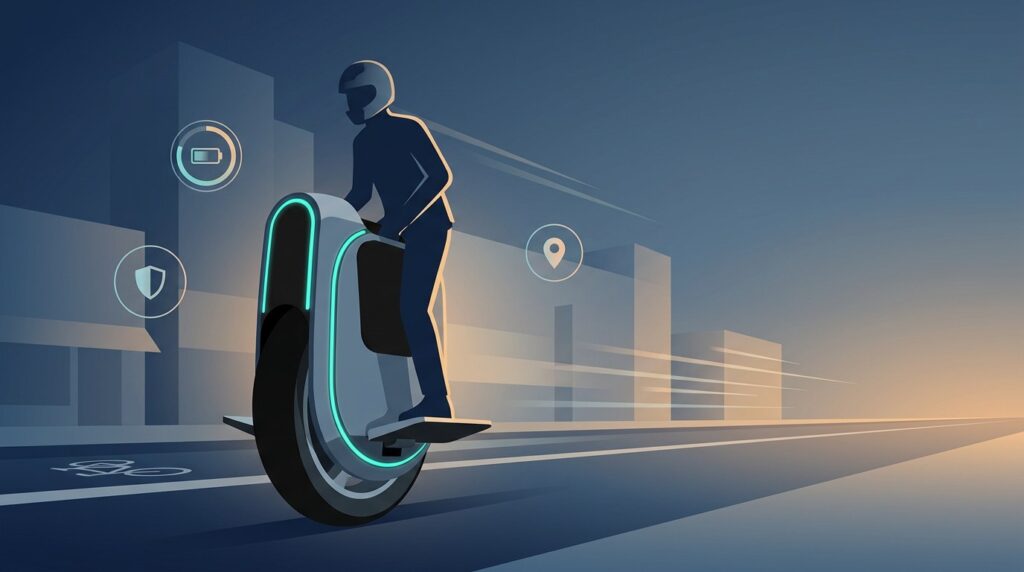
Personal electric mobility has moved well past novelty, and single-wheel machines now sit at the sharp end of that shift. If you are researching the Solo ET Electric Unicycle, you are almost certainly weighing it against scooters, e-bikes, and other wheels in the same bracket. That comparison deserves more than a glance at a spec sheet. Electric unicycles reward informed buyers and punish impulsive ones, because the numbers printed on a product page rarely translate directly into the experience you get on the road.
This guide walks through the criteria that genuinely separate a satisfying purchase from an expensive regret. Rather than repeating marketing copy, it explains what each specification means in practice, where published figures tend to overstate reality, and which safety considerations deserve attention before you place an order. Use it as a checklist against any wheel you are considering.
Understanding How an Electric Unicycle Works
Before evaluating the Solo ET Electric Unicycle against alternatives, it helps to understand the mechanism you are trusting with your balance. An electric unicycle consists of a single motorised wheel flanked by two folding foot pedals. Inside the shell sit gyroscopes and accelerometers that sample the machine’s tilt hundreds of times per second, feeding a controller that adjusts motor output to keep the pedals level beneath you.
Consequently, riding is a matter of shifting weight rather than operating controls. Lean forward and the wheel accelerates to stay under your centre of mass. Lean back and it slows. Steering comes from subtle pressure through the calves and hips rather than handlebars. There is no throttle, no brake lever, and no gear selector, which is precisely why the learning curve feels unusual at first and remarkably natural afterwards.
This design carries one important implication. The motor is the only thing holding you upright, so any situation that exceeds its available power removes your support entirely. That single fact drives nearly every recommendation that follows.
Battery Watt-Hours Tell the Real Range Story
Range claims are where specification sheets tend to be most generous, so approach the Solo ET Electric Unicycle with a calculator rather than optimism. Manufacturers typically quote range figures generated under ideal conditions: flat ground, mild temperatures, a lightweight rider, and a steady moderate speed. Very few owners ride that way.
The honest metric is watt-hours, calculated by multiplying battery voltage by amp-hours. A pack rated at 84 volts and 20 amp-hours holds roughly 1,680 watt-hours. Industry guidance and rider testing consistently suggest planning for somewhere between sixty and seventy-five percent of any advertised range once you account for real conditions. Hills consume power dramatically faster than level ground. Cold weather reduces available capacity. Headwinds, soft tyres, aggressive acceleration, and heavier riders all pull the number down further.
Therefore, a sensible approach is to identify your longest realistic round trip, add a comfortable margin, and shop for watt-hours accordingly. Riders who plan for the brochure figure eventually find themselves stranded, and a depleted electric unicycle is heavy, awkward, and impossible to coast home.
Motor Power and Why Headroom Matters More Than Top Speed
Motor specifications deserve careful reading when assessing the Solo ET Electric Unicycle, particularly the distinction between continuous and peak wattage. Peak figures describe brief bursts, while continuous ratings describe what the motor sustains without overheating. Marketing tends to favour the larger number.
More importantly, motor power on an electric unicycle is not primarily about speed. It is about reserve capacity. Because the motor keeps you balanced, you need power available beyond what you are currently using. Climbing a steep grade, accelerating hard, or riding at the top of the speed range all consume that reserve. When it runs out, the wheel can no longer correct your forward lean, and the rider goes over the front.
Experienced riders address this with a simple discipline: stay meaningfully below the rated top speed, commonly by ten to fifteen percent or more. Additionally, most wheels provide tilt-back, a safety behaviour that raises the front pedal angle to physically push the rider upright as limits approach. Treat tilt-back and audible alarms as instructions rather than suggestions. They exist because the alternative is a fall at speed.
Battery charge level interacts with this directly. As voltage drops through a ride, available power drops with it, which means the safe cruising speed on a nearly empty pack is lower than on a full one.
Wheel Size, Weight, and Everyday Practicality
Physical dimensions shape ownership more than buyers expect, so consider how the Solo ET Electric Unicycle fits your actual routine rather than your aspirations. Larger wheels roll over broken pavement, kerbs, and debris with greater composure, and they feel more planted at speed. Smaller wheels turn more tightly, feel more playful, and prove far less intimidating during the learning phase.
Weight is the trade-off that catches people out. Entry-level wheels often sit in the region of twenty kilograms, while high-performance machines with large batteries and suspension can approach or exceed thirty. That difference matters enormously if you carry the wheel up stairs, lift it onto public transport, or store it in an upstairs flat. A trolley handle helps on smooth ground and helps very little on a staircase.
Consider your storage and charging situation too. The machine needs somewhere to live and somewhere safe to charge, and those constraints are worth settling before purchase rather than after delivery.
Safety Certification Deserves Serious Attention
No specification on the Solo ET Electric Unicycle matters more than electrical safety certification. Lithium battery fires in micromobility devices have prompted sustained regulatory attention. The United States Consumer Product Safety Commission has written to manufacturers and importers urging compliance with recognised standards, and has indicated that devices failing to meet UL 2272 may be treated as a substantial product hazard subject to seizure or recall.
Three standards come up repeatedly. UL 2272 covers the complete electrical system of a personal e-mobility device, testing battery, controller, and charging behaviour together under both normal and fault conditions. UL 2271 covers the battery pack alone. UL 2849 applies to electric bicycles. For an electric unicycle, UL 2272 is the relevant benchmark.
Note an important distinction: a product described as tested to a standard is not the same as a product certified to it. Genuine certification comes from an accredited testing laboratory, and reputable sellers state this plainly. New York City has already banned the sale of uncertified micromobility devices, and recent model fire codes have incorporated listing requirements, so certification increasingly affects legality and insurance as well as safety.
Water resistance ratings matter alongside certification. An IP rating indicates protection against dust and moisture, but no consumer electric unicycle should be treated as waterproof. Standing water, deep puddles, and heavy rain are genuine hazards to electronics that keep you upright.
What the Learning Curve Actually Involves
Realistic expectations make the first week far less frustrating, whether you choose the Solo ET Electric Unicycle or any comparable wheel. Most people reach basic competence somewhere between two and ten hours of practice, spread across several sessions rather than one exhausting afternoon.
The progression tends to follow a pattern. Mounting and dismounting come first, usually with one hand against a wall, fence, or railing. Slow forward movement follows once the wheel stops feeling like it wants to escape. Turning arrives later, and confident low-speed manoeuvring later still. Muscle memory consolidates between sessions, so riders frequently discover that a skill which felt impossible yesterday works on the first attempt today.
A few practical points shorten the process considerably. Practise on a flat, open surface with no traffic. Grass is forgiving during the earliest attempts. Keep your gaze up and ahead rather than down at the wheel, because looking down destabilises you. Above all, resist the temptation to increase speed before slow-speed control is genuinely comfortable.
Protective Gear Is Part of the Purchase Price
Budget for protection at the same time as the machine itself, not after the first fall. A helmet is the baseline, and many experienced riders favour full-face designs at higher speeds. Wrist protection deserves particular emphasis, since the instinctive response to any fall is to put hands out, and wrist injuries are among the most common outcomes for new riders.
Knee and elbow pads make early practice sessions substantially less discouraging. Gloves protect palms during low-speed tumbles. High-visibility clothing and good lighting matter enormously in traffic, because an electric unicycle presents a narrow profile that drivers are not trained to look for.
Allocating an additional fifteen to twenty percent of the machine’s cost toward safety equipment is a reasonable planning figure. Nobody regrets that expenditure after their first unexpected dismount.
Legal Status Varies Enormously by Location
Regulations remain genuinely inconsistent, so verify local rules before riding the Solo ET Electric Unicycle anywhere public. There is no unified national framework in most countries, and electric unicycles frequently fall into a classification gap. Where no legal category fits the device, riding on public roads or paths may simply lack authorisation rather than being expressly permitted.
Across the United States, treatment varies by state and often by municipality. Some jurisdictions group electric unicycles with electric bicycles or motorised boards, imposing helmet requirements, minimum ages, speed caps, and bike-lane-only restrictions. Others have written nothing specific at all. In much of Europe, personal light electric vehicles face speed limits considerably lower than what capable wheels can achieve.
Accordingly, check your state or national transport authority first, then your city or county code, searching terms such as personal electric vehicle, motorised scooter, and micromobility. Insurance is worth investigating in the same session, because liability coverage for an uncategorised device is rarely automatic.
Maintenance and Long-Term Battery Care
Ongoing care for the Solo ET Electric Unicycle is modest but not optional. Tyre pressure deserves regular attention, since an underinflated tyre degrades both range and handling. Periodic inspection of pedal hangers, fasteners, and the shell catches problems while they remain minor. Bearings and tyres are consumables that eventually need replacement.
Battery habits determine how long the pack remains useful. Lithium cells age faster when stored at full charge or run repeatedly to empty, so a partial state of charge suits long-term storage better than either extreme. Charge in a cool, dry place, on a hard surface, away from exits and flammable materials. Use only the charger supplied for the pack, and avoid charging unattended overnight where practical.
Firmware updates from the manufacturer sometimes adjust safety behaviour and alarm thresholds, so keeping the wheel current is worthwhile. Finally, factor in support availability. A brand with accessible spare parts and a functioning warranty process is worth a premium over an anonymous listing offering slightly better numbers.
Frequently Asked Questions
Is an electric unicycle harder to learn than a bicycle?
It is different rather than strictly harder. Most riders reach basic competence within two to ten hours of practice spread over several sessions. The balance skill is unfamiliar, but gyroscopic stabilisation does considerable work on your behalf once you stop fighting it.
How much range should I expect compared with the advertised figure?
Plan for roughly sixty to seventy-five percent of the quoted number under typical conditions. Hills, cold weather, higher speeds, and heavier riders reduce it further. Watt-hours provide a more honest comparison between models than advertised miles.
What does UL 2272 certification actually cover?
It evaluates the complete electrical system, including battery, controller, and charging, under normal and fault conditions, primarily to reduce fire risk. It is distinct from UL 2271, which covers battery packs alone. Confirm certification by an accredited laboratory rather than a claim of having been tested.
Can I ride an electric unicycle in the rain?
Light moisture is manageable on wheels with reasonable ingress protection, but no consumer model should be considered waterproof. Standing water and heavy rain risk damaging electronics that keep you balanced, and wet surfaces reduce traction significantly.
Why do experienced riders insist on staying below top speed?
Because the motor keeps you upright, you need power in reserve at all times. Riding near the maximum leaves nothing available for hills, acceleration, or recovery, which risks an overlean fall. Heed tilt-back and alarms whenever they activate.
Do I need a licence or insurance?
It depends entirely on your jurisdiction. Some regions require helmets, minimum ages, or registration, while others have no specific provision. Check state and municipal rules directly, and confirm whether any liability coverage applies to your device.
Conclusion
Choosing well comes down to matching honest specifications against your actual riding, rather than the riding you imagine doing. Calculate watt-hours instead of trusting range claims. Look for genuine certification from an accredited laboratory. Respect the relationship between motor headroom and safety, and treat tilt-back warnings as non-negotiable. Budget for protective gear from the outset, and confirm local regulations before your first public ride.
Whichever wheel you ultimately select, verify the current specifications, certification status, and warranty terms directly with the manufacturer or an authorised seller, since product details change between production batches. An informed purchase, combined with patient practice and consistent protective equipment, is what turns an electric unicycle from an intimidating gadget into a genuinely useful part of daily travel.