
Two of the deadliest hazards in any home are invisible until they are already dangerous. Fire announces itself with smoke that a sensor can catch...
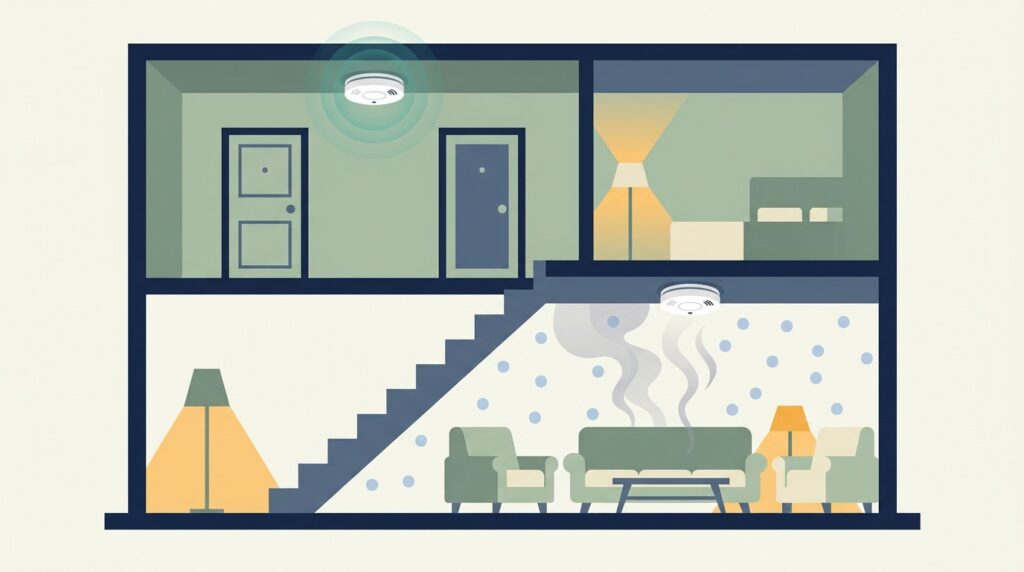
Two of the deadliest hazards in any home are invisible until they are already dangerous. Fire announces itself with smoke that a sensor can catch minutes before flames spread, while carbon monoxide gives no warning at all to human senses. A combined smoke and carbon monoxide detector addresses both threats from a single mounting point, which explains why these units have become the default recommendation for most residential installations.
Convenience alone does not make a purchase correct, however. These devices carry genuine trade-offs around sensor lifespan, placement compromises, and replacement timing that separate units do not share. This guide explains how the technology works, what national standards require, and which details determine whether your alarms actually protect the people sleeping under your roof.
Understanding What Each Sensor Detects
A combined smoke and carbon monoxide detector contains two entirely separate sensing systems inside one housing, because smoke and carbon monoxide behave nothing alike. Confusing the two is the most common misunderstanding among homeowners, and it leads directly to poor placement decisions.
Smoke consists of visible particulate matter carried upward by hot air. It rises, collects against ceilings, and spreads laterally along them. Carbon monoxide, by contrast, is a colourless and odourless gas with a density almost identical to air. It does not rise or sink appreciably. Instead it mixes evenly throughout a room, reaching the sleeping occupant at roughly the same concentration whether the sensor sits high or low.
This physical difference matters enormously. It is why smoke alarms carry strict mounting-height rules while carbon monoxide alarms generally do not, and it is why a combination unit represents a sensible compromise rather than a perfect solution for both hazards simultaneously.
Why Carbon Monoxide Deserves Particular Respect
The carbon monoxide half of a combined smoke and carbon monoxide detector typically relies on an electrochemical sensor, which generates a small electrical current proportional to the gas concentration it encounters. These sensors are accurate and draw very little power, which suits battery operation well.
Carbon monoxide originates from anything that burns fuel incompletely. Gas furnaces, water heaters, boilers, fireplaces, wood stoves, gas ranges, and vehicles idling in attached garages all produce it. In apartments and terraced housing, it can migrate from a neighbouring unit entirely outside your control.
What makes the gas so dangerous is its effect on the body. It displaces oxygen in the bloodstream, producing symptoms that resemble ordinary illness — headache, nausea, fatigue, confusion. A sleeping person may never wake. Because there is no smell, no visible sign, and no reliable early symptom, the alarm is the only warning mechanism that exists. That is a heavier burden than a smoke sensor carries, since occupants can often smell or see a fire independently.
Smoke Sensing Technology and Its Trade-Offs
The smoke side of a combined smoke and carbon monoxide detector generally uses photoelectric sensing, ionisation sensing, or both together. Each approach responds differently depending on how a fire develops.
Photoelectric sensors detect light scattered by smoke particles and respond well to smouldering fires — the slow, smoky kind that starts in upholstery, bedding, or faulty wiring, and which accounts for a large share of fatal night-time incidents. Ionisation sensors respond more quickly to fast-flaming fires producing smaller combustion particles. Dual-sensor designs incorporate both technologies to cover the full range.
Photoelectric sensing also tends to produce fewer nuisance alarms from cooking, which matters more than it sounds. The single most damaging thing a household can do is disable an alarm that cries wolf. An alarm removed from the ceiling because it chirped during dinner protects nobody at three in the morning.
Where Code Requires These Alarms
Placement is where a combined smoke and carbon monoxide detector either delivers protection or quietly fails, so it is worth understanding the baseline that national standards establish. NFPA 72, the National Fire Alarm and Signaling Code, sets the requirements that most local building codes adopt, and it absorbed the carbon monoxide provisions previously held in NFPA 720.
For smoke detection, the accepted minimum is an alarm inside every sleeping room, one outside each separate sleeping area, and at least one on every level of the home including the basement. A basement alarm belongs near the foot of the stairway leading upward, because that stairwell is the route smoke travels.
For carbon monoxide, recent editions of NFPA 72 call for detection outside each separate sleeping area within roughly twenty-one feet of any bedroom door measured along the path of travel, on every occupiable level including basements, and inside any sleeping room that contains a fuel-burning appliance. Many state and municipal codes impose tighter distances, commonly ten or fifteen feet, so local requirements can exceed the national baseline rather than relax it.
Mounting rules follow the physics described earlier. Smoke sensing performs best on the ceiling at least four inches from any wall, or on a wall with the top of the unit within four to twelve inches of the ceiling. Carbon monoxide detection faces no equivalent general height restriction, though units installed in a room with permanently installed fuel-burning equipment are typically required on the ceiling. Always follow the manufacturer’s published instructions, since certification depends on installation as specified.
Placement Mistakes That Undermine Protection
Even the right device fails in the wrong location. Keep any combined smoke and carbon monoxide detector at least ten feet from cooking appliances to limit nuisance alarms, and roughly three feet from bathroom doors, ceiling fans, and air supply registers. Steam reads as smoke, and moving air can push smoke past a sensor before it registers.
Avoid dead-air pockets. The apex of a peaked ceiling and the corner where wall meets ceiling both trap stagnant air that smoke reaches late. On a peaked ceiling, position the alarm within three feet of the peak horizontally but at least four inches below it vertically.
Garages deserve specific mention. A combination unit is a poor choice there, because vehicle exhaust triggers the carbon monoxide sensor and stored dust triggers the smoke sensor. Better practice places a heat alarm in the garage itself and the combination unit on the living side of the connecting door, where it monitors the space people actually occupy.
Finally, resist the temptation to mount a combination alarm directly beside the furnace to catch problems early. Proximity to fuel-burning equipment invites nuisance activation during normal start-up cycles, and repeated false alarms lead to disabled devices.
Choosing a Power Source
Three power configurations dominate the market, and the right choice depends on your building rather than your preference. A sealed ten-year lithium battery unit eliminates annual battery changes entirely and removes the low-battery chirp that prompts so many households to pull a battery and forget. These suit homes without alarm wiring particularly well.
Replaceable-battery models cost less initially and allow the battery to be swapped, but they depend on someone remembering to do it. Hardwired units with battery backup draw from household power and continue operating during an outage, making them the standard choice for new construction and full retrofits.
Whichever configuration you select, the certification marks matter more than the feature list. Smoke alarms are listed to UL 217 and carbon monoxide alarms to UL 2034, and a combination unit should carry both listings from an accredited laboratory. Certification is not the same as a claim of having been tested, and reputable manufacturers state their listings plainly.
Interconnection Changes Survival Odds
A single combined smoke and carbon monoxide detector sounding on its own protects only the people who can hear it. Interconnection means that when one unit detects a hazard, every unit in the home sounds simultaneously, which matters enormously when the fire starts in a basement and the occupants sleep two floors above behind closed doors.
Interconnection arrives through hardwiring, radio frequency links between units, or app-connected systems working through a base station or home network. Wireless interconnection has made retrofitting practical in older homes where running cable is impractical. Smart models add phone notifications, which provide genuine value when nobody is home — a carbon monoxide event in an empty house still needs a response before anyone returns.
Treat connectivity as a supplement rather than a substitute. The audible alarm remains the primary life-safety function, and any device should perform correctly with the network down.
The Ten-Year Rule and End-of-Life Warnings
This is the point most homeowners miss entirely, and it deserves emphasis. Every combined smoke and carbon monoxide detector has an expiration date, because both sensor types degrade with age regardless of whether the test button still produces a sound.
Smoke sensors are generally rated for ten years from the date of manufacture. Electrochemical carbon monoxide sensors typically last somewhere between five and ten years depending on the model. In a combination unit, the shorter of the two governs, and the entire device is replaced when it expires, including the sensor that might still function. That shared expiry is the principal argument for keeping the two functions separate, though most households reasonably prefer the simplicity of one device and one test button.
Since 2009, UL 2034 has required carbon monoxide and combination alarms to include an end-of-life warning. This produces a distinct chirp pattern that differs from the low-battery signal, and it typically cannot be silenced indefinitely — a deliberate design choice. Replacing the battery will not stop an end-of-life chirp, and a household that keeps trying is running on an expired sensor.
Check the manufacture date printed on the back of each unit rather than guessing from when you moved in. An expired alarm is the most dangerous failure mode precisely because it still looks operational on the ceiling.
Building a Testing Routine That Sticks
Maintenance requirements for a combined smoke and carbon monoxide detector are modest. Press the test button on every unit monthly, which verifies the horn, battery, and electronics, though it does not verify sensor sensitivity. Vacuum the vents periodically, since accumulated dust interferes with both sensing methods. Replace batteries annually in units that take them, unless the model uses a sealed ten-year cell.
Beyond testing, an escape plan turns a warning into a survivable event. Agree on two routes out of every room, establish a meeting point outside, and practise the plan with everyone in the household. For carbon monoxide specifically, the correct response to an alarm is to get everyone outside into fresh air first and call emergency services from there — never to search for the source while still inside.
Any alarm that has been exposed to an actual fire should be replaced rather than reused, regardless of its age.
Frequently Asked Questions
Is a combination unit better than separate smoke and CO alarms?
For most homes, yes, because one device covers both hazards with a single installation and a single monthly test. The trade-off is that the whole unit retires when either sensor expires, so a functioning smoke sensor gets discarded alongside a spent carbon monoxide sensor.
How long does a combination alarm last?
Plan on replacement roughly ten years from the manufacture date, or sooner if the carbon monoxide sensor carries a shorter rating. The date is printed on the back of the unit, and it is the manufacture date rather than the installation date that counts.
What height should I mount it at?
Follow smoke alarm rules, since those are the stricter constraint: on the ceiling at least four inches from a wall, or high on a wall within four to twelve inches of the ceiling. Carbon monoxide mixes evenly with air, so that height serves both sensors adequately.
My alarm chirps but the battery is new. What now?
A repeating chirp after a battery change usually signals end of life rather than low power. Check the manufacture date, and if the unit is approaching or past its rated lifespan, replace the whole device.
Do I need one in the kitchen or garage?
Neither location suits a combination unit. Keep the nearest alarm at least ten feet from cooking appliances, and use a heat alarm in the garage while placing the combination unit on the living side of the connecting door.
How many alarms does an average home need?
A two-storey, three-bedroom house with a basement typically needs at least six smoke alarms: one in each bedroom, one in the upstairs hallway, one on the main floor, and one in the basement. Carbon monoxide coverage is required on every occupiable level and near sleeping areas, which combination units can satisfy simultaneously.
Conclusion
Choosing well comes down to a handful of decisions that outlast any feature comparison. Confirm the unit carries genuine UL 217 and UL 2034 listings. Install alarms inside every bedroom, outside each sleeping area, and on every level including the basement, respecting the clearances from kitchens, bathrooms, and air vents. Interconnect them so that one detection wakes the entire household.
Then write the replacement date somewhere you will actually see it. The most common failure in residential fire and carbon monoxide protection is not a defective product but an expired one left in place for years past its rated life. Verify current specifications and listings with the manufacturer or an authorised seller before purchasing, and confirm your local code, which may impose requirements stricter than the national baseline. A correctly chosen and correctly placed alarm costs very little against what it protects.