
Industrial operations often require the movement of liquids containing abrasive particles, minerals, chemicals, or other solid materials. Unlike standard water pumps, these demanding environments require...
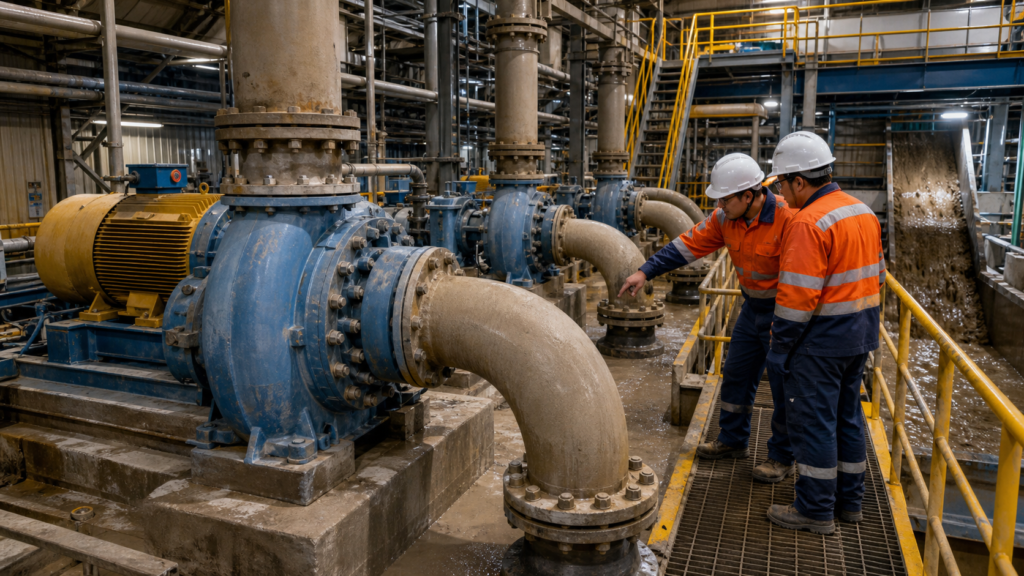
Industrial operations often require the movement of liquids containing abrasive particles, minerals, chemicals, or other solid materials. Unlike standard water pumps, these demanding environments require specialized equipment designed to handle challenging mixtures. Industrial slurry pump configurations are developed to transport high-density fluids containing suspended solids while maintaining reliability in industries such as mining, construction, wastewater treatment, dredging, and mineral processing.
Selecting the correct slurry pump configuration is essential because different applications require different designs, materials, and operating characteristics. Factors such as slurry concentration, particle size, flow requirements, pressure conditions, and installation environment influence which pump configuration provides the best performance.
Understanding the available configurations helps engineers and industrial operators improve efficiency, reduce maintenance requirements, and select equipment that matches their specific operating conditions.
What Is an Industrial Slurry Pump?
An industrial slurry pump is a heavy-duty pumping system designed to move mixtures of liquid and solid particles. These pumps are commonly engineered to handle abrasive and sometimes corrosive materials that can quickly damage conventional pumping equipment.
Unlike standard pumps designed primarily for clean fluids, slurry pumps use specialized materials and reinforced components to withstand wear caused by suspended solids. Many slurry pumps are centrifugal designs created specifically for hydraulic transport of abrasive materials.
Common slurry applications include:
- Mining mineral transportation
- Tailings handling
- Sand and gravel processing
- Chemical processing
- Wastewater treatment
- Dredging operations
- Power generation systems
Because every slurry behaves differently, pump configuration and material selection must be carefully matched to the application.
Why Industrial Slurry Pump Configurations Matter
The configuration of a slurry pump determines how effectively it handles specific operating conditions. A pump installed in a deep sump environment may require a different design compared with a fixed processing plant application.
Choosing the correct configuration helps achieve:
- Better wear resistance
- Improved operational efficiency
- Reduced downtime
- Easier maintenance
- Longer equipment service life
Poor pump selection can result in excessive wear, reduced performance, increased energy consumption, and frequent repairs.
Horizontal Slurry Pump Configurations
Horizontal slurry pumps are among the most common designs used in industrial facilities. These pumps are typically installed above ground and connected directly to pipeline systems.
They are widely used in applications where accessibility, maintenance convenience, and continuous operation are important considerations.
Features of Horizontal Slurry Pumps
Horizontal slurry pumps generally include:
- Horizontal shaft arrangement
- Heavy-duty casing designs
- Replaceable wear components
- Large impeller passages for solids handling
These characteristics make them suitable for industries where large volumes of abrasive slurry must be transported over pipelines.
Common Applications
Horizontal slurry pumps are commonly used in:
- Mineral processing plants
- Mining operations
- Concentrate transport systems
- Industrial waste handling
Their accessible design also makes inspection and maintenance easier compared with some submerged configurations.
Vertical Slurry Pump Configurations
Vertical slurry pumps are designed for applications where the pump operates in a sump, tank, or pit. The pump wet end is submerged while the motor remains above the liquid level.
This configuration is useful when suction conditions make traditional horizontal installation difficult.
Advantages of Vertical Slurry Pumps
Vertical configurations offer several benefits:
- Reduced priming requirements
- Ability to operate in sumps
- Space-saving installation
- Better handling of changing liquid levels
These pumps are often selected for applications involving collection pits, drainage systems, and process tanks.
Typical Uses
Industries commonly using vertical slurry pumps include:
- Mining facilities
- Wastewater operations
- Chemical processing plants
- Material recovery systems
Submersible Slurry Pump Configurations
Submersible slurry pumps are designed to operate completely underwater. The pump and motor assembly are placed directly into the slurry environment.
This design eliminates the need for external suction arrangements and allows pumping in locations where traditional systems may not be practical.
Benefits of Submersible Designs
Submersible slurry pumps can provide:
- Flexible installation options
- Direct pumping from pits or ponds
- Reduced setup requirements
- Effective handling of difficult locations
They are commonly used in dredging, underground operations, flood recovery, and industrial collection areas.
Self-Priming Slurry Pump Configurations
Self-priming slurry pumps are designed to restart operation without requiring manual priming after suction interruptions.
This configuration is valuable in applications where operating conditions change frequently or where reliable restarting is important.
Common Applications
Self-priming slurry pumps may be used in:
- Construction sites
- Temporary pumping operations
- Sludge handling
- Variable-level applications
Their ability to recover suction makes them useful in environments where traditional pumps may experience operational challenges.
High-Head Slurry Pump Configurations
Some industrial applications require slurry to be transported over long distances or elevated heights. High-head slurry pumps are designed to generate increased pressure while handling abrasive materials.
These pumps are often used in mining and processing operations where slurry must travel through extensive pipeline systems.
Important considerations include:
- Required pressure
- Pipeline distance
- Slurry density
- Particle characteristics
Correct sizing is essential because operating outside the recommended range can increase wear.
Slurry Pump Material Configurations
The internal materials used in slurry pumps directly affect durability and performance. Different slurry compositions create different wear challenges.
High Chrome Alloy Components
High chrome materials are commonly used where strong abrasion resistance is required. They are often selected for applications involving hard mineral particles.
Rubber-Lined Configurations
Rubber-lined slurry pumps can be suitable for applications involving smaller particles and certain chemical conditions.
Rubber provides flexibility and resistance against some types of wear.
Polyurethane Components
Polyurethane parts may be used in specific slurry applications where resistance to abrasion and corrosion is important.
Material selection depends on factors such as particle size, chemical composition, and operating temperature.
Factors to Consider When Selecting a Slurry Pump Configuration
Choosing the correct industrial slurry pump configuration requires evaluating several technical factors.
Slurry Characteristics
The composition of the slurry is one of the most important considerations.
Engineers evaluate:
- Solid concentration
- Particle size
- Particle hardness
- Chemical properties
- Density
Different slurry characteristics require different pump designs and materials.
Flow Requirements
The required flow rate determines the pump capacity needed for the application.
A pump that is too small may struggle to maintain performance, while an oversized pump may increase energy costs.
Pressure and Head Requirements
The distance and elevation of slurry transportation affect pressure requirements.
Long pipeline systems generally require pumps capable of producing sufficient head to maintain consistent movement.
Wear Resistance Requirements
Abrasive slurry can quickly damage unsuitable equipment. Selecting appropriate materials and configurations helps reduce replacement costs and downtime.
Maintenance Accessibility
Industrial facilities often operate continuously, making maintenance efficiency important.
Configurations that allow easier inspection and replacement of wear parts can improve operational reliability.
Common Industrial Applications of Slurry Pumps
Industrial slurry pumps support many sectors where solid-liquid mixtures must be transported.
Mining Industry
Mining operations rely heavily on slurry pumps for moving mineral concentrates, tailings, and processing materials.
These pumps help transport materials throughout different stages of mineral recovery.
Construction and Dredging
Construction projects and dredging operations often involve moving sand, mud, and sediment.
Slurry pumps provide the capability needed for handling these dense mixtures.
Wastewater Treatment
Wastewater facilities use slurry pumps to transport sludge and solids-containing fluids.
Reliable pumping helps maintain effective treatment processes.
Power Generation
Certain power plants use slurry pumps in systems involving ash handling and industrial waste transportation.
Maintaining Industrial Slurry Pumps
Proper maintenance is essential for maximizing pump life and reducing unexpected failures.
Important maintenance practices include:
- Regular inspection of wear components
- Monitoring vibration and performance
- Checking seals and bearings
- Reviewing operating conditions
- Replacing damaged parts when necessary
Because slurry conditions can change, continuous monitoring helps identify problems before major failures occur.
Frequently Asked Questions
What are the main industrial slurry pump configurations?
The main configurations include horizontal, vertical, submersible, self-priming, and high-head slurry pump designs. Each configuration is designed for different installation and operating conditions.
Why are slurry pumps different from standard pumps?
Slurry pumps are built to handle abrasive mixtures containing solid particles. They use stronger materials and specialized designs to resist wear.
Which slurry pump configuration is best for mining?
The best configuration depends on the mining application, slurry characteristics, distance, and operating conditions. Horizontal and vertical designs are commonly used in mining environments.
How do slurry pump materials affect performance?
Materials such as high chrome alloy, rubber, and polyurethane affect wear resistance, durability, and suitability for different slurry conditions.
How can slurry pump lifespan be improved?
Proper selection, regular maintenance, correct operating conditions, and suitable materials can help extend slurry pump service life.
Conclusion
Industrial slurry pump configurations play a critical role in industries that require reliable transportation of abrasive and solid-containing fluids. From mining and wastewater treatment to construction and processing facilities, these pumps provide essential support for demanding operations.
Selecting the right configuration requires careful evaluation of slurry characteristics, flow requirements, installation conditions, and material compatibility. With proper design selection and regular maintenance, industrial slurry pumps can deliver reliable performance while reducing downtime and improving operational efficiency.