
The 1960s and 1970s marked an era of profound social upheaval and cultural awakening across the United States, as disenfranchised communities rose to demand civil...
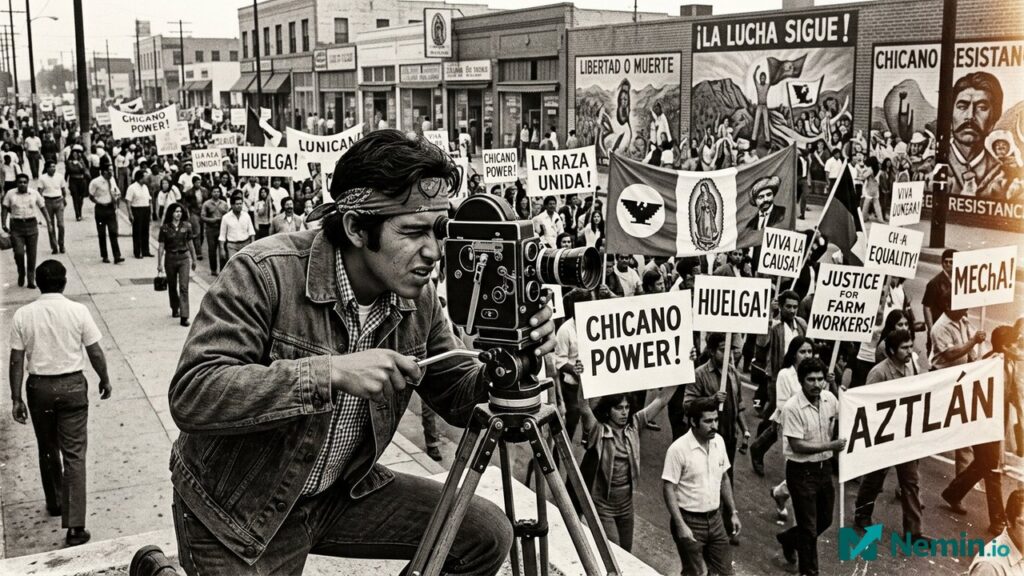
The 1960s and 1970s marked an era of profound social upheaval and cultural awakening across the United States, as disenfranchised communities rose to demand civil equality, labor dignity, and cultural self-determination. Central to this historic civil rights awakening was El Movimiento the Chicano Civil Rights Movement—which united farmworkers, high school student activists, artists, and intellectuals under a shared banner of Mexican American identity. While political organizing, boycotts, and mass walkouts formed the movement’s frontline strategy, it was through the transformative lens of cinema that Chicano artists reclaimed their history, exposed systemic injustice, and established an authentic visual identity.
By analyzing the evolution of Chicano cinema from revolutionary agitprop to critically acclaimed narrative masterworks, we uncover how film became the ultimate medium for immortalizing the Chicano struggle and inspiring future generations.
What Is El Movimiento and How Did It Catalyze the Chicano Rights Movement?
El Movimiento was a multi-faceted civil rights, cultural pride, and political empowerment movement led by Mexican Americans across the southwestern United States throughout the 1960s and 1970s.
| Movement Pillar | Key Historical Leaders | Core Sociopolitical Objective | Manifestation in Visual Media |
|---|---|---|---|
| Agricultural Labor Rights | César Chávez & Dolores Huerta (UFW) | Fair wages, unionization, and dignified working conditions for farmworkers | Documenting the Delano Grape Strike and march to Sacramento on 16mm film |
| Educational Equity & Reform | Sal Castro & student organizers | Bilingual education, Mexican American history curricula, better facilities | Filming the historic 1968 East Los Angeles High School Walkouts (Blowouts) |
| Land Grant Reclamation | Reies López Tijerina (Alianza Federal) | Restoring historic ancestral land grants guaranteed under the Treaty of Guadalupe Hidalgo | Capturing armed courthouse confrontations in New Mexico newsreels |
| Political Self-Determination | José Ángel Gutiérrez (La Raza Unida) | Establishing independent political representation in Texas local governments | Recording political rallies and community organizing strategies |
| Anti-War & Social Justice | Rosalio Muñoz & Ruben Salazar | Protesting disproportionate Chicano casualty rates in the Vietnam War | Documenting the 1970 National Chicano Moratorium and police brutality |
Before the rise of El Movimiento, Mexican Americans endured decades of institutional disenfranchisement, segregated schooling, labor exploitation, and systematic cultural erasure.
During the formative years of El Movimiento, when the United Farm Workers (UFW) launched the historic Delano Grape Strike in 1965, it ignited a nationwide awakening. Activists embraced the previously derogatory term “Chicano” as an empowering badge of indigenous and mestizo pride. As El Movimiento gained momentum, recognizing that mainstream media outlets either ignored their civil rights struggle or framed them as lawless agitators, Chicano activists realized that controlling the camera was essential to controlling their own political destiny.
How Did Independent Cinema Become the Visual Voice of El Movimiento?
Chicano cinema emerged not as a commercial Hollywood endeavor, but as a form of urgent, grassroots guerrilla documentary filmmaking born directly on the frontlines of political protest.
| Technical / Media Element | Mainstream Hollywood Approach (1960s) | El Movimiento Independent Cinema | Cultural Impact on Audiences |
|---|---|---|---|
| Filmmaking Equipment | Massive 35mm studio cameras, fixed sound stages | Portable handheld 16mm Bolex cameras, natural audio | Allowed agile filming in grape fields, classrooms, and street marches |
| Narrative Authorship | Anglo writers and directors depicting caricatures | Self-authored community cinema by Chicano directors | Presented authentic cultural lived experiences and oral histories |
| Distribution Network | Commercial movie theaters and broadcast networks | Union halls, community centers, universities, church basements | Bypassed gatekeepers to educate and mobilize working-class communities |
| Visual Aesthetic | Polished, sanitized, studio-lit Hollywood gloss | Gritty, high-contrast, kinetic, documentary realism | Captured the raw energy and immediate urgency of civil rights clashes |
| Character Representation | Stereotypical bandits, passive maids, comic relief | Complex, politically conscious, resilient working-class heroes | Fostered deep cultural dignity and political solidarity |
1. Countering the Hollywood “Bandido” Stereotype
Before the political awakening of El Movimiento, American cinema depicted Mexican Americans through degrading, flat caricatures—the treacherous “greaser” or “bandido,” the submissive domestic servant, or the lazy peasant sleeping beneath a cactus. Independent filmmakers during El Movimiento rejected these racist tropes, using cinema to present three-dimensional human beings with rich cultural heritage, intellectual agency, and righteous political fury.
2. Guerrilla 16mm Filmmaking in the Fields and Streets
Empowered by the spirit of El Movimiento and armed with lightweight 16mm cameras purchased with community fundraising dollars, early Chicano filmmakers operated as visual journalists. Filmmakers documenting El Movimiento stood beside striking farmworkers under the California sun and documented tear-gas attacks by police during peaceful urban protests, creating an undeniable historical archive of state violence and community resilience.
Which Groundbreaking Films and Documentaries Defined El Movimiento?
The golden era of El Movimiento political cinema produced foundational works that redefined American documentary and narrative filmmaking.
| Film Title | Release Year | Director / Key Creatives | Primary Thematic Subject | Lasting Cultural Significance |
|---|---|---|---|---|
| I Am Joaquín | 1969 | Luis Valdez (El Teatro Campesino) | Epic historical journey of Chicano identity based on Corky Gonzales’ poem | Regarded as the foundational spark of the Chicano cinematic movement |
| Requiem-29 | 1971 | David Garcia & Moctesuma Esparza | Forensic documentary of the 1970 Chicano Moratorium and death of Ruben Salazar | Indispensable historical record of police misconduct and civil rights resistance |
| Chicana | 1979 | Sylvia Morales | Historical contribution of Mexican and indigenous women from pre-Columbian times | First major feminist documentary of the Chicano Movement |
| Zoot Suit | 1981 | Luis Valdez | The 1942 Sleepy Lagoon murder trial and 1943 Los Angeles Zoot Suit Riots | First Chicano-directed major studio release; seamlessly blended theater and film |
| The Ballad of Gregorio Cortez | 1982 | Robert M. Young (Starring Edward James Olmos) | Historical Western examining linguistic injustice and borderland mythology | Masterpiece of revisionist Western cinema preserved in the National Film Registry |
| El Norte | 1983 | Gregory Nava | Epic odyssey of indigenous Mayan siblings fleeing Guatemalan civil war | First independent American Latinx film nominated for an Academy Award |
| Stand and Deliver | 1988 | Ramón Menéndez (Starring Edward James Olmos) | Jaime Escalante teaching advanced calculus in East Los Angeles | Iconic triumph of educational empowerment and intellectual resilience |
1. I Am Joaquín (1969): The Genesis of Chicano Cinema
Representing a foundational milestone of El Movimiento, adapted from the epic poem by Rodolfo “Corky” Gonzales, Luis Valdez’s 20-minute short film I Am Joaquín is universally recognized as the birth of Chicano visual cinema. Combining dramatic still photography, kinetic editing, powerful voiceover narration, and traditional indigenous music, the film chronicled 500 years of Mexican and mestizo history—from the conquest of the Aztecs to modern migrant labor struggles—galvanizing student activists across the nation.
2. Requiem-29 (1971): The Power of Citizen Video Evidence
In one of the most consequential events of El Movimiento, on August 29, 1970, over 30,000 protesters marched through East Los Angeles in the National Chicano Moratorium against the Vietnam War. When law enforcement brutally dispersed the crowd and pioneering journalist Ruben Salazar was killed by a tear-gas projectile, student filmmakers from UCLA documented the inquest. Requiem-29 captured direct contradictions between police testimony and actual footage, creating a landmark piece of forensic investigative cinema.
3. Zoot Suit (1981): Breaking into the Major Studio System
Bridging the theatrical ethos of El Movimiento with Hollywood, written and directed by Luis Valdez, Zoot Suit dramatized the 1942 Sleepy Lagoon murder trial and the subsequent Zoot Suit Riots in Los Angeles. Starring Edward James Olmos as the mythical pachuco figure “El Pachuco,” the film made history as the first Chicano-directed feature film produced by a major studio (Universal Pictures), blending theatrical staging with bold cinematic flair.
The Role of El Teatro Campesino: From Flatbed Trucks to the Big Screen
The artistic engine driving visual storytelling during El Movimiento during El Movimiento was El Teatro Campesino (The Farmworkers’ Theater), founded in 1965 by playwright and director Luis Valdez on the picket lines of the Delano Grape Strike.
| Theatrical & Film Form | Performance Venue | Primary Artistic Purpose | Transition to Cinematic Language |
|---|---|---|---|
| The “Acto” (One-Act Skit) | Flatbed pickup trucks in agricultural fields | Satirized farm bosses, scabs, and oppressive labor conditions | Informed the fast-paced, satirical editing of early Chicano short films |
| The “Mito” (Mythological Play) | Community centers and labor union halls | Explored indigenous Aztec and Mayan spirituality and mestizo duality | Introduced rich magical realism and pre-Columbian iconography to cinema |
| The “Corrido” (Musical Ballad) | Picket lines and political rallies | Retold historical events through traditional folk songs | Transformed into musical scoring for historical narrative features |
1. The Power of the “Acto”
During the early activism of El Movimiento, El Teatro Campesino initially performed short, improvised 15-minute skits called actos directly on the flatbeds of pickup trucks for striking farmworkers. These performances used broad satire, vibrant masks, and working-class humor to educate workers on union rights and strip power from intimidating agricultural landowners.
2. Translating Stage Energy to the Cinematic Medium
As the artistic vision of El Movimiento matured, when Luis Valdez transitioned from street theater to cinema, he brought the urgent, Brechtian performance style of El Teatro Campesino with him. In Zoot Suit, characters frequently break the fourth wall, addressing the audience directly to challenge historical distortions and forcing viewers to confront racial prejudice directly.
How Chicana Filmmakers Shaped the Feminist Consciousness of El Movimiento
While early leaders of El Movimiento focused heavily on labor and ethnic pride, Chicana women faced the dual challenge of combating societal Anglo racism while simultaneously dismantling internal cultural machismo within El Movimiento.
| Chicana Filmmaker | Seminal Cinematic Work | Core Feminist Theme | Impact on Chicano Movement |
|---|---|---|---|
| Sylvia Morales | Chicana (1979) | Tracing 1,000 years of indigenous and Mexican female labor and leadership | Dismantled patriarchal historical narratives, proving women were central leaders |
| Lourdes Portillo | Las Madres: The Mothers of Plaza de Mayo (1985) | Human rights activism and political resistance by mothers | Earned an Academy Award nomination; linked Chicana identity with global struggles |
| Esperanza Vasquez | Una Causa Común (1975) | Female leadership within agricultural and educational boycotts | Documented the frontline organizing of grassroots women activists |
| Beverly Sanchez-Padilla | In Black and White (1980s) | The intersection of Chicana identity, indigenous roots, and artistic expression | Championed multidimensional female storytelling across independent media |
1. Sylvia Morales and the Landmark Film Chicana (1979)
Championing the intersectional feminist wing of El Movimiento, in her revolutionary documentary Chicana, director Sylvia Morales shattered the myth that Mexican American women were merely passive domestic supporters of male activists. Drawing lines from Aztec goddesses and Sor Juana Inés de la Cruz to revolutionary Soldaderas and modern labor organizers like Dolores Huerta, the film cemented women as the historical vanguard of social change.
2. Expanding the Horizon of Human Rights Documentaries
Expanding the intellectual horizons of El Movimiento, Chicana directors broadened movement cinema beyond regional borderland politics. Lourdes Portillo’s documentary work connected Mexican American feminist consciousness to international human rights struggles against totalitarian regimes in Latin America, establishing a legacy of global solidarity.
Institutional Milestones: The UCLA Ethno-Communications Program
A crucial structural catalyst that empowered filmmakers during El Movimiento during El Movimiento was the creation of the Ethno-Communications Program at the UCLA School of Theater, Film and Television in 1969.
| UCLA Film Program Cohort | Key Participating Filmmakers | Groundbreaking Output | Institutional Legacy |
|---|---|---|---|
| Chicano Film Collective | Moctesuma Esparza, David Garcia, Jesus Treviño | Requiem-29, América Tropical, Yo Soy Chicano | Built the premier professional pipeline for Mexican American film producers |
| L.A. Rebellion (Black Cinema) | Charles Burnett, Haile Gerima, Julie Dash | Killer of Sheep, Bush Mama, Daughters of the Dust | Parallel movement revolutionizing Black independent cinema |
| Asian American Media Collective | Eddie Wong, Franklin Odo | Early documentary records of Asian American labor | Established the foundations for Asian American independent media |
1. Access to High-End Studio Equipment
At the height of El Movimiento, prior to 1969, prestige university film schools were almost exclusively white and male. Following student protests, UCLA admitted cohorts of Chicano, Black, Asian American, and Native American students, providing them with access to professional cameras, editing suites, and film processing labs.
2. Producing the Next Generation of Hollywood Leaders
Carrying the cultural values of El Movimiento into commercial cinema, graduates of this program—went on to produce monumental commercial films including The Milagro Beanfield War (1988), Gettysburg (1993), and Selena (1997), proving that movement-trained filmmakers could succeed at the highest levels of global commercial cinema.
Comparing Cinematic Eras: El Movimiento vs. Modern Latinx Cinema
Tracing the evolution of cinema born from El Movimiento from the 1960s to the 2020s reveals how the foundational battles of El Movimiento paved the way for contemporary narrative storytelling.
| Evaluation Metric | Early El Movimiento Cinema (1965–1980) | Golden Era Narrative Cinema (1980–1999) | Contemporary 21st-Century Latinx Cinema (2000–Present) |
|---|---|---|---|
| Primary Film Medium | Handheld 16mm & 8mm celluloid film | 35mm theatrical feature releases | 4K / 8K digital cameras & global streaming platforms |
| Core Thematic Focus | Labor rights, anti-war protests, cultural awakening | Biopics, immigration epics, inner-city education | Complex genre diversity (Sci-fi, horror, queer cinema, comedy) |
| Financing Sources | Community donations, church grants, student collectives | Independent investors & major studio distribution | Venture capital, streaming deals (Netflix, Prime), independent grants |
| Key Benchmark Titles | I Am Joaquín, Requiem-29, Chicana | Zoot Suit, El Norte, Stand and Deliver, Selena | A Better Life, Coco, Flamin’ Hot, Aristotle and Dante |
| Primary Distribution | Underground rallies, universities, union halls | Theatrical release chains & VHS home video | Global streaming networks reaching hundreds of millions |
5 Critical Cinematic Techniques Pioneered by El Movimiento Filmmakers
Filmmakers working within El Movimiento developed innovative stylistic and narrative conventions that left an indelible mark on independent cinema.
| Cinematic Technique | Technical Implementation | Narrative Purpose in Chicano Cinema |
|---|---|---|
| 1. The Bilingual Dialogue Matrix | Seamlessly alternating between English and Spanish (Code-switching) | Reflects authentic linguistic realities of borderland communities |
| 2. Muralist Visual Composition | Framing live actors against massive community street murals | Connects contemporary physical struggles with ancestral heritage |
| 3. Non-Linear Corrido Balladry | Structuring movie pacing around traditional acoustic songs | Honors oral storytelling traditions rather than rigid three-act structures |
| 4. Direct Address to Camera | Actors breaking the fourth wall to speak directly to viewers | Challenges audience complacency and demands political engagement |
| 5. Guerrilla Street B-Roll | Interweaving raw 16mm protest footage into fictional scripts | Blurs the line between documentary reality and narrative drama |
Frequently Asked Questions
What was the main goal of El Movimiento in the 1960s and 1970s?
The main goal of El Movimiento was to achieve civil rights equality, fair agricultural labor conditions, educational reform, voting rights, and cultural self-determination for Mexican Americans.
Why was film so important to the activists of El Movimiento?
Film provided Chicano activists with a powerful tool to document police brutality, preserve oral histories, educate illiterate workers, and dismantle racist Hollywood caricatures.
In the artistic history of El Movimiento, what is considered the first true Chicano film?
The 1969 short film I Am Joaquín, directed by Luis Valdez and based on the epic poem by Rodolfo “Corky” Gonzales, is widely considered the foundational first film of Chicano cinema.
How did El Teatro Campesino shape the visual storytelling of El Movimiento?
El Teatro Campesino pioneered fast-paced satirical skits (actos) on flatbed trucks that influenced the energetic storytelling, political directness, and visual style of subsequent Chicano feature films.
Who were the key female directors advancing the goals of El Movimiento?
Pioneering Chicana directors include Sylvia Morales (director of Chicana), Lourdes Portillo (director of Las Madres), and Esperanza Vasquez, who brought intersectional feminist perspectives to the movement.
What is the lasting cultural legacy of El Movimiento on modern Hollywood?
El Movimiento established the institutional pipelines, independent production companies, and cultural precedent that enabled modern Latinx filmmakers to create diverse, authentic stories across global cinema and streaming platforms.
Conclusion
The rise of the Chicanos through the lens of cinema represents one of the most vital chapters in American cultural history. Born out of the fiery crucible of agricultural strikes, student boycotts, and civil rights marches, El Movimiento proved that film is far more than passive commercial entertainment; it is an enduring instrument of human dignity, historical reclamation, and political liberation.
By picking up cameras during El Movimiento to document their own lived realities, pioneering Chicano filmmakers transformed the visual landscape of the United States, replacing harmful stereotypes with nuanced portraits of courage, intellectual depth, and artistic brilliance. The cinematic trails blazed during the peak of El Movimiento continue to inspire contemporary filmmakers, ensuring that the voice, spirit, and resilience of the Chicano community resonate permanently across screens worldwide.