
A lifeguard certificate provides evidence that an individual has completed a specified training programme and demonstrated required competencies under that programme, which may include surveillance, water rescue,...
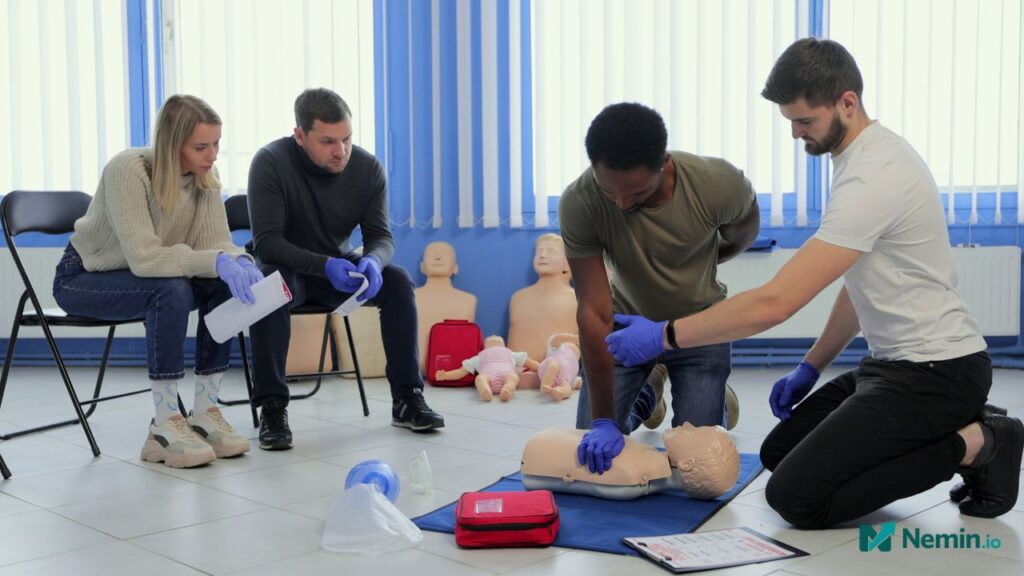
A lifeguard certificate provides evidence that an individual has completed a specified training programme and demonstrated required competencies under that programme, which may include surveillance, water rescue, CPR, AED use and first aid. At pools, water parks and other aquatic venues, properly trained lifeguards form an important part of the safety system because they are expected to recognize hazards, intervene appropriately and respond when an emergency occurs.
A lifeguard certificate alone, however, cannot make an aquatic facility safe. Effective water safety depends on several layers working together, including competent staffing, active supervision, safe facility design, appropriate rescue equipment, water-quality management, emergency action plans, communication systems and regular practice. Understanding how those measures interact helps facility operators, lifeguards and visitors recognise that aquatic safety is an ongoing operational responsibility rather than a document displayed on a wall.
What Is a Lifeguard Certificate
A lifeguard certificate is a credential issued after a candidate successfully completes the requirements of a recognised lifeguard training programme.
The precise skills represented by the credential depend on the issuing organisation, course level and aquatic environment. A certificate designed for a conventional swimming pool may not demonstrate the additional competencies needed for an ocean beach, surf environment or specialised water attraction.
This makes verification important. An employer should not simply ask whether a candidate has a lifeguard certificate. It should confirm whether the specific certification is current and appropriate for the facility in which that person will work.
What a Lifeguard Certificate May Cover
Recognised training programmes commonly address accident prevention and surveillance alongside practical emergency skills. Course content can include identifying swimmers in distress, using rescue equipment, performing water rescues and providing appropriate emergency care within the individual’s training.
Many programmes also incorporate CPR, AED use and first aid or require related credentials. Exact content, prerequisites and validity periods vary, so the issuing organisation’s current documentation should always be checked.
A lifeguard certificate demonstrates training to a defined standard at a point in time. It does not guarantee that skills will remain sharp without continued practice.
Why a Lifeguard Certificate Matters at Aquatic Facilities
Aquatic facilities contain hazards that require rapid recognition. A person experiencing difficulty in water may not be able to shout, wave or attract attention in the way films commonly depict.
Trained lifeguards learn to observe swimmers continuously and recognise behaviour that may indicate distress. They are also taught structured responses that are intended to protect both the person needing assistance and the rescuer.
The lifeguard certificate provides employers with a baseline indication of this training. Facility-specific preparation then needs to build on that baseline.
A lifeguard who can perform a skill in a training pool must still learn the blind spots, communication systems, equipment locations and emergency procedures of the workplace.
Aquatic Safety Is a Layered System
A useful way to understand swimming-pool safety is to think in layers. If one layer fails, another should still help reduce risk.
Lifeguards are one layer. Barriers, depth markings, maintenance, water clarity, safe operating rules, emergency equipment and caregiver supervision are others.
A lifeguard certificate does not replace any of these measures.
Well-operated facilities avoid placing the entire responsibility for safety on one person sitting in a chair.
7 Vital Safety Measures for Aquatic Facilities
The strongest facilities combine trained personnel with effective systems. The following seven areas demonstrate how a lifeguard certificate fits within a much broader safety framework.
1. Employ Lifeguards With an Appropriate Lifeguard Certificate
Certification should match the environment and job requirements.
Pool lifeguards, waterfront lifeguards and water-park staff may require different training or employer-specific qualifications. Facilities should confirm the exact credential rather than relying on a generic claim that someone is certified.
A lifeguard certificate should also be current. Expired credentials may mean the worker no longer meets employer, regulatory or certification-provider requirements.
Verification should occur before the person is assigned independent surveillance duties.
Certification Does Not End at Hiring
Initial certification establishes foundational competence, but a facility must translate that training into local procedures. Newly hired lifeguards should learn the specific pool configuration, emergency equipment, communication methods and operating policies before beginning routine duty.
Periodic in-service practice can reinforce the skills represented by a lifeguard certificate. Drills may also reveal operational weaknesses that would otherwise remain hidden until an actual emergency.
The objective is continuous readiness, not simply regulatory paperwork.
2. Maintain Effective Lifeguard Surveillance
Prevention begins with seeing what is happening.
Lifeguards need clear surveillance zones and a systematic approach to observing swimmers. Sightlines can be affected by glare, crowds, water movement, pool geometry and recreational equipment.
Facility managers should evaluate these conditions rather than assuming a high chair automatically provides complete visibility.
The skills behind a lifeguard certificate become useful only when the lifeguard can actually observe the relevant water area.
Manage Blind Spots
Columns, slides, play structures and unusual pool shapes can create areas that are difficult to see from one position.
Facilities may address this through staffing locations, rotation strategies, equipment placement or other controls appropriate to the venue.
Water clarity is also essential. If a lifeguard cannot see sufficiently through the water, submerged-person detection becomes far more difficult.
Safety staffing should therefore be considered during facility design, not only after construction.
3. Develop and Practise an Emergency Action Plan
An emergency action plan explains how staff should respond when something goes wrong.
A useful plan identifies roles rather than simply stating that emergency services should be called. One employee may initiate a rescue while another brings equipment, clears the area or meets responding medical personnel.
Facilities can face more than drowning incidents. Plans may need to address severe weather, fire, chemical incidents, medical emergencies, missing children and other site-specific hazards.
A lifeguard certificate provides individual emergency skills, while the emergency action plan explains how those skills fit into a coordinated facility response.
Practise the Plan
A procedure that exists only in a binder may fail under stress.
Regular drills allow staff to rehearse communication, equipment retrieval and role allocation. They can also expose simple problems such as blocked equipment access or staff being unable to hear an alarm from a particular location.
Training exercises should follow recognised practices and facility policies.
The aim is not theatrical realism. It is to make the response familiar enough that staff can work together efficiently.
4. Keep Rescue and Emergency Equipment Ready
Equipment should be accessible, appropriate to the facility and maintained in serviceable condition.
Depending on the venue and applicable requirements, this may include rescue tubes, reaching equipment, first-aid supplies, AEDs and other emergency resources.
Staff should know where equipment is stored.
Possessing a lifeguard certificate but losing valuable time searching for an AED or first-aid kit undermines emergency readiness.
Routine inspection schedules can help identify missing, expired or damaged equipment before it is needed.
Equipment Must Match Training
Facilities should avoid purchasing specialist rescue equipment without ensuring staff know how and when it is intended to be used.
Likewise, lifeguards should follow the methods taught by their recognised programme and workplace procedures rather than improvising unfamiliar rescue techniques.
Aquatic rescue involves risk to both victim and rescuer.
Hands-on skills should therefore come from supervised professional training, not from unverified online demonstrations.
5. Maintain Safe Water Quality and Visibility
Water safety includes microbiological and chemical management.
Aquatic facilities must maintain water according to applicable public-health, operational and regulatory requirements. Disinfection, circulation, filtration and chemical balance are all relevant.
Clear water also supports surveillance.
If poor clarity prevents staff from seeing important areas of the pool, the facility can face both operational and rescue problems.
A lifeguard certificate does not qualify someone automatically to manage pool chemistry. Water treatment should be handled by personnel with appropriate training and responsibilities.
Chemical Safety Is a Separate Competency
Pool chemicals can be hazardous when stored, mixed or handled incorrectly.
Facilities need secure storage, suitable procedures and properly trained personnel.
Lifeguards should know how to report an apparent chemical problem and follow the emergency plan, but they should not perform technical chemical tasks outside their role.
Clear responsibility boundaries make aquatic operations safer.
6. Enforce Rules Consistently
Rules such as no running or restrictions around diving exist because predictable behaviours can create injuries.
Enforcement needs to be consistent and understandable.
A lifeguard may need to interrupt unsafe behaviour before an incident occurs. This preventive communication can be less visible than performing a rescue, but it is central to the role represented by a lifeguard certificate.
Visitors are more likely to understand rules when signs are clear and staff apply them consistently rather than selectively.
Rules Should Match the Facility
Generic signs are useful, but site-specific hazards also need consideration.
A shallow pool, diving area, water slide and wave pool each have different risks.
Rules should reflect actual equipment and operating conditions.
Facilities should periodically review policies when layouts, attractions or user groups change.
7. Keep Lifeguard Certificate Skills Current Through Training
Emergency skills are perishable.
A lifeguard who has not practised rescue or CPR procedures for a long period may be less prepared than someone regularly participating in drills.
Employers should understand both the formal renewal requirements associated with each lifeguard certificate and their own responsibility for ongoing competence.
In-service sessions can focus on real facility conditions rather than repeating generic scenarios alone.
This combination of certification and local practice produces a stronger safety system.
Lifeguard Certificate Requirements Are Not Universal
A common misunderstanding is that one credential qualifies a person to work at every aquatic facility.
Requirements vary by country, region, employer and environment.
In the United States, for example, organisations such as the American Red Cross, Ellis and Associates and others provide aquatic safety programmes, while employers and authorities determine which credentials meet their needs. Other countries operate through different national bodies and qualification systems.
Anyone seeking a lifeguard certificate should identify the intended workplace first.
This avoids spending money on a course that the employer does not recognise.
Pool Versus Waterfront Lifeguard Certificate
Swimming pools provide relatively controlled environments. Water depth, boundaries and circulation systems are known, and lifeguards usually operate from designated positions.
Natural waterfronts can introduce current, waves, changing depth, limited visibility, cold water and more variable boundaries. Ocean environments add tides and surf conditions.
As a result, a pool lifeguard certificate should not automatically be treated as evidence of open-water competence.
Additional training may be required for waterfront or surf positions.
Lifeguard Certificate and CPR Competence
CPR is commonly associated with lifeguarding because submersion incidents can involve respiratory and cardiac emergencies.
Current techniques should be learned from qualified instructors using contemporary guidelines.
Written summaries are not substitutes for hands-on practice and assessment.
A lifeguard certificate may include CPR and AED training within the programme or operate alongside separate certification requirements.
Facilities should verify exactly what each employee holds.
First Aid at Aquatic Facilities
Pools experience many incidents that do not involve water rescue.
Cuts, slips, falls and medical emergencies can occur around decks, changing rooms and spectator areas.
First-aid competence allows trained staff to provide initial assistance within their scope while arranging higher-level medical care when necessary.
Documentation procedures may also apply after an incident.
A lifeguard certificate holder should follow employer policy regarding incident reports and escalation.
Appropriate Staffing Levels
There is no single staffing number suitable for every facility.
A small rectangular pool has different surveillance needs from a water park with multiple attractions.
Staffing decisions can be influenced by facility geometry, bather load, attraction type, local regulations and operational risk assessments.
Managers should follow applicable laws, industry standards and qualified professional guidance.
A lifeguard certificate establishes individual competency but does not determine how many lifeguards a venue requires.
Lifeguard Zones and Rotations
Surveillance zones define the area each lifeguard is responsible for observing.
Zones should provide appropriate visibility and manageable coverage.
Rotation systems can move lifeguards between positions and scheduled breaks. This may help manage fatigue and maintain concentration according to facility procedures.
The process should be organised so that water coverage is maintained during transitions.
A handover should never create an unmonitored period simply because two certified employees are changing positions.
Managing Lifeguard Fatigue
Vigilance is mentally demanding.
A quiet pool can be deceptively difficult to supervise because there are few events to stimulate attention.
Heat, glare, dehydration and repetitive visual scanning can add to fatigue in outdoor facilities.
Managers should consider working conditions when scheduling rotations and breaks.
A lifeguard certificate does not make a person immune to human limitations.
Facility design and staffing should account for them.
Distractions and Lifeguard Performance
A phone can draw visual and mental attention away from swimmers within seconds.
Lengthy unrelated conversations can create similar problems.
Facilities should have clear distraction policies during active surveillance.
Other staff responsibilities also need careful management. Assigning a lifeguard to simultaneously supervise water, clean equipment and answer customer questions can create conflicting priorities.
The person occupying a surveillance position should be able to focus on surveillance.
Parent and Caregiver Supervision
Lifeguards provide professional facility oversight, but they do not replace responsible adult supervision of children.
A lifeguard may be watching many people simultaneously.
Parents and caregivers should remain attentive, particularly with young children and weak swimmers.
Facilities can communicate this expectation through signage and admission policies.
A lifeguard certificate strengthens the safety system, but family supervision remains another important layer.
Life Jackets and Flotation Devices
Personal flotation devices can form part of aquatic safety in appropriate environments.
Facilities should establish policies about permitted devices and ensure equipment is suitable for the intended user and activity.
Inflatable toys should not automatically be treated as lifesaving equipment.
Where life jackets are required, use appropriately approved devices and follow relevant fit and use instructions.
Lifeguards can support compliance but should not create improvised flotation solutions.
Diving Safety
Diving into insufficient depth can cause severe head and spinal injuries.
Facilities should clearly identify where diving is permitted and prohibited based on applicable design and safety requirements.
Starting blocks and diving boards introduce additional considerations.
Staff with a current lifeguard certificate should understand the facility’s rules and intervention procedures.
Visitors should never assume that an area is safe for diving simply because other swimmers have done it.
Slips and Falls Around Pools
Not all serious aquatic facility injuries occur in the water.
Wet decks create slip hazards, while bags, toys and other objects can obstruct walkways.
Good housekeeping is therefore part of aquatic safety.
Non-slip surfaces, drainage and prompt attention to hazards can reduce risk.
Lifeguards can report problems, but maintenance responsibility should be shared across the facility rather than added entirely to active surveillance duties.
Water Depth Markings
Accurate and visible depth information helps swimmers make safer decisions.
Markings should comply with relevant requirements and remain legible.
Where depth changes suddenly, additional visual communication may be appropriate.
A lifeguard certificate teaches staff to recognise risk, but swimmers also need enough information to understand the environment independently.
Good facility design reduces dependence on verbal warnings.
Water Slides and Special Attractions
Water parks require attraction-specific safety controls.
Height, weight, rider-position or dispatch rules may apply depending on equipment design.
Employees assigned to these attractions need suitable training.
A general lifeguard certificate may provide important emergency foundations while site-specific instruction addresses the particular attraction.
Operators should follow equipment manufacturer requirements and applicable regulations.
Wave Pools and Moving Water
Wave pools can create conditions significantly different from ordinary swimming pools.
Moving water changes swimmer behaviour and can make distress more difficult to detect.
Facilities may require specialised surveillance patterns and staffing.
Lifeguards working there should receive environment-specific preparation in addition to whatever foundation their lifeguard certificate provides.
Regular drills should reflect realistic conditions.
Indoor Aquatic Facility Safety
Indoor pools eliminate some weather exposure but introduce other operational factors.
Humidity can affect surfaces and building systems, while indoor acoustics can make verbal communication difficult.
Air quality also depends on effective ventilation and pool chemistry management.
Lifeguards need to understand the emergency communication system in noisy environments.
A whistle or radio procedure should be established and practised rather than improvised during an incident.
Outdoor Aquatic Facility Safety
Outdoor facilities face changing weather.
Lightning, extreme heat, wind and intense sun can require operational responses.
Facilities need written policies that follow appropriate local weather and safety guidance.
A lifeguard certificate may introduce some weather-related concepts, but workplace procedures should specify when an area must be cleared and who authorises reopening.
Outdoor staff also need appropriate protection from prolonged sun and heat exposure.
Emergency Communication Systems
Fast communication can improve coordinated emergency response.
Depending on the facility, systems may include whistles, radios, alarms, telephones or public-address equipment.
Staff should know which signal corresponds to which action.
Too many complicated signals can create confusion.
Aquatic facilities benefit from simple, practised communication structures that complement the emergency skills associated with a lifeguard certificate.
AED Access at Aquatic Facilities
An automated external defibrillator can be an important emergency resource.
Placement should support timely access, and equipment should be maintained according to manufacturer and regulatory requirements.
Trained staff need to know where the AED is located.
If a facility has multiple levels or distant attractions, one device in an inaccessible office may not support an effective response plan.
AED procedures should be included in appropriate drills.
Emergency Equipment Readiness
Equipment inspections should be documented according to facility procedures.
A useful framework separates frequently used rescue equipment from medical supplies and facility-specific emergency resources.
| Safety area | Example resource | Operational priority |
|---|---|---|
| Water rescue | Rescue tube or approved rescue aid | Accessible and serviceable |
| Cardiac response | AED | Maintained and easy to locate |
| First aid | Stocked first-aid supplies | Checked for availability and expiry |
| Communication | Radio or alarm system | Tested and understood |
| Evacuation | Facility-specific equipment | Accessible under emergency plan |
| Staff readiness | Current lifeguard certificate | Verified and supplemented by drills |
The exact equipment list depends on facility type and applicable requirements.
Record Keeping and Incident Reporting
Safety management requires documentation.
Facilities may keep records of staff credentials, in-service training, equipment inspections, water quality and incidents.
These records can help identify patterns.
If multiple slips occur in one location, for example, that may indicate a surface or drainage problem rather than isolated visitor carelessness.
A lifeguard certificate is therefore only one document within a much broader operational record system.
Regular Safety Audits
Routine reviews can identify risks before they lead to incidents.
A safety audit may assess sightlines, signage, equipment, staff performance, water conditions and emergency procedures.
External specialist review can be valuable for complex facilities.
Audits should not become box-ticking exercises.
The objective is to identify whether safety systems genuinely work under normal operating conditions.
Lifeguard Certificate Renewal
Certification renewal requirements depend on the issuing organisation.
Credentials can expire, and employers should maintain a system for tracking relevant dates.
Employees should not wait for management to discover an approaching expiry.
A lifeguard certificate holder has an interest in keeping personal credentials current, particularly before applying for seasonal work.
Renewal is also an opportunity to refresh techniques that may have changed.
In-Service Training Between Renewals
Certification renewal intervals are not a substitute for regular practice.
A lifeguard may go months without performing an actual rescue, which is a good operational outcome but means critical skills can become less familiar.
In-service training bridges that gap.
Short, focused drills can reinforce emergency procedures and help newly hired staff learn from experienced team members.
All practice should remain consistent with approved methods and workplace policies.
What a Lifeguard Certificate Does Not Guarantee
Certification does not guarantee flawless judgement.
It does not ensure the person will remain attentive for every second of every shift, and it does not compensate for inadequate staffing or poor facility design.
It also does not qualify the holder for every aquatic environment.
A lifeguard certificate should be understood as evidence of specified training, not as an all-purpose declaration of aquatic expertise.
Employers still need effective recruitment, orientation, supervision and performance management.
Technology and Aquatic Safety
Some facilities use cameras, computer vision or other technology to support monitoring.
These tools may provide useful additional information, but they should not automatically be treated as replacements for required human supervision unless applicable regulations and validated operating systems specifically support such use.
Technology can fail.
Cameras can have blind spots, and automated systems can generate false alarms or miss events.
The strongest approach treats technology as another safety layer.
Why Water Clarity Is a Lifeguard Issue
A lifeguard cannot effectively monitor what cannot be seen.
Poor water clarity can obscure a submerged swimmer, making it an urgent operational concern.
Facility procedures should define what staff must do when visibility becomes unacceptable.
The response should not depend on a lifeguard personally deciding to continue because the pool is busy.
Clear closure authority protects staff from commercial pressure overriding safety.
Safety Signage
Signs communicate rules before staff have to intervene.
They can identify water depth, prohibited activities, emergency information and attraction requirements.
Effective signs are visible and understandable.
Covering a wall with dozens of small warnings can become less effective because visitors stop reading them.
Facility operators should prioritise essential information and comply with applicable signage requirements.
Accessibility and Aquatic Safety
Aquatic facilities serve people with different mobility, sensory and communication needs.
Accessibility should be integrated into both facility design and emergency planning.
Staff may need training on evacuation assistance and communication methods appropriate to different users.
A lifeguard certificate may not address every accessibility scenario specific to a workplace.
Facility orientation and professional accessibility guidance can fill those gaps.
Child Safety at Aquatic Facilities
Young children require particularly close supervision.
Facilities may use wristbands, swim tests or designated zones according to their policies.
No system should encourage caregivers to disengage.
Children can move quickly between shallow and deeper water.
A certified lifeguard contributes professional oversight, while the accompanying adult remains responsible for active supervision according to facility rules.
Swim Tests and Ability Classification
Some camps and aquatic centres use swimming assessments to determine which areas a participant may access.
These assessments should use consistent criteria and be administered by appropriately trained staff.
A strong swimmer on one day can still become tired or injured later.
Ability classification reduces certain risks but does not eliminate the need for surveillance.
Aquatic Safety for Schools and Camps
Group visits can dramatically change facility dynamics.
Large numbers of children entering together can increase noise, movement and supervision complexity.
Facilities should coordinate with teachers, camp counsellors or group leaders before arrival.
Responsibilities should be clear.
A lifeguard certificate does not transfer all supervisory responsibility from the visiting organisation to the aquatic staff.
Common Aquatic Facility Safety Mistakes
Weak systems often fail through several small problems rather than one dramatic error.
Examples include expired staff credentials, unclear surveillance zones, blocked equipment, inconsistent rule enforcement and emergency plans that have never been practised.
Another major problem is complacency.
A facility can operate for years without a severe incident and still contain preventable risks.
A current lifeguard certificate and regular safety review help create a culture where preparedness remains routine.
How Facility Managers Should Verify a Lifeguard Certificate
Managers should inspect the credential rather than accepting a résumé statement.
Verification may include the issuing organisation, candidate identity, certification type and expiration date.
Where an online verification system is available, use the provider’s official process.
Facilities should maintain records securely and update them when staff renew credentials.
If a certificate looks unusual or cannot be verified, contact the issuing organisation directly.
How to Choose a Lifeguard Certificate Course
Prospective lifeguards should begin with the job they want.
Ask the employer which organisations and course types it accepts.
Then confirm prerequisites, course dates, assessments, certification period and renewal requirements directly with the authorised provider.
A cheap online-only lifeguard certificate should be approached cautiously if the role requires practical water-rescue competency.
Hands-on rescue skills require supervised practice and assessment.
Preparing for Certification
Most candidates benefit from practising swimming well before the course.
Obtain the official prerequisite test and train for those exact requirements in a safe, supervised environment.
Do not improvise prolonged underwater breath-holding exercises.
Candidates should also expect physically demanding practical sessions and arrive rested, hydrated and prepared with the equipment requested by the course provider.
Lifeguard Certificate and Summer Employment
Aquatic facilities often recruit seasonally.
Obtaining an accepted credential before peak hiring can improve eligibility, although certification does not guarantee a job.
Some employers provide or subsidise training for successful applicants.
It can therefore be worth applying before independently purchasing a course.
Seasonal workers should also check whether their lifeguard certificate will remain valid throughout the full employment period.
Building a Stronger Safety Culture
Safety culture exists when employees feel responsible for identifying hazards rather than ignoring them because nothing has happened yet.
Managers influence this through training, staffing and how they respond when workers raise concerns.
If lifeguards are pressured to keep an unsafe attraction open, certification alone cannot solve the problem.
A strong facility treats the lifeguard certificate as the beginning of professional competency and supports staff with systems that allow them to use that competency effectively.
How Visitors Can Support Aquatic Safety
Guests also play a role.
Following posted rules, supervising children, avoiding distractions and notifying staff about hazards can support the facility’s safety system.
Visitors should never assume that the presence of lifeguards means they can ignore their own limitations.
People who cannot swim confidently should use appropriate safety measures and remain in suitable areas.
Safety works best when facility staff and visitors cooperate.
FAQ’s
What is a lifeguard certificate?
A lifeguard certificate is a credential showing that a person successfully completed the specified knowledge and practical requirements of a particular lifeguard training programme.
How long does a lifeguard certificate remain valid?
Validity depends on the issuing organisation and jurisdiction. Lifeguards and employers should check the credential’s stated expiration and current renewal requirements.
Does a lifeguard certificate include CPR and first aid?
Many programmes include CPR, AED and first-aid competencies or coordinate with related certifications, but the exact content differs. Always verify the selected programme.
Is one lifeguard certificate valid for every aquatic facility?
No. Pool, waterfront, surf and water-park positions can require different qualifications or additional workplace training. Employers determine acceptable credentials under applicable rules.
Can a lifeguard certificate be completed entirely online?
Practical lifeguarding requires supervised water-rescue competency. Some programmes may offer online theory components, but recognised practical assessment generally requires in-person training.
Does having certified lifeguards make a pool completely safe?
No. Certified lifeguards are one important safety layer. Facility design, water quality, supervision, rescue equipment, emergency planning, maintenance and visitor behaviour also matter.
Conclusion
A lifeguard certificate is an essential foundation for many professional aquatic supervision roles because it demonstrates that the holder has completed defined training in prevention, surveillance, rescue and emergency response. Its real value appears when those skills are supported by facility-specific orientation, regular practice, clear surveillance zones and emergency procedures that staff understand before an incident occurs.
Safer aquatic facilities are built through layers rather than a single qualification. A current lifeguard certificate should work alongside effective staffing, clear water, maintained rescue equipment, consistent rules, caregiver supervision and regularly practised emergency plans. When facilities treat certification as the beginning of an ongoing safety programme rather than its final requirement, lifeguards are better positioned to prevent emergencies and respond effectively when every second matters.