
Finding the right custom t-shirt manufacturers is an important step for fashion brands, startups, retailers, promotional businesses, and companies developing their own apparel collections. A...
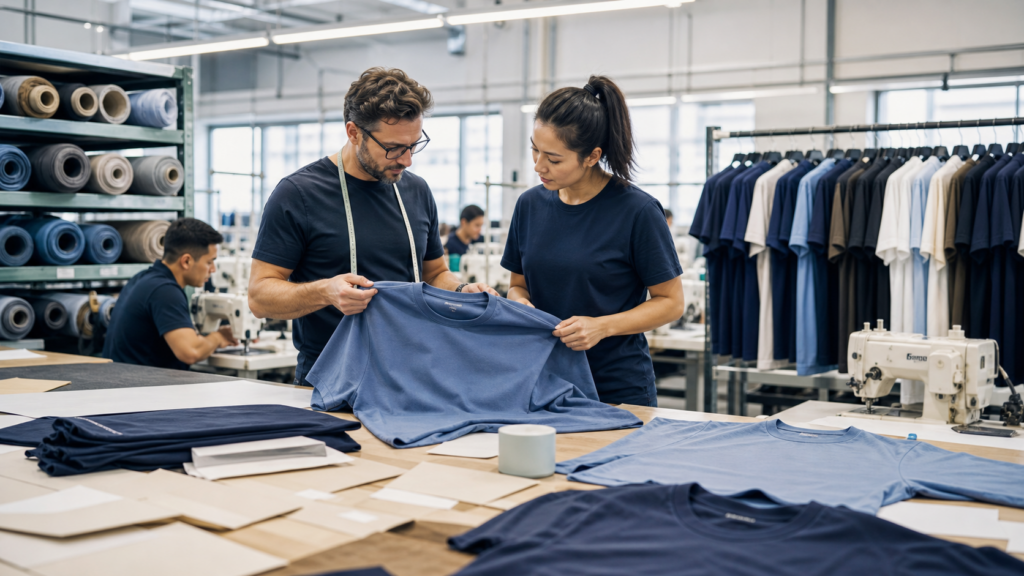
Finding the right custom t-shirt manufacturers is an important step for fashion brands, startups, retailers, promotional businesses, and companies developing their own apparel collections. A T-shirt may look like a simple garment, but creating a consistent product involves fabric selection, measurements, pattern development, construction, decoration, quality control, labeling, packaging, and production planning.
Working with an experienced manufacturer can help turn a design concept into a finished product that matches your specifications. The right partner can also make it easier to manage sampling, production quantities, branding, and future reorders.
However, not every manufacturer provides the same services. Some specialize in basic T-shirts, while others offer cut-and-sew production, private labeling, custom printing, embroidery, packaging, and broader apparel development services.
Choosing the right manufacturing partner starts with understanding what your brand needs and how the production process works.
What Are Custom T-Shirt Manufacturers?
Custom T-shirt manufacturers produce shirts according to a brand’s specific requirements rather than simply supplying standard garments.
Customization can involve many different elements, including:
- Fabric type
- Fabric weight
- Color
- Fit
- Neck style
- Sleeve length
- Measurements
- Stitching
- Graphics
- Printing
- Embroidery
- Labels
- Tags
- Packaging
A brand may provide a complete technical specification or work with a manufacturer to develop the product from an initial concept.
The manufacturing process can therefore range from relatively simple customization to complete cut-and-sew development.
Why Custom T-Shirt Manufacturing Matters
A custom T-shirt gives a brand greater control over the final product.
Instead of choosing an existing shirt and adding a logo, a business can develop a garment around its own design requirements.
This can be useful for brands that want a specific:
- Fit
- Fabric feel
- Silhouette
- Color
- Graphic placement
- Brand identity
- Product experience
Custom production can also help create products that are more distinctive than generic apparel.
For fashion companies, that distinction can become an important part of product positioning.
Custom T-Shirts vs. Printed Blank T-Shirts
These two approaches are often confused.
A printed blank T-shirt starts with an existing garment. The brand adds a graphic, logo, embroidery, or other decoration.
Custom manufacturing can go much further.
A custom T-shirt may be developed from the fabric itself, allowing the brand to control the construction and specifications.
Blank Apparel
Blank apparel can be useful when:
- You need a simple product
- Speed is important
- You do not need a unique fit
- The existing garment already meets your requirements
- You want to add graphics or branding
Custom Cut-and-Sew Apparel
Cut-and-sew production can be useful when:
- You need a unique silhouette
- You want specific fabric characteristics
- You require custom measurements
- You need unique construction
- You are developing a fashion collection
The right option depends on the product and budget.
Types of Custom T-Shirts You Can Manufacture
T-shirts are available in many different styles.
Crew Neck T-Shirts
Crew neck shirts have a traditional rounded neckline.
They are popular because they work across casual, lifestyle, retail, and promotional collections.
A custom crew neck can be adjusted through fabric weight, fit, sleeve shape, neckline construction, color, and branding.
V-Neck T-Shirts
V-neck T-shirts provide a different neckline shape and can be used for casual, lifestyle, or corporate apparel.
The depth and proportions of the V-neck can be customized according to the desired design.
Oversized T-Shirts
Oversized shirts have become especially popular in streetwear and contemporary fashion.
Manufacturers need to carefully control:
- Shoulder width
- Body length
- Sleeve length
- Sleeve opening
- Neckline
- Overall proportions
An oversized shirt should look intentionally designed rather than simply being a larger standard size.
Long-Sleeve T-Shirts
Long-sleeve T-shirts can extend a collection into cooler seasons.
They can be produced with different fabric weights and may include cuffs, graphics, embroidery, or layered construction.
Polo T-Shirts
Polo-style shirts provide a more structured alternative to standard T-shirts.
They can be useful for:
- Corporate apparel
- Casual uniforms
- Lifestyle collections
- Retail clothing
- Hospitality businesses
The Custom T-Shirt Manufacturing Process
A professional manufacturing process usually follows several stages.
The exact workflow varies depending on the manufacturer and project.
1. Consultation and Planning
The process begins by discussing the product.
You may need to provide information about:
- Product type
- Target customer
- Quantity
- Design
- Fabric
- Color
- Fit
- Branding
- Timeline
Affix Apparel describes its T-shirt manufacturing process as beginning with consultation and design discussions before moving into sampling, manufacturing, quality control, and delivery.
2. Design Development
The design needs to be translated into specifications that a production team can understand.
This may involve:
- Sketches
- Reference garments
- Measurements
- Artwork
- Fabric references
- Construction instructions
A detailed specification reduces uncertainty during production.
3. Fabric Selection
Fabric selection can have a major effect on the finished shirt.
Factors can include:
- Fiber composition
- Weight
- Texture
- Stretch
- Breathability
- Durability
- Shrinkage
- Color
- Intended use
4. Pattern Development
For cut-and-sew T-shirts, the pattern defines the shape of each garment component.
The pattern determines important elements such as:
- Body width
- Body length
- Shoulder shape
- Sleeve dimensions
- Neck opening
- Armhole construction
A well-developed pattern helps create a consistent fit.
5. Sample Production
Before bulk production, a sample allows the brand to evaluate the actual garment.
This is an important stage because design files do not always reveal how a garment will look or feel when physically produced.
6. Sample Review
Review the sample carefully.
Check:
- Measurements
- Fit
- Fabric
- Color
- Stitching
- Neckline
- Sleeves
- Print placement
- Embroidery
- Labels
Any necessary changes should be communicated before bulk production.
7. Bulk Manufacturing
Once the sample and specifications are approved, the manufacturer can proceed with production.
The production stage can involve:
- Fabric preparation
- Cutting
- Sewing
- Decoration
- Labeling
- Finishing
- Inspection
- Packaging
8. Quality Control
Quality checks help identify defects and inconsistencies.
Affix Apparel states that its custom T-shirt production includes quality control throughout the process.
Why Fabric Selection Matters
Fabric is one of the most important components of a T-shirt.
Two shirts with identical designs can feel completely different because of their fabrics.
Cotton
Cotton is widely used for casual T-shirts because of its familiar feel and versatility.
Different cotton fabrics can vary significantly in weight, softness, texture, and durability.
Cotton Blends
Blended fabrics combine different fibers to achieve specific characteristics.
Depending on the blend, manufacturers can create garments with different levels of stretch, durability, softness, or performance.
Polyester
Polyester can be useful for activewear and performance-oriented products.
It can also work well with certain printing techniques.
Organic or Recycled Materials
Brands focused on sustainability may explore organic, recycled, or other preferred materials.
However, businesses should verify material claims and certifications rather than relying solely on marketing language.
Understanding T-Shirt Weight
Fabric weight can influence how a T-shirt feels and looks.
Lightweight fabrics can create a softer, more breathable garment.
Heavier fabrics can create a more structured appearance.
Streetwear brands may prefer heavier T-shirts for an oversized or premium silhouette, while summer collections may favor lighter materials.
The ideal weight depends on the intended use.
Importance of T-Shirt Fit
Fit is one of the most important factors in apparel.
A shirt can have excellent fabric and decoration but still fail if the fit is wrong.
Common fit categories include:
- Slim
- Regular
- Relaxed
- Oversized
- Boxy
- Cropped
Your manufacturer should have clear measurements for every relevant size.
Creating a Size Chart
A size chart helps maintain consistency.
It can include measurements such as:
- Chest
- Shoulder width
- Body length
- Sleeve length
- Sleeve opening
- Neck width
Different brands may use different measurement systems.
Avoid assuming that a generic size chart will work for your target audience.
Why Sampling Is Essential
Sampling allows you to test the product before committing to a larger quantity.
It can identify issues such as:
- Incorrect proportions
- Poor fabric choice
- Incorrect colors
- Uncomfortable neckline
- Unexpected shrinkage
- Printing problems
- Incorrect labels
Affix Apparel states that it provides samples for approval as part of its production process and requires production approval before manufacturing proceeds.
Printing Options for Custom T-Shirts
Custom T-shirt manufacturers may offer multiple decoration techniques.
Screen Printing
Screen printing is commonly used for graphic T-shirts.
It can be suitable for bold artwork and larger production runs.
The final result depends on the artwork, ink, fabric, colors, and production process.
Embroidery
Embroidery creates a raised stitched design.
It can work particularly well for smaller logos or premium branding.
However, highly detailed artwork may need to be simplified before embroidery.
Sublimation
Sublimation is commonly used with suitable synthetic fabrics.
It can be useful for detailed designs and certain sportswear applications.
Affix Apparel lists screen printing, embroidery, and all-over sublimation among its customization capabilities.
Heat Transfer
Heat transfer applies a design to the garment using heat and pressure.
It can be suitable for certain small-batch and customized applications.
The best method depends on the garment, artwork, quantity, and desired appearance.
Private Label T-Shirt Manufacturing
Private labeling allows brands to create T-shirts with their own branding.
A private-label T-shirt can include:
- Custom neck labels
- Woven labels
- Printed labels
- Size labels
- Hang tags
- Packaging
- Brand-specific artwork
Affix Apparel offers private-label T-shirt manufacturing and describes customization of fabric, colors, decoration, labels, and other product elements.
For a fashion brand, private labeling can create a more consistent customer experience.
Custom T-Shirt Packaging
Packaging should be considered part of product development.
Depending on the sales channel, brands may use:
- Poly bags
- Branded bags
- Boxes
- Tissue paper
- Hang tags
- Product cards
- Custom inserts
Affix Apparel lists custom apparel packaging bags as part of its manufacturing services.
Packaging requirements should be communicated before production begins.
Minimum Order Quantities
Minimum order quantity, commonly called MOQ, is an important factor when choosing a manufacturer.
The MOQ represents the minimum quantity required for a particular manufacturing service.
Affix Apparel’s published information lists different minimums depending on the service. Its FAQ states that screen printing, garment embroidery, and dye-sublimation orders can start at 50 pieces per design, while cut-and-sew manufacturing and woven labels have different minimums.
MOQs can affect how much inventory you need to purchase upfront.
Why Lower MOQs Help New Brands
A startup may not know how many units a new product will sell.
A smaller initial order can reduce inventory exposure and allow the brand to test:
- Product demand
- Customer preferences
- Sizes
- Colors
- Pricing
- Marketing
If a product performs well, the brand can place larger reorders.
Questions to Ask Custom T-Shirt Manufacturers
Before choosing a manufacturing partner, ask detailed questions.
Production Questions
- What types of T-shirts do you manufacture?
- Do you provide cut-and-sew production?
- What are your minimum order quantities?
- What is the estimated production timeline?
- Can you handle repeat orders?
Fabric Questions
- What fabrics are available?
- Can I request a specific fabric weight?
- Can you source custom colors?
- Can I provide my own fabric?
- Do you provide fabric samples?
Customization Questions
- Can you create custom patterns?
- Can you produce custom measurements?
- Do you offer screen printing?
- Do you offer embroidery?
- Do you provide sublimation?
- Can you create private labels?
Quality Questions
- How is quality inspected?
- Is there a pre-production sample?
- Can I approve the sample before bulk production?
- What happens if finished garments do not meet the agreed specifications?
How to Compare Manufacturers
Price should not be the only factor.
Create a comparison based on:
| Factor | Manufacturer A | Manufacturer B | Manufacturer C |
|---|---|---|---|
| MOQ | |||
| Sample Process | |||
| Fabric Options | |||
| Customization | |||
| Branding | |||
| Quality Control | |||
| Production Timeline | |||
| Packaging | |||
| Shipping | |||
| Communication |
This can make the decision more objective.
Understanding the Total Cost
The unit price is only one part of the total cost.
Consider:
- Fabric
- Labor
- Pattern development
- Sampling
- Printing
- Embroidery
- Labels
- Packaging
- Quality control
- Shipping
- Duties or other applicable charges
A manufacturer with a slightly higher unit price may still provide better overall value if the process reduces defects or provides more complete services.
Manufacturing for Small Businesses
Small businesses often need flexibility.
A startup may want to produce a limited collection without committing to thousands of units.
Look for manufacturers that can accommodate smaller production runs where appropriate.
Affix Apparel states that it supports startups and offers production quantities beginning at relatively small volumes for certain services.
Before placing an order, confirm the MOQ for your specific garment and customization requirements.
Manufacturing for Established Brands
Established brands may have different priorities.
They may need:
- Higher production capacity
- Consistent repeat orders
- Multiple styles
- Seasonal collections
- Reliable material sourcing
- Detailed quality standards
- Efficient logistics
A manufacturer’s ability to handle your current order is important, but its ability to support future growth can also matter.
Building a Strong Manufacturing Relationship
A good manufacturing relationship depends on clear communication.
Provide complete specifications.
Document changes.
Approve samples carefully.
Keep records of approved measurements and materials.
When production requirements change, communicate those changes clearly.
A manufacturer also needs enough information to understand your expectations.
Strong collaboration can reduce misunderstandings and make future production more efficient.
Common Mistakes to Avoid
Choosing Only by Price
The cheapest quote may not produce the best overall result.
Skipping Samples
A sample is an opportunity to identify problems before bulk production.
Providing Poor Specifications
Unclear instructions can result in unexpected products.
Ordering Too Much Too Early
Large inventory commitments can create financial pressure.
Ignoring Quality Control
Quality problems can damage customer trust and create costly returns.
Failing to Plan Packaging
Packaging changes made late can create unnecessary delays and expenses.
Not Planning for Shipping
Production completion and customer delivery are separate stages.
Creating a Production Checklist
Before approving your order, confirm:
- Final design
- Fabric
- Fabric weight
- Color
- Measurements
- Size grading
- Neck construction
- Sleeve specifications
- Artwork
- Print method
- Embroidery
- Labels
- Tags
- Packaging
- Quantity
- MOQ
- Unit price
- Sample approval
- Production timeline
- Quality requirements
- Delivery details
This checklist provides a clear reference for everyone involved.
Scaling a T-Shirt Brand
A successful first collection can lead to larger orders.
When scaling, do not focus solely on lowering the unit cost.
Consider whether the manufacturer can maintain:
- Consistent measurements
- Consistent fabric
- Consistent colors
- Reliable decoration
- Stable quality
- Production capacity
A product that changes noticeably between batches can create customer complaints and complicate inventory management.
Managing T-Shirt Inventory
Inventory planning is particularly important for apparel because each design may have multiple sizes and colors.
For example, a single shirt available in five sizes and four colors creates 20 separate stock combinations.
Ordering too many units in every variation can tie up capital.
New brands should therefore consider demand carefully and use sales data to guide future production decisions.
Custom T-Shirts for Different Industries
Custom T-shirt manufacturing is not limited to fashion labels.
Businesses may use custom T-shirts for:
- Corporate apparel
- Events
- Sports teams
- Restaurants
- Hospitality
- Retail
- Promotional campaigns
- Schools
- Organizations
- Merchandise
The manufacturing requirements can differ depending on the purpose.
A fashion brand may prioritize unique construction, while an event organizer may prioritize quantity and cost.
What Makes a Good Manufacturing Partner?
A strong manufacturing partner should provide a process that is understandable and manageable.
Important characteristics can include:
- Relevant experience
- Clear communication
- Appropriate MOQs
- Consistent quality
- Sampling
- Production transparency
- Customization capabilities
- Reasonable timelines
- Reliable order handling
The best partner is not necessarily the largest company.
It is the one whose capabilities align with your requirements.
When Should You Start Production?
Start earlier than your final launch date.
The development process may involve multiple rounds of samples.
Allow time for:
- Design adjustments
- Fabric sourcing
- Pattern changes
- Sample production
- Approval
- Bulk manufacturing
- Inspection
- Packaging
- Shipping
A rushed production schedule can increase the risk of errors.
How to Start With a Custom T-Shirt Manufacturer
Begin with a clear product brief.
Describe the shirt you want to produce and provide any available artwork, measurements, references, or technical specifications.
Ask the manufacturer about:
- MOQ
- Fabric options
- Sampling
- Production
- Customization
- Branding
- Quality control
- Pricing
- Timeline
- Shipping
Review the sample carefully before approving bulk production.
Once the specifications are confirmed, keep the approved sample and documentation as references for future orders.
Conclusion
Choosing the right custom t-shirt manufacturers can make a major difference in the development and growth of an apparel brand. From fabric and fit to printing, private labeling, sampling, quality control, and packaging, every detail can influence the final product. Businesses should compare manufacturers based on their complete capabilities rather than focusing only on price. Clear specifications, realistic quantities, careful sample approval, and consistent quality checks can help reduce production problems. Whether you are launching a small clothing brand, developing private-label merchandise, or scaling an established apparel company, a well-organized manufacturing process provides a stronger foundation for producing T-shirts that match your brand’s requirements and customer expectations.
FAQs
What do custom t-shirt manufacturers do?
Custom t-shirt manufacturers produce T-shirts according to a brand’s specifications. Services can include fabric sourcing, pattern development, cut-and-sew production, sampling, printing, embroidery, private labeling, packaging, and quality control.
What is the MOQ for custom T-shirt manufacturing?
MOQ varies by manufacturer, garment type, and customization method. Affix Apparel’s published information lists minimums that vary by service, with some services starting at 50 pieces per design.
Can custom T-shirt manufacturers create my own design?
Yes. Depending on the manufacturer, you can provide your own artwork, measurements, technical specifications, or design concept. Some manufacturers can also assist with design development and product specifications.
Why should I request a sample before bulk production?
A sample allows you to check the fabric, fit, measurements, color, construction, printing, embroidery, and overall appearance before ordering a larger quantity.
Can custom T-shirt manufacturers provide private labeling?
Many manufacturers provide private-label services that can include custom neck labels, woven labels, tags, packaging, and other branding elements.
What fabrics can be used for custom T-shirts?
Common options include cotton, cotton blends, polyester, and other specialized fabrics. The appropriate material depends on the desired fit, weight, comfort, performance, decoration method, and intended use.
How long does custom T-shirt manufacturing take?
The timeline depends on the product, quantity, sampling requirements, materials, customization, and manufacturer capacity. Planning additional time for sample revisions, production, quality control, and shipping is recommended.
Are custom T-shirt manufacturers suitable for startups?
Yes. Startups can benefit from manufacturers that offer smaller production runs and flexible quantities. Smaller initial orders can allow a new brand to test designs and customer demand before scaling production.