
Finding the right clothing manufacturers is one of the most important decisions for a fashion brand. Whether you are launching your first collection, developing a...
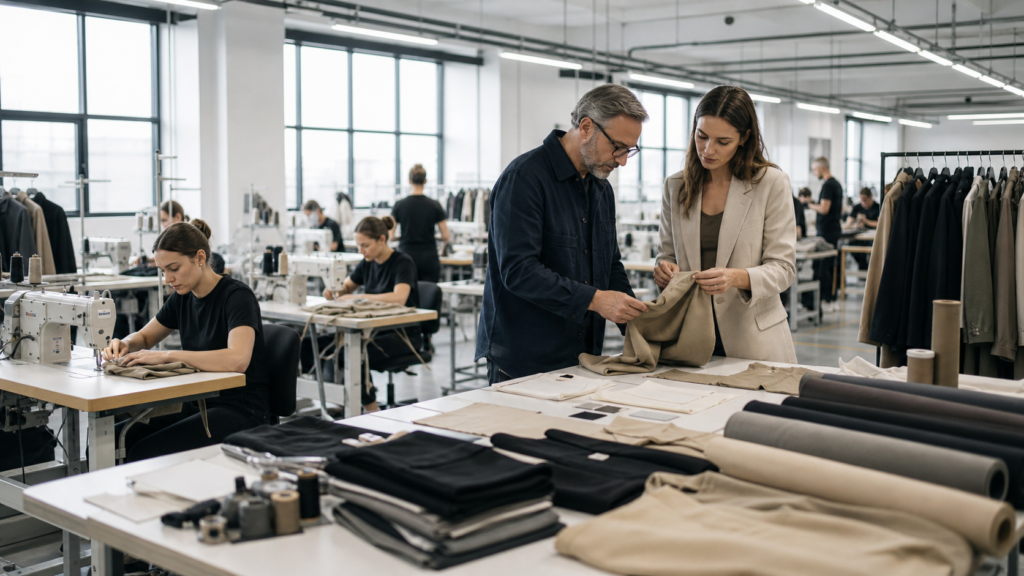
Finding the right clothing manufacturers is one of the most important decisions for a fashion brand. Whether you are launching your first collection, developing a private-label line, or expanding an established apparel business, the manufacturer you choose can influence product quality, production costs, delivery schedules, and your ability to maintain a consistent brand identity.
A clothing manufacturer does much more than sew garments. Depending on the company and the project, manufacturing services can include design development, pattern making, fabric sourcing, sample development, cut-and-sew production, printing, embroidery, private labeling, packaging, quality control, and fulfillment preparation.
The right production partner should therefore fit your specific requirements rather than simply offering the lowest quoted price.
What Are Clothing Manufacturers?
Clothing manufacturers are companies that produce garments for fashion brands, retailers, private labels, organizations, and other businesses.
Their role can range from producing simple garments based on an existing specification to managing the entire product-development process.
A manufacturer may work with:
- T-shirts
- Hoodies
- Sweatshirts
- Jeans
- Jackets
- Dresses
- Activewear
- Sportswear
- Loungewear
- Children’s clothing
- Uniforms
- Streetwear
- Casual clothing
- Accessories
Some manufacturers specialize in particular garment categories, while others offer broader apparel production capabilities.
Why the Manufacturer Matters
Your manufacturing partner directly affects the physical product customers receive.
A strong design can lose its appeal if:
- The fabric feels wrong
- The fit is inconsistent
- Stitching is poor
- Colors vary between batches
- Prints are low quality
- Labels are incorrectly positioned
- Garments arrive damaged
- Production deadlines are missed
Manufacturing is therefore closely connected to customer satisfaction and brand reputation.
A reliable process helps turn a design concept into a finished garment that matches the intended specifications.
Types of Clothing Manufacturers
Different manufacturing models can meet different business needs.
Full-Service Clothing Manufacturers
Full-service manufacturers can support multiple stages of the apparel development process.
This may include design consultation, technical documentation, fabric sourcing, sampling, production, branding, packaging, and shipping.
This approach can be convenient for brands that want fewer separate suppliers.
Cut-and-Sew Manufacturers
Cut-and-sew manufacturers create garments from fabric according to specific patterns and measurements.
The process can include:
- Pattern development
- Fabric selection
- Fabric cutting
- Garment assembly
- Stitching
- Finishing
- Quality inspection
This type of production provides significant control over garment construction.
Private Label Manufacturers
Private-label manufacturing allows businesses to sell products under their own brand identity.
Services can include custom labels, tags, branding elements, packaging, and other details.
Weft Apparel states that its private-label services include custom branding, labels, and tags for clothing brands.
Custom Apparel Manufacturers
Custom apparel manufacturers create garments according to a brand’s specifications rather than simply selling standard wholesale products.
Customization can involve:
- Fabric
- Fit
- Color
- Pattern
- Embroidery
- Labels
- Trims
- Packaging
This can be especially useful for brands that want a distinctive product rather than generic merchandise.
What Products Can Clothing Manufacturers Produce?
The capabilities of manufacturers vary considerably.
Some focus on basic garments, while others support more specialized apparel.
Weft Apparel, for example, lists products including T-shirts, hoodies, sports apparel, casual wear, jeans, jackets, tracksuits, children’s clothing, swimwear, loungewear, lingerie, pet clothing, and other apparel categories.
T-Shirts
T-shirts are among the most common garments for emerging brands.
They can be customized through:
- Fabric weight
- Neck construction
- Fit
- Sleeve length
- Dye color
- Printing
- Embroidery
- Labels
- Packaging
Hoodies and Sweatshirts
Hoodies require attention to fabric weight, construction, ribbing, hood shape, drawstrings, pockets, and finishing.
A premium hoodie may require substantially different specifications from a lightweight promotional sweatshirt.
Denim
Jeans involve specialized construction.
Important factors include:
- Denim weight
- Wash
- Fit
- Hardware
- Stitching
- Pocket construction
- Zippers
- Buttons
- Finishing
Activewear
Activewear requires materials and construction suited to movement and the intended use.
Brands may need to consider stretch, moisture management, durability, seam placement, and garment support.
How to Choose Clothing Manufacturers
Choosing a manufacturer should begin with your product requirements.
Do not start by asking only, “How much does this cost?”
First determine what you need.
Define Your Product
Prepare a basic product brief containing:
- Garment type
- Intended customer
- Target fit
- Fabric preference
- Colors
- Sizes
- Decoration method
- Branding requirements
- Packaging
- Estimated quantity
- Target delivery date
The more clearly you communicate your requirements, the easier it is for a manufacturer to provide a meaningful quotation.
Review Manufacturing Capabilities
A manufacturer may be excellent at T-shirts but unsuitable for technical outerwear.
Check whether the company has experience with your specific product category.
Ask about:
- Relevant garment experience
- Available production techniques
- Fabric sourcing
- Sampling
- Pattern making
- Printing
- Embroidery
- Quality control
- Packaging
- Shipping
Weft Apparel describes an end-to-end process covering design consulting, tech packs, fabric sourcing, sampling, production, branding, packaging, and logistics.
Understand Minimum Order Quantities
Minimum order quantity, or MOQ, is an important consideration for new brands.
An MOQ determines the minimum quantity a manufacturer requires for an order.
Lower MOQs can be helpful for startups because they reduce the amount of inventory that must be purchased upfront.
Weft Apparel currently states that its minimum quantities can start at 50 pieces per color and design.
However, MOQ requirements vary by manufacturer and project.
A custom garment may require a different MOQ from a standard blank product.
Ask What the MOQ Applies To
Do not assume that an MOQ applies to the entire order.
Ask whether it applies to:
- Each design
- Each color
- Each size
- Each fabric
- Each style
This distinction can significantly affect the total production quantity.
Why Tech Packs Matter
A tech pack is a technical document that communicates how a garment should be manufactured.
It can include:
- Measurements
- Construction details
- Materials
- Stitching
- Colors
- Labels
- Trims
- Placement instructions
- Size specifications
- Artwork
- Packaging details
A detailed tech pack reduces ambiguity.
Weft Apparel describes its tech pack service as documentation containing measurements, materials, and specifications intended to support consistent production.
What Happens Without a Good Tech Pack?
Without clear specifications, different people may interpret the design differently.
This can result in:
- Incorrect measurements
- Wrong materials
- Incorrect artwork placement
- Inconsistent stitching
- Unexpected fit
- Packaging errors
A detailed technical document provides a common reference for everyone involved.
Fabric Selection
Fabric can dramatically affect the appearance, comfort, durability, and price of a garment.
Consider:
- Fiber composition
- Weight
- Stretch
- Texture
- Breathability
- Durability
- Shrinkage
- Colorfastness
- Intended use
For example, the fabric appropriate for a lightweight summer T-shirt may be unsuitable for a structured jacket.
Request Fabric Samples
Before approving bulk production, review fabric samples.
Evaluate how the fabric:
- Looks
- Feels
- Stretches
- Washes
- Holds color
- Handles printing
- Performs during wear
For important products, testing the actual fabric before mass production can help reduce surprises.
The Importance of Samples
A production sample is one of the most important checkpoints in apparel manufacturing.
It gives you an opportunity to evaluate the physical garment before committing to a larger production run.
Check:
- Fit
- Measurements
- Fabric
- Color
- Stitching
- Seams
- Prints
- Embroidery
- Labels
- Trims
- Overall appearance
Do not approve a sample casually.
If something is wrong, communicate the change before production begins.
Sample Approval
The approved sample should become the reference point for bulk manufacturing.
Keep detailed records of the approved version.
Document important details such as:
- Measurements
- Fabric
- Color
- Artwork
- Label placement
- Packaging
- Construction
This provides a stronger basis for quality control later.
Quality Control in Clothing Manufacturing
Quality control should be built into the production process.
It should not be treated as something that happens only after all garments are finished.
Manufacturers can inspect different stages of production.
Pre-Production Inspection
Before manufacturing begins, confirm:
- Fabric
- Trim
- Labels
- Patterns
- Artwork
- Approved sample
- Production specifications
During Production
Inspecting garments during production can identify problems before the entire order is completed.
Potential issues include:
- Incorrect stitching
- Fabric defects
- Measurement inconsistencies
- Printing problems
- Color variation
Final Inspection
A final inspection checks completed garments before shipment.
The inspection can examine:
- Quantity
- Appearance
- Measurements
- Construction
- Packaging
- Labeling
- Defects
Printing Options
Clothing manufacturers may offer different decoration methods.
The appropriate technique depends on the fabric, design, quantity, and desired appearance.
Screen Printing
Screen printing is widely used for garments such as T-shirts and hoodies.
It can work well for designs requiring strong, durable printed graphics.
Sublimation
Sublimation is commonly used for suitable polyester-based garments and can create detailed all-over graphics.
Weft Apparel describes sublimation as a printing option particularly suited to activewear and polyester-based clothing.
Embroidery
Embroidery creates a stitched design rather than a printed image.
It can be useful for:
- Polos
- Jackets
- Caps
- Workwear
- Premium branded apparel
The final appearance depends on thread, design complexity, garment construction, and embroidery settings.
Private Labeling
Private labeling allows a garment to carry your brand identity.
Branding elements can include:
- Neck labels
- Woven labels
- Printed labels
- Hang tags
- Size labels
- Packaging
- Custom inserts
A consistent branding system helps create a cohesive customer experience.
However, branding should be considered early in development.
Changing labels or packaging late in production can create additional costs or delays.
Custom Packaging
Packaging is part of the customer experience.
Depending on your business model, manufacturers may be able to provide:
- Branded bags
- Boxes
- Tags
- Inserts
- Tissue
- Stickers
- Shipping-ready packaging
Weft Apparel lists custom packaging among its apparel services, including custom bags, boxes, tags, and inserts.
The packaging should match your product, target audience, shipping method, and budget.
Ethical and Sustainable Manufacturing
Sustainability has become an important consideration for many apparel businesses.
Brands may want to understand:
- Where fabrics are sourced
- How workers are treated
- Factory working conditions
- Environmental practices
- Certifications
- Waste management
- Packaging materials
However, businesses should distinguish between verified manufacturing practices and vague sustainability language.
Ask manufacturers for specific information when sustainability is an important part of your brand positioning.
Weft Apparel states that it works with certified mills and describes its factories as ethically audited.
Clothing Manufacturing Costs
There is no single price for producing a garment.
The final cost can depend on:
- Garment type
- Fabric
- Quantity
- Construction complexity
- Printing
- Embroidery
- Labels
- Packaging
- Sampling
- Customization
- Shipping
A simple T-shirt may require fewer production steps than a technical jacket with multiple panels, trims, zippers, and specialized fabric.
Why the Cheapest Quote May Not Be Best
A low quotation can become expensive if it results in:
- Poor quality
- High defect rates
- Delayed production
- Incorrect specifications
- Additional shipping
- Rework
Compare the complete manufacturing proposition rather than the unit price alone.
Production Timeline
Apparel production usually involves several stages.
A typical workflow can include:
- Initial consultation
- Design review
- Tech pack development
- Fabric sourcing
- Pattern creation
- Sample development
- Sample revisions
- Sample approval
- Bulk production
- Quality control
- Packaging
- Shipping
The timeline depends on the complexity of the project and the manufacturer’s capacity.
Weft Apparel describes a process that begins with consultation, moves through sample or prototype development, and proceeds to bulk production after approval.
Planning Around Deadlines
Fashion brands often work around product launches and seasonal demand.
If you have a fixed launch date, communicate it early.
Build additional time into your schedule for:
- Sample revisions
- Material delays
- Production issues
- Quality inspections
- Shipping
- Customs
- Unexpected changes
A realistic schedule is better than assuming every stage will happen without delays.
Local vs. Overseas Manufacturing
Brands can choose manufacturers based in their home country or work with overseas production partners.
Each option has potential advantages and challenges.
Local Manufacturing
Potential benefits can include:
- Easier communication
- Faster physical access
- Shorter shipping distances
- Easier factory visits
- Simpler coordination
Potential challenges may include higher production costs depending on the location and product.
Overseas Manufacturing
Potential benefits can include:
- Large production capacity
- Established textile supply chains
- Competitive manufacturing costs
- Access to specialized production clusters
Potential challenges can include:
- Longer shipping times
- Communication differences
- Import requirements
- Less direct factory access
The right choice depends on your product, target market, volume, budget, and priorities.
Questions to Ask Clothing Manufacturers
Before selecting a manufacturer, ask detailed questions.
Production Questions
- What garments do you specialize in?
- What production techniques do you offer?
- What is your MOQ?
- Can you handle small-batch production?
- What is your typical production timeline?
Product Questions
- Can you source specific fabrics?
- Can you develop patterns?
- Can you create samples?
- Can you follow an existing tech pack?
- Can you customize measurements?
Branding Questions
- Do you offer private labels?
- Can you produce custom tags?
- Can you handle embroidery?
- Do you offer screen printing?
- Can you provide custom packaging?
Quality Questions
- How do you inspect finished garments?
- How do you manage fabric defects?
- What happens if products fail inspection?
- Can you provide production samples?
How to Compare Manufacturers
Create a comparison table rather than relying on memory.
| Factor | Manufacturer A | Manufacturer B | Manufacturer C |
|---|---|---|---|
| MOQ | |||
| Sample Cost | |||
| Production Time | |||
| Fabric Options | |||
| Customization | |||
| Branding | |||
| Quality Control | |||
| Packaging | |||
| Shipping | |||
| Communication |
This makes differences easier to identify.
Working With Clothing Manufacturers as a Startup
Startups often have limited capital.
That makes inventory management especially important.
A smaller production run can allow you to test:
- Product-market fit
- Pricing
- Customer response
- Sizing
- Colors
- Marketing
- Repeat-purchase behavior
If the product performs well, you can consider increasing future production.
Weft Apparel specifically promotes low MOQs for emerging brands and states that its minimum order can start at 50 pieces per color and design.
Scaling Production
As your brand grows, manufacturing requirements change.
A supplier that works well for a small launch may not necessarily be the best fit for significantly larger production.
As volume increases, review:
- Production capacity
- Lead times
- Quality consistency
- Material availability
- Communication
- Logistics
- Pricing
Scaling should not sacrifice product quality.
Managing Inventory
Inventory ties up capital.
Ordering too much can create storage problems and markdowns.
Ordering too little can lead to stockouts and missed sales.
Use historical sales data where available and make forecasts based on realistic assumptions.
New brands should be particularly careful when predicting demand for products without an established sales history.
Building a Long-Term Manufacturing Relationship
A strong relationship with a manufacturer can become a valuable business asset.
Consistent communication can help both sides understand:
- Product standards
- Quality expectations
- Production preferences
- Packaging requirements
- Timelines
- Future product plans
Clear documentation remains important even when the relationship becomes familiar.
Verbal assumptions should not replace written specifications.
Common Manufacturing Mistakes
Choosing Based Only on Price
Price matters, but quality and reliability matter too.
Skipping the Sample Stage
A sample gives you an opportunity to identify problems before mass production.
Providing Incomplete Specifications
Manufacturers cannot reliably produce what has not been clearly defined.
Ordering Too Much
Large quantities may lower unit costs but increase inventory risk.
Ignoring Packaging
Packaging affects product presentation and customer experience.
Failing to Plan for Shipping
Production completion does not mean the products are immediately available to customers.
Not Documenting Changes
Every approved revision should be recorded.
A Practical Clothing Manufacturing Checklist
Before starting production, confirm:
- Product design
- Tech pack
- Fabric
- Color
- Measurements
- Size grading
- Labels
- Trims
- Artwork
- Printing or embroidery
- Packaging
- MOQ
- Unit cost
- Sample approval
- Production timeline
- Quality standards
- Shipping arrangements
Having these details confirmed reduces avoidable misunderstandings.
Why Full-Service Manufacturing Can Be Useful
Managing separate suppliers for design, patterns, fabric, production, printing, labels, packaging, and shipping can become complicated.
A full-service manufacturer can consolidate several stages.
This can reduce the number of vendors a brand needs to coordinate.
However, businesses should still evaluate each service independently and confirm that the manufacturer can meet their specific standards.
The Future of Apparel Manufacturing
Apparel production continues to evolve.
Brands are increasingly interested in:
- Smaller production runs
- Faster product development
- Sustainable materials
- Better traceability
- Customization
- On-demand production
- Digital product development
- More efficient supply chains
At the same time, global supply chains remain sensitive to shipping disruptions, trade policy, and changing consumer demand. Recent industry developments show manufacturers evaluating geographic diversification and new production locations as brands reconsider supply-chain strategies.
For brands, this makes manufacturing flexibility increasingly important.
How to Start Working With a Clothing Manufacturer
The process can begin with a simple project brief.
Prepare your designs and specifications.
Then contact manufacturers that appear to match your product requirements.
Request information about:
- MOQ
- Sampling
- Production
- Materials
- Pricing
- Branding
- Quality control
- Timelines
Compare the responses carefully.
Once you identify a suitable partner, develop the sample, make revisions, approve the final version, and establish clear production requirements before moving into bulk manufacturing.
Conclusion
Choosing the right clothing manufacturers is a strategic decision that can influence the quality, cost, consistency, and growth of an apparel brand. The best manufacturing partner should match your product requirements, order volume, budget, timeline, branding needs, and quality expectations. From tech packs and fabric sourcing to sampling, cut-and-sew production, printing, private labeling, packaging, and quality control, every stage deserves careful attention. Start with clear specifications, request samples, compare manufacturers beyond price, and document your final requirements before bulk production. With a well-managed manufacturing process and a reliable production partner, brands can turn creative concepts into finished apparel while building a stronger foundation for long-term growth.
FAQs
What do clothing manufacturers do?
Clothing manufacturers produce garments for brands, retailers, private labels, and other businesses. Depending on their capabilities, they may provide design development, pattern making, fabric sourcing, sampling, cut-and-sew production, printing, embroidery, labeling, packaging, and shipping.
How do I choose the right clothing manufacturers?
Start by identifying your product, fabric, quantity, quality requirements, budget, and timeline. Then compare manufacturers based on relevant experience, MOQ, sampling, production capabilities, quality control, communication, customization, and overall costs.
What is a clothing manufacturer’s MOQ?
MOQ means minimum order quantity. It is the smallest quantity a manufacturer requires for a production order. The MOQ can apply to an entire order, individual designs, colors, or other production variables depending on the manufacturer.
Can clothing manufacturers make custom designs?
Yes. Custom manufacturers can produce garments according to specific designs and technical specifications. Customization can include fabric, fit, colors, measurements, prints, embroidery, labels, trims, and packaging.
What is a tech pack in clothing manufacturing?
A tech pack is a technical document that communicates how a garment should be produced. It can contain measurements, materials, construction details, colors, artwork, labels, trims, and other manufacturing specifications.
Why are samples important before bulk production?
Samples allow a brand to evaluate the actual garment before committing to a larger production run. They can reveal problems with fit, fabric, measurements, construction, color, printing, embroidery, or labeling.
Do clothing manufacturers offer private labeling?
Many manufacturers offer private-label services. These can include custom labels, tags, branding, packaging, and other elements that allow a business to sell garments under its own brand identity.
Can startups work with clothing manufacturers?
Yes. Startups can work with manufacturers that offer small-batch production and lower MOQs. Starting with a manageable quantity can help a new brand test products and customer demand before committing to larger inventory levels.