
Water treatment technology continues to improve as industries look for more efficient ways to manage water quality, oxygen levels, contaminants, and biological activity. nano bubble...
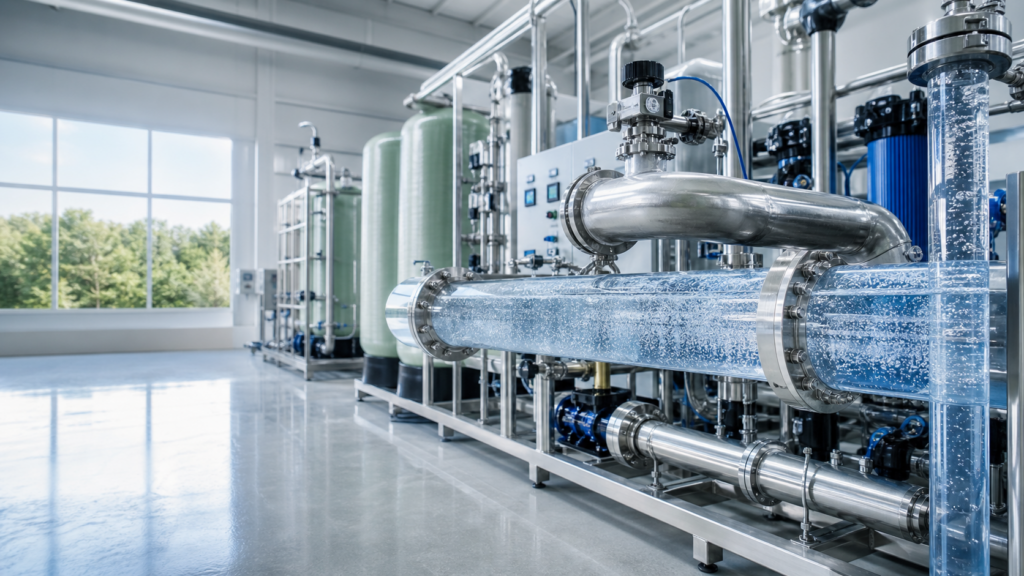
Water treatment technology continues to improve as industries look for more efficient ways to manage water quality, oxygen levels, contaminants, and biological activity. nano bubble water treatment is one of the technologies attracting attention because it uses extremely small gas bubbles that behave differently from ordinary bubbles in water. Their tiny size allows them to remain suspended for longer periods and interact closely with particles, microorganisms, dissolved substances, and aquatic environments.
Unlike large bubbles that quickly rise to the surface and disappear, nanobubbles can remain distributed throughout the water. This feature makes them useful in several treatment processes, including oxygenation, oxidation, flotation support, irrigation, wastewater management, aquaculture, and industrial water systems.
Understanding how nanobubbles work can help facility managers, water treatment professionals, agricultural operators, and business owners decide whether the technology fits their water management needs.
What Is Nano Bubble Water Treatment?
Nano bubble water treatment is a process that introduces extremely small gas bubbles into water to support physical, chemical, or biological treatment processes.
These bubbles are generally much smaller than conventional aeration bubbles. Because of their microscopic size, they do not behave in the same way as visible bubbles produced by standard diffusers or aerators.
Traditional bubbles usually rise quickly because of buoyancy. Nanobubbles can remain suspended in water for much longer periods. This increases the amount of time the gas remains in contact with the surrounding water.
The gas used depends on the treatment goal. Common options may include:
- Oxygen
- Air
- Ozone
- Carbon dioxide
- Other application-specific gases
For example, oxygen nanobubbles may support dissolved oxygen levels in biological systems, while ozone nanobubbles may be used where oxidation is required.
The technology does not replace every conventional treatment process. Instead, it can support or improve specific parts of a water treatment system.
How Do Nanobubbles Work in Water?
Nanobubbles work mainly because of their size, stability, and large surface area compared with their volume.
When gas is introduced as very small bubbles, a greater amount of bubble surface becomes available to interact with the water. This can improve contact between the gas and substances present in the water.
Nanobubbles may also remain dispersed rather than rapidly escaping to the atmosphere.
Longer Gas-Water Contact
Ordinary bubbles often reach the water surface within seconds or minutes.
Nanobubbles can stay in suspension much longer. This extended contact time may improve the transfer of certain gases into the water.
This characteristic is particularly useful when oxygen or ozone needs time to react or dissolve.
High Surface Area
A large number of tiny bubbles provides more combined surface area than a smaller number of large bubbles containing a similar gas volume.
More surface area means more opportunity for gas-liquid interaction.
This can improve treatment efficiency in applications where contact between the gas and water is important.
Interaction With Particles
Nanobubbles can interact with fine suspended particles and contaminants.
In certain treatment systems, this interaction may support separation, flotation, oxidation, or biological processes.
The actual effect depends on water chemistry, bubble size, gas type, treatment design, and operating conditions.
How Are Nanobubbles Generated?
Nanobubbles require specialized equipment because simply pumping air into water usually produces much larger bubbles.
Different systems use different generation methods.
Venturi-Based Systems
Venturi systems create a pressure difference as water moves through a narrowed section of piping.
Gas can be introduced into this low-pressure area and mixed with the moving water.
Additional processes may then reduce the gas bubbles to very small sizes.
Hydrodynamic Cavitation
Hydrodynamic cavitation creates changes in pressure inside flowing water.
These pressure changes can help form and collapse gas cavities, producing extremely fine bubbles under controlled conditions.
Gas Injection and Mixing
Some systems combine pressurized gas injection with high-shear mixing or specially designed pumps.
The goal is to distribute gas into the water as uniformly and finely as possible.
Membrane-Based Generation
Special membranes containing very small pores may also introduce gas into flowing water.
The equipment design determines bubble size, gas-transfer efficiency, energy demand, and suitability for different water conditions.
Main Benefits of Nano Bubble Water Treatment
The usefulness of nanobubbles depends on the application, but several potential advantages explain why the technology is used across different industries.
Improved Dissolved Oxygen Levels
One of the most common applications involves oxygenation.
Because nanobubbles can stay suspended for longer periods, oxygen has more time to move from the gas phase into the surrounding water.
Higher dissolved oxygen can support aerobic microorganisms, aquatic environments, irrigation water, and biological wastewater processes.
Better oxygen distribution may also reduce areas where water becomes oxygen-deficient.
Efficient Gas Transfer
Gas transfer is important in many treatment systems.
If conventional aeration releases large bubbles that quickly escape, part of the supplied gas may be lost before it dissolves or reacts.
Nanobubbles increase contact time and surface area, which may improve gas utilization under suitable conditions.
This can be valuable when using oxygen or ozone, where efficient delivery affects overall system performance.
Better Water Circulation Support
Nanobubbles can complement water circulation systems by distributing gas throughout a larger volume of water.
Uniform treatment is important in ponds, tanks, reservoirs, industrial process water, and biological reactors.
Good circulation helps minimize stagnant zones and improves contact between treated water and the introduced gas.
Support for Biological Treatment
Many wastewater treatment systems rely on microorganisms.
Aerobic microorganisms require oxygen to break down organic material.
If oxygen delivery is poor, biological treatment can become less efficient.
Oxygen nanobubbles may help maintain dissolved oxygen levels and improve oxygen availability throughout biological treatment zones.
However, the overall result still depends on microbial activity, organic loading, temperature, pH, retention time, and system design.
Oxidation Support
When ozone is used instead of air or oxygen, nanobubbles can provide extended contact between ozone and water.
Ozone is a strong oxidizing gas that can react with certain organic compounds, odors, microorganisms, and dissolved contaminants.
Nanobubble generation may help improve the way ozone is delivered into the water.
Ozone treatment still requires careful system design because ozone concentration, contact time, water chemistry, and safety controls strongly affect performance.
Potential Reduction of Odors
Unpleasant odors in wastewater, ponds, and industrial water systems are often associated with biological activity and low-oxygen conditions.
Improved oxygenation can sometimes help reduce anaerobic conditions that contribute to odor formation.
Ozone nanobubbles may also support oxidation of some odor-causing compounds.
The effectiveness depends on the specific source of the odor rather than the presence of nanobubbles alone.
Nano Bubble Water Treatment in Wastewater
Wastewater treatment is one of the major areas where nanobubble technology can be applied.
Wastewater may contain organic matter, suspended solids, microorganisms, nutrients, chemicals, and other contaminants.
Different treatment stages require different processes.
Nanobubbles are usually added to support a specific treatment function rather than serving as the entire wastewater treatment process.
Aerobic Biological Treatment
Aerobic treatment depends on bacteria that use oxygen while breaking down organic material.
Nanobubble oxygenation can increase the contact time between oxygen and wastewater.
This may help maintain more consistent dissolved oxygen conditions in treatment tanks.
Sludge and Organic Matter Management
Improved oxygenation can support the biological processes responsible for breaking down organic material.
The exact effect on sludge depends on system conditions and the microorganisms involved.
Operators should monitor performance rather than assuming that higher oxygen automatically reduces all sludge-related problems.
Treatment Ponds and Lagoons
Wastewater lagoons can experience uneven oxygen distribution.
Surface aerators may provide strong mixing near the equipment while leaving other areas with lower dissolved oxygen.
Nanobubble systems can be used with circulation equipment to distribute oxygen more widely through the water body.
Nano Bubble Technology in Drinking Water Treatment
Nanobubbles may also support certain drinking water treatment stages, depending on local treatment standards and system design.
They can assist with oxidation, aeration, dissolved gas management, and the treatment of specific water-quality problems.
However, drinking water systems require careful control because any technology used must fit established water quality and safety requirements.
Nanobubbles should therefore be treated as one part of a complete treatment process rather than a standalone guarantee of safe drinking water.
Nanobubbles and Ozone Water Treatment
Ozone and nanobubble technology are often discussed together.
Ozone is used in water treatment because of its strong oxidation properties.
When ozone is introduced as conventional bubbles, some of it may rise to the surface before reacting.
Converting ozone into extremely fine bubbles can increase the available contact area between the gas and water.
How Ozone Nanobubbles May Help
Ozone nanobubbles may support:
- Oxidation of certain dissolved compounds
- Odor control
- Color reduction
- Microbial control
- Treatment of specific organic contaminants
- Improved ozone-water contact
The exact treatment result depends on ozone dose, water quality, contact time, temperature, pH, organic load, and equipment configuration.
Ozone should always be handled with proper controls because high concentrations can be harmful to people.
Nano Bubble Water Treatment in Agriculture
Agriculture is another area where nanobubble systems are being explored and used.
Water quality can directly affect plant roots, irrigation equipment, nutrient delivery, and growing conditions.
Irrigation Water Oxygenation
Plant roots require oxygen for healthy metabolic activity.
In waterlogged or poorly aerated growing systems, root-zone oxygen can become limited.
Oxygen-rich irrigation water may help improve oxygen availability around the root zone, particularly in controlled growing environments.
Hydroponic Systems
Hydroponic crops grow without traditional soil and rely heavily on water-based nutrient solutions.
Maintaining dissolved oxygen can be important because plant roots remain in close contact with water.
Nanobubble oxygenation can help distribute oxygen through nutrient solutions while limiting the need for very aggressive bubbling.
Greenhouse Operations
Greenhouses often use recirculating irrigation or fertigation systems.
Nanobubbles can be integrated into these systems to support water oxygenation and circulation.
Performance should still be monitored through dissolved oxygen measurements and crop response.
Nano Bubble Water Treatment in Aquaculture
Fish, shrimp, and other aquatic organisms depend on adequate dissolved oxygen.
Low oxygen can cause stress, poor feeding behavior, slower growth, and serious losses in extreme cases.
Nanobubble systems can improve oxygen distribution in aquaculture environments.
Better Oxygen Availability
Instead of relying entirely on large bubbles at the water surface, nanobubbles can remain dispersed throughout the water column.
This may improve access to dissolved oxygen across a pond or tank.
Support During High-Demand Periods
Oxygen demand can increase because of:
- High stocking density
- Warm water
- Heavy feeding
- Algae activity
- Organic waste
- Nighttime respiration
Nanobubble oxygenation can be integrated with other aeration systems to help manage these conditions.
Operators should continue using oxygen sensors because water conditions can change rapidly.
Industrial Applications of Nanobubble Water Treatment
Industrial facilities use water for cooling, cleaning, processing, manufacturing, rinsing, and wastewater management.
Each application creates different water-quality challenges.
Nanobubble technology can support several industrial processes.
Process Water
Some manufacturing processes benefit from controlled oxygen levels, oxidation, or improved water quality.
Nanobubbles can be introduced before or during specific treatment stages.
Cooling Water
Cooling systems can experience biological growth, scale, corrosion, and water chemistry changes.
Nanobubbles may be considered as part of broader water management strategies.
The correct treatment method depends on system materials, operating temperature, chemistry, and microbial conditions.
Food Processing
Food processing facilities require careful hygiene and water management.
Nanobubble systems using oxygen or ozone may support certain cleaning or process-water applications.
Any use in food-related environments must be designed around appropriate hygiene and safety controls.
Nano Bubbles vs Traditional Aeration
Traditional aeration and nanobubble systems both introduce gas into water, but the bubble behavior is very different.
Bubble Size
Traditional aeration usually creates visible bubbles.
Nanobubbles are microscopic and may not be visible to the naked eye.
Rising Speed
Large bubbles rise quickly.
Nanobubbles can remain suspended much longer.
Gas Contact
Longer suspension generally provides more opportunity for gas-water interaction.
This is one of the main reasons nanobubbles can be useful in oxygenation and oxidation systems.
Equipment Requirements
Traditional aeration systems can be relatively simple.
Nanobubble generation usually requires specialized pumps, injectors, membranes, or mixing equipment.
Best Choice
Neither option is automatically better in every situation.
Traditional aeration can provide excellent mixing and oxygen transfer in many systems.
Nanobubbles may be more suitable where extended gas contact, fine bubble distribution, or specialized oxidation is required.
In some installations, both technologies are used together.
Factors That Affect Nanobubble Treatment Performance
Installing a nanobubble generator does not automatically guarantee improved water quality.
Several conditions affect performance.
Water Chemistry
pH, salinity, hardness, dissolved minerals, organic content, and other chemical properties influence gas behavior and treatment reactions.
Water Temperature
Temperature affects gas solubility.
Cooler water generally holds more dissolved oxygen than warmer water.
This becomes particularly important in aquaculture and biological treatment systems.
Gas Type
Air, oxygen, ozone, and carbon dioxide have different properties.
The correct choice depends on the treatment objective.
Flow Rate
Water flow must match the treatment system’s capacity.
If flow is too high, the equipment may not achieve the required gas transfer or contact time.
Contaminant Load
Water with high organic or chemical loading may require a larger treatment capacity.
A system designed for clean irrigation water may not perform the same way in heavily contaminated wastewater.
Bubble Generator Design
Not all nanobubble generators operate identically.
Bubble size distribution, gas-transfer efficiency, maintenance needs, pressure requirements, and energy consumption can vary considerably.
How to Choose a Nano Bubble Water Treatment System
Choosing the right system starts with understanding the problem that needs to be solved.
Do not begin by selecting equipment based only on flow rate or generator size.
Define the Treatment Goal
Identify the primary objective.
For example:
- Increase dissolved oxygen
- Improve biological treatment
- Deliver ozone
- Reduce odors
- Support irrigation
- Improve aquaculture conditions
- Treat process water
- Assist oxidation
A clear goal makes system selection much easier.
Test the Water
Water analysis helps identify the conditions the system must handle.
Useful parameters may include:
- Dissolved oxygen
- pH
- Temperature
- Turbidity
- Organic loading
- Suspended solids
- Conductivity
- Chemical contaminants
- Biological activity
Testing also provides a baseline for measuring future performance.
Determine Flow and Volume
A small recirculating tank requires a very different system from a large wastewater lagoon.
Calculate total water volume, circulation rate, required treatment time, and daily flow.
Consider Gas Supply
Air can often be supplied directly from the surrounding environment.
Pure oxygen and ozone require additional equipment.
Gas supply affects operating cost, maintenance, safety, and overall system design.
Check Maintenance Needs
Any water treatment system requires maintenance.
Nanobubble equipment may include pumps, injectors, filters, compressors, ozone generators, sensors, and control systems.
Choose equipment that operators can realistically maintain.
Monitoring Nano Bubble Water Treatment
Good monitoring is essential because water conditions change over time.
Visual observation alone is not enough.
Useful measurements may include dissolved oxygen, oxidation-reduction potential, temperature, pH, turbidity, flow rate, and treatment-specific contaminant levels.
For wastewater treatment, operators may also monitor biological and organic loading indicators.
For aquaculture, dissolved oxygen should be checked at different times of day and at multiple depths.
For irrigation systems, water quality and crop response should both be monitored.
Collecting regular data makes it easier to determine whether the nanobubble system is producing meaningful improvements.
Common Misconceptions About Nanobubble Technology
Because nanobubbles are a relatively advanced treatment method, they are sometimes described in unrealistic ways.
Understanding the limitations is important.
Nanobubbles Do Not Purify Every Type of Water Automatically
Water treatment usually requires multiple stages.
Nanobubbles can support oxygenation, oxidation, biological treatment, and other processes, but they do not remove every contaminant by themselves.
More Bubbles Are Not Always Better
Treatment depends on correct gas concentration and system design.
Adding excessive oxygen or ozone can waste energy and may create operational problems.
Every Application Requires Different Settings
A fish pond, wastewater tank, hydroponic reservoir, and industrial process line have very different requirements.
The system must be designed around the specific water conditions.
Nanobubbles Are Not a Replacement for Monitoring
Equipment performance should always be verified using appropriate measurements.
Water that looks clear may still contain dissolved contaminants or inadequate oxygen levels.
Maintenance Tips for Nanobubble Systems
Regular maintenance helps maintain consistent performance.
Operators should inspect pumps, injectors, filters, gas lines, sensors, and control equipment according to the system design.
Keep water intake screens and filters clean because restricted flow can reduce performance.
Inspect piping for leaks or pressure changes.
If the system uses ozone, check ozone generation equipment and off-gas management regularly.
Sensors should also be cleaned and calibrated because inaccurate readings can lead to incorrect operating decisions.
Record operating conditions and maintenance activities so changes in performance can be identified early.
Is Nano Bubble Water Treatment Right for Every Application?
Nanobubble technology can be useful, but it is not necessary for every water system.
A conventional aerator may be perfectly suitable for a simple pond.
A large municipal or industrial treatment plant may require several technologies working together.
The best approach is to compare the treatment objective, current water conditions, operating cost, system complexity, available space, maintenance requirements, and measurable performance.
Nanobubbles make the most sense when their unique characteristics, such as long suspension time and high gas-water contact area, directly support the required treatment process.
Future Potential of Nano Bubble Water Treatment
Water efficiency is becoming increasingly important across agriculture, industry, aquaculture, and wastewater management.
Nanobubble technology offers an interesting way to improve gas delivery without relying only on conventional large-bubble aeration.
Future systems may combine nanobubble generation with sensors, automated controls, real-time water monitoring, ozone treatment, filtration, and digital management platforms.
Improved equipment efficiency may also expand use in facilities where energy demand or installation complexity currently limits adoption.
The technology is likely to remain most valuable when it is integrated thoughtfully into a complete water treatment strategy rather than treated as a standalone solution for every problem.
FAQs
What is nano bubble water treatment?
Nano bubble water treatment introduces extremely small gas bubbles into water to support oxygenation, oxidation, biological treatment, or other water-quality processes. These bubbles remain suspended longer than conventional large bubbles.
How does nano bubble water treatment improve oxygen levels?
The tiny bubbles provide a large combined surface area and longer gas-water contact time. This allows more opportunity for oxygen to dissolve into the surrounding water under suitable operating conditions.
Can nanobubbles be used with ozone?
Yes. Ozone can be introduced as nanobubbles to increase contact between ozone and water. This can support oxidation, odor control, microbial management, and treatment of certain dissolved compounds.
Where is nano bubble water treatment commonly used?
Applications include wastewater treatment, aquaculture, agriculture, hydroponics, industrial process water, irrigation systems, treatment ponds, and certain ozone-based water treatment systems.
Are nanobubbles better than normal aeration?
Not in every application. Traditional aeration is effective for many systems. Nanobubbles may provide advantages when longer gas contact, fine bubble distribution, or improved gas transfer is particularly important.
Can nanobubbles completely purify drinking water?
Nanobubbles alone should not be considered a complete drinking water purification method. They may support specific treatment stages, but safe drinking water often requires filtration, disinfection, chemical control, and other processes.
Do nanobubble systems require maintenance?
Yes. Pumps, filters, injectors, sensors, gas equipment, and piping should be inspected and maintained regularly. Proper maintenance helps maintain consistent bubble generation and water flow.
How do I know if a nanobubble system is working?
Monitor measurable water-quality parameters such as dissolved oxygen, pH, temperature, oxidation-reduction potential, turbidity, flow rate, and treatment-specific contaminants. Comparing results with baseline data provides the clearest indication of performance.
Conclusion
Nano bubble water treatment offers a practical way to improve gas-water interaction by introducing extremely small bubbles that remain suspended for longer periods than traditional aeration bubbles. This characteristic can support oxygenation, ozone treatment, biological wastewater processes, aquaculture, irrigation, hydroponics, and industrial water management. However, the technology works best when it is selected for a clearly defined treatment goal and supported by proper water testing, equipment sizing, maintenance, and performance monitoring. Rather than viewing nanobubbles as a universal solution, operators should consider them as one useful tool within a complete water treatment strategy designed around the actual conditions and needs of the water system.