
A reliable portable power source can make travel, camping, emergency preparation, remote work, and temporary home backup much easier. A lithium power station stores electrical...
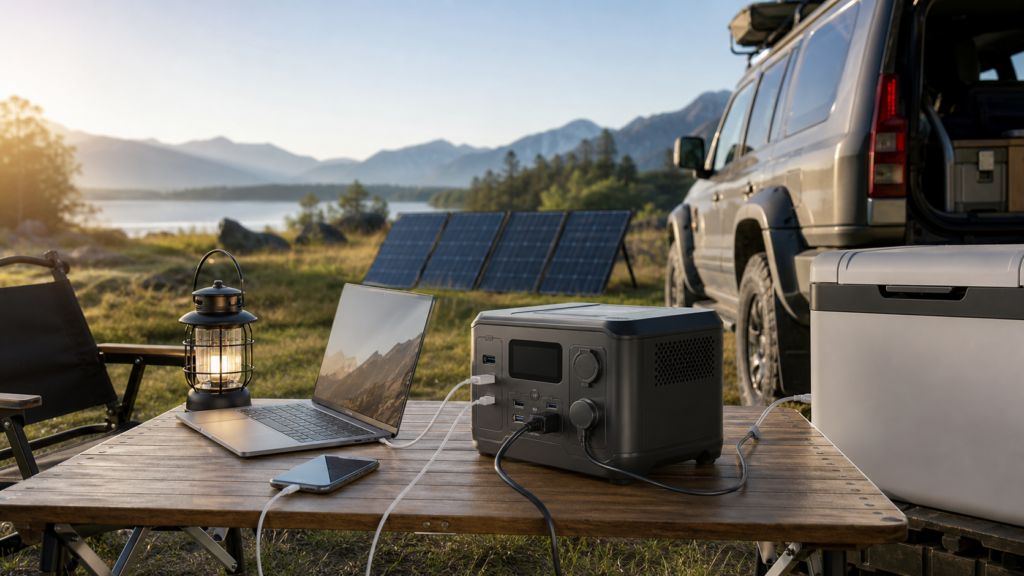
A reliable portable power source can make travel, camping, emergency preparation, remote work, and temporary home backup much easier. A lithium power station stores electrical energy in a rechargeable battery and makes that energy available through common outputs such as AC outlets, USB ports, and DC connections. Unlike traditional fuel generators, these units operate without combustion during use, making them suitable for many situations where quiet and convenient portable power is important.
Portable power stations are now available in many sizes. Some are designed mainly for charging phones, cameras, and laptops, while larger systems may support refrigerators, power tools, appliances, and selected household equipment.
Choosing the right model requires more than selecting the largest battery you can afford.
Battery capacity, output power, battery chemistry, charging speed, portability, solar compatibility, safety features, and intended use all matter.
A power station that works perfectly for a weekend camping trip may be too small for extended home backup. At the same time, a very large unit may be unnecessarily heavy and expensive if you only need to charge personal electronics.
This guide explains how lithium power stations work, the features that matter most, common uses, charging options, maintenance considerations, and practical steps for selecting a system that matches your real energy needs.
What Is a Lithium Power Station?
A lithium power station is a portable rechargeable battery system that stores electrical energy and provides it through several output types.
Most units combine several important components inside one enclosure:
- Lithium battery cells
- Battery management system
- Inverter
- Charging system
- AC outlets
- USB ports
- DC outputs
- Display or monitoring interface
- Cooling system
- Protective electronics
The battery stores direct-current electricity.
The inverter converts some of that stored DC power into alternating current so common appliances and devices can use it through standard power outlets.
This all-in-one design is what makes a portable power station convenient.
Instead of assembling batteries, inverters, controllers, and wiring separately, users can operate one integrated unit.
Why Lithium Batteries Are Used in Portable Power Stations
Lithium batteries offer several characteristics that make them useful for portable energy storage.
They can store substantial energy relative to their size and weight, and they can be repeatedly recharged.
Compared with older battery technologies, modern lithium systems are often easier to transport and manage.
Benefits can include:
- Good energy density
- Rechargeable operation
- Relatively compact design
- Lower weight than many older battery systems
- Fast charging capability on suitable models
- Integrated electronic protection
- Compatibility with solar charging on many units
However, not all lithium batteries are the same.
Battery chemistry plays an important role in lifespan, weight, safety characteristics, and performance.
Understanding Lithium-Ion and LiFePO4 Batteries
Two battery categories are commonly discussed in portable power stations.
Lithium-Ion Batteries
Traditional lithium-ion batteries can offer high energy density.
This helps manufacturers create relatively light and compact units.
They are commonly used in:
- Laptops
- Smartphones
- Portable electronics
- Electric devices
- Battery storage equipment
Energy density can be valuable when portability is a major priority.
LiFePO4 Batteries
Lithium iron phosphate, often shortened to LiFePO4 or LFP, is another lithium battery chemistry increasingly used in portable power stations.
It is known for its long cycle life and stable operating characteristics.
Potential advantages include:
- Long rechargeable cycle life
- Good thermal stability
- Consistent performance
- Suitability for frequent use
- Strong long-term value for regular cycling
LiFePO4 units can sometimes be heavier than comparable high-energy-density lithium-ion systems, although modern designs continue to improve.
When comparing products, battery chemistry should be considered alongside capacity, weight, warranty, and intended use.
Battery Capacity Explained
Battery capacity is one of the first specifications you will see.
It is usually measured in watt-hours, written as Wh.
A 500 Wh power station stores less energy than a 1,000 Wh unit.
However, usable runtime is not determined by capacity alone.
Energy losses occur during conversion and operation.
For example, if you connect an appliance that consumes 100 watts to a 1,000 Wh power station, you should not automatically assume it will run for exactly ten hours.
Real runtime may be lower due to inverter losses, battery management, temperature, and device behaviour.
Capacity should therefore be used as a practical comparison tool rather than a guaranteed runtime figure.
How to Estimate Runtime
A simple estimate can help you understand whether a power station is large enough.
The basic idea is:
Battery capacity in watt-hours ÷ device power consumption in watts = approximate theoretical runtime.
For example:
A 1,000 Wh battery powering a 100 W device may theoretically provide around 10 hours before considering losses.
Actual performance will normally be lower.
If the device cycles on and off, such as a refrigerator, average consumption may also differ from its maximum rated power.
Before purchasing, check both:
- Continuous power use
- Startup or surge power
This is especially important for appliances with motors or compressors.
Understanding Output Power
Battery capacity tells you how much energy is stored.
Output power tells you how much electrical load the station can deliver at one time.
This is usually measured in watts.
For example, a power station may have:
- 1,000 Wh battery capacity
- 1,800 W continuous AC output
These are different specifications.
A large battery with low inverter output may run smaller devices for a long time but still be unable to operate a high-power appliance.
Always check both capacity and output rating.
Continuous Power vs Surge Power
Many electrical devices briefly require more power when starting than they use during normal operation.
This is known as surge or startup power.
Devices that may have higher startup demand include:
- Refrigerators
- Freezers
- Pumps
- Power tools
- Compressors
- Some air-conditioning equipment
A power station may advertise both continuous output and peak or surge output.
The continuous rating is especially important because it describes what the unit can sustain under normal operation.
Do not rely only on the highest peak number.
Common Uses for a Lithium Power Station
Portable energy storage can be useful in many situations.
Camping and Outdoor Trips
Camping is one of the most common uses.
A portable power station may run or recharge:
- Phones
- Tablets
- Cameras
- LED lights
- Laptops
- Portable refrigerators
- Fans
- GPS devices
- Communication equipment
A medium-capacity system can often be sufficient for weekend trips depending on energy use.
Solar charging may also help during longer stays.
Caravan and Campervan Use
Caravan and campervan users often need portable power for lighting, electronics, refrigeration, and other equipment.
A power station can serve as a flexible energy source without requiring a permanently installed electrical system.
When planning for vehicle-based use, consider:
- Charging from the vehicle
- Solar compatibility
- Storage space
- Weight
- Ventilation
- Daily power consumption
Large appliances may require significantly more capacity.
Home Emergency Backup
A lithium power station can provide limited backup during a temporary power outage.
Depending on size, it may support:
- Mobile phones
- Internet router
- Lights
- Laptop
- Small refrigerator
- Medical or communication equipment where appropriate and within rated requirements
However, portable power stations should not automatically be treated as full-home backup systems.
Large electrical loads such as electric ovens, central air conditioning, electric water heaters, and some pumps may exceed the capability of portable units.
Identify essential loads before choosing capacity.
Remote Work
People working from locations without dependable power may use a portable power station to run:
- Laptop
- Monitor
- Mobile hotspot
- Router
- Phone
- Camera equipment
- Small lighting systems
For remote work, reliability and charging speed may matter more than extremely high inverter output.
A compact system may provide enough energy for a full workday depending on the equipment.
Photography and Video Production
Content creators often need energy in remote locations.
A power station can help recharge:
- Camera batteries
- Drones
- Lights
- Monitors
- Laptops
- Audio equipment
The number of available output ports may be especially important when several devices need charging at once.
DIY and Light Tool Use
Some larger systems can run power tools.
Examples may include:
- Drills
- Saws
- Sanders
- Battery chargers
- Small workshop equipment
Always compare tool wattage with the station’s continuous and surge output ratings.
Some tools draw substantial startup current.
How Much Capacity Do You Need?
Capacity should be based on real usage.
Small Capacity
Smaller units may suit:
- Phones
- Tablets
- Cameras
- Small lights
- Laptops
- Day trips
These models are usually easier to carry.
Medium Capacity
Mid-sized systems may suit:
- Camping
- Portable refrigeration
- Remote work
- Small appliances
- Short emergency backup
They provide a useful balance between power and portability.
Large Capacity
Larger units may support:
- Extended outages
- Multiple appliances
- Campervan systems
- Professional equipment
- Larger portable refrigerators
- Selected high-power tools
Large systems can become heavy, so portability needs to be considered honestly.
AC Charging
Most power stations can be charged from a household wall outlet.
Charging speed varies considerably.
Some modern units can recharge quickly when connected to compatible AC power.
Fast charging is useful when:
- Preparing for travel
- Recharging between power outages
- Moving frequently
- Using the station every day
However, charging time should always be evaluated under the conditions specified for the product.
Solar Charging
Many portable power stations can be connected to solar panels.
This can be useful during:
- Camping
- Off-grid travel
- Extended outages
- Remote work
- Outdoor events
Solar charging performance depends on several factors.
These include:
- Solar panel wattage
- Weather
- Sun angle
- Shade
- Temperature
- Power station input limit
A large solar panel does not automatically mean faster charging if the power station cannot accept the full input.
Check the maximum solar input specification.
Why Solar Input Limits Matter
Suppose a portable power station accepts a maximum of 500 W solar input.
Connecting significantly more panel capacity may not produce a proportional charging improvement because the power station limits how much energy it can receive.
You should also check:
- Supported voltage range
- Current limits
- Connector requirements
- Panel compatibility
Correct matching between the panels and the power station is essential.
Vehicle Charging
Some power stations can charge from a vehicle’s electrical outlet.
This can be convenient on road trips.
However, vehicle charging may be slower than household AC charging.
It can still be valuable because the battery can gain energy while you drive.
Avoid draining the vehicle starter battery when the engine is off unless the setup is specifically designed to manage that risk.
USB-C Charging and Output
USB-C has become increasingly important in portable energy systems.
High-output USB-C ports may directly charge:
- Modern laptops
- Tablets
- Smartphones
- Cameras
- Handheld gaming devices
Direct USB-C charging can be more efficient than using an AC adapter for some electronics.
If you regularly travel with modern devices, check the wattage rating of the USB-C ports.
Not all USB-C connections provide the same level of power.
Port Selection
The number and type of ports can affect convenience.
Useful connections may include:
- AC outlets
- USB-A
- USB-C
- 12V DC
- Vehicle-style socket
- Dedicated DC outputs
Think about how many devices you will use simultaneously.
A unit with sufficient capacity but too few ports may require additional adapters.
Inverter Type
Many quality power stations use pure sine wave inverters.
These produce AC power designed to closely resemble household electrical power.
Pure sine wave output is generally preferred for sensitive electronics and many appliances.
Check the inverter specification if you intend to power:
- Computers
- Audio equipment
- Refrigerators
- Medical devices
- Electronics with sensitive power supplies
Always follow equipment manufacturer requirements.
Battery Management Systems
A battery management system, or BMS, helps monitor and protect lithium battery cells.
Depending on the design, it may help manage:
- Overcharging
- Over-discharge
- Overcurrent
- Temperature
- Short circuits
- Cell balancing
A well-designed power station should include appropriate protection systems.
These features operate in the background but are important to safe and reliable battery use.
Temperature and Performance
Temperature affects battery performance.
Very hot or very cold conditions can reduce usable capacity or affect charging.
Avoid placing a power station:
- In direct intense sunlight
- Beside heaters
- Inside extremely hot vehicles
- In wet environments
- In areas without suitable ventilation
Follow the recommended operating and storage temperatures for the specific unit.
Can a Lithium Power Station Be Used Indoors?
One major difference between portable battery stations and combustion generators is that battery systems do not produce exhaust gases during normal operation.
This can make them suitable for many indoor uses.
However, they should still be used responsibly.
Keep the unit:
- Dry
- Properly ventilated
- Away from extreme heat
- Away from damaged cables
- On a stable surface
Never block cooling vents.
Power Station vs Fuel Generator
Battery power stations and fuel generators serve similar purposes in some situations but operate very differently.
Lithium Power Station Advantages
Potential benefits include:
- Quiet operation
- No fuel required during use
- No exhaust during operation
- Easy startup
- Low routine maintenance
- Indoor usability when used correctly
Fuel Generator Advantages
Fuel generators may be more suitable for:
- Very high continuous loads
- Extended operation with fuel supply
- Certain construction applications
- Situations requiring rapid refuelling rather than battery recharging
The better solution depends on the application.
Some users combine both technologies for greater flexibility.
Portability and Weight
Portable does not always mean lightweight.
Large-capacity systems may weigh many kilograms.
Before buying, consider:
- Carry handles
- Wheels
- Storage dimensions
- Vehicle loading
- Stairs
- Frequency of movement
If the unit will remain mostly at home, weight may not matter much.
If you carry it frequently, portability should be a major factor.
Expandable Battery Systems
Some power stations support additional battery modules.
This allows users to increase storage capacity later.
Expandable systems can be useful if:
- Your needs may grow
- You want longer backup time
- You are building a caravan setup
- You prefer modular equipment
However, expansion batteries add cost, weight, and storage requirements.
Think about whether future expansion is genuinely useful.
Charging While Using the Power Station
Some units support pass-through charging, allowing connected devices to operate while the power station itself is charging.
This can be useful in certain setups.
However, operating conditions and limitations vary.
Check whether the manufacturer supports the intended configuration, especially if you plan to use the power station as part of a permanent or semi-permanent setup.
Understanding Cycle Life
Battery cycle life describes how many charge and discharge cycles a battery may complete before its capacity declines to a specified level.
A cycle does not always mean charging from exactly 0% to 100%.
For frequent users, cycle life can be important.
A system used every day experiences far more battery cycling than one used only for emergencies.
LiFePO4 batteries are often chosen for applications where long cycle life matters.
How to Store a Lithium Power Station
Good storage habits can help protect the battery.
Store the unit:
- In a cool, dry place
- Away from direct sunlight
- Away from moisture
- Away from extreme temperatures
- With appropriate battery charge according to manufacturer guidance
If you store the power station for months, check it periodically.
Do not assume it will remain fully charged indefinitely.
Maintenance Requirements
Portable power stations generally require less routine maintenance than fuel generators.
However, they still need attention.
Inspect Cables
Check charging and output cables for damage.
Keep Vents Clear
Dust around cooling vents can affect airflow.
Monitor Battery Condition
Recharge periodically if stored long term.
Keep the Unit Dry
Water can damage internal electronics.
Update Software if Applicable
Some modern power stations use apps or firmware.
Updates may improve functionality or device compatibility.
Common Mistakes to Avoid
Choosing or using a power station incorrectly can reduce its usefulness.
Looking Only at Battery Capacity
A large battery does not guarantee enough inverter output.
Ignoring Surge Power
Motor-driven appliances may need high startup power.
Buying Too Much Capacity
An oversized unit may be expensive and unnecessarily heavy.
Buying Too Little Capacity
A small unit may not provide enough energy for your essential equipment.
Ignoring Charging Speed
Slow recharging can become frustrating during frequent use.
Assuming Any Solar Panel Will Work
Voltage, current, connector type, and input limits must be compatible.
Creating a Simple Power Budget
Before buying, list the devices you expect to use.
For each device, record:
- Wattage
- Hours of daily use
- Startup power if relevant
Then estimate the total energy required.
For example:
A laptop using 60 W for five hours would theoretically consume about 300 Wh.
A 10 W light used for five hours would require about 50 Wh.
Adding several devices helps you estimate the minimum battery capacity.
Allow additional capacity for conversion losses and unexpected needs.
Choosing a Power Station for Emergencies
Emergency planning should focus on essentials.
Ask yourself what you truly need during an outage.
Possible priorities include:
- Communication
- Lighting
- Refrigeration
- Internet access
- Laptop charging
- Medical equipment if compatible
- Small fans
You may discover that you do not need to power every appliance.
Prioritising essential loads can dramatically reduce the battery capacity required.
Choosing a Power Station for Camping
Camping users should balance capacity against portability.
Ask:
- How many days will I be away?
- Can I recharge from solar?
- Will I use a refrigerator?
- How many people need device charging?
- Will I use cooking appliances?
- How far will I carry the unit?
A smaller power station can be ideal for lightweight trips.
Vehicle-based camping can accommodate larger systems.
Choosing a Power Station for Home Use
For home use, consider where the unit will be stored and how quickly you can access it.
A backup station should be:
- Charged
- Easy to reach
- Stored safely
- Paired with necessary cables
- Tested with critical equipment
Do not wait for an outage to discover that an appliance requires more power than your station can supply.
Test your planned setup in advance.
Questions to Ask Before Buying
Before selecting a lithium power station, ask:
- What battery chemistry does it use?
- What is the battery capacity?
- What is the continuous AC output?
- What is the surge output?
- How quickly can it recharge?
- Does it support solar charging?
- What is the maximum solar input?
- How many AC outlets are included?
- What USB-C output is available?
- How much does it weigh?
- Is the battery expandable?
- What safety protections are included?
- What is the expected cycle life?
- How will I use it most often?
Answering these questions can narrow your choices quickly.
FAQs
What is a lithium power station?
A lithium power station is a rechargeable portable energy storage system that uses lithium battery cells to store electricity. It can power or charge compatible devices through AC outlets, USB ports, and DC connections.
How long can a lithium power station run appliances?
Runtime depends on battery capacity, appliance wattage, inverter efficiency, temperature, and device usage. Divide the battery’s watt-hour capacity by the approximate device wattage for a basic theoretical estimate, then allow for energy losses.
Can a lithium power station run a refrigerator?
Many medium and large models can run selected refrigerators if their continuous and startup power requirements are within the power station’s limits. Always check both appliance wattage and compressor startup demand.
Can I charge a lithium power station with solar panels?
Many models support solar charging. You must match the panels to the station’s supported voltage, current, connector, and maximum solar input specifications.
Is a lithium power station suitable for camping?
Yes. Portable power stations are widely used for camping because they can charge phones, laptops, lights, cameras, refrigerators, and other compatible equipment without fuel during operation.
Can a lithium power station be used indoors?
Portable battery power stations can generally be used indoors because they do not burn fuel during normal operation. Keep the unit dry, properly ventilated, and within its recommended temperature range.
What size lithium power station do I need?
The right size depends on the devices you want to run and how long you need to use them. Small units suit electronics, medium units suit camping and limited backup, and larger units can support more demanding appliances.
How long does a lithium power station battery last?
Battery lifespan varies by chemistry, usage, charging habits, temperature, and cycle count. LiFePO4-based systems are often selected when frequent cycling and long service life are priorities.
Conclusion
Choosing the right lithium power station starts with understanding how much energy you actually need and what equipment you plan to run. Battery capacity, continuous output, surge power, battery chemistry, charging speed, solar compatibility, port selection, and portability should all be considered together rather than separately. A compact unit may be ideal for phones, laptops, and weekend camping, while larger systems can provide more useful support during outages, extended travel, and off-grid activities. Creating a simple power budget before buying can help you avoid selecting a system that is too small, unnecessarily large, or incompatible with your equipment. With realistic expectations and proper care, a lithium power station can provide flexible portable energy for a wide range of everyday, outdoor, and emergency situations.