
GE Monogram is the name most luxury kitchen shoppers still use for Monogram, the flagship appliance brand of GE Appliances, and the search habit is...
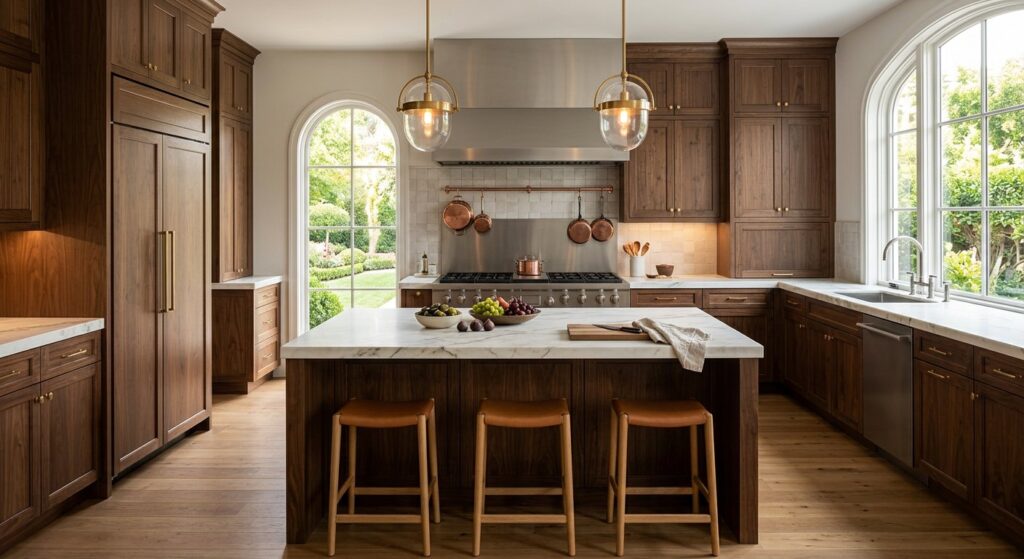
GE Monogram is the name most luxury kitchen shoppers still use for Monogram, the flagship appliance brand of GE Appliances, and the search habit is a compliment that stuck: few brands have collapsed the distance between professional-grade performance and residential design as completely. If you are planning a dream kitchen, the appliance decision carries more weight than any other equipment choice, because appliances set the room’s capability, its visual tone, and a meaningful share of its budget all at once. This guide explains what the brand is, who makes it, and the nine reasons designers and serious home cooks keep shortlisting it, from brass-burner professional ranges and panel-ready built-in refrigeration to smart features, American manufacturing, and a warranty that beats the industry norm. It also covers how the brand sits against Sub-Zero, Wolf, and Thermador, what a realistic package budget looks like, and how to plan the purchase so the appliances fit the room, the cabinetry, and the way you actually cook. By the end, you will know whether this is the right suite for your project and exactly how to move from inspiration to a working kitchen.
Key Takeaways
- Monogram, long known as GE Monogram, is the luxury appliance brand of GE Appliances, positioned above Cafe and GE Profile in the company’s lineup.
- Most luxury products are built in the United States at GE Appliances’ home in Louisville, Kentucky, with strict quality control behind the badge.
- The suite covers ranges, cooktops, wall ovens, built-in refrigeration, dishwashers, ventilation, and undercounter specialties, all designed to match visually.
- Professional ranges start around $5,600, positioning the brand below flagship European-style pricing while keeping pro features such as multi-ring brass burners.
- The brand backs its products with a full two-year warranty on most items, double the one-year coverage typical of the industry.
What Is GE Monogram?
Monogram is GE Appliances’ ultra-premium appliance line, carrying the professional-grade engineering of the company’s commercial heritage into residential kitchens. Many shoppers still call it GE Monogram, the name it carried for decades before the lineup streamlined to Monogram, and dealers and designers use the two interchangeably; this guide uses both for the same flagship brand. The portfolio spans six categories: cooking (pro ranges, gas and induction cooktops, rangetops, wall ovens), refrigeration (built-in systems, columns, counter-depth freestanding units), dishwashing, ventilation, undercounter appliances (wine reserves, beverage centers, warming drawers, ice makers), and specialty pieces such as built-in hearth ovens and rotisserie ovens. The brand sits deliberately at the top of GE Appliances’ ladder, above the design-forward Cafe line, the technology-focused GE Profile line, and standard GE products, sharing their service network while competing directly with Sub-Zero, Wolf, and Thermador in the luxury tier.
The Statement and Minimalist Collections
Every Monogram appliance is ordered with one of two handle design languages, and the choice quietly defines the whole kitchen. The Statement Collection offers sculpted, traditional-professional handles with presence and shadow lines, while the Minimalist Collection strips hardware to slim, flat bars for a contemporary, European look, and panel-ready models take either style or the designer’s own. Finishes run from classic stainless to matte black and matte white, with details such as ring-lit knobs that glow softly when burners are active. Because every piece in the suite accepts both collections, a homeowner can start with a range and add refrigeration, dishwashing, and undercounter units over years without the kitchen ever looking mismatched.
9 Powerful Reasons to Build Your Kitchen Around GE Monogram
1. Professional Ranges Built for Serious Cooking
The ranges are the brand’s statement pieces, offered in all-gas and dual-fuel configurations at 30, 36, and 48 inches. The cooktops are built around multi-ring brass burners reaching 21,000 to 23,000 BTU, paired with dual-stack brass burners that simmer as gracefully as they sear, and 36- and 48-inch configurations add griddles, and on the 48-inch dual-fuel, a grill. Dual-fuel models pair that gas top with electric convection ovens featuring no-preheat air frying, self-clean and steam-clean modes, and on the 48-inch, twin ovens with true European reverse-air convection for even multi-rack baking. The entertaining math works too, because a 48-inch configuration lets griddle, grill, and open burners run simultaneously while two ovens hold different temperatures, which is the difference between hosting a holiday and surviving one. Starting prices run from roughly $5,600 for an all-gas 30-inch to $6,800 and up for dual-fuel, which in the pro-range market is a deliberate value position.
2. Built-In Refrigeration That Disappears Into the Design
Refrigeration is where luxury kitchens win or lose their clean lines, and the lineup handles it properly. True built-in models and standalone columns sit flush with cabinetry in standard stainless, glass door, or panel-ready configurations, while counter-depth freestanding units bring the look to remodels that cannot sacrifice cabinet depth. The column approach adds a planning freedom the category deserves more credit for, since a refrigerator column, a freezer column, and a wine reserve can live in different parts of the kitchen or pantry wall instead of stacking into one tall unit, letting the design spread along the architecture. Inside, the emphasis is on food care: adjustable temperature-controlled drawers, sealed produce compartments, and dual-evaporator cooling that keeps fresh and frozen air separate so odors do not migrate. A glass-door refrigerator, the kind of statement piece long associated with pricier competitors, is available here at a friendlier entry point, and every unit accepts the Statement or Minimalist handle suites.
3. A Complete Suite From Wall to Wall
A luxury kitchen fails visually when appliances fight each other, and the suite approach is the brand’s answer. Wall ovens carry hot-air frying modes and precision cooking controls; the Advantium line speedcooks with light technology that combines convection, microwave, and broiling to cut cooking times dramatically; and dishwashers from the line push more than 90 water jets, hidden controls, adjustable third racks, and quiet operation around 39 dBA on select models. Ventilation comes in professional hoods sized to match the ranges, and the undercounter family covers wine reserves, beverage centers, warming drawers, ice makers, and microwave drawers. The dishwasher quietness deserves a specific word, because at around 39 dBA on select models it sits below the sound level of a quiet library, which matters enormously in today’s open-plan kitchens where the machine runs ten feet from the dinner conversation. Even the specialties earn their place: a built-in hearth oven for pizza and bread, and a rotisserie oven that turns Sunday dinner into theater.
4. Smart Features You Will Actually Use
The smart layer avoids the gimmick problem because every feature answers a real question. WiFi connectivity through the SmartHQ app lets you preheat the oven on the drive home, check whether the refrigerator door closed, and monitor cook times from the sofa. Scan-to-Cook reads packaged food barcodes and sets the oven automatically, precision cooking modes hold exact temperatures for technique-sensitive dishes, and voice control works with the major assistants. None of it demands attention; the appliances work perfectly as standalone machines, and the connectivity simply removes steps. The app layer also earns its keep over the ownership period, surfacing maintenance reminders and support options so small questions never become service calls, and a connected appliance that reports its own status is measurably easier to live with than one you diagnose by memory. In a market full of connected appliances that connect to nothing useful, this restraint reads as maturity.
5. American Manufacturing With Real Quality Control
Most Monogram luxury products roll out of GE Appliances’ Louisville, Kentucky campus, the same complex that has built American appliances for generations. That matters for reasons beyond patriotism: domestic production keeps design and engineering teams next to the assembly line, shortens the feedback loop when a component needs improvement, and subjects every unit to the company’s quality standards before it ships. It also keeps the spare-parts pipeline close, so a replacement rack or hinge ships from a domestic warehouse rather than crossing an ocean. Buyers feel the benefit practically, in parts availability and in the credibility of the warranty, because the company standing behind the product is also the one that built it, a short distance from your zip code rather than an ocean away.
6. Flagship Features Without the Flagship Premium
Positioned against Sub-Zero, Wolf, and Thermador, the brand’s pitch is straightforward: comparable pro performance and design flexibility, generally at a more accessible price. The ranges illustrate it, starting in the mid-four figures while delivering brass burners, reverse-air convection, and dual ovens that the flagship brands price substantially higher. Value shows up in the details too, from glass-door refrigeration that competitors reserve for their most expensive lines, to the sheer breadth of a suite that lets one brand fill the entire kitchen. For homeowners who want the luxury tier without stretching to the very top of it, that positioning is often the deciding factor.
7. Backed by the GE Service Network and a Two-Year Warranty
Luxury appliances earn their keep over years of service, and this is where the corporate parent matters. The brand ships with a full two-year warranty on most products, at a time when one year remains the industry’s default, a quiet signal of confidence in the build. Behind the warranty sits GE Appliances’ nationwide service network, one of the largest in the country, which means trained technicians, genuine parts, and established support in markets where boutique luxury brands can be thin on the ground. Owners can stretch that advantage further with basic stewardship, registering each product after installation, keeping model and serial numbers on file, and booking installation through the dealer so the warranty starts clean. For a product you will own for a decade or more, service depth is not a footnote; it is half the purchase.
8. Design Flexibility for Any Architectural Style
The suite bends to the room rather than demanding the room bend to it. Flush-mounted built-ins and columns suit minimalist great rooms, matte black finishes anchor industrial and modern farmhouse plans, classic stainless with Statement handles serves traditional and transitional kitchens, and panel-ready dishwashers and refrigerators vanish into bespoke cabinetry entirely. The matte finishes carry a practical bonus in busy households, hiding fingerprints and smudges that high-gloss stainless advertises, which keeps the kitchen camera-ready between cleanings. Ring-lit knobs, sweeping handle bars, and glass-door displays give designers jewelry-box details to work with, while hidden controls keep surfaces calm. Because the two handle collections and multiple finishes run across every category, the kitchen stays coherent even when it is purchased in stages, which is how most real projects actually unfold.
9. Plan the Kitchen as One System
The final reason is the one that turns admiration into a kitchen: the brand is easiest to love when the suite is planned together. Cook first, and let the range or cooktop dictate ventilation sizing, then position wall ovens and refrigeration around the workflow triangle, and let the panel-ready and finish decisions fall out of the cabinetry design rather than being bolted on later. The place to start is the source: the GE Monogram official site lays out the full product line, specifications, finishes, and design resources, and an authorized dealer showroom turns those screens into doors you can open, handles you can grip, and ovens you can stand in front of. Bring your floor plan, your door-swing clearances, and your honest cooking ambitions, ask the showroom to confirm electrical and gas requirements for each piece, and sequence delivery around the cabinet install so nothing waits in a garage. One more habit separates happy owners from frustrated ones: photograph the installed set and keep a folder with receipts, serial numbers, and warranty terms, because a decade of effortless ownership starts with an afternoon of paperwork.
What Does a GE Monogram Kitchen Cost?
Budgets vary with configuration and finish, but the anchors are public and stable:
| Appliance | Typical Starting Price | Notes |
|---|---|---|
| All-gas pro range, 30 in. | From about $5,600 | Multi-ring brass burner, gas convection oven |
| Dual-fuel pro range, 30 in. | From about $6,800 | No-preheat air fry, self-clean, steam clean |
| Built-in refrigeration | Varies by size and style | Built-ins, columns, glass door, panel ready |
| Wall ovens and Advantium | Varies by model | Convection, precision modes, speedcook |
| Dishwasher | Varies by model | 90+ jets and quiet operation on select units |
| Undercounter specialties | Varies by model | Wine, beverage, warming, ice, hearth oven |
Ranges carry public pricing, while built-in refrigeration, wall ovens, and undercounter units vary widely with size, handle collection, and finish, so the practical budgeting method is to select the cooking anchor first, then price the supporting suite with an authorized dealer. A full six-category kitchen in this tier is a five-figure project in every configuration, and planning it as one order often unlocks package pricing worth asking about.
A Practical Timeline From Inspiration to Installation
A luxury appliance purchase rewards sequencing, and a workable order looks like this:
- Define the cooking anchor and overall budget band before falling in love with finishes.
- Visit an authorized showroom with your floor plan; verify every piece fits its planned opening.
- Confirm electrical, gas, and water requirements room by room with your contractor.
- Lock handle collection and finishes across all pieces in one decision, not per appliance.
- Coordinate delivery dates with the cabinet installation so nothing arrives before its opening exists.
- Register each product and file the manuals the week the kitchen goes live.
Followed in that order, the project avoids the two classic luxury-kitchen failures, appliances that miss their openings by half an inch and finishes that never quite matched.
Frequently Asked Questions
Who makes GE Monogram appliances?
Monogram is made by GE Appliances, which is owned by Haier; the brand is GE Appliances’ luxury line, positioned above Cafe, GE Profile, and standard GE products, and most shoppers still know it by its longtime name, GE Monogram.
Is GE Monogram worth the money?
For buyers who want pro-grade cooking power, built-in design flexibility, smart features, and strong domestic service support, the brand delivers flagship-tier performance at a generally lower price than its closest luxury competitors.
Where are GE Monogram appliances made?
Most luxury products are manufactured in the United States at GE Appliances’ Louisville, Kentucky facilities, with quality control handled domestically before shipment.
What warranty does the brand offer?
Most Monogram products carry a full two-year warranty, double the one-year coverage that remains standard across the appliance industry; confirm the specific terms for each model with your dealer.
How does Monogram compare to Sub-Zero, Wolf, and Thermador?
Monogram competes directly on pro performance and design while generally pricing below the flagships, and it leans on deeper smart-home integration and GE’s nationwide service network as differentiators.
Can I mix Monogram appliances with my existing kitchen?
Yes; the suite is designed to mix and match, with two handle collections and multiple finishes across categories, so you can start with a single range or refrigerator and add matching pieces over time.
Conclusion
GE Monogram has lasted in American luxury kitchens for the most durable of reasons: it solves the appliance decision completely, with pro-grade ranges, built-in refrigeration, a full matching suite, genuinely useful smart features, domestic manufacturing, and a warranty that outlasts the industry’s, all at a price that respects the rest of your renovation budget. The nine reasons above are not marketing lines; they are the checklist a designer runs when a project demands both performance and polish, and the brand clears it more consistently than most. If you are planning a dream kitchen, start at the official site, confirm the specs with an authorized dealer, and buy the suite as one considered system rather than nine separate purchases. Do that, and the appliances will outlast trends, tenants of taste, and quite possibly the mortgage, which is exactly what a flagship should do.