
Plantation shutters in Sydney have moved from a premium nice-to-have to the window furnishing more and more homeowners ask for by name, and once you...
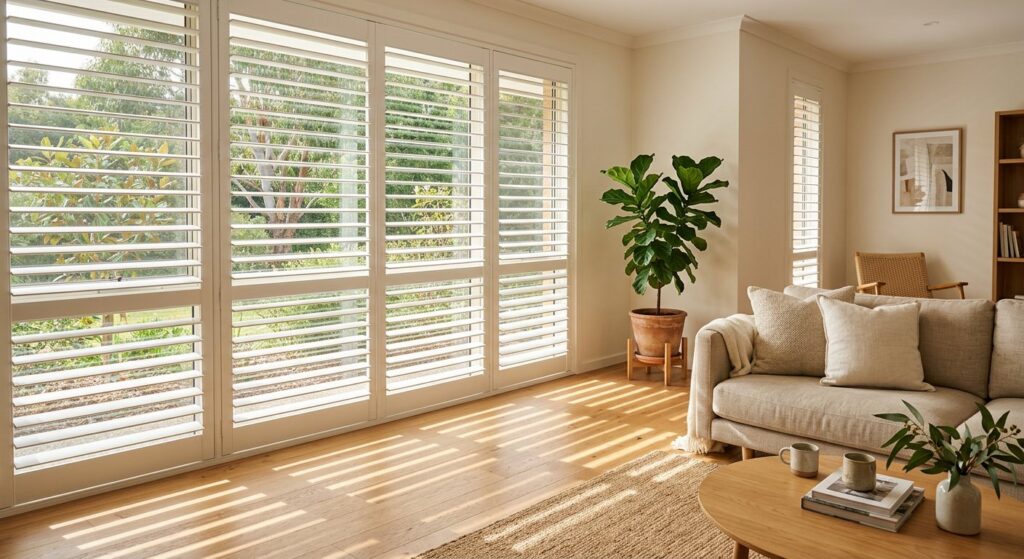
Plantation shutters in Sydney have moved from a premium nice-to-have to the window furnishing more and more homeowners ask for by name, and once you understand what they do for a house in this climate, the reasons are obvious. Sydney serves up some of the harshest light and heat in the country, from western summers that push air conditioning bills through the roof to coastal salt air that punishes anything flimsy, and shutters answer all of it with adjustable louvres that control light, heat, privacy, and airflow in one movement. They suit the city’s housing stock just as well, from heritage terraces in the inner west to new apartments on the coast, because every set is made to measure for the exact window it covers. This guide walks through the nine ways shutters earn their place in a Sydney home, explains how the different materials perform in our conditions, and sets out what you should expect to pay, with current pricing ranges so you can budget before anyone knocks on your door. By the end, you will know exactly which material suits which room, what a fair quote looks like, and why so many homeowners now consider shutters the last window covering they ever buy.
Key Takeaways
- Plantation shutters give precise control of light, heat, privacy, and airflow with a single adjustment of the louvres.
- In Sydney, expect to pay roughly $250 to $350 per square metre for PVC, $300 to $700 for timber, and $350 to $500 for aluminium, installed.
- Material choice decides longevity: PVC for wet areas, timber for insulation and wide spans, aluminium for outdoor living spaces.
- Shutters have no dangling cords, which makes them one of the safest window furnishings for homes with children and pets.
- Made-to-measure shutters are considered permanent fixtures, and they are widely recognised for adding resale appeal to a property.
What Are Plantation Shutters?
Plantation shutters are window coverings built from hinged panels fitted with adjustable horizontal slats, called louvres, that tilt open or closed to control light and air while the panel itself stays fixed to the window reveal. The name comes from the shutters used on plantation houses in the American South, where broad louvres managed brutal sun long before air conditioning, and the design has barely changed because the physics still works. Modern versions pair that classic mechanism with engineered materials and made-to-measure frames, so a set can follow a bay window, span a sliding door, or fit a shaped federation-era opening exactly.
Louvre Sizes and Frame Styles
Louvre width shapes both the look and the performance. The common choices run from 63mm blades with a more traditional, cluttered-free rhythm, up to 89mm and 114mm blades that admit more light when open and present cleaner lines in contemporary rooms, and larger louvres generally suit larger windows. Frame options include L-frames and Z-frames for reveals and face-fix situations, with hinged panels as the standard configuration, plus sliding and bi-fold tracks for wide openings and doors. Tilt rods, the mechanism that moves the louvres, come in centred traditional style or hidden rear style for an uncluttered modern finish.
A Design That Earned Its Longevity
Few household products survive centuries essentially unchanged, and shutters belong to that rare group. The mechanism has no tracks to jam, no cords to snap, and no motor to fail, just timber or engineered panels on piano hinges with a tilting blade rod, which is why decades-old sets in older Sydney homes still operate as smoothly as the day they were hung. When a covering this simple is made from quality materials, its main enemy is only poor measurement, not time.
9 Powerful Ways Plantation Shutters Transform a Sydney Home
1. Master Light Control in a Harsh Sun
Sydney’s light is glorious and relentless, and shutters handle it better than any other window covering. Where a blind offers two states, open or closed, a shutter offers continuous adjustment: louvres angled downward bounce light onto the ceiling, angled upward push it away entirely, and anywhere in between fine-tunes glare through the hours when the sun tracks across the room. That matters most in west-facing rooms during summer afternoons, when the difference between comfortable and unbearable is a few degrees of blade angle. Homeowners also gain light without exposure, the ability to brighten a room while the louvres’ angles keep the interior invisible from the street, which curtains and roller blinds struggle to match. There is a preservation benefit hiding here too, because the same adjustment filters the ultraviolet load that fades floorboards, rugs, and furniture, letting you protect the parts of the room the sun would otherwise bleach over a Sydney summer.
2. Cut Summer Heat and Winter Chill
A window is the weakest thermal link in any wall, and shutters reinforce it. Closed louvres trap a still layer of air at the glass, which slows heat pouring in during a February scorcher and slows it escaping on a July morning, and because the whole panel forms a solid barrier, the effect is stronger than a slatted blind or a light curtain provides. The practical result is rooms that hold their temperature longer, air conditioning that cycles less on extreme days, and heating that does not fight a constant draft from the glass. No window furnishing replaces insulation, but shutters are the option that improves the thermal envelope every single day of the year simply by being closed when nobody needs the view. They pair well with ventilation too, because on a mild evening the panels can stand open with louvres angled to move air through while still blocking direct sun, a combination a fixed glass or solid blind cannot offer.
3. Get Privacy Without Losing the Daylight
The classic Sydney dilemma is the terrace or apartment window that faces the neighbour two metres away, where covering it means living in the dark. Shutters solve it with geometry: louvres angled up or down pass daylight deep into the room while cutting every direct sightline, so the space stays naturally lit and completely private at the same time. Bathrooms get a further upgrade, because a moisture-resistant shutter on the lower half of the window handles privacy at the exact height it is needed while the upper louvres stay open to the sky. The same logic works floor by floor in townhouses and apartments, where ground-level living rooms angle louvres against passers-by while upper storeys stay open to the outlook. For street-facing rooms, the tidy panelled look from outside is itself a bonus, presenting the same clean appearance day and night.
4. Protect Small Children and Pets
Corded blinds remain a quiet household hazard, and Australian safety guidance for blinds and curtains is explicit about the strangulation risk loose cords pose to young children. Shutters eliminate the problem by design, because there is no cord, chain, or loop anywhere in the product; the louvres move by hand on a tilt rod fixed to the panel. For families with crawling babies, curious toddlers, or cats that treat dangling strings as toys, that single difference removes the most dangerous part of the window. It is one of the few safety upgrades that also happens to look better than what it replaces.
5. Handle Coastal Air, Humidity, and Wet Areas
Sydney conditions are genuinely hard on window furnishings, and material selection is where shutters either succeed or fail. Coastal suburbs serve salt-laden air that corrodes cheap hardware; bathrooms and laundries run humid; and north-facing glass bakes anything nearby in direct sun. This is why the material range matters: PVC and engineered polymer shutters shrug off moisture in wet areas, aluminium shutters with powdercoated finishes stand up to weather on patios and balconies, and premium hardwoods such as basswood deliver the richest finish and best insulation for living rooms and bedrooms. Hardware deserves a share of the attention as well, because hinges, staples, and tilt mechanisms in coastal exposures need corrosion-resistant treatments to match the panels, and quality manufacturers spec them accordingly. Matching the material to the room is exactly what a professional measure and quote is for, and it is the difference between shutters that look new in fifteen years and shutters that warp in three.
6. Add Real Value at Resale
Buyers and agents treat quality shutters as permanent fixtures, in the same category as built-in wardrobes rather than loose furnishings, and a home fitted throughout photographs and presents noticeably better. Two factors drive the effect: the street-facing polish of consistent white panels across the front windows, and the signal that the home has been maintained with quality rather than dressed for sale. Unlike curtains, which the new owners may rip out on taste alone, shutters tend to survive changeovers because they suit nearly every interior style from period to minimalist. The long-run arithmetic reinforces the point, because blinds typically serve five to eight years before replacing, while quality shutters commonly run for decades, so the dearer upfront choice often proves the cheaper one across a single ownership. Add the energy and comfort benefits and a set of shutters reads as an improvement to the house itself, which is how valuers and buyers alike treat them.
7. Live With Less Cleaning and Fewer Allergens
Shutters suit people who resent maintaining their window coverings. The surfaces are hard and smooth, so a microfibre cloth or duster handles a full set in minutes, and a light fortnightly pass keeps the whole house presentable without ever scheduling a cleaning day. There is no fabric to harbour dust mites, no venetian slats stacked edge to edge, and nothing to take down for professional cleaning. For allergy sufferers this is more than convenience, because horizontal fabric surfaces and heavy curtains are among the worst dust reservoirs in a home, while a shutter presents hard, wipeable, non-porous surfaces. Spills and fingerprints in high-traffic spots clean with a damp cloth, and the finish on quality ranges resists fading and yellowing under years of sun.
8. Fit Every Window, From Heritage Terraces to Modern Apartments
Sydney’s housing stock defeats off-the-shelf coverings constantly: bay windows in federation homes, awkward reveal depths in terraces, oversized sliding doors to courtyards, and shaped or arched openings in renovated attics. Shutters are made to measure for each opening, with frames configured for inside or face mounting, panels divided so wide doors still operate easily, and tracking options that let panels slide or fold clear of a doorway entirely. Apartment dwellers face their own variant of the problem, since strata buildings often restrict external alterations but leave internal window furnishings free, and a made-to-measure internal shutter delivers a uniform, compliant look across every window without touching the facade. Even unusual shapes follow the joinery, so an arched window becomes a feature rather than a compromise. The result is a covering that looks built into the architecture, which is precisely the quality buyers notice.
9. Get the Fit Right With Professional Measure, Quote, and Installation
The gap between good shutters and great ones is measurement and installation, because a millimetre-level fit is what makes the panels sit square, the louvres close tight, and the whole set operate smoothly for decades. A professional measure accounts for reveal depth, obstructions, tile lines, and handle clearances that owners routinely miss, and correct installation protects both the operation and the warranty. For homeowners ready to make the investment, iStyle Shutters is a 100 percent Australian owned and operated specialist with more than 20 years of industry experience, and its certified team handles Plantation Shutters in Sydney from free measure and quote through professional installation, offering the Thermastyle engineered range for wet and dry zones, premium basswood for classic timber character, and powdercoated aluminium for outdoor areas, with flexible appointments that include weekends and free installation offers on selected products. Whether you choose a national brand or a local specialist, insist on an in-home measure rather than a phone-quote, ask which material the company recommends room by room, and confirm the warranty in writing before you commit, including what after-sales support looks like if a hinge or tilt rod ever needs attention. A company that has served one market for twenty years has a reputation to protect, and that longevity is worth as much as any discount.
How Much Do Plantation Shutters Cost in Sydney?
Current Sydney pricing is straightforward once you know the material tiers:
| Material | Typical Price (Per m², Installed) | Best For |
|---|---|---|
| PVC / polymer | $250 to $350 | Bathrooms, laundries, and other wet areas |
| Timber (basswood) | $300 to $700 | Living rooms, bedrooms, wide windows, premium finish |
| Aluminium | $350 to $500 | Patios, balconies, and exterior openings |
A standard window of roughly 1.2 by 1.2 metres typically lands between $300 and $500 installed, and a full three-bedroom home generally falls in the $4,000 to $8,000 range depending on window count, size, and configuration. The figures shift with panel style, since sliding and bi-fold tracks, custom colours, and shaped frames add cost, so treat any quote well below these bands as a prompt to ask what has been left out.
What Moves a Quote Up or Down
Two homes with the same floor area can quote worlds apart, and the drivers are predictable:
- Window count and total area, the foundation of any per-square-metre calculation.
- Material tier, with polymer at the value end and premium timber at the top.
- Panel configuration, since wide spans need dividing, and doors need track systems.
- Mounting and framing, because deep reveals, tiles, and obstructions complicate fitting.
- Custom colours and finishes beyond the standard white range.
- Access and height, as second-storey windows add time and equipment.
Understanding these levers turns quote comparison from guesswork into a like-for-like exercise, and it gives you honest places to save, such as choosing polymer in the laundry rather than shaving material quality in the living room.
Frequently Asked Questions
How much do plantation shutters cost in Sydney?
Most Sydney homes pay between $250 and $700 per square metre installed, depending on material, with PVC at the lower end, timber in the middle, and aluminium exteriors ranging around $350 to $500.
Which material is best, PVC, timber, or aluminium?
PVC suits wet areas such as bathrooms and laundries, timber gives the best finish and insulation for living spaces, and aluminium is the choice for outdoor patios and balconies.
Do plantation shutters add value to a home?
Yes, buyers treat quality shutters as permanent fixtures that improve presentation, comfort, and energy performance, which is why fitted homes consistently present better at sale.
How long do plantation shutters last?
With reasonable care, quality shutters commonly serve 15 to 20 years or more, and many homeowners find they outlast several sets of blinds or curtains in the same window.
Can shutters cover sliding doors and unusual windows?
Yes, sliding and bi-fold track systems span wide openings, and made-to-measure panels handle bays, reveals, and shaped or arched windows that off-the-shelf coverings cannot fit.
Are plantation shutters safe for children and pets?
Shutters are among the safest options because they have no cords or chains at all; louvres are adjusted by a tilt rod fixed to the panel, removing the strangulation hazard corded blinds present.
Conclusion
Plantation shutters in Sydney earn their reputation the practical way, by solving the problems this city actually hands out: fierce light, real heat and cold, tight privacy, salt air, and housing stock that refuses to fit anything standard. The nine benefits above add up to a single proposition, a window covering that manages the climate, protects the household, and reads as part of the architecture, all with a lifespan measured in decades rather than years. Start with the material decision room by room, insist on a professional measure so the fit is perfect, and buy quality once rather than replacing lesser coverings every few years. Do that, and the shutters will still be doing their quiet work long after the last renovation show has moved on, which is exactly what an investment in your home should do.