
Choosing the right sportswear manufacturer can have a major impact on the quality, performance, appearance, and long-term success of an athletic clothing brand. Whether you...
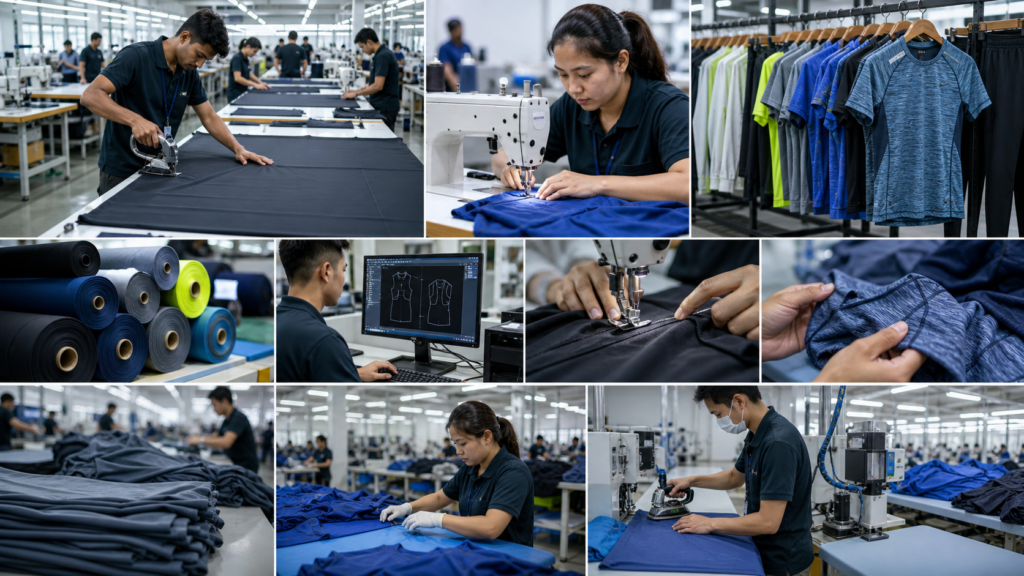
Choosing the right sportswear manufacturer can have a major impact on the quality, performance, appearance, and long-term success of an athletic clothing brand. Whether you are launching a new sportswear label, producing uniforms for a team, creating activewear for a fitness business, or expanding an existing clothing collection, your manufacturer plays a central role in turning ideas into finished garments. From fabric selection and pattern development to stitching, customization, quality control, and packaging, every stage of production requires attention to detail.
Sportswear is different from ordinary clothing because it must perform under movement, heat, sweat, stretching, and repeated washing. A shirt may look attractive, but if it traps heat or loses shape quickly, customers will not consider it high quality. Similarly, leggings need stretch and recovery, team jerseys need durability and breathability, and training wear should provide comfort without restricting movement.
For this reason, working with a capable manufacturing partner is one of the most important decisions for any sportswear business.
This guide explains how sportswear manufacturing works, which fabrics and production methods are commonly used, what customization options are available, how to evaluate quality, and what factors to consider before selecting a manufacturer.
What Does a Sportswear Manufacturer Do?
A sportswear manufacturer produces garments specifically designed for exercise, athletic performance, training, leisure, and sports-related activities.
Depending on the factory or supplier, the manufacturer may handle the complete production process or only selected stages.
A full-service sportswear manufacturing process may include product development, fabric sourcing, pattern creation, sample production, cutting, stitching, printing, embroidery, finishing, inspection, labeling, packaging, and shipment preparation.
Some manufacturers also provide private label and custom clothing services.
This allows brands to develop unique collections instead of purchasing generic garments.
A good manufacturer should understand the technical requirements of athletic clothing. Sportswear needs to balance comfort, flexibility, breathability, durability, and visual appeal.
Why the Right Sportswear Manufacturer Matters
The manufacturer directly influences the final product.
Even a strong sportswear design can fail if production quality is poor.
The right manufacturer helps ensure consistent sizing, clean stitching, proper fabric performance, accurate colors, and reliable construction.
This matters especially when customers expect athletic apparel to withstand frequent use.
Poor manufacturing can create problems such as loose seams, fading prints, damaged zippers, uneven sizing, uncomfortable fabrics, or garments that lose their shape after washing.
A reliable sportswear manufacturer should focus on both appearance and performance.
Types of Sportswear a Manufacturer Can Produce
Sportswear covers a wide range of garments.
A manufacturer may specialize in one category or provide multiple apparel options.
Performance T-Shirts
Performance shirts are widely used in gyms, running, football, basketball, training, cycling, and many other sports.
These garments often use lightweight synthetic or blended fabrics.
The goal is usually to provide moisture management, breathability, comfort, and freedom of movement.
Sports T-shirts may be customized with sublimation printing, screen printing, heat transfers, embroidery, or other decoration methods.
Sports Jerseys
Team jerseys are one of the most important sportswear categories.
They are commonly manufactured for football, basketball, baseball, hockey, rugby, cricket, cycling, esports, and other team activities.
A custom sportswear manufacturer may produce jerseys with player names, numbers, team colors, sponsor graphics, patterns, and logos.
Sublimation printing is particularly useful for jerseys because designs can cover large areas of fabric without adding thick printed layers.
Gym Wear
Gym apparel can include T-shirts, tank tops, stringers, leggings, compression shirts, shorts, joggers, hoodies, and sports bras.
Gym wear should provide comfort during different types of physical activity.
Stretch, moisture control, breathability, and durability are important considerations when selecting fabrics.
Leggings
Leggings require careful fabric selection and garment construction.
The material should stretch with the body while returning to its original shape.
Poor-quality leggings may become transparent when stretched, lose elasticity, or develop loose seams.
A good manufacturer pays attention to fabric density, seam placement, waistband construction, and fit.
Sports Shorts
Sports shorts can be produced for running, training, basketball, football, boxing, fitness, and casual athletic use.
Some styles need lightweight materials, while others require stronger fabrics.
Features may include elastic waistbands, drawstrings, pockets, mesh panels, side vents, or compression liners.
Tracksuits
Tracksuits are popular for athletes, sports teams, schools, clubs, and lifestyle brands.
A tracksuit normally includes a jacket and matching pants.
Manufacturing quality is especially important because customers notice zipper quality, ribbing, seams, fabric weight, and fit.
Hoodies and Sweatshirts
Hoodies are often included in sportswear collections because they work well for warm-ups, travel, casual wear, and branded team apparel.
Fabric weight can vary depending on the intended season and use.
Common options include fleece, cotton blends, polyester blends, and performance fabrics.
Compression Wear
Compression garments are designed to fit closely to the body.
They may include shirts, leggings, sleeves, shorts, and base layers.
These products require elastic materials, strong seams, and accurate sizing.
Flatlock stitching is often used because it can reduce bulky seam areas.
Sports Bras
Sports bras need careful pattern design, support, comfort, stretch, and secure construction.
Different levels of support may be needed depending on the intended activity.
The manufacturer should understand fit, elastic placement, lining, and fabric recovery.
Jackets and Windbreakers
Athletic outerwear includes lightweight training jackets, waterproof shells, windbreakers, and warm-up jackets.
These garments may require specialized fabrics, linings, zippers, hoods, drawcords, and other hardware.
Popular Fabrics Used in Sportswear Manufacturing
Fabric selection is one of the most important parts of sportswear development.
Different fabrics provide different levels of stretch, breathability, softness, durability, and moisture management.
Polyester
Polyester is widely used in sports clothing.
It is lightweight, durable, quick drying, and suitable for several printing methods.
Many jerseys, training shirts, shorts, and tracksuits use polyester or polyester blends.
The exact performance depends on fabric construction and weight.
Nylon
Nylon is known for strength, smoothness, and flexibility.
It is commonly used in activewear, leggings, compression garments, and performance apparel.
Nylon can provide a softer feel than some polyester fabrics.
Spandex
Spandex, also known as elastane, is added to fabrics to provide stretch.
It is rarely used alone.
Instead, it is blended with polyester, nylon, cotton, and other fibers.
Stretch fabrics are important for leggings, compression wear, sports bras, fitted shirts, and training clothing.
Cotton
Cotton is soft and comfortable, which makes it popular for casual sportswear.
However, pure cotton absorbs moisture and may dry more slowly than synthetic performance fabrics.
Cotton-polyester blends are often used to balance comfort and durability.
Mesh Fabrics
Mesh can improve airflow.
Manufacturers may use it in jersey panels, training shirts, shorts, and sports uniforms.
Different mesh structures provide different levels of ventilation and transparency.
Fleece
Fleece is often used for hoodies, sweatshirts, joggers, and winter training apparel.
It can provide warmth while remaining relatively lightweight.
Recycled Fabrics
Some sportswear brands choose fabrics made partly from recycled polyester or other recycled materials.
These fabrics may be used when they meet the required performance and design standards.
The availability and characteristics depend on the manufacturer and textile supplier.
How Sportswear Manufacturing Works
Understanding the manufacturing process helps brands communicate more clearly with suppliers.
Although exact steps vary, most custom sportswear production follows a similar structure.
Step 1: Product Concept
The process begins with an idea.
The brand decides what type of garment it wants to produce.
This may include a training shirt, tracksuit, leggings, basketball uniform, running shorts, or complete sportswear collection.
Important details should be defined early.
These can include target customers, fit, colors, materials, performance features, design details, and intended selling price.
Step 2: Tech Pack Development
A tech pack is a document that explains how the garment should be made.
It may include garment measurements, fabric details, construction notes, colors, artwork placement, stitching instructions, labels, and trims.
A clear tech pack reduces confusion between the brand and manufacturer.
It also makes sample development more accurate.
Step 3: Fabric Selection
The manufacturer or brand chooses suitable materials.
The correct fabric depends on the garment’s purpose.
Running wear may need lightweight breathable material.
Compression clothing needs stretch.
Hoodies may require heavier fleece.
Team jerseys may need polyester that performs well with sublimation printing.
Step 4: Pattern Making
Patterns determine the shape and construction of each garment component.
A pattern maker develops pieces for the front, back, sleeves, waistband, collar, and other parts.
Accurate patterns are essential for consistent sizing.
Step 5: Sample Production
Before bulk production, a sample is usually created.
This allows the brand to review fit, fabric, design placement, stitching, and overall appearance.
Sample development is an important stage because changes are much easier to make before large quantities are produced.
Step 6: Sample Review
The brand inspects the sample.
Possible changes may include adjusting sleeve length, changing fabric, moving a logo, modifying a waistband, improving stitching, or changing the overall fit.
Several sample rounds may be necessary for complex designs.
Step 7: Fabric Cutting
Once the design is approved, fabric is prepared and cut according to the production patterns.
Accurate cutting helps maintain size consistency.
Modern manufacturing facilities may use manual, automated, or computer-assisted cutting systems.
Step 8: Sewing
Cut garment pieces are stitched together.
Different sewing machines may be used for different construction methods.
Sportswear may require overlock, flatlock, coverstitch, lockstitch, and other techniques.
The type of seam affects comfort, stretch, and durability.
Step 9: Printing and Decoration
Customization may be added before or after assembly depending on the technique.
Common options include sublimation, embroidery, screen printing, heat transfer, vinyl, and woven patches.
The correct method depends on the fabric and design.
Step 10: Quality Inspection
Finished garments are checked for defects.
A sportswear manufacturer may inspect stitching, measurements, printing, trims, stains, fabric damage, and construction.
Quality inspection helps reduce defective products before packaging.
Step 11: Labeling and Packaging
Brand labels, care labels, size tags, hangtags, and packaging are added.
Packaging requirements vary by brand.
Some businesses use individual bags, custom boxes, recycled packaging, or retail-ready presentation.
Customization Options in Sportswear Manufacturing
Customization allows a sportswear brand to create a unique identity.
Several methods can be used.
Sublimation Printing
Sublimation is widely used for polyester sportswear.
The design becomes part of the fabric rather than sitting as a thick layer on top.
It works well for detailed patterns, gradients, team graphics, numbers, and full-garment designs.
It is especially common for jerseys and uniforms.
Screen Printing
Screen printing can provide durable and bold graphics.
It works well for logos, text, and relatively simple designs.
The suitability depends on fabric type and print requirements.
Embroidery
Embroidery provides a premium textured appearance.
It is often used for team logos, brand marks, hoodies, tracksuits, jackets, and caps.
Large embroidery designs may add weight, so placement and size should be considered carefully.
Heat Transfer Printing
Heat transfers can be used for logos, player names, numbers, graphics, and small production runs.
Different transfer materials can produce different finishes.
Private Labeling
Private labeling allows brands to sell sportswear under their own identity.
This may include woven labels, printed neck labels, care labels, hangtags, branded packaging, and custom size tags.
A private label sportswear manufacturer can help businesses create a more professional brand presentation.
Cut and Sew Manufacturing
Cut and sew manufacturing means garments are created from fabric according to custom patterns rather than simply adding a logo to ready-made clothing.
This provides greater control over design, fit, panels, pockets, seams, colors, and construction.
Important Features in High-Quality Sportswear
Customers expect athletic clothing to work well during movement.
Several features help improve performance and comfort.
Breathability
Breathable materials allow heat and moisture to escape more easily.
This can improve comfort during physical activity.
Moisture Management
Some performance fabrics are designed to move moisture away from the skin and spread it across a larger surface area for faster evaporation.
This feature is commonly used in training apparel.
Stretch
Stretch is important in garments that follow body movement.
Leggings, compression wear, sports bras, fitted tops, and gym clothing often include elastane.
Seam Strength
Sportswear experiences repeated stretching and movement.
Weak seams may open under stress.
Proper stitching and seam construction are important for durability.
Comfort
Fabric feel, seam placement, waistband construction, labels, and garment fit all influence comfort.
An attractive garment will still disappoint customers if it feels uncomfortable during exercise.
Durability
Athletic clothing is often washed frequently.
Fabric, printing, stitching, and trims should be selected with repeated use in mind.
How to Choose the Right Sportswear Manufacturer
Finding the right production partner requires careful research.
Several factors should be considered.
Experience
Look for a manufacturer with experience producing the specific type of sportswear you need.
A factory that specializes in basic T-shirts may not have the same knowledge as one that regularly produces compression wear, technical jerseys, or premium gym apparel.
Customization Capabilities
Check which services are available.
Some brands need only printing.
Others require complete cut-and-sew development, custom fabric, labels, embroidery, packaging, and product design support.
Choose a manufacturer whose capabilities match your project.
Minimum Order Quantity
Manufacturers often have minimum order quantities, commonly called MOQs.
Small brands may prefer lower MOQs when testing a new product.
Larger businesses may focus more on high-volume capacity.
Ask whether the MOQ applies per design, color, size, or total order.
Sample Process
A reliable sampling process is important.
Samples allow you to test fit, materials, construction, and artwork before bulk production.
Avoid rushing into a large production run before reviewing an approved sample.
Communication
Good communication can prevent costly mistakes.
The manufacturer should understand product specifications, provide clear answers, and communicate production requirements.
Detailed communication is especially important for custom designs.
Quality Control
Ask how garments are inspected.
Quality control should cover measurements, stitching, fabric, printing, trims, and finished appearance.
Consistent inspection is important for repeat orders.
Production Capacity
Consider how many garments the manufacturer can realistically produce.
A small supplier may be suitable for a startup.
A growing brand may need a manufacturer that can handle larger future orders.
Lead Time
Production time should match your launch schedule.
Ask how long samples, bulk production, finishing, and packaging usually take.
Allow additional time for revisions and unexpected delays.
Common Mistakes Brands Make When Ordering Sportswear
Many production problems can be avoided through planning.
Choosing Based Only on Price
The cheapest manufacturer is not always the best choice.
Low pricing may sometimes reflect lower-grade fabrics, weaker construction, limited quality control, or fewer customization options.
Brands should consider overall value rather than only unit cost.
Skipping Samples
Ordering bulk production without checking a sample creates unnecessary risk.
A small issue in one sample can become a major problem when repeated across hundreds of garments.
Using an Incomplete Tech Pack
Manufacturers cannot accurately produce a design if important details are missing.
Provide clear measurements, colors, fabric requirements, artwork, trim details, and construction instructions.
Selecting the Wrong Fabric
Different materials perform differently.
A fabric that looks good may not provide the correct stretch, breathability, or durability.
Always select material based on how the garment will actually be used.
Ignoring Sizing
Sizing consistency is essential.
Brands should approve a size chart and check garment measurements before bulk production.
Ordering Too Much Too Early
New brands may be tempted to place a large first order to reduce unit costs.
However, smaller initial orders can reduce risk while testing customer response.
Building a Successful Sportswear Brand With Manufacturing in Mind
Manufacturing should be part of the brand strategy from the beginning.
Design products that can be produced consistently and realistically.
Start with a focused collection rather than creating too many styles at once.
A smaller collection allows you to spend more time improving each garment.
Test samples in real conditions.
If you are developing running clothing, wear it during exercise.
If you are creating gym leggings, test stretch, opacity, waistband stability, and movement.
If you are designing jerseys, check ventilation, printing, and comfort.
Customer feedback can also help improve future production runs.
Sportswear Manufacturing for Startups
New brands often face different challenges from established companies.
Budget, order quantities, product testing, and brand development become major considerations.
A startup should begin by identifying its most important product category.
For example, instead of launching shirts, leggings, hoodies, jackets, shorts, and accessories at once, the business may start with two or three strong products.
This makes inventory easier to manage.
A suitable sportswear manufacturer for startups should provide reasonable customization options and communicate clearly about minimum orders and sampling.
Sportswear Manufacturing for Teams and Organizations
Sports teams often require custom uniforms that combine performance with team identity.
The manufacturer may need to produce multiple sizes, player names, numbers, and matching designs.
Schools, clubs, academies, gyms, and organizations may also require repeat orders.
Consistency is particularly important when additional uniforms are ordered later.
Colors, fonts, patterns, and construction should remain as close as possible to previous production.
Private Label Sportswear Manufacturing
Private label manufacturing allows businesses to create branded products without owning a factory.
The manufacturer handles production while the company focuses on branding, marketing, sales, and customer service.
Private label services can include custom designs, internal labels, care instructions, packaging, color selection, and size specifications.
This approach can work for fitness influencers, gym owners, fashion businesses, sports clubs, online stores, and startup brands.
Sustainable Considerations in Sportswear Production
Some brands want to reduce the environmental impact of their clothing.
A manufacturer may provide options such as recycled fabrics, lower-waste cutting methods, reduced packaging, or reusable packaging materials.
However, sustainability should be evaluated carefully.
Brands should avoid making environmental claims that cannot be supported.
The most practical approach is to ask clear questions about fabric composition, packaging, production methods, and available alternatives.
How Quality Control Protects a Sportswear Brand
Quality problems affect more than one order.
They can damage customer trust.
A customer who receives leggings with broken seams or a jersey with incorrect printing may hesitate to purchase from the brand again.
Quality control helps catch problems before products reach customers.
Inspection may include checking measurements against specifications, reviewing stitching, testing zippers, examining prints, confirming colors, and looking for stains or fabric defects.
Random inspection of multiple units is especially useful in larger production runs.
Building a Long-Term Relationship With a Sportswear Manufacturer
A good manufacturer can become a long-term business partner.
Clear communication, accurate forecasting, realistic deadlines, and detailed specifications help create a stronger working relationship.
Brands should provide feedback after each production run.
If customers report sizing issues or fabric concerns, share that information with the manufacturer.
Continuous improvement can lead to better products over time.
Long-term partnerships may also make future development easier because the manufacturer becomes familiar with the brand’s sizing, quality expectations, materials, and design preferences.
Conclusion
Choosing a reliable sportswear manufacturer requires more than comparing prices. The right manufacturing partner should understand athletic apparel construction, fabric performance, sizing, customization, sampling, quality control, and brand requirements. From jerseys and gym wear to leggings, tracksuits, hoodies, compression clothing, and team uniforms, every product needs the correct balance of comfort, durability, movement, and appearance. Brands can reduce production problems by creating clear specifications, selecting suitable materials, approving samples, testing products carefully, and maintaining strong communication throughout the manufacturing process. Whether you are starting a new activewear company, creating custom uniforms, or expanding an established sportswear collection, a thoughtful manufacturing strategy can help you build more consistent products and a stronger long-term brand.
Frequently Asked Questions
What does a sportswear manufacturer produce?
A sportswear manufacturer can produce athletic apparel such as jerseys, gym shirts, shorts, leggings, sports bras, tracksuits, hoodies, compression wear, training clothing, and custom team uniforms.
How do I choose a reliable sportswear manufacturer?
Look at the manufacturer’s experience, product capabilities, minimum order quantity, sample process, quality control, communication, fabric options, customization methods, and production capacity.
Can a sportswear manufacturer create custom designs?
Yes. Many manufacturers provide custom cut-and-sew production, sublimation printing, embroidery, screen printing, heat transfers, custom labels, colors, packaging, and private label services.
What fabric is best for sportswear?
There is no single best fabric for every product. Polyester is popular for jerseys and training wear, nylon is common in activewear, and elastane provides stretch for leggings and compression garments. The best material depends on the intended use.
What is the minimum order quantity for custom sportswear?
Minimum order quantities vary between manufacturers. Some suppliers accept smaller startup orders, while large factories may require higher volumes. Always ask whether the minimum applies per style, color, or total order.
Why is sampling important before sportswear production?
A sample allows you to check fit, fabric, stitching, colors, artwork, and construction before committing to bulk production. It can prevent expensive mistakes.
Can sportswear manufacturers provide private labeling?
Many manufacturers offer private label services, including custom neck labels, woven labels, care labels, hangtags, size labels, branded packaging, and customized garment designs.
How long does custom sportswear manufacturing take?
Production time depends on product complexity, sample revisions, order quantity, fabric availability, printing methods, and factory capacity. Brands should allow enough time for both sampling and bulk production.