
Professional hospital janitorial services play an important role in keeping healthcare environments clean, organized, and ready for daily use. Hospitals are different from ordinary offices,...
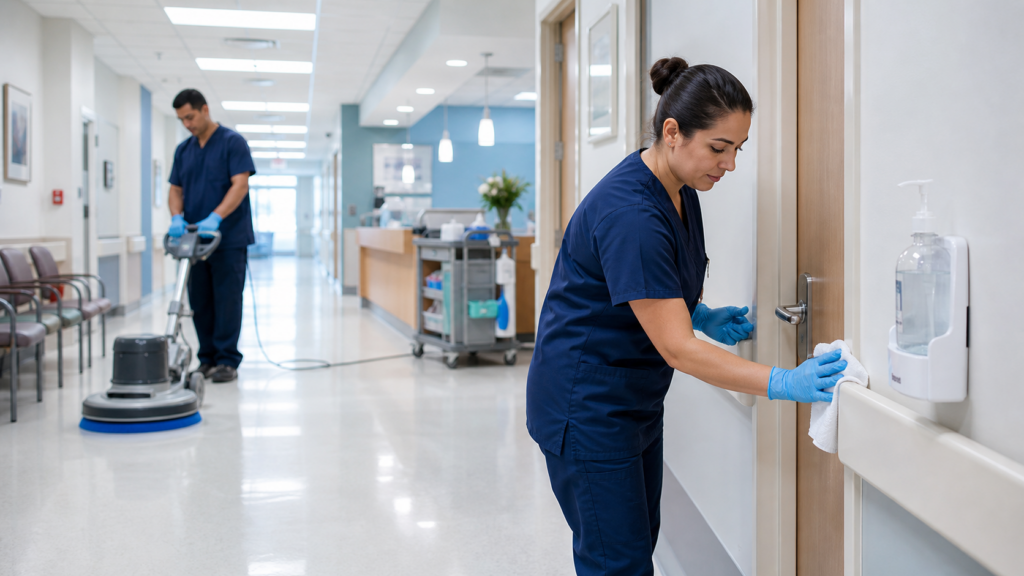
Professional hospital janitorial services play an important role in keeping healthcare environments clean, organized, and ready for daily use. Hospitals are different from ordinary offices, retail stores, or commercial buildings because patients, visitors, doctors, nurses, technicians, and support staff move through the facility throughout the day. Cleaning teams must therefore follow structured procedures for patient rooms, corridors, waiting areas, restrooms, treatment spaces, administrative areas, and other shared surfaces while working carefully around healthcare operations.
Cleaning in a hospital is not simply about making floors shine or removing visible dust.
Healthcare facilities contain high-touch surfaces, sensitive equipment, busy entrances, food areas, patient spaces, and locations where stronger hygiene controls may be necessary.
A well-organized janitorial program should combine routine cleaning, appropriate disinfection, waste handling, floor maintenance, supply management, documentation, staff training, and clear communication with facility teams.
The following guide explains how hospital cleaning works, which areas typically need the most attention, what tasks janitorial teams perform, and what healthcare facilities should consider when planning a reliable cleaning program.
What Are Hospital Janitorial Services?
Hospital janitorial services are professional cleaning and facility-support tasks performed in healthcare environments.
The work may include routine cleaning as well as more specialized procedures depending on the type of area being serviced.
Common responsibilities can include:
- Dusting
- Surface cleaning
- Disinfection
- Floor care
- Restroom cleaning
- Trash removal
- Waste handling
- Waiting-area cleaning
- Patient-room cleaning
- Common-area maintenance
- High-touch surface cleaning
- Supply restocking
- Spill response
- Periodic deep cleaning
The exact scope depends on the hospital, the department, operating hours, facility policies, and the responsibilities assigned to the cleaning provider.
Why Hospital Cleaning Requires a Different Approach
Hospitals have cleaning needs that go beyond ordinary commercial environments.
A general office may primarily need dust removal, restroom servicing, vacuuming, trash removal, and occasional deep cleaning.
A hospital requires greater attention to how, when, and where cleaning is performed.
High Levels of Daily Traffic
Hospitals can operate around the clock.
Patients arrive throughout the day.
Visitors move between waiting rooms and patient areas.
Medical staff use hallways, treatment rooms, elevators, offices, and shared spaces continuously.
All that foot traffic also wears on automatic entrance doors, so hospitals typically schedule regular commercial door maintenance to keep sensors, operators and sliding panels working reliably.
This traffic means surfaces can become dirty again quickly.
Cleaning schedules need to account for continuous use rather than assuming a building becomes empty every evening.
Many High-Touch Surfaces
Commonly touched surfaces can include:
- Door handles
- Bed rails
- Elevator buttons
- Light switches
- Countertops
- Waiting-room chairs
- Reception desks
- Handrails
- Bathroom fixtures
- Call buttons
These areas may require more frequent attention than low-touch surfaces.
Different Spaces Have Different Needs
A hospital is not one uniform environment.
A public lobby has different cleaning requirements from a patient room.
A staff office differs from a clinical treatment area.
Restrooms require different tools and procedures than administrative spaces.
A successful janitorial program should recognize these differences.
Cleaning and Disinfection Are Not the Same
Understanding the difference between cleaning and disinfection is important.
Cleaning
Cleaning removes dirt, dust, spills, organic material, and visible soil from surfaces.
It usually involves water, detergent, or another suitable cleaning product.
Disinfection
Disinfection uses an appropriate product and process to reduce microorganisms on surfaces.
A surface generally needs to be cleaned properly before disinfection can work as intended.
This is why wiping a visibly dirty surface with disinfectant may not be enough.
The cleaning process should follow the correct sequence.
Importance of High-Touch Surface Cleaning
High-touch surfaces receive frequent contact from many people.
These areas deserve special attention in hospitals because repeated contact can quickly reintroduce dirt and contamination.
A cleaning checklist may prioritize surfaces such as:
- Door handles
- Push plates
- Elevator controls
- Handrails
- Faucet handles
- Toilet flush handles
- Countertops
- Shared keyboards
- Chair arms
- Bed rails
The frequency of cleaning should depend on how heavily the area is used.
A busy emergency waiting area may require more frequent service than a low-traffic administrative hallway.
Patient Room Cleaning
Patient rooms are one of the most important areas in a hospital cleaning program.
The room may contain a bed, side tables, bathroom fixtures, chairs, switches, medical equipment, and many frequently touched surfaces.
Cleaning teams need to work carefully around patients and staff.
Typical patient-room cleaning may include:
- Removing trash
- Cleaning visible soil
- Wiping high-touch surfaces
- Cleaning bathroom fixtures
- Mopping or cleaning floors
- Restocking approved supplies
- Cleaning furniture surfaces
- Following room-specific procedures
The process may change depending on whether the patient is still occupying the room or has been discharged.
Occupied Room Cleaning
An occupied patient room requires care and respect.
The janitorial worker may need to coordinate with clinical staff before entering.
Cleaning should be performed without interfering with patient care.
Noise should be kept reasonable.
Personal belongings should not be moved unnecessarily.
The worker should also follow any room-specific precautions communicated by the healthcare team.
Discharge or Terminal Cleaning
When a patient leaves a room, the space may require a more detailed cleaning process before it is prepared for the next patient.
The exact procedure depends on facility policy.
Areas commonly addressed can include:
- Bed frames
- Bed rails
- Tables
- Chairs
- Door handles
- Bathroom fixtures
- Floors
- Switches
- Wall surfaces when needed
- Other frequently touched areas
This process often requires more thorough attention than routine occupied-room cleaning.
Cleaning Hospital Waiting Areas
Waiting rooms experience constant movement.
Patients and visitors may sit in the same chairs throughout the day.
Reception desks, tables, doors, and vending areas may receive frequent contact.
A cleaning plan should consider:
- Seating surfaces
- Chair arms
- Tables
- Door handles
- Reception counters
- Floors
- Trash containers
- Glass surfaces
- Public restrooms
- Hand-sanitizer areas
Visible cleanliness is important because waiting rooms often shape a visitor’s first impression of the facility.
Hospital Restroom Cleaning
Restrooms require frequent attention because they are used by many people throughout the day.
Hospital restrooms may be located in:
- Patient rooms
- Waiting areas
- Staff areas
- Public corridors
- Administrative sections
Routine tasks can include:
- Cleaning toilets
- Cleaning sinks
- Wiping faucets
- Cleaning mirrors
- Disinfecting high-touch points
- Refilling soap
- Refilling paper products
- Emptying trash
- Cleaning floors
- Checking for spills
Restroom conditions can change quickly, so scheduled inspections can be useful.
Floor Care in Healthcare Facilities
Hospital floors need regular maintenance because they experience heavy foot traffic and frequent movement of carts, wheelchairs, beds, and equipment.
Different floor materials may require different cleaning methods.
Common hospital floor types can include:
- Vinyl
- Rubber
- Tile
- Luxury vinyl
- Resilient flooring
- Carpet in selected non-clinical areas
A floor-care program may include:
- Dust mopping
- Damp mopping
- Machine scrubbing
- Spot cleaning
- Carpet vacuuming
- Carpet extraction
- Periodic refinishing where appropriate
Correct cleaning products matter because some chemicals can damage flooring or leave slippery residue.
Managing Spills Safely
Spills should be addressed quickly in healthcare environments.
A spill can create a slip hazard.
Some spills may also require special handling depending on what was spilled.
Janitorial staff should know when a routine cleaning process is appropriate and when additional precautions are required.
A basic response may involve:
- Securing the area.
- Using appropriate protective equipment.
- Removing the spill safely.
- Cleaning the surface.
- Applying suitable disinfection if required.
- Disposing of materials correctly.
- Documenting the event when necessary.
Waste Handling in Hospitals
Hospital waste needs careful separation.
Not all waste belongs in the same container.
Some materials may be ordinary trash, while other materials may fall into special waste categories.
Janitorial workers should understand the facility’s waste system.
They should not guess.
Examples of waste streams may include:
- General trash
- Recycling
- Regulated medical waste
- Sharps containers
- Pharmaceutical waste
- Other controlled materials
Cleaning workers should handle only the waste categories they are trained and authorized to manage.
Why Color-Coded Tools Can Be Useful
Some healthcare cleaning programs use color-coded tools to reduce the chance of using the same cloth, mop, or equipment in different types of areas.
For example, one color may be used for restrooms and another for patient-room surfaces.
The exact color system varies by facility.
The important point is consistency.
A clear tool-separation system can make procedures easier for staff to follow.
Microfiber Cleaning Tools
Microfiber cloths and mop systems are commonly used in professional cleaning because they can collect dust and soil effectively when used properly.
Hospitals may use separate microfiber cloths for different rooms or surface categories.
The cloths should be changed as required rather than using one cloth across many rooms.
Proper laundering and storage are also important.
Cleaning Chemicals and Product Selection
Hospital janitorial services require careful product selection.
A product should be appropriate for the surface and intended task.
Cleaning teams may need:
- Neutral floor cleaners
- General surface cleaners
- Glass cleaners
- Approved disinfectants
- Restroom cleaners
- Specialty products
Workers should understand dilution, application, contact time, storage, and handling instructions.
Using more chemical than recommended is not automatically better.
Incorrect use can create residue, damage surfaces, or reduce effectiveness.
Understanding Disinfectant Contact Time
Many disinfectants need to remain visibly wet on a surface for a specified period to work properly.
This is commonly called contact time or dwell time.
Simply spraying and immediately wiping the product away may not provide the intended result.
Janitorial staff should follow the product label and facility procedures.
Training is important because different products can have different instructions.
Personal Protective Equipment
Janitorial workers may need personal protective equipment depending on the task and area.
Examples can include:
- Gloves
- Protective gowns
- Eye protection
- Face protection
- Masks or respirators where specifically required
The correct equipment depends on the situation.
Workers should receive training on when protective equipment is necessary and how to remove it safely.
Cleaning Around Medical Equipment
Medical equipment may have specific cleaning requirements.
Janitorial teams should not assume they are responsible for every device in a patient room.
Some equipment may need to be cleaned by clinical or technical staff.
Clear responsibilities should be established.
This helps prevent accidental damage and avoids uncertainty about whether important equipment has been cleaned.
Hospital Corridors and Hallways
Corridors are high-traffic areas.
Beds, wheelchairs, supply carts, staff, patients, and visitors may all use them.
Cleaning teams need to keep these areas safe while avoiding disruption.
Common tasks include:
- Removing litter
- Dust mopping
- Damp mopping
- Spot cleaning
- Cleaning handrails
- Cleaning wall marks
- Servicing trash containers
Wet-floor signs or other warning methods should be used when needed.
Elevator Cleaning
Elevators contain multiple high-touch points in a small area.
These may include:
- Buttons
- Handrails
- Door edges
- Interior walls
- Control panels
Floors may also require frequent cleaning because of constant foot and equipment traffic.
Elevator cleaning should be scheduled carefully so it does not unnecessarily block access.
Nurse Station Cleaning
Nurse stations can be busy work areas.
They may contain computers, telephones, counters, paperwork, medications, and equipment.
Janitorial staff should know which surfaces they are permitted to clean.
Shared counters and touchpoints may need routine service, but workers should avoid moving sensitive items.
Good communication between cleaning teams and healthcare staff is essential.
Administrative Office Cleaning
Hospitals also contain offices, meeting rooms, staff lounges, and other non-clinical spaces.
These areas may use a cleaning approach similar to traditional commercial offices.
Tasks can include:
- Vacuuming
- Dusting
- Emptying trash
- Cleaning desks where permitted
- Cleaning shared touchpoints
- Restroom servicing
- Floor maintenance
However, the hospital’s overall policies still apply.
Entrance and Lobby Cleaning
Hospital entrances see continuous traffic.
Rain, dust, leaves, and outdoor debris can be tracked inside.
Entrances should remain clean and safe.
A lobby program may include:
- Floor care
- Mat cleaning
- Glass cleaning
- Door cleaning
- Trash removal
- Seating-area cleaning
- Reception surface cleaning
During poor weather, floor inspection frequency may need to increase.
Hospital Kitchen and Food-Service Areas
Food-service spaces require their own cleaning procedures.
Janitorial staff may be responsible for some surfaces while kitchen staff handle others.
Clear responsibilities are important.
Areas may include:
- Dining floors
- Tables
- Trash areas
- Public seating
- Break rooms
- Staff dining spaces
Food preparation equipment should only be cleaned by personnel assigned and trained for that responsibility.
Staff Break Rooms and Locker Areas
Break rooms can become busy during shift changes.
Common cleaning tasks may include:
- Wiping tables
- Cleaning counters
- Emptying trash
- Cleaning sinks
- Cleaning floors
- Wiping appliance exteriors
- Restocking basic supplies when assigned
Locker rooms may also require floor, restroom, shower, and high-touch surface cleaning.
Day Porter Services in Hospitals
Some hospitals use daytime cleaning staff or day porters.
Their role can include continuous support such as:
- Responding to spills
- Checking restrooms
- Emptying overflowing trash
- Cleaning high-traffic areas
- Spot-cleaning entrances
- Supporting supply restocking
- Addressing urgent cleaning requests
Daytime support can be especially valuable in facilities that operate 24 hours a day.
Night Cleaning Programs
Certain tasks may be easier to complete during quieter hours.
Night teams may perform:
- Detailed floor care
- Low-traffic corridor cleaning
- Deep cleaning
- Periodic maintenance
- Administrative area cleaning
However, hospitals rarely become completely empty.
Cleaning teams still need to coordinate with staff and work around patient care.
Deep Cleaning in Hospitals
Routine daily cleaning does not replace periodic deep cleaning.
Deep cleaning may focus on areas that are harder to address during normal service.
Examples can include:
- Baseboards
- High surfaces
- Corners
- Wall marks
- Furniture edges
- Behind movable items
- Detailed floor work
- Vent exteriors
- Selected fixtures
A planned deep-cleaning schedule can prevent soil from building up over time.
Cleaning High and Low Surfaces
A useful cleaning method is to work from cleaner or higher areas toward lower areas when appropriate.
Dust or debris from higher surfaces can fall downward.
If the floor is cleaned first and high surfaces later, the floor may need to be cleaned again.
A logical sequence improves efficiency.
Preventing Cross-Contamination
Cross-contamination can occur when cleaning tools or hands transfer soil from one area to another.
Cleaning teams can reduce this possibility by following consistent procedures.
Examples include:
- Changing gloves when required
- Using separate cloths
- Using room-specific supplies
- Cleaning cleaner areas before dirtier areas
- Handling waste carefully
- Following hand-hygiene procedures
- Storing clean and dirty tools separately
The exact process should match hospital policy.
Staff Training for Hospital Janitorial Services
Training is one of the most important parts of a healthcare cleaning program.
A worker may be experienced in commercial cleaning but still need additional instruction before working in a hospital.
Training topics can include:
- Cleaning procedures
- Disinfection
- Chemical safety
- Personal protective equipment
- Waste handling
- Hand hygiene
- Room entry procedures
- Privacy
- Spill response
- Equipment use
- Documentation
Training should not be treated as a one-time event.
Procedures may change.
Products may change.
New workers may join the team.
Refresher training can help maintain consistency.
Importance of Cleaning Checklists
Checklists can help teams complete tasks in a consistent order.
A patient-room checklist may include:
- Door handles
- Bed rails
- Tables
- Chairs
- Switches
- Bathroom surfaces
- Floors
- Trash
- Supply checks
A restroom checklist would be different.
Checklists reduce the chance that high-touch surfaces are forgotten.
They can also help supervisors review performance.
Quality Control and Inspections
Cleaning should be checked, not simply assumed.
Supervisors may conduct routine inspections to review:
- Visible cleanliness
- Floor condition
- Restroom condition
- Supply levels
- Trash removal
- High-touch surfaces
- Proper equipment storage
Quality-control systems can also include corrective actions when problems are found.
Communication With Hospital Staff
Cleaning teams work inside an active healthcare environment.
Clear communication is essential.
Hospital staff may need to tell cleaning workers:
- When a room is available
- Which areas are restricted
- Whether special precautions apply
- Which surfaces should not be touched
- Whether an urgent spill needs attention
- When equipment should be avoided
Likewise, cleaning teams should report issues such as leaks, damaged flooring, overflowing waste containers, or unsafe conditions.
Scheduling Hospital Cleaning
A hospital cleaning schedule should reflect real activity patterns.
High-traffic spaces may need service multiple times per day.
Lower-traffic areas may require less frequent attention.
A schedule can include:
- Daily cleaning
- Multiple daily touchpoint cleaning
- Weekly tasks
- Monthly deep cleaning
- Periodic floor maintenance
- On-demand spill response
The schedule should remain flexible.
Unexpected situations can change priorities.
Cleaning During Flu and Respiratory Illness Seasons
Healthcare facilities may experience increased traffic during periods when respiratory illnesses are more common.
During these times, high-touch areas and waiting rooms may need more frequent attention.
Cleaning teams should continue following facility-approved procedures rather than creating unapproved methods.
Consistency becomes especially important when workloads increase.
Cleaning Emergency Departments
Emergency departments can have unpredictable traffic and rapid patient turnover.
Cleaning teams may need to respond quickly between uses while avoiding interference with medical care.
Important factors include:
- Fast communication
- Clear room-status information
- Readily available supplies
- Proper waste handling
- High-touch surface attention
- Flexible staffing
The cleaning process should support clinical operations without slowing them down unnecessarily.
Cleaning Outpatient and Medical Office Areas
Healthcare facilities often include outpatient clinics and medical offices.
These spaces may not require the same cleaning intensity as some hospital departments, but they still benefit from structured procedures.
Typical areas include:
- Exam rooms
- Reception desks
- Waiting rooms
- Restrooms
- Staff offices
- Corridors
The same basic principles of cleanliness, high-touch surface management, and consistent procedures still apply.
Choosing a Hospital Janitorial Services Provider
Healthcare facilities should evaluate more than basic cleaning ability when selecting a janitorial provider.
Useful considerations can include:
- Experience in healthcare environments
- Staff training
- Supervision
- Quality-control processes
- Communication systems
- Cleaning documentation
- Equipment management
- Waste-handling procedures
- Ability to work around active operations
- Flexible staffing
The right provider should understand that healthcare cleaning requires structure and consistency.
Questions to Ask Before Hiring a Cleaning Provider
Facility managers may want to ask:
- How are workers trained for healthcare environments?
- How are high-touch surfaces handled?
- What quality-control process is used?
- How are cleaning chemicals managed?
- How are different areas separated?
- How are spills handled?
- What happens when staffing changes?
- How are complaints or missed tasks corrected?
- Can services be adjusted for 24-hour operations?
- How is communication handled with facility staff?
Clear answers can reveal how organized the provider’s system is.
Common Hospital Cleaning Mistakes
Several mistakes can weaken a cleaning program.
Treating Every Area the Same
A waiting room, restroom, patient room, and office should not all follow identical procedures.
Reusing Dirty Cloths Too Long
Cleaning tools can spread soil if they are not changed or managed correctly.
Ignoring Contact Time
Disinfectants need to be used according to instructions.
Focusing Only on Appearance
A surface can look clean while still requiring proper cleaning or disinfection procedures.
Poor Communication
Cleaning workers should know when rooms are available and when special precautions apply.
Inconsistent Training
Different employees should not follow completely different methods for the same task.
Benefits of a Structured Hospital Cleaning Program
A well-organized cleaning program can support the overall operation of a healthcare facility.
Potential benefits include:
- Cleaner patient areas
- Better-maintained floors and surfaces
- More consistent restroom conditions
- Faster response to spills
- Improved organization
- More reliable supply restocking
- Clearer accountability
- Better coordination between departments
The strongest programs focus on consistency rather than occasional intensive cleaning.
Why Documentation Matters
Documentation helps facility managers understand what work was completed.
Records may include:
- Cleaning schedules
- Inspection forms
- Staff training
- Corrective actions
- Deep-cleaning tasks
- Supply checks
- Equipment maintenance
Documentation can also make it easier to identify repeated problem areas.
Equipment Maintenance
Cleaning equipment needs regular care.
Dirty or poorly maintained equipment can reduce cleaning quality.
Examples include:
- Mop systems
- Vacuum cleaners
- Floor scrubbers
- Extractors
- Carts
Equipment should be cleaned, stored, and maintained according to its intended use.
Clean equipment should also be separated from dirty tools where practical.
Technology in Hospital Janitorial Operations
Some cleaning programs use technology to improve coordination.
Examples can include:
- Digital task lists
- Mobile inspection forms
- Work-order systems
- Supply tracking
- Cleaning schedules
- Supervisor dashboards
Technology does not replace trained staff.
However, it can make task tracking and communication easier.
Building a Consistent Cleaning Culture
Hospital cleanliness depends on more than one worker.
It requires cooperation between:
- Cleaning staff
- Supervisors
- Nurses
- Facility managers
- Environmental services teams
- Administrative staff
- Other departments
Clear responsibilities help everyone understand who handles each task.
When expectations are consistent, cleaning operations become easier to manage.
Conclusion
Hospital janitorial services require a structured approach that combines routine cleaning, proper disinfection, high-touch surface care, floor maintenance, restroom servicing, waste handling, spill response, staff training, and strong communication with healthcare teams. Hospitals contain many different environments, so cleaning procedures should be adjusted according to the needs of patient rooms, waiting areas, corridors, administrative spaces, restrooms, and other departments. Consistent checklists, suitable products, trained workers, quality inspections, and clear responsibilities can help healthcare facilities maintain cleaner and more organized spaces throughout daily operations. A reliable janitorial program should focus not only on appearance but also on repeatable procedures, careful work, and ongoing coordination with the people who use the facility.
Frequently Asked Questions
What are hospital janitorial services?
Hospital janitorial services include cleaning, disinfection, floor care, restroom servicing, waste removal, high-touch surface cleaning, supply restocking, and other facility-support tasks performed in healthcare environments.
How are hospital janitorial services different from regular office cleaning?
Hospitals have more high-touch surfaces, continuous traffic, patient-care areas, specialized waste streams, and room-specific cleaning procedures. Staff may also require additional training for healthcare settings.
How often should hospital high-touch surfaces be cleaned?
Cleaning frequency depends on the area, traffic level, facility procedures, and how often surfaces are touched. Busy areas may require attention several times throughout the day.
Do hospital cleaning teams clean medical equipment?
Responsibilities vary by facility. Some equipment may be cleaned by janitorial staff, while sensitive medical devices may be assigned to clinical or technical teams. Clear task responsibilities are important.
What areas are included in hospital janitorial cleaning?
Services may cover patient rooms, waiting areas, corridors, restrooms, entrances, administrative offices, staff areas, elevators, nurse stations, and other approved spaces.
Why is staff training important for hospital janitorial services?
Healthcare cleaning involves specialized procedures for disinfection, waste handling, personal protective equipment, high-touch surfaces, chemical use, privacy, and working around active patient care.
What should a hospital look for in a janitorial provider?
Facilities should consider healthcare experience, employee training, supervision, quality-control systems, communication, documentation, flexible staffing, cleaning procedures, and the provider’s ability to work in active healthcare environments.
What is the difference between cleaning and disinfecting in a hospital?
Cleaning removes dirt, soil, and debris from a surface. Disinfection uses an appropriate product and process to reduce microorganisms. In many situations, proper cleaning should occur before disinfection.