
Few footwear choices move between different parts of a wardrobe as easily as black boots. Depending on their silhouette, material, heel, and construction, they can accompany...
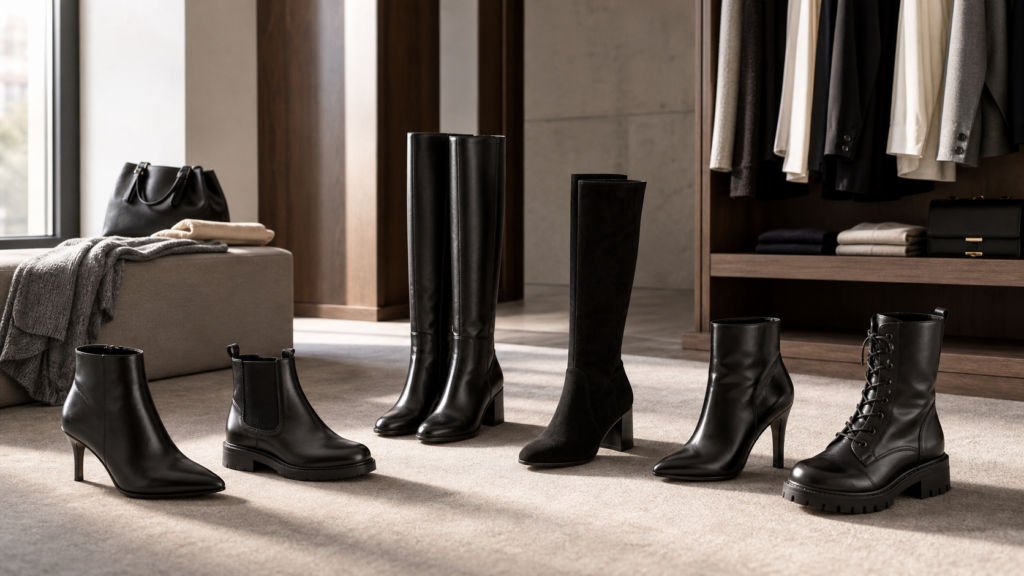
Few footwear choices move between different parts of a wardrobe as easily as black boots. Depending on their silhouette, material, heel, and construction, they can accompany office tailoring, weekend denim, evening dresses, travel outfits, and practical cold weather clothing. Their dark neutral color makes coordination relatively straightforward, but color alone does not make every pair equally versatile. Choosing boots that fit your lifestyle requires attention to comfort, proportions, materials, weather conditions, dress codes, and how frequently you expect to wear them.
A sleek ankle boot and a heavy lug sole boot may share the same color yet serve completely different purposes. Similarly, a high heeled design intended for an evening event is unlikely to be the best option for a walking intensive trip.
Understanding those distinctions can help you buy footwear that does more than look appealing. This guide explores nine major styles, how to wear them in different settings, and what to consider when evaluating fit, construction, materials, and care.
Why Black Boots Remain a Versatile Footwear Choice
Black is a neutral that coordinates with a broad range of colors, including white, gray, beige, navy, denim, earthy shades, pastels, and brighter tones. That makes black footwear relatively easy to integrate into an existing wardrobe.
Versatility, however, also comes from silhouette.
Minimal ankle boots can work with both casual and polished outfits. Tall boots add visual presence and additional leg coverage. Chelsea designs favor convenience, while heeled options can create a dressier appearance.
The most useful pair is therefore not necessarily the most fashionable one. It is usually the pair that works with the clothes, activities, climate, and occasions already present in your life.
How Black Boots Adapt to Different Personal Styles
The same basic footwear color can support very different aesthetics.
Smooth leather with a narrow silhouette can appear polished and understated. Suede introduces a softer texture. Chunky soles and pronounced hardware create a stronger visual statement, while simple flat designs tend to blend easily into everyday outfits.
Toe shape matters as well. Round and almond toes often create classic proportions, whereas square and pointed shapes can produce a more distinctive appearance.
These details allow a neutral shoe to have considerable personality without sacrificing its ability to coordinate with multiple outfits.
Choosing Black Boots for Your Lifestyle
Before buying, consider where you will realistically wear the boots.
For commuting and frequent walking, comfort, traction, and durability may be priorities. Professional wardrobes may call for simpler shapes and restrained hardware. Travelers can benefit from lightweight, versatile footwear, while people living in wet or cold climates may need technical weather protection.
A beautiful pair that does not match your routine can spend most of its life in storage. Matching footwear to actual use generally creates better long term value.
9 Black Boots Styles Worth Knowing
There are many variations within the category, but several established silhouettes cover most wardrobe requirements. Understanding how each works makes comparing options considerably easier.
1. Black Ankle Boots for Everyday Outfits
Ankle boots are among the easiest boot styles to wear regularly because the short shaft works with many trouser, skirt, and dress silhouettes.
A simple pair with minimal embellishment can accompany jeans during the weekend and tailored trousers for smart casual occasions. Heel height and material can move the same general silhouette toward casual or formal styling.
For frequent wear, pay attention to the outsole, fastening method, lining, weight, and cushioning rather than evaluating appearance alone.
A well fitting ankle boot in an understated design can become one of the most frequently worn pairs in a wardrobe.
2. Black Chelsea Boots for Effortless Styling
Chelsea boots traditionally feature elastic side panels and a pull on construction. Their minimal appearance makes them particularly adaptable.
Slim Chelsea designs can complement smart casual clothing, while heavier soles produce a more rugged look. They pair naturally with denim, trousers, knitwear, skirts, and simple dresses.
Their slip on format can also be convenient for daily routines and travel.
Elastic panels do not make a boot weatherproof, however. Anyone buying Chelsea boots for rain should examine the specific upper materials, seams, sole construction, and manufacturer’s claims.
3. Black Knee High Boots for a Refined Silhouette
Knee high designs provide greater coverage and create a stronger visual line than ankle footwear.
They can work particularly well with midi skirts, dresses, leggings, and appropriately fitted trousers. Flat versions often feel practical for daytime outfits, while heeled designs can introduce a more formal quality.
Correct shaft fit is important. Check both shaft height and calf circumference when those measurements are provided by the manufacturer.
A boot that is too tight around the calf can be uncomfortable, while excessive room may alter the intended silhouette. Wider and narrower calf options are available from some footwear manufacturers.
4. Black Heeled Boots for Work and Evening Wear
Heeled designs range from low block heels to high, narrow heels, creating substantial differences in both appearance and wearability.
A moderate block heel can complement professional outfits and may offer a larger contact area with the ground than a narrow heel. Taller heels can create a more dramatic silhouette for dinners, events, and other occasions.
Comfort cannot be predicted from heel height alone. Foot shape, shoe construction, toe box design, cushioning, heel positioning, and intended duration of wear all matter.
Select heels according to where you are going as well as what you are wearing.
5. Black Flat Boots for Busy Days
A flat or low heeled pair can be particularly useful when a day involves frequent walking, commuting, errands, or long periods on the feet.
However, flat does not automatically mean supportive or comfortable.
Examine flexibility, cushioning, width, weight, outsole construction, and fit. Individual support requirements differ, so a design that works well for one person may not work equally well for another.
From minimalist ankle styles to tall riding inspired designs, flat black footwear can cover a broad range of casual and polished settings.
6. Black Combat Inspired Boots for Casual Style
Combat inspired fashion boots typically use lace up construction, sturdier looking soles, and a more substantial silhouette.
They can add visual contrast to dresses and skirts or reinforce the relaxed character of jeans, cargo trousers, and oversized knitwear.
Some fashion designs borrow military or workwear aesthetics without providing the performance characteristics associated with specialist footwear. Appearance should therefore not be used as evidence of protective capability.
If you need boots for an occupation with safety requirements, select certified footwear appropriate for that workplace rather than a fashion equivalent.
7. Black Platform and Chunky Boots for Statement Outfits
Chunky and platform silhouettes create visual weight and can become the focal point of an outfit.
They frequently pair well with wide leg trousers, denim, short or midi skirts, and relaxed layers. Combining substantial footwear with simpler clothing can create a balanced look, although there are no rigid styling rules.
Platform height does not eliminate the practical considerations associated with elevated footwear. Weight, stability, sole flexibility, and individual comfort should still be assessed.
Try walking on different safe indoor surfaces before deciding whether a pair suits your routine.
8. Black Weather Ready Boots for Rain and Winter
Wet and cold weather can require more than a dark color and substantial appearance.
Rain footwear should be selected according to the manufacturer’s stated water protection. Winter boots may incorporate insulation, specialized outsoles, higher shafts, or weather resistant construction.
Water resistant and waterproof are not necessarily equivalent terms. Product claims and test standards can also vary.
Similarly, no ordinary outsole should be assumed to eliminate slipping on ice. Severe winter conditions may require footwear or traction solutions specifically designed for the environment.
9. Black Dress Boots for Special Occasions
Dress boots typically feature cleaner lines and refined materials, allowing them to complement elevated clothing during cooler seasons.
Ankle versions can work beneath tailored trousers or alongside dresses. Sleek knee high footwear can provide more coverage while maintaining a polished silhouette.
Suede, smooth leather, and quality synthetic materials can each create different effects. Decorative details should complement rather than compete with the outfit if versatility is a priority.
For weddings, dinners, parties, and other extended events, also consider standing time, walking distance, stairs, flooring, and venue conditions.
Black Boots for Work and Professional Outfits
Boots can be appropriate for many workplaces, although dress expectations differ substantially between employers and industries.
A streamlined ankle boot with a low or moderate heel can fit naturally with tailored trousers and suits. Knee high footwear may pair with professional dresses and longer skirts where appropriate for the workplace.
Minimal hardware and clean lines generally create a more understated impression.
Styling Black Boots With Office Clothing
One advantage of dark footwear is the ability to create visual continuity.
Wearing black footwear with black trousers, tights, or a dark skirt can produce a long, consistent line. Alternatively, pairing it with lighter tailoring introduces deliberate contrast.
With trousers, consider how the hem meets the boot. Straight and wide leg trousers can often fall over ankle footwear, while cropped styles may intentionally reveal part of the shaft.
Keep the overall condition of footwear in mind. Regular cleaning and maintenance can make frequently worn office shoes look more polished.
When Black Boots Need Workplace Specific Features
Some workplaces have requirements that go beyond appearance.
Jobs involving industrial environments, kitchens, construction sites, laboratories, healthcare settings, or other specialized conditions may require specific protective footwear.
A fashionable lug sole, steel colored detail, or workwear inspired upper does not demonstrate compliance with safety requirements.
Follow workplace policies and applicable safety standards when occupational footwear is required.
Black Boots for Casual and Weekend Outfits
Casual styling gives you greater freedom to experiment with shape, texture, and proportion.
Ankle and Chelsea designs work naturally with denim. Chunky lace up footwear can provide contrast with softer garments. Tall flat boots can accompany leggings, skirts, knitted dresses, and long coats.
All black outfits are another option. Combining different textures such as denim, knitwear, leather, and suede can prevent a monochromatic outfit from appearing visually flat.
Alternatively, use dark footwear as an anchor for lighter clothing. Cream knitwear, blue denim, camel outerwear, and colorful dresses can all work effectively with black footwear.
Black Boots With Jeans
The ideal combination depends on the jeans’ cut.
Straight jeans can fall over an ankle shaft or finish just above it. Wider cuts often cover more of the boot, leaving the toe and part of the vamp visible.
Skinny or narrow trousers may fit inside tall boots when there is sufficient room without uncomfortable bunching.
Consider hem length carefully. Excess fabric collecting around an ankle boot can change the silhouette, while an unintentionally large gap between cropped jeans and footwear may interrupt the proportions you intended.
Black Boots With Dresses and Skirts
Pairing boots with dresses creates options across multiple seasons.
Ankle footwear provides a distinct visual break between leg and shoe. Knee high designs reduce that gap and can offer additional coverage in cooler temperatures.
The contrast between footwear and garment can also be used intentionally. Heavy boots can make a delicate dress feel more casual, while a sleek heeled pair can reinforce a refined outfit.
Tights allow further adjustment of color, warmth, and visual continuity.
Black Boots for Travel and City Breaks
Travel shoes need to satisfy practical demands that are easy to underestimate while packing.
A city trip may involve airports, stations, stairs, uneven pavements, museums, restaurants, and substantially more walking than an ordinary day. Proven comfort should therefore take priority over choosing a new pair solely for appearance.
Wear potential travel footwear multiple times before departure.
Choosing Black Boots for Travel
Versatility is particularly valuable when luggage space is limited.
A minimal ankle or Chelsea style can potentially work with daytime and dinner outfits, reducing the number of shoes required. Check the destination’s expected weather before relying on a single pair.
Boot weight also matters. Heavy footwear can add significant luggage weight, although travelers may choose to wear their bulkiest pair during transit.
For hiking, snow, or other demanding environments, technical suitability should take priority over maximizing outfit combinations.
Making Black Boots Comfortable for Long Days
Begin with correct sizing rather than expecting major discomfort to disappear after a breaking in period.
Wear the socks or hosiery you intend to use and assess toe space, width, heel security, and pressure points. Some upper materials may soften through use, but footwear that is fundamentally the wrong size is unlikely to become reliably comfortable.
People with ongoing foot pain or medical foot concerns should consider individualized professional advice when selecting footwear for prolonged walking.
Black Boots for Evening and Special Occasions
Boots can provide a stylish alternative to lower cut footwear for evening events, particularly during autumn and winter.
A pointed ankle design can accompany tailored trousers or a dress, while sleek knee high boots can work with midi lengths. Moderate or high heels can increase formality depending on their shape and finish.
The venue should influence your choice. Outdoor celebrations and uneven surfaces create different footwear demands than indoor restaurants or theaters.
If an event includes considerable standing or dancing, wearing shoes you already know are comfortable can be preferable to debuting an unfamiliar pair.
How to Choose Quality Black Boots
Price alone does not determine quality.
Look closely at upper materials, stitching, sole attachment, lining, zippers, elastic sections, hardware, and finishing. Consider whether the construction suits the amount and type of wear you expect.
Material selection should also reflect your maintenance preferences.
Smooth leather, suede, synthetic materials, rubber, and textiles have different care requirements and performance characteristics. Product descriptions and manufacturer instructions provide more reliable information than assumptions based purely on appearance.
Leather and Suede Black Boots
Leather is widely used in footwear because it can offer durability and develop character with appropriate use and care. Properties vary depending on the type of leather and its finish.
Suede has a softer textured surface but often requires different maintenance, particularly around water, mud, and staining.
Neither material should automatically be assumed to be waterproof.
Use cleaning and protective products that the footwear manufacturer identifies as suitable for the particular material and finish.
Synthetic Black Boots
Synthetic footwear includes a broad range of materials and construction methods, so generalizations about durability, comfort, or environmental impact should be treated cautiously.
Some shoppers choose synthetic products for price, appearance, specific performance characteristics, or a preference to avoid animal derived materials.
Review product specifications, care instructions, construction, and customer service policies when comparing options.
How Black Boots Should Fit
Correct sizing contributes to comfort and usable life.
There should generally be sufficient room around the toes without the foot sliding excessively inside the shoe. Width should accommodate the foot without painful pressure, and the heel should feel appropriately secure for the specific construction.
With knee high and over the knee designs, shaft measurements become equally important.
Checking Black Boots Before Buying
When possible, try both boots because feet can differ slightly in size.
Wear your usual boot socks and spend enough time walking indoors to identify pressure, rubbing, or instability. Test zippers, laces, and elastic sections as well.
When shopping online, consult the manufacturer’s size chart and product measurements rather than assuming sizing is identical across brands.
A retailer’s return policy is also worth checking before purchase.
How to Care for Black Boots
Regular maintenance can help footwear remain presentable and functional.
Begin by identifying the material. Cleaning methods appropriate for smooth leather may not be appropriate for suede, textiles, or some synthetic finishes.
Remove loose dirt carefully and follow manufacturer recommendations for deeper cleaning and conditioning.
Allow wet footwear to dry according to its care instructions. Direct high heat can damage some materials, adhesives, or finishes.
Storing Black Boots Correctly
Store footwear in a dry, ventilated location away from conditions that may damage its materials.
Boot trees, appropriate inserts, or other suitable supports can help some tall styles retain their shape. Avoid overcrowding shoes in a way that creates unnecessary creasing or deformation.
Before storing seasonal footwear for an extended period, clean it and make sure it is properly dry.
Maintaining the Appearance of Black Boots
Dark footwear can still show dust, salt residue, scratches, and fading.
Use products made for the relevant upper material and follow their instructions. Black shoe care products can refresh some compatible finishes, but always check suitability before application.
Periodic inspection of soles, heel tips, stitching, zippers, and other high wear areas can also identify problems before they become more difficult to repair.
Are Black Boots Worth Adding to a Capsule Wardrobe?
For many wardrobes, they can be a useful foundation because they coordinate with numerous colors and garment categories.
That does not mean everyone needs several pairs. A person who wears mostly casual clothing might get extensive use from one comfortable ankle or Chelsea design. Someone whose routine includes formal work and outdoor activities may need different footwear for those distinct functions.
A capsule wardrobe works best when it reflects real habits rather than a predetermined shopping checklist.
Before buying another pair, compare it with footwear you already own and identify what new function it will provide.
Frequently Asked Questions
Are black boots suitable for every season?
They can be worn across several seasons, but suitability depends on material, construction, climate, and weather. Insulated winter designs and lightweight fashion boots serve very different purposes.
Which black boots are the most versatile?
Minimal ankle and Chelsea styles are among the easiest to coordinate because they can work with jeans, trousers, skirts, dresses, and many smart casual outfits.
Can black boots be worn with dresses?
Yes. Ankle, knee high, heeled, and chunky styles can all work with dresses. Choose the silhouette according to the garment, occasion, weather, and desired level of formality.
How do I style black boots for work?
Pair streamlined designs with tailored trousers, midi skirts, professional dresses, or suits. Always consider your workplace dress code and any occupational footwear requirements.
How should black boots fit?
They should provide suitable toe room, comfortable width, and appropriate heel security without painful pressure. Tall designs should also fit properly around the calf and shaft.
How do I keep black boots looking new?
Clean them according to their specific material, dry them correctly after exposure to moisture, store them carefully, and use only compatible conditioning or protective products.
Conclusion
Black boots combine a highly adaptable color with silhouettes suited to work, casual dressing, travel, evenings, and challenging weather. The best pair depends not only on appearance but also on fit, materials, construction, climate, comfort, and how the footwear will actually be used. Choosing a design around your everyday lifestyle can provide greater versatility than following trends alone. With appropriate wear and care, a well chosen pair can remain a practical part of a wardrobe across many outfits and occasions.