
Learning the flute for beginners can feel challenging at first because producing a clear sound requires a combination of controlled airflow, embouchure, posture, and coordination. The good...
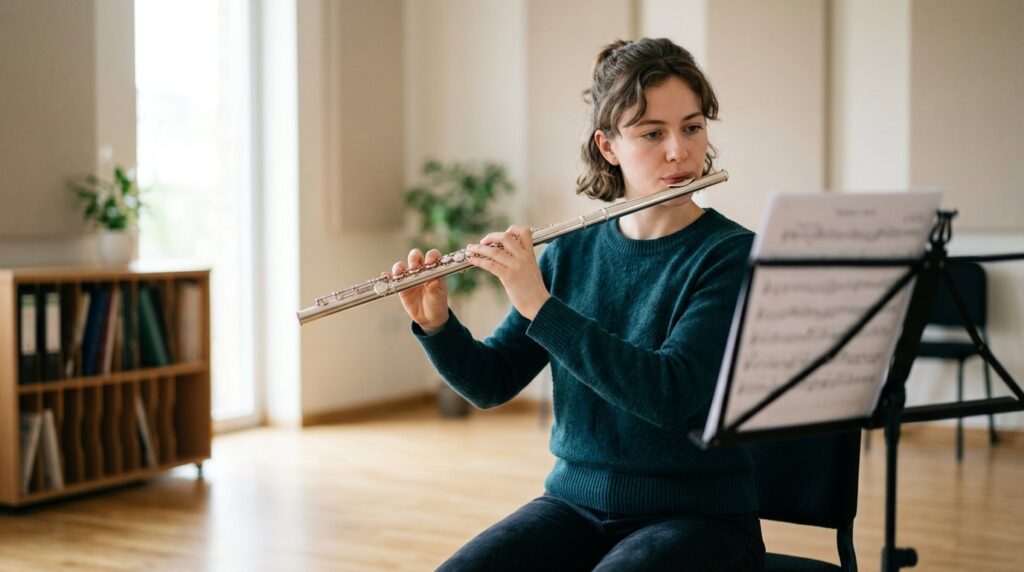
Learning the flute for beginners can feel challenging at first because producing a clear sound requires a combination of controlled airflow, embouchure, posture, and coordination. The good news is that these skills can be developed gradually through correct technique and consistent practice. A suitable instrument, realistic practice routine, and qualified instruction can help new players establish strong fundamentals while avoiding habits that become difficult to correct later.
The modern concert flute is used in orchestras, concert bands, chamber ensembles, jazz, contemporary music, and solo performance. Its relatively compact size also makes it convenient to transport compared with many larger instruments.
This guide explains how the flute works, how to choose a beginner instrument, how to produce your first sound, what to practice, common mistakes, maintenance, and realistic ways to improve.
What Is the Best Flute for Beginners?
For most new players interested in Western concert music, a standard student concert flute is the usual starting point. It is typically made from nickel silver or another metal alloy with a silver colored plating or finish, although construction varies among manufacturers.
Student models are designed to be accessible to developing players. They commonly feature a C footjoint and closed hole keys, also known as plateau keys.
A well adjusted instrument is more important for a new player than decorative features. Leaking pads, damaged keys, or poor mechanical adjustment can make producing notes unnecessarily difficult.
Closed Hole vs Open Hole Flute for Beginners
Closed hole flutes have solid key surfaces. Open hole flutes, also called French models, contain openings in several keys that must eventually be covered correctly by the player’s fingers.
Closed hole instruments are common among beginners because precise finger placement over holes is not required.
Open hole flutes are also available with removable plugs, making them usable during the transition to open holes. However, beginners do not need an open hole model simply because it is sometimes marketed as more advanced.
C Footjoint vs B Footjoint
The footjoint is the section at the lower end of a concert flute. Student instruments commonly have a C footjoint, while many intermediate and professional models offer a B footjoint that extends the flute’s lower range by one semitone.
A beginner generally does not require a B footjoint.
The additional mechanism can increase an instrument’s weight and price, while the extended note is unnecessary for much introductory repertoire.
Understanding the Parts of a Flute
Before playing, beginners should recognize the flute’s three main sections: the headjoint, body, and footjoint.
The headjoint contains the embouchure hole, where the player directs air to create sound. The body contains most of the key mechanism. The footjoint contains additional keys used for lower notes.
How Does a Flute Produce Sound?
Unlike reed instruments such as clarinets and saxophones, the concert flute does not use a reed.
The player directs an air stream across the edge of the embouchure hole. This interaction excites the air column inside the instrument and produces vibration. Changing fingerings alters the effective acoustic length of the instrument, enabling different pitches to sound.
This explains why simply blowing directly into the flute does not reliably produce a good tone. Airflow direction and embouchure are fundamental.
9 Essential Flute for Beginners Tips
Learning the correct fundamentals from the beginning can make later development more manageable. New players should prioritize sound and control over speed.
1. Practice With the Headjoint First
Before assembling the entire instrument, beginners can practice producing a sound using only the headjoint.
Rest the lip plate comfortably near the lower lip and direct a narrow stream of air across the embouchure hole rather than straight into it.
Experiment with small changes in angle until you achieve a stable sound.
Why Headjoint Practice Helps
The full flute introduces fingerings, balance, posture, and reading music simultaneously. Headjoint practice reduces the number of variables and lets the student concentrate on tone production.
Once the sound becomes reasonably repeatable, the complete instrument can be introduced.
2. Develop a Relaxed Embouchure
Embouchure describes how the lips and surrounding facial muscles are positioned while playing.
A useful beginner goal is a controlled but relatively relaxed formation that allows a focused stream of air. Excessive tension can make sound production harder and reduce flexibility.
Avoid forcing the lips into an extreme smile or tightly pinching them together.
3. Learn Correct Flute Posture
Balanced posture helps breathing, hand position, and instrument control.
Whether sitting or standing, keep the torso comfortably upright without unnecessary stiffness. Bring the flute toward the playing position rather than excessively bending the head and upper body toward the flute.
The instrument extends horizontally toward the player’s right.
Sitting Posture for Beginner Flute Players
Sit toward the front portion of a stable chair with both feet supported. Avoid collapsing the chest or twisting unnecessarily.
When reading from a music stand, position it so you can see the music without significantly lowering your head.
4. Use Proper Hand Position
The left hand operates keys closer to the headjoint, while the right hand controls keys farther along the body.
Fingers should generally remain naturally curved and reasonably close to the keys. Avoid gripping excessively or lifting fingers much farther than necessary.
The right thumb supports the flute but should not clamp the instrument.
Proper hand position is particularly important for young musicians. A teacher can identify alignment issues that may not be obvious to the student.
5. Learn a Few Notes at a Time
Trying to memorize every fingering immediately can overwhelm a beginner.
Start with a small group of notes recommended by your method book or teacher. Practice moving slowly between them while preserving a steady tone.
Once those fingerings become familiar, gradually expand your range.
6. Focus on Tone Before Speed
Fast playing can sound impressive, but speed should not be the main goal during early practice.
A controlled tone, accurate fingering, steady rhythm, and comfortable posture provide the foundation for faster music later.
When a passage repeatedly causes errors, slow it down until the movements become manageable.
7. Practice Consistently
Regular focused practice is generally more useful for skill development than relying solely on occasional long sessions.
Beginners can divide practice into manageable sections covering tone, notes, rhythm, repertoire, and review.
The appropriate session length depends on age, experience, concentration, physical comfort, and learning goals.
8. Use a Metronome Carefully
A metronome provides a regular pulse that can help students develop rhythmic consistency.
Begin difficult passages at a tempo where they can be played accurately. Increase the tempo gradually instead of immediately trying to match the final performance speed.
The goal is to develop control rather than race against the metronome.
9. Get Feedback From a Qualified Teacher
Books and online videos can introduce useful concepts, but personalized feedback can identify problems with embouchure, posture, breathing, articulation, fingering, and rhythm.
In person instruction is particularly helpful because a teacher can observe the player from multiple angles. Online lessons can also be useful when good camera positioning and audio make effective feedback possible.
How to Play Your First Notes on Flute
Producing your first notes involves more than pressing the correct keys. Tone production must work together with fingering.
Begin by making a stable sound with the headjoint. After assembling the instrument, use a beginner fingering chart from a reputable educational source or follow your teacher’s method.
Common introductory sequences vary among teaching methods, so there is no need to insist that every student starts with the same note.
How to Read a Flute Fingering Chart
A fingering chart visually represents which keys should be pressed for each note.
Because the concert flute has multiple keys and alternative fingerings for some pitches, use a chart specifically designed for the modern Boehm system concert flute.
Learn Fingerings Through Repetition
Instead of memorizing a chart away from the instrument, combine visual recognition with physical practice.
Play a note, identify its written position, check the fingering, and then repeat it. Gradually practice transitions between neighboring notes.
This connects notation, pitch, sound, and movement.
How to Hold a Flute Correctly
Supporting a flute comfortably involves several contact points rather than squeezing it between the hands.
Correct balance allows the fingers to operate the keys with minimal unnecessary tension. The exact positioning varies somewhat with hand shape, body proportions, and the instrument.
Young players with smaller hands or arms may require adaptations.
Flute Options for Younger Beginners
A full length concert flute may be physically difficult for some children even when they are otherwise ready for music lessons.
Curved headjoints and specially designed student flutes can reduce the reach required. Some beginner instruments also use alternative key designs intended to improve accessibility.
An experienced flute teacher can assess whether a standard instrument fits appropriately.
How to Assemble a Beginner Flute
Flutes should be assembled carefully because the key mechanism is relatively delicate.
Hold the body in an area that avoids squeezing the keys. Insert the headjoint gently into the body using a controlled twisting motion. Attach the footjoint in the same careful manner.
Do not force components together.
Aligning the Flute
Alignment affects playing position and comfort. While general reference points can help, there is no single visual alignment that perfectly suits every player.
A teacher can help establish a comfortable setup based on embouchure and hand position.
What to Do if Flute Joints Are Stuck
Do not use excessive force or household tools on a stuck flute joint.
If normal careful handling does not separate the sections, consult a qualified instrument repair technician. Improvised repairs can bend tubing or damage the mechanism.
Beginner Flute Practice Routine
A structured routine helps students use practice time purposefully rather than repeatedly playing pieces from beginning to end.
A beginner session might include:
• Tone production and controlled breathing
• Familiar note patterns
• Fingering transitions
• Articulation exercises
• Rhythm practice
• Scales appropriate to the student’s level
• Method book exercises
• Repertoire
• Review of difficult passages
The relative time spent on each activity should reflect current learning goals.
How Long Should Beginners Practice Flute?
There is no universal number of minutes that guarantees progress.
Shorter, attentive practice sessions can be appropriate for new or younger students, while developing musicians may gradually increase their practice time. Quality, regularity, physical comfort, and appropriate goals matter more than chasing a fixed duration.
Stop if playing causes persistent pain, dizziness, or unusual physical discomfort. A teacher or relevant healthcare professional can help address recurring concerns.
Breathing Techniques for Flute for Beginners
The flute uses a continuous air stream, and learning to manage breath efficiently is an important part of playing.
Beginners often use more air than necessary because their embouchure is not yet focused. As tone production improves, airflow can become more efficient.
Practice Comfortable Breathing
Start by allowing a natural, comfortable inhalation without unnecessarily raising or tensing the shoulders.
During playing, aim for controlled exhalation rather than forcing all available air out rapidly.
Musical breathing also involves planning. Teachers often help students identify appropriate places to breathe within phrases.
Avoid Excessive Breath Holding
Do not turn breathing exercises into competitions to see how long you can play without inhaling.
The objective is musical control and efficient airflow. Beginners who become lightheaded should stop playing, sit safely, and allow normal breathing to return.
How to Read Music for Beginner Flute
Concert flute music is generally written in treble clef. The standard concert flute is a non transposing instrument, meaning its written pitches correspond to concert pitches.
Beginners need to learn both note names and rhythmic values.
Start With Rhythm Separately
When a passage feels difficult, separate rhythm from fingering.
Clap or count the rhythm first. Then practice the fingerings slowly. Finally, combine the two while producing a steady tone.
This reduces the cognitive load involved in learning several skills simultaneously.
Essential Musical Concepts to Learn
A beginner should gradually become familiar with:
• Treble clef note reading
• Note and rest values
• Measures and bar lines
• Time signatures
• Basic dynamics
• Articulation markings
• Key signatures
• Accidentals
• Tempo markings
These concepts should be introduced progressively rather than memorized all at once.
Common Flute for Beginners Mistakes
Recognizing common difficulties can prevent frustration and inefficient practice.
Blowing Too Hard
More air does not automatically create a better sound. Excessive or poorly directed airflow can produce an unstable or airy tone.
Experiment with the direction, speed, and focus of the air stream under qualified guidance.
Covering Too Much of the Embouchure Hole
Headjoint placement affects tone considerably. If the embouchure hole is positioned incorrectly relative to the lips, sound production can become difficult.
Small adjustments can make a substantial difference.
Pressing the Keys Too Hard
The keys need enough pressure to close properly, but unnecessary force creates tension.
If a key only seals when pressed unusually hard, the instrument may need professional adjustment.
Ignoring Rhythm
Correct pitches played with incorrect timing do not produce an accurate performance.
Practice rhythm from the beginning rather than treating it as something to fix after learning the notes.
Practicing Mistakes Repeatedly
Repetition reinforces movements, including incorrect ones.
When errors occur consistently, reduce the tempo, isolate a smaller section, identify the problem, and rebuild the passage accurately.
How to Choose the Best Flute for Beginners
A first flute should be playable, appropriately sized, mechanically reliable, and suitable for the student’s learning environment.
Price alone does not indicate whether an instrument is suitable.
Features Worth Considering
When comparing beginner flutes, examine:
• Closed or open hole key design
• Key mechanism and adjustment
• Instrument size and weight
• Headjoint design
• Footjoint type
• Manufacturer support
• Warranty conditions
• Access to replacement parts
• Availability of qualified repair technicians
For younger students, physical fit should receive particular attention.
New vs Used Beginner Flute
A well maintained used flute can be a practical option, but its mechanical condition matters.
Pads deteriorate with age and use, and key mechanisms can become misaligned. A low purchase price can become less attractive if extensive repair work is needed.
Consider having a used instrument evaluated by an experienced flute teacher or repair technician before purchasing when possible.
Renting vs Buying a Flute
Renting can make sense for students who are uncertain whether they will continue or for growing children who may require a different setup.
Buying may suit someone committed to learning who has identified an appropriate instrument.
Review rental contracts carefully. Understand maintenance coverage, damage policies, insurance, return requirements, and whether payments contribute toward eventual ownership.
How Much Does a Beginner Flute Cost?
Prices vary substantially according to manufacturer, materials, country, retailer, condition, included accessories, and whether an instrument is new or used.
Because prices change over time, a fixed figure can become outdated quickly.
Instead of selecting the cheapest option, compare instruments from established music retailers and ask teachers which models have dependable mechanisms and accessible repair support in your area.
Beginner Flute Lessons: Online or In Person?
Both approaches can work under suitable circumstances.
In person lessons give teachers a direct view of posture, hand position, flute alignment, and breathing. They can also hear acoustic details without compression from microphones or internet connections.
Online instruction offers geographic flexibility and can provide access to teachers who are otherwise unavailable locally.
What to Look for in a Flute Teacher
A good instructor should understand flute specific technique and be able to communicate in a way suited to the student’s age and experience.
Ask about teaching experience, lesson structure, practice expectations, performance opportunities, safeguarding policies for minors, and how progress is evaluated.
How to Clean and Care for a Flute
Routine care can protect the instrument and help preserve its playing condition.
Moisture accumulates inside a flute during normal playing. After a practice session, disassemble the instrument carefully and use an appropriate cleaning rod and absorbent cloth to remove internal moisture.
Avoid storing a wet cleaning cloth inside the case next to the flute.
Cleaning the Outside of the Flute
Use an appropriate soft cloth to remove fingerprints without applying excessive pressure to the key mechanism.
Do not use household metal polish or cleaning chemicals unless the manufacturer or qualified repair professional specifically confirms they are safe for that instrument.
Do Not Adjust Flute Screws Yourself
The small screws and adjustment points on the mechanism affect how keys work together.
Turning them without understanding the mechanism can create leaks or alignment problems. Mechanical repairs are better handled by a qualified woodwind repair technician.
How Long Does It Take to Learn the Flute?
Learning speed varies widely. Age, practice consistency, instruction quality, previous musical experience, physical coordination, and personal goals all influence progress.
Many beginners can learn basic notes and simple melodies relatively early, while developing reliable tone, intonation, articulation, technique, and musicianship takes sustained practice.
Rather than measuring progress solely by time, track specific skills such as improved tone consistency, smoother fingering transitions, better rhythm, and increased reading fluency.
Frequently Asked Questions
Is the flute easy for beginners to learn?
The flute is accessible to beginners, but producing a consistent first sound can require practice. Good instruction and regular focused practice make the fundamentals more manageable.
What type of flute is best for beginners?
A well adjusted student concert flute with closed hole keys and a C footjoint is a common choice. Younger players may benefit from a curved headjoint or another reduced reach design.
Can I teach myself to play the flute?
Self study resources can teach basic concepts, but a qualified flute teacher can identify issues involving posture, embouchure, fingering, breathing, and instrument setup that are difficult to diagnose alone.
How often should a beginner practice flute?
Consistent, focused practice is generally preferable to irregular sessions. Appropriate practice frequency and duration depend on the student’s age, goals, experience, and physical comfort.
Why does my flute sound airy?
An airy sound can result from inefficient embouchure, airflow direction, headjoint placement, or an instrument problem. A flute teacher can help identify the specific cause.
Should a beginner buy or rent a flute?
Either can be appropriate. Renting offers flexibility for new students, while buying can suit committed learners who have identified a reliable instrument that fits their needs.
Conclusion
Choosing the right flute for beginners involves more than finding an affordable instrument. A properly functioning flute, comfortable posture, focused airflow, accurate fingerings, and consistent practice provide a stronger foundation for learning. Begin slowly, prioritize tone and rhythm over speed, and use qualified instruction whenever possible. With patient, structured practice, beginners can steadily progress from producing their first sound to confidently performing complete pieces.