
Regular Fire Sprinkler Servicing helps building owners and responsible parties identify conditions that could prevent an automatic sprinkler system from operating as intended during a fire. Professional...
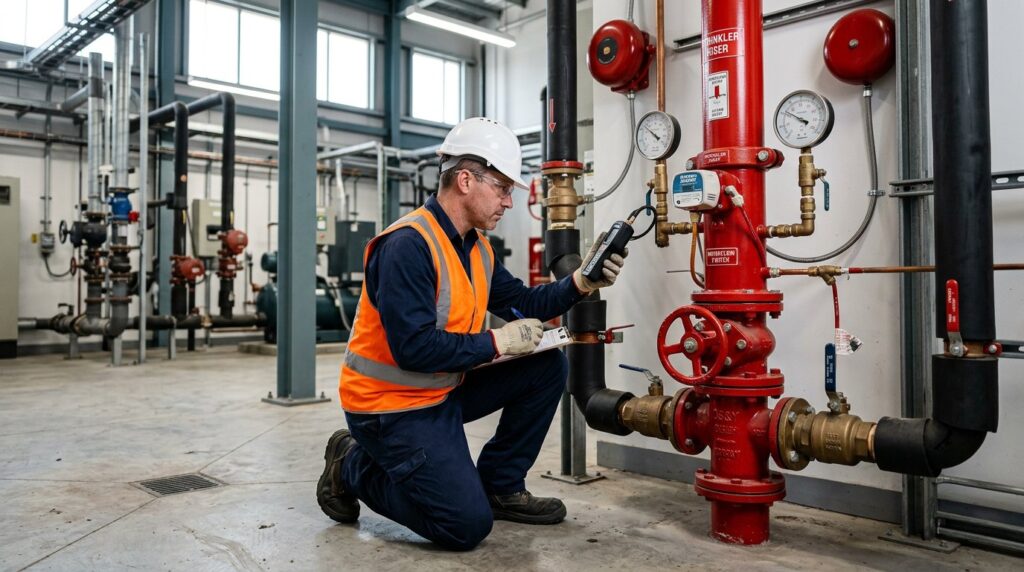
Regular Fire Sprinkler Servicing helps building owners and responsible parties identify conditions that could prevent an automatic sprinkler system from operating as intended during a fire. Professional servicing can include inspection, testing, preventive maintenance, documentation, and repairs according to the system type, manufacturer instructions, applicable standards, and requirements of the authority having jurisdiction. Because fire protection systems are life safety equipment, servicing should be performed by appropriately qualified personnel rather than treated as routine plumbing work.
Automatic sprinkler systems are designed to respond to heat at individual sprinkler locations. Contrary to a common misconception, a typical system does not activate every sprinkler simultaneously. In most conventional systems, individual sprinklers operate when exposed to sufficient heat, although specialized system designs can work differently.
Maintaining these systems therefore requires knowledge of sprinklers, valves, piping, water supplies, alarms, pumps, and other associated equipment. This guide explains servicing requirements, common procedures, warning signs, compliance considerations, and how to choose a competent provider.
What Is Fire Sprinkler Servicing?
Fire Sprinkler Servicing is the professional inspection, testing, maintenance, and repair activity used to help keep automatic sprinkler systems in appropriate operating condition.
The exact scope depends on the building and system. A small wet pipe installation can have different maintenance requirements from a large facility containing dry pipe, preaction, deluge, or specialized systems.
Professional servicing can involve checking:
• Sprinklers and accessible pipework
• Control and isolation valves
• Water supply arrangements
• Pressure gauges
• Alarm and supervisory devices
• Dry pipe or preaction components
• Fire department connections where applicable
• Sprinkler system pumps where installed
• Obstructions and physical damage
• Signs of leakage or corrosion
• Required identification and signage
• Inspection and testing records
A service visit should be based on the applicable standards and system requirements, not a generic checklist applied indiscriminately to every property.
Why Is Fire Sprinkler Servicing Important?
A sprinkler system spends most of its life waiting for an emergency. That inactivity does not mean its condition remains unchanged.
Valves can be inadvertently closed, components can deteriorate, piping can leak, sprinklers can become damaged or obstructed, and building alterations can change the hazards the original installation was designed to protect.
Regular servicing helps identify such issues before an emergency exposes them.
Fire Protection Depends on System Readiness
A sprinkler system can only provide its intended protection when essential components are available and functioning appropriately.
For example, a closed water supply control valve can compromise protection even when sprinkler heads throughout the building appear undamaged.
This is why inspection involves more than looking at ceiling mounted sprinklers.
Fire Sprinkler Servicing and Legal Compliance
Fire protection responsibilities differ by country, state, province, municipality, building type, occupancy, insurance policy, and local fire code.
In the United States, NFPA 25 is a widely referenced standard addressing inspection, testing, and maintenance of water based fire protection systems. Its application can depend on adoption and modification by the authority having jurisdiction.
Local requirements always matter. A standard being widely used does not automatically establish the precise legal requirement for every property.
Building owners and facility managers should confirm applicable obligations with their authority having jurisdiction, fire protection professional, insurer, and other relevant parties.
7 Powerful Benefits of Fire Sprinkler Servicing
Consistent maintenance provides benefits beyond simply documenting that a technician visited the building.
1. Helps Maintain System Reliability
Inspection and testing can reveal problems that are not apparent during everyday building operations.
Identifying impaired valves, damaged components, pressure concerns, or alarm problems provides an opportunity for corrective action before the system is needed.
No servicing company can guarantee that a system will always operate perfectly, but appropriate maintenance reduces the risk of preventable deficiencies remaining undiscovered.
2. Identifies Damage and Deterioration
Leaks, corrosion, impact damage, missing components, and environmental exposure can affect sprinkler installations.
Some defects are obvious. Others require testing or closer professional inspection.
Early identification may prevent a relatively limited maintenance issue from becoming a larger repair.
3. Supports Regulatory Compliance
Documented inspection, testing, and maintenance can help property owners demonstrate that required fire protection activities have been performed.
The records must accurately reflect what was actually inspected, tested, repaired, or found deficient.
4. Helps Detect Closed or Incorrectly Positioned Valves
Water control valves are essential to many sprinkler installations.
An improperly positioned valve can seriously affect system availability. Routine inspections can verify valve status and identify circumstances requiring further investigation.
5. Protects Business Continuity
Fire can interrupt operations even when nobody is injured. Damage to facilities, equipment, inventory, utilities, and records can affect an organization for an extended period.
Properly maintained fire protection systems form one part of broader property protection and continuity planning.
6. Supports Insurance and Risk Management Requirements
Insurers may establish specific inspection, testing, maintenance, and documentation expectations depending on the property and policy.
Owners should confirm requirements directly rather than assuming a standard service contract satisfies every insurance condition.
7. Creates Useful Maintenance Records
Accurate records provide a history of tests, deficiencies, repairs, alterations, and recurring problems.
These documents can help future technicians understand the system and assist facility teams with maintenance planning.
How Often Should Fire Sprinkler Servicing Be Done?
There is no single servicing interval that applies to every component of every sprinkler system.
Inspection and testing frequencies can range from relatively frequent visual checks to annual or multi year activities, depending on the component, system type, applicable standard, and local requirements.
For that reason, saying a complete sprinkler system only needs servicing once per year can be misleading.
Typical Fire Sprinkler Inspection Frequencies
Different components can require inspection or testing on different schedules.
Depending on applicable requirements, activities may occur:
• Weekly
• Monthly
• Quarterly
• Semiannually
• Annually
• At specified multi year intervals
• Following certain system events or modifications
The correct schedule must be established from the applicable edition of the adopted standard, manufacturer’s requirements, local regulations, and authority having jurisdiction.
Why Annual Servicing Alone May Not Be Enough
An annual professional visit does not necessarily replace required inspections throughout the year.
Some routine visual inspections may be performed by trained or designated building personnel where regulations permit, while technical testing and maintenance should be handled by qualified professionals as required.
Fire Sprinkler Servicing Schedules Need to Be System Specific
A facility containing a fire pump and dry pipe system requires different maintenance activities from a small property using only a basic wet pipe sprinkler system.
A professional inventory of fire protection equipment can help establish an appropriate schedule.
What Happens During Fire Sprinkler Servicing?
A service visit should begin with an understanding of the installation, available documentation, known impairments, and work being performed.
The technician may review previous service records to identify unresolved or recurring issues.
Visual Fire Sprinkler Inspection
A visual inspection can identify visible abnormalities affecting accessible equipment.
The technician may look for physical damage, leakage, corrosion, missing identification, inappropriate storage arrangements, painted sprinklers, obstructions, or changes to protected areas.
Not every problem can be identified visually, which is why required testing is also important.
Control Valve Inspection
Technicians verify relevant valve conditions and positions according to applicable procedures.
Where supervisory devices are installed, their operation may also require testing at specified intervals.
Unauthorized operation of fire protection valves should be avoided. Improperly shutting down or restoring equipment can create an impairment.
Pressure Gauge Checks
Pressure gauges can provide useful information about the state of a sprinkler system.
However, simply recording a pressure reading does not establish overall system performance. Gauges themselves can also require periodic testing or replacement according to applicable requirements.
Alarm Testing
Waterflow alarms and supervisory devices can be essential parts of the fire protection arrangement.
Testing procedures vary according to system configuration. Coordination may be necessary with alarm monitoring providers, building personnel, and fire alarm professionals before testing begins.
Documentation After Servicing
A professional report should identify the work completed, test results where applicable, deficiencies found, and corrective work performed or recommended.
Records should be understandable enough for building management to distinguish completed maintenance from unresolved deficiencies.
Types of Fire Sprinkler Systems That Need Servicing
Different sprinkler system configurations address different operating environments and hazards.
Wet Pipe Fire Sprinkler Systems
Wet pipe systems contain pressurized water in the sprinkler piping under normal conditions.
They are widely used where temperatures can be maintained appropriately to prevent freezing.
Servicing can involve valves, waterflow devices, gauges, drains, sprinklers, piping, and other system components.
Dry Pipe Sprinkler Systems
Dry pipe systems use pressurized air or nitrogen in sprinkler piping, with water held behind a dry pipe valve until system operation occurs.
These systems are commonly used in environments where water filled piping could freeze.
Their additional components create maintenance considerations that differ from wet pipe systems.
Preaction Sprinkler Systems
Preaction systems incorporate detection or control arrangements before water enters some or all sprinkler piping, depending on system design.
They can be used where accidental water discharge presents significant concerns.
Testing often requires coordination between sprinkler and detection system functions.
Deluge Systems
Deluge systems typically use open sprinklers or nozzles with a deluge valve that releases water through the distribution system following activation of the applicable detection arrangement.
Because they are commonly used for particular high hazard applications, inspection and testing should be performed by technicians familiar with the specific system.
Fire Sprinkler Inspection vs Testing vs Maintenance
These terms have distinct meanings in fire protection practice.
Inspection generally involves visually examining a system or component to verify that it appears to be in proper operating condition and is free from physical damage or conditions that could impair operation.
Testing involves operating equipment or conducting procedures to verify function or performance.
Maintenance involves work performed to keep equipment operational or repair identified deficiencies.
Why the Difference Matters
A system can pass a visual inspection but still have problems revealed through testing.
Similarly, testing that discovers a defect does not mean the defect has automatically been repaired.
Building managers should therefore understand exactly what their service agreement includes.
Common Problems Found During Fire Sprinkler Servicing
Many deficiencies arise from building use, environmental conditions, aging components, or unauthorized alterations.
Painted or Damaged Sprinklers
Paint, coatings, impact damage, or corrosion can affect sprinkler performance.
Sprinklers generally should not be field cleaned or modified using methods not permitted by applicable requirements or the manufacturer.
Where replacement is necessary, the replacement must have appropriate characteristics for the system design.
Obstructed Sprinklers
Storage, construction work, new partitions, equipment, signs, decorative installations, and other objects can interfere with water distribution.
Maintaining proper clearances is therefore an ongoing facility management responsibility.
Leaks and Corrosion
Visible leakage can indicate a problem requiring investigation.
Internal corrosion may be more difficult to detect and can require specialized assessment when there is evidence suggesting an obstruction or corrosion concern.
Incorrect Valve Position
A closed or partially closed control valve can compromise sprinkler protection.
Valve supervision, inspections, proper locking arrangements where applicable, and controlled impairment procedures can reduce this risk.
Fire Sprinkler Servicing After Building Changes
Fire protection needs can change when the building changes.
Renovations, new walls, ceiling alterations, storage changes, occupancy changes, equipment installations, or modifications to building use may affect sprinkler coverage or system design.
Building management should involve qualified fire protection professionals during planning rather than waiting until the next routine inspection.
Changes in Storage Can Be Significant
Warehouses deserve particular attention because storage height, arrangement, commodities, packaging, racks, and clearances can affect sprinkler system design requirements.
A sprinkler system that was appropriate for one storage arrangement cannot automatically be assumed appropriate after substantial operational changes.
Fire Sprinkler Servicing and System Impairments
An impairment occurs when all or part of a fire protection system is taken out of service or cannot provide its intended protection.
Planned maintenance itself can sometimes require a temporary impairment.
Managing an Impairment Safely
Impairment procedures should follow applicable codes, standards, site policies, insurer requirements, and instructions from relevant authorities.
Depending on circumstances, actions may include notifying relevant parties, limiting the affected area, implementing temporary precautions, completing work promptly, restoring the system, and confirming normal service afterward.
Never Disable Fire Protection Without Authorization
Sprinkler valves, alarms, pumps, and related equipment should not be disabled casually.
Unauthorized shutdown can create serious life safety and property protection risks.
How Much Does Fire Sprinkler Servicing Cost?
There is no reliable universal price because sprinkler installations differ significantly.
Costs can depend on:
• Property size
• Number of systems and risers
• Sprinkler system type
• Number of testable components
• Fire pump availability
• System accessibility
• Location and labor rates
• Required testing frequency
• Certification requirements
• After hours scheduling
• Repairs and replacement parts
• Water disposal requirements
• Documentation requirements
A basic inspection of a small building and comprehensive testing of a large industrial facility are fundamentally different scopes of work.
Getting an Accurate Service Quote
Provide contractors with system documentation when available and request a clearly defined scope.
The proposal should distinguish recurring inspection and testing charges from repairs, emergency callouts, replacement components, and specialized tests.
A low initial price may not represent the lowest overall cost if essential services are excluded.
Choosing a Fire Sprinkler Servicing Company
Competence is especially important when selecting a contractor for life safety systems.
Licensing requirements vary by jurisdiction, so verify that the company and individual technicians hold all credentials legally required where the property is located.
What to Look for in a Service Provider
Consider:
• Appropriate licensing and qualifications
• Relevant sprinkler system experience
• Familiarity with applicable codes and standards
• Adequate insurance coverage
• Clear inspection and testing documentation
• Transparent service scope
• Defined deficiency reporting procedures
• Emergency response capability where required
• Experience with your specific system type
Professional certifications may provide additional evidence of technical competence, but they do not replace licenses required by law.
Questions to Ask Before Hiring
Ask which standards govern the proposed work, which services are included, who will perform the work, and how deficiencies will be reported.
You should also understand what happens when a test fails and whether repairs require separate authorization.
Avoid Compliance Guarantees Without Context
Be cautious when a contractor promises that one generic service package will make every property fully compliant.
Compliance depends on the actual installation and applicable legal requirements. Deficiencies, outdated configurations, building modifications, or local requirements may require additional work.
Fire Sprinkler Servicing Records
Accurate records are an important part of system management.
Documents can establish when equipment was inspected or tested, what results were recorded, and whether identified problems were resolved.
Records may include:
• Inspection dates
• Technician or responsible person details
• Equipment inspected
• Test procedures and results
• Deficiencies discovered
• Repairs completed
• Outstanding corrective actions
• Impairment information
• Relevant system modifications
Retention requirements depend on applicable regulations and organizational policies.
Can Building Owners Service Fire Sprinklers Themselves?
Some jurisdictions and standards may allow designated personnel to perform certain routine inspections when appropriately trained. That does not mean building owners should independently perform technical testing, repairs, alterations, or sprinkler replacement.
Fire protection systems can contain pressurized equipment and interact with alarm systems, pumps, monitoring services, and building water supplies.
Work performed incorrectly can create an unnoticed impairment.
When to Call a Qualified Fire Protection Professional
Professional assistance is appropriate when there is:
• Physical damage to sprinklers or pipework
• Leakage
• A suspected closed or defective valve
• Alarm or supervisory trouble
• Significant corrosion
• An unexplained pressure change
• A system activation
• Building renovation or occupancy changes
• A suspected frozen section
• An overdue required test
• An unresolved inspection deficiency
Emergency conditions should be handled according to the building’s emergency procedures and local emergency services requirements.
Fire Sprinkler Servicing for Commercial Buildings
Commercial properties can have complex fire protection arrangements involving sprinkler systems, fire pumps, alarm monitoring, standpipes, special hazard systems, and municipal water supplies.
Facility managers should coordinate these systems rather than treating each as completely independent.
Create a Fire Protection Maintenance Plan
An effective maintenance plan identifies installed equipment, required inspection and testing activities, responsible personnel, relevant contractors, documentation procedures, and impairment protocols.
The plan should be reviewed when the building or its use changes.
Coordinate Contractors and Facility Teams
Good communication helps prevent a contractor from arriving to test equipment when building staff, monitoring services, or affected occupants are unprepared.
Advance coordination can also minimize unnecessary operational disruption while maintaining safety.
Fire Sprinkler Servicing and Preventive Maintenance
Preventive maintenance focuses on identifying and addressing foreseeable problems before system performance deteriorates.
However, replacement intervals and maintenance procedures should come from applicable standards, manufacturers, authorities having jurisdiction, and qualified professionals rather than arbitrary schedules.
A well managed program combines routine observation, formal inspection, scheduled testing, timely repairs, and accurate documentation.
Frequently Asked Questions
What is Fire Sprinkler Servicing?
Fire Sprinkler Servicing involves required inspection, testing, maintenance, and repair activities intended to help keep automatic sprinkler systems in proper operating condition.
How often should fire sprinklers be serviced?
Frequency depends on the system, component, adopted standards, and local regulations. Different inspection and testing activities may be required at different intervals.
Who can perform Fire Sprinkler Servicing?
Requirements vary by jurisdiction, but technical work should be performed by appropriately qualified personnel holding any licenses or certifications required by local law.
What does a fire sprinkler service include?
Depending on the scope, servicing can include inspection of sprinklers, valves and piping, functional testing, alarm checks, pressure assessment, maintenance, documentation, and deficiency reporting.
Is fire sprinkler maintenance legally required?
Many jurisdictions impose inspection, testing, and maintenance requirements for fire protection systems. Building owners should confirm the exact obligations applicable to their property with the authority having jurisdiction.
How much does Fire Sprinkler Servicing cost?
Costs vary based on property size, system design, number of components, required tests, location, labor, and repairs. A system specific inspection is the best basis for an accurate quotation.
Conclusion
Fire Sprinkler Servicing is an essential part of managing a building’s fire protection systems and maintaining their readiness for an emergency. Effective programs combine appropriate inspections, scheduled testing, timely maintenance, professional repairs, and reliable documentation. Because requirements vary by system and jurisdiction, property owners should follow applicable codes, manufacturer guidance, and instructions from their authority having jurisdiction. Working with appropriately qualified fire protection professionals can help ensure deficiencies are identified and addressed before they compromise the system.
Pingback: Retirement Planning in Tempe 7 Powerful Positive Moves