
A nipple cream is a topical product intended to moisturize and protect dry, irritated, or sore nipple skin, particularly during breastfeeding or pumping. Common formulations contain purified...
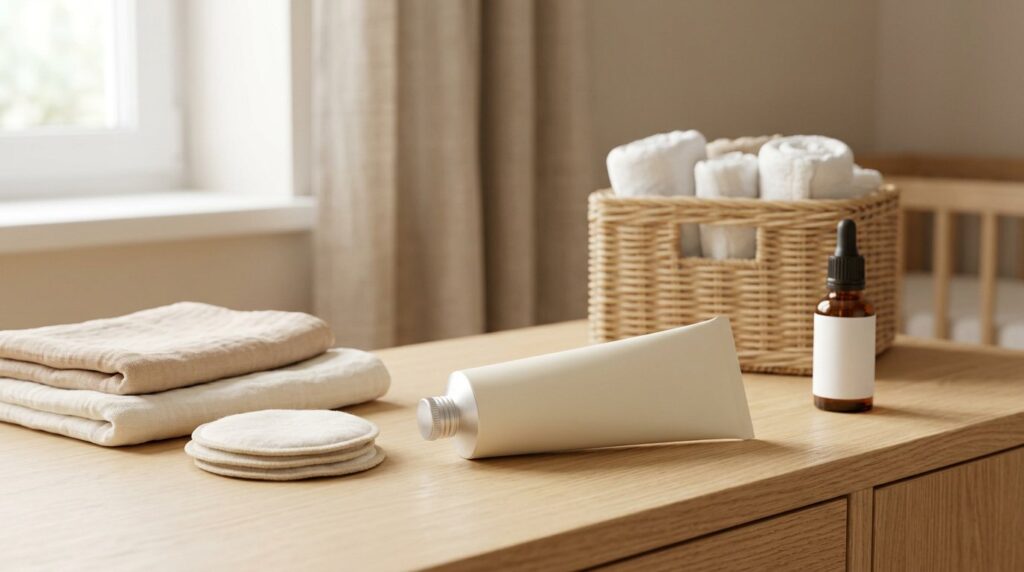
A nipple cream is a topical product intended to moisturize and protect dry, irritated, or sore nipple skin, particularly during breastfeeding or pumping. Common formulations contain purified lanolin, petrolatum, plant derived oils, butters, or other emollient and barrier ingredients. While creams can reduce friction and support damaged skin, persistent nipple pain or cracking can also result from latch difficulties, pump fit, dermatitis, infection, or other problems that require assessment rather than repeated application of cream alone.
Nipple soreness can occur when someone begins breastfeeding, but severe, worsening, or persistent pain should not simply be accepted as unavoidable. Identifying the underlying cause is usually more useful than relying exclusively on a topical product.
Product selection also matters because anything applied to the nipple during lactation may potentially contact the infant. Instructions regarding removal before feeding should therefore come from the specific product label and appropriate healthcare guidance.
What Is Nipple Cream?
Nipple cream is a topical skin care product formulated for the nipple and areola.
Breastfeeding products are generally designed to create a moisturizing or protective barrier that reduces dryness and friction. Some products use a single primary ingredient, while others combine oils, waxes, butters, or additional skin conditioning substances.
Typical formulations may contain:
• Highly purified lanolin
• Petrolatum based ingredients
• Shea butter
• Coconut or other plant oils
• Waxes
• Glycerin
• Other emollients
Not every ingredient is suitable for every person, and botanical does not automatically mean safer or less allergenic.
Why Are Nipples Sore During Breastfeeding?
Breastfeeding related nipple pain has several potential causes.
Some sensitivity can occur during the early adjustment to feeding, but significant ongoing pain deserves attention.
Shallow or Ineffective Latch
Latch and positioning problems are common reasons for breastfeeding discomfort.
When an infant takes insufficient breast tissue into the mouth, excessive mechanical pressure can be concentrated on the nipple.
A lactation consultant or appropriately trained healthcare professional can assess an entire feeding session and suggest individualized adjustments.
Pump Related Irritation
Pumping can also cause nipple injury.
Potential factors include:
• Incorrect flange size
• Excessive suction
• Prolonged sessions
• Poor alignment
• Friction
• Damaged pump components
Pain, swelling, abrasion, or discoloration during pumping can indicate that the setup needs review.
Skin Conditions
Eczema, contact dermatitis, psoriasis, and other skin conditions can affect the nipple or surrounding area.
Fragrances, detergents, breast pads, creams, soaps, and topical products themselves can sometimes contribute to irritation.
Infection and Other Causes
Certain infections and inflammatory conditions can cause breast or nipple symptoms.
Because symptoms can overlap, self diagnosing the cause of persistent pain is unreliable. Appropriate clinical assessment is advisable when pain is severe, unusual, recurrent, or failing to improve.
9 Helpful Facts About Nipple Cream
Understanding what these products can and cannot do makes it easier to use them appropriately.
1. Nipple Cream Primarily Supports the Skin Barrier
Most nipple creams act as emollients or barriers.
They can help reduce moisture loss, soften dry skin, and protect irritated areas from friction.
They generally do not correct mechanical causes such as a poor latch or incorrectly fitted breast pump.
2. Lanolin Is a Common Ingredient
Lanolin is a waxy substance derived from wool and has long been used as an emollient.
Highly purified lanolin products are widely marketed for breastfeeding related nipple care.
Lanolin Is Not Suitable for Everyone
Some people can develop sensitivity or contact dermatitis involving lanolin.
If a product causes increasing redness, itching, burning, rash, or worsening irritation, stop using it and seek appropriate advice.
3. Lanolin Free Nipple Cream Is Available
People who prefer not to use lanolin have several alternatives.
Lanolin free formulations may use petrolatum, plant oils, waxes, or butters to provide emollient and barrier effects.
The important consideration is whether the formulation is appropriate for nipple use during breastfeeding.
4. Not Every Cream Can Stay on During Feeding
Instructions differ between products.
Some manufacturers state that their nipple products do not require removal before breastfeeding when used as directed, while other topical products should be removed.
Follow the current label for the exact product rather than applying generic rules to every cream.
5. More Product Is Not Necessarily Better
A thick layer may increase mess without providing additional benefit.
Use the amount recommended by the manufacturer or healthcare professional.
6. Nipple Cream Does Not Treat Every Cause of Pain
Persistent pain can reflect mechanical, dermatological, or infectious problems.
Using progressively more cream without identifying the cause may delay effective treatment.
7. Ingredient Simplicity Can Be Useful
A short ingredient list makes it easier to identify what is contacting irritated skin.
This does not mean every single ingredient product is necessarily superior.
Individual allergies, sensitivities, and preferences remain relevant.
8. Severe Cracking Needs Attention
Minor superficial irritation may improve with appropriate feeding adjustments and skin care.
Deep cracks, bleeding, significant tissue damage, or worsening pain should prompt assessment.
9. Breastfeeding Support Can Be More Important Than Cream
A lactation professional can assess positioning, latch, infant feeding behavior, nipple appearance after feeding, and pump use where relevant.
Addressing the source of trauma may produce more meaningful improvement than topical care alone.
How Does Nipple Cream Work?
Healthy skin contains a protective barrier that reduces water loss and helps protect underlying tissue.
Repeated feeding, friction, moisture, washing, and skin conditions can disrupt that barrier.
Emollient Action
Emollients soften and smooth skin by filling spaces between surface skin cells and improving flexibility.
This can make dry or cracked skin feel more comfortable.
Occlusive Action
Occlusive ingredients create a surface layer that reduces water loss.
Petrolatum is a well known example of a highly occlusive skin protectant, although formulations and intended uses vary.
Nipple Cream Is Supportive Care
Topical barrier care can support healing conditions at the skin surface, but it does not substitute for diagnosis when there is infection, significant trauma, or another medical condition.
Lanolin Nipple Cream
Lanolin based products are among the most recognizable breastfeeding creams.
They typically emphasize moisture protection and a relatively simple formulation.
Potential Advantages of Lanolin
Purified lanolin provides emollient and occlusive properties and can remain on the skin for extended periods.
It is also widely available through pharmacies and maternity retailers.
Potential Disadvantages
Lanolin is sticky and relatively thick compared with many creams or balms.
Sensitivity is possible, and people with known lanolin allergy should avoid it.
Products should be used according to their instructions.
Lanolin Free Nipple Cream
Lanolin free options can be appropriate for people with sensitivities, ingredient preferences, or texture preferences.
Plant Based Creams
These can contain shea butter, coconut oil, olive derived components, waxes, or other ingredients.
Natural origin does not guarantee absence of allergic reactions.
Petrolatum Based Products
Petrolatum creates an effective barrier and is used broadly in dermatological skin care.
If using a product during breastfeeding, select one appropriate for the intended application and follow healthcare and manufacturer instructions.
Nipple Cream Ingredients to Consider Carefully
A product used elsewhere on the body is not automatically suitable for breastfeeding nipples.
The infant’s potential oral exposure should be considered.
Fragrances
Fragrance can irritate sensitive skin in some individuals and is usually unnecessary for nipple care.
Strong scents may also be undesirable immediately around feeding.
Essential Oils
Essential oils contain biologically active compounds and can cause irritation or sensitization.
Do not assume that an essential oil is safe for infant oral exposure simply because it is marketed as natural.
Medicinal Ingredients
Antibiotics, antifungals, corticosteroids, and other medicated creams should be used according to professional or product specific guidance.
Different medications have different breastfeeding safety considerations.
Check Every Product Separately
A clinician or pharmacist can help assess whether a specific topical medicine is compatible with breastfeeding and whether it needs to be removed before feeds.
How to Use Nipple Cream
Follow the manufacturer’s directions for the particular product.
Wash your hands before touching irritated or broken skin.
After Breastfeeding
Depending on the product, a small amount may be applied after feeding to clean skin.
Aggressive nipple washing is usually unnecessary and can worsen dryness or irritation.
Before the Next Feed
Whether removal is required depends on the formulation.
Check the label instead of assuming every breastfeeding cream can remain on the nipple.
Keep the Container Clean
Avoid unnecessary contact between the dispensing opening and damaged skin.
Follow storage instructions and discard products that are expired or contaminated.
Do You Need to Wash Nipple Cream Off?
There is no single answer for all products.
Some purified lanolin and other breastfeeding specific formulations are explicitly designed to remain in place when used as directed. Other products may need removal.
Always follow the specific manufacturer’s instructions.
Avoid Repeated Harsh Washing
Excessive use of soap, scrubbing, or strong cleansers can strip natural skin oils and worsen irritation.
Gentle hygiene is generally preferable unless a healthcare professional recommends a specific cleansing approach.
Nipple Cream for Pumping
Pumping introduces repetitive contact between the nipple, breast tissue, and pump flange.
Cream alone cannot compensate for poor pump fit.
Check Flange Size
The nipple should move appropriately within the flange tunnel without excessive rubbing or pulling of surrounding tissue.
Breast and nipple dimensions can also change over time.
A lactation professional familiar with pumping can assess fit.
Review Suction
Higher suction is not necessarily better.
Pumping should use effective settings without creating avoidable trauma.
Pain during pumping is a reason to reassess the setup.
Nipple Cream During Pregnancy
Nipple skin can become dry or sensitive during pregnancy, but routine preparation of nipples for breastfeeding through aggressive rubbing or similar practices is unnecessary.
If a cream is used during pregnancy, ensure its ingredients are appropriate for that use.
Persistent Changes Should Be Assessed
New breast or nipple symptoms during pregnancy should not automatically be attributed to normal hormonal changes.
Seek healthcare advice for unexplained lumps, significant skin changes, discharge of concern, persistent focal pain, or other unusual symptoms.
Nipple Cream for Cracked Nipples
Cracked nipples indicate disruption of the skin barrier.
Topical products may reduce dryness and friction, but preventing repeated trauma is particularly important.
Find the Cause of Cracking
Potential contributors include:
• Latch problems
• Pump friction
• Excessive moisture
• Dryness
• Contact dermatitis
• Skin disease
• Infection
• Mechanical injury
Treating the cause generally provides a more sustainable approach than covering the crack alone.
What About Bleeding?
Minor trauma can occasionally cause bleeding, but recurrent or significant bleeding warrants assessment.
A lactation or healthcare professional can determine whether feeding mechanics or another condition is involved.
When Nipple Pain May Need Medical Attention
Seek medical advice when symptoms are severe, persistent, worsening, or associated with broader illness.
Signs That Need Assessment
Contact an appropriate healthcare professional if you experience:
• Increasing redness or warmth
• Significant swelling
• Pus or concerning discharge
• Fever or systemic illness
• Severe or worsening breast pain
• Deep nipple cracks
• Persistent bleeding
• Spreading rash
• Blisters or ulcers
• Pain that is not improving despite feeding adjustments
Urgent evaluation may be appropriate for rapidly worsening symptoms or significant illness.
Nipple Cream and Mastitis
Mastitis involves breast inflammation and can sometimes be associated with bacterial infection.
Nipple cream is not a treatment for mastitis.
Symptoms Can Include
Mastitis can involve breast pain, swelling, redness or color changes, and systemic symptoms such as fever or feeling unwell.
Presentation varies, including across different skin tones.
Anyone concerned about mastitis should seek current medical guidance rather than relying on a topical nipple product.
Nipple Cream and Thrush
Breast or nipple pain is sometimes attributed to Candida or thrush.
However, nipple and breast pain has multiple possible causes, and symptoms alone may not establish fungal infection.
Avoid Self Treating Repeatedly Without Diagnosis
Unnecessary antifungal treatment can delay identification of another cause.
A clinician can evaluate symptoms and recommend treatment when infection is suspected or diagnosed.
Breast Milk vs Nipple Cream
Some breastfeeding advice has historically suggested applying expressed breast milk to sore nipples.
Evidence regarding different topical approaches is mixed, and no single method is ideal for every cause of soreness.
Address Mechanics First
Whatever topical strategy is selected, a persistent mechanical cause such as shallow latch or poor pump fit should be corrected.
Otherwise, repeated trauma can continue.
Hydrogel Pads and Other Nipple Cream Alternatives
Cream is not the only comfort option.
Depending on circumstances, breastfeeding professionals may recommend different forms of skin protection.
Hydrogel Pads
Hydrogel dressings can provide a cooling moist environment for some types of nipple trauma.
They require appropriate hygiene and should be used according to their instructions.
Breast Pads
Absorbent breast pads can help manage milk leakage.
Change damp pads regularly because prolonged moisture and friction can irritate skin.
Nipple Shields
Nipple shields are feeding devices rather than skin creams.
They can be useful in selected breastfeeding situations but should ideally be used with appropriate assessment because fit and feeding technique matter.
How to Choose the Best Nipple Cream
The best product depends on the user’s skin, cause of irritation, ingredient tolerance, and feeding circumstances.
Check the Ingredient List
Look for a clear ingredient declaration.
If you have eczema, allergies, or sensitive skin, discuss unfamiliar ingredients with a healthcare professional or pharmacist when appropriate.
Choose Breastfeeding Specific Products
If a nursing infant may come into contact with the product, choose a formulation intended for this use and follow its instructions.
Consider Texture
Thick ointments provide a different feel from softer balms or creams.
The most comfortable formulation is partly personal preference.
Avoid Unsupported Marketing Claims
Terms such as organic, clean, pure, toxin free, or chemical free do not by themselves establish safety or effectiveness.
Evaluate actual ingredients and reliable safety information instead.
How Much Does Nipple Cream Cost?
Prices vary according to brand, formulation, package size, country, and retailer.
Cost per package does not indicate whether a product will solve the cause of nipple pain.
Compare Cost per Quantity
When comparing products, check package weight or volume rather than price alone.
Because only small amounts may be needed, a modest container can last longer than expected depending on usage.
Nipple Cream for Sensitive Skin
Sensitive skin benefits from avoiding unnecessary ingredients.
Fragrance free formulations with clearly disclosed ingredients may be easier to evaluate.
Patch Testing
For people with a history of contact allergy, a healthcare professional may recommend appropriate testing or dermatological assessment.
Do not continue using a cream that consistently worsens symptoms.
Nipple Cream Safety Around Babies
Anything placed on the nipple during breastfeeding deserves careful consideration because infants may encounter residues.
Use products specifically appropriate for lactation, and follow their instructions.
Avoid Homemade Formulations With Unverified Ingredients
Homemade balms can contain essential oils, herbal extracts, fragrances, or other ingredients whose safety for infant exposure is uncertain.
Simple does not always mean safe.
Store Cream Securely
Keep all topical products, medications, and cosmetics away from children.
Even products considered appropriate in small amounts on skin may not be safe if an infant or child consumes the container’s contents.
Frequently Asked Questions
What is nipple cream used for?
Nipple cream moisturizes and protects dry, irritated, or sore nipple skin, particularly during breastfeeding or pumping. It does not correct every underlying cause of pain.
Is nipple cream safe for breastfeeding?
Many breastfeeding specific products are intended for use during lactation, but ingredients and instructions vary. Check the exact product label and seek professional guidance when uncertain.
Do I need to wash nipple cream off before feeding?
It depends on the product. Some formulations are designed to remain on when used as directed, while others require removal before breastfeeding.
Is lanolin nipple cream good for cracked nipples?
Purified lanolin can provide emollient and barrier effects, but cracked nipples may also require correction of latch, pump fit, dermatitis, infection, or another underlying cause.
What can I use instead of lanolin nipple cream?
Lanolin free breastfeeding products may contain petrolatum, plant derived emollients, butters, or waxes. Choose products appropriate for nipple use during lactation.
When should I seek help for sore nipples?
Seek professional assessment for severe, persistent, or worsening pain, deep cracks, significant bleeding, spreading redness, fever, unusual discharge, or other concerning symptoms.
Conclusion
Nipple cream can be a useful part of caring for dry, irritated, or sore nipple skin during breastfeeding and pumping, particularly when it reduces friction and supports the skin barrier. The most appropriate formula depends on ingredients, individual sensitivity, and whether the product is intended to remain on during feeding. Persistent pain should prompt evaluation of latch, pumping technique, skin conditions, or possible infection rather than simply applying more cream. Combining suitable skin care with timely breastfeeding or medical support offers a more complete approach to nipple discomfort.