
The world of men’s perfume brands extends far beyond choosing between fresh and strong fragrances. Designer labels, heritage perfume houses, niche brands, and independent perfumers create scents...
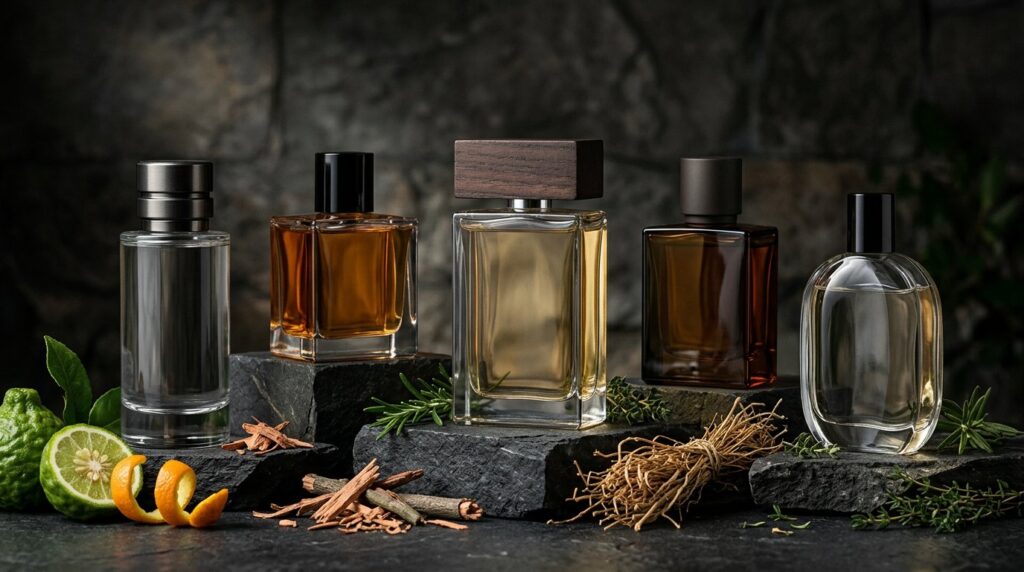
The world of men’s perfume brands extends far beyond choosing between fresh and strong fragrances. Designer labels, heritage perfume houses, niche brands, and independent perfumers create scents spanning citrus, aromatic herbs, woods, spices, leather, amber, florals, and gourmand notes. Finding the right fragrance depends less on popularity and more on how a composition develops on your skin, where you plan to wear it, your preferred scent profile, concentration, budget, and tolerance for particular ingredients.
The term men’s perfume is primarily a marketing category. Fragrance itself is not inherently restricted by gender, and many people wear scents sold as masculine, feminine, or unisex according to personal preference.
This guide covers notable fragrance houses, perfume concentrations, scent families, testing techniques, authenticity, storage, and practical ways to build a fragrance collection without unnecessary purchases.
What Are Men’s Perfume Brands?
Men’s perfume brands are companies that produce fragrances marketed primarily toward men or offer prominent masculine fragrance collections.
Some are fashion houses that also produce fragrances, while others specialize principally in perfumery.
The market broadly includes:
• Designer fragrance brands
• Traditional perfume houses
• Niche fragrance houses
• Independent perfumers
• Luxury fashion brands
• Accessible mass market brands
• Artisanal fragrance companies
A higher price does not automatically indicate a fragrance that will smell better to you or perform longer.
11 Men’s Perfume Brands Worth Exploring
The following established names represent different approaches to modern perfumery. Individual products and formulations can change over time, so current fragrance details should always be checked directly with the brand or authorized retailer.
1. Dior
Dior is a French fashion house with an extensive fragrance portfolio.
Its men’s fragrance history includes Dior Homme, Fahrenheit, Eau Sauvage, and Sauvage, although these names can encompass multiple concentrations and flankers.
Why Explore Dior Fragrances?
The house provides options across aromatic, woody, citrus, spicy, and other styles.
Dior Homme is particularly notable because different versions within the line illustrate how dramatically products sharing a family name can differ.
Do Not Buy by Collection Name Alone
An eau de toilette, parfum, elixir, and flanker carrying related branding may have different compositions.
Always test the exact bottle you intend to purchase.
2. Chanel
Chanel has produced several influential men’s fragrance collections, including Bleu de Chanel, Allure Homme, and the long established Pour Monsieur.
The brand covers both relatively classic perfumery and contemporary aromatic compositions.
Bleu de Chanel
Bleu de Chanel has become one of the company’s most recognizable men’s fragrance lines.
It is available in multiple concentrations, and these should not be assumed to smell or perform identically.
Test the specific formulation rather than treating the collection as one fragrance.
3. Giorgio Armani
Armani’s fragrance catalog spans fresh aquatic styles, aromatic compositions, woods, spices, and deeper evening scents.
Acqua di Giò is among the house’s best known men’s fragrance families.
Acqua di Giò and Modern Fresh Fragrance
The original Acqua di Giò became strongly associated with the fresh aquatic style of men’s perfumery.
The wider line now contains several related formulations, illustrating a common industry practice in which successful fragrances develop into larger collections.
4. Hermès
Hermès combines its broader luxury heritage with an established perfume division.
Terre d’Hermès is one of its most recognizable fragrances marketed toward men, built around citrus, woody, and mineral or earthy impressions.
Hermès also produces fragrances marketed without rigid gender categorization.
5. Tom Ford
Tom Ford offers designer fragrances alongside higher priced private collection releases.
The catalog ranges from fresh citrus and woods to leather, tobacco, spices, florals, amber, and gourmand influenced compositions.
Who Might Like Tom Ford?
The brand may appeal to consumers who enjoy distinctive or richer fragrance profiles.
However, not every Tom Ford fragrance is heavy or intended for evening use.
The individual composition matters more than the brand’s overall image.
6. Creed
Creed is a luxury fragrance house with several fragrances popular among male consumers.
Aventus is its most internationally recognized modern release and has influenced broader interest in fruity, woody, and smoky masculine fragrance profiles.
Consider Price and Testing
Luxury pricing makes sampling particularly important.
Do not purchase an expensive full bottle solely because a fragrance is popular online.
7. Guerlain
Guerlain is one of the historically significant names in French perfumery.
Its men’s portfolio includes classic and contemporary compositions across citrus, vetiver, aromatic, woody, and other profiles.
Guerlain is worth exploring for buyers interested in perfumery beyond current bestseller lists.
8. Yves Saint Laurent
Yves Saint Laurent offers several well known men’s fragrance families.
Y, La Nuit de L’Homme, and L’Homme represent different interpretations of contemporary masculine fragrance.
The catalog can suit consumers looking for aromatic, fresh, woody, or warmer profiles.
9. Acqua di Parma
Acqua di Parma is closely associated with Italian style and citrus centered perfumery.
Its Colonia collection is particularly recognizable.
Fresh Does Not Necessarily Mean Weak
Citrus ingredients can create an immediate impression of freshness, but fragrance performance depends on the entire composition and formulation.
Judge longevity through actual wear rather than note categories alone.
10. Maison Francis Kurkdjian
Maison Francis Kurkdjian is a luxury fragrance house offering scents across multiple styles and gender presentations.
Its fragrances have gained significant attention among consumers interested in niche and luxury perfumery.
The brand’s catalog demonstrates how contemporary fragrance increasingly moves beyond conventional men’s and women’s categories.
11. Le Labo
Le Labo is known for a recognizable minimalist presentation and fragrances often sold without traditional gender restrictions.
Its catalog includes woody, musky, floral, smoky, and aromatic compositions.
Santal 33 is among its most widely recognized releases, although personal reactions to its distinctive profile vary considerably.
Designer vs Niche Men’s Perfume Brands
The terms designer and niche describe broad business categories rather than guaranteed levels of fragrance quality.
Designer Perfume Brands
Designer houses typically operate in fashion, accessories, cosmetics, or other luxury categories alongside fragrance.
Examples include Dior, Chanel, Armani, Hermès, and Yves Saint Laurent.
Their fragrances frequently have wide retail distribution.
Niche Perfume Brands
Niche houses focus more heavily or exclusively on fragrance.
Distribution can be more selective, although the distinction between designer and niche has become less rigid as large luxury groups acquire fragrance companies and brands expand globally.
Is Niche Perfume Better?
Not inherently.
Niche fragrances may explore unusual materials or concepts, but designer brands can also produce sophisticated compositions.
Personal preference remains more important than category prestige.
Understanding Men’s Perfume Concentrations
Terms such as eau de toilette and eau de parfum provide general information about fragrance concentration, but exact percentages are not universally standardized across every brand.
Eau de Cologne
Eau de cologne traditionally refers to relatively light fragrance styles and concentrations.
Modern brands sometimes use the term stylistically, so check the actual product description.
Eau de Toilette
Eau de toilette is extremely common in men’s fragrance.
It often creates a lighter or more immediately projecting interpretation compared with richer versions in the same family, although this is not a universal rule.
Eau de Parfum
Eau de parfum generally contains a higher concentration of aromatic material than eau de toilette within conventional terminology.
That does not automatically mean it will project farther or suit every wearer better.
Parfum
Parfum is generally among the more concentrated fragrance formats.
Different proportions can shift the balance of individual notes rather than merely making the same scent stronger.
Elixir and Similar Terms
Terms such as elixir, intense, absolu, and extrait can represent highly concentrated or substantially reformulated versions.
These names are not standardized consistently across all manufacturers.
Men’s Perfume Brands by Scent Family
Understanding scent families is more practical than selecting fragrance only by brand.
Fresh Citrus Fragrances
Citrus compositions can use impressions associated with bergamot, lemon, mandarin, grapefruit, or related materials.
They commonly suit people who prefer bright, clean openings.
Aromatic Fragrances
Aromatic scents can incorporate lavender, herbs, green notes, or other fresh elements.
This broad style appears throughout traditional and contemporary men’s perfumery.
Woody Fragrances
Woody profiles can evoke cedar, sandalwood, vetiver, patchouli, or other wood associated materials.
Actual perfume formulas can use natural extracts, synthetic aroma molecules, or combinations of both.
Leather Fragrances
Leather in perfumery is generally an olfactory accord rather than simply the smell of literal leather added to a bottle.
These fragrances can range from soft suede impressions to darker smoky profiles.
Amber and Spicy Fragrances
Warm compositions can include vanilla, resins, spices, woods, and amber style accords.
They are often marketed for cooler weather or evening wear, although there is no rule preventing year round use.
How to Choose the Best Men’s Perfume Brands for You
Brand reputation can help narrow the search, but testing determines whether a particular fragrance actually suits you.
Identify Scents You Already Enjoy
Think about fragrances, soaps, woods, foods, flowers, environments, or grooming products whose aromas you like.
This can reveal preferences for citrus, woody, sweet, spicy, clean, green, or smoky profiles.
Start With Samples
Samples and legitimate discovery sets can reduce the cost of experimentation.
Wear a fragrance several times before committing to a full bottle, especially when the purchase is expensive.
Do Not Test Too Many at Once
Testing many fragrances in quick succession can make differences harder to perceive.
Use blotters for initial screening and skin for the finalists.
How to Test Men’s Perfume Properly
A fragrance develops after application.
The first few seconds do not represent the entire wearing experience.
Start With a Blotter
Paper blotters allow you to compare fragrances without immediately covering your skin with several scents.
Write the fragrance name on each strip to avoid confusion.
Test Favorites on Skin
Skin testing is important because evaporation, body temperature, and individual perception influence the experience.
A fragrance that works beautifully on paper may feel different when worn.
Give It Time
Evaluate the fragrance after the opening and again later during its development.
This allows you to experience more than the initial volatile notes.
Top, Middle, and Base Notes
Perfume descriptions often organize ingredients or impressions into top, heart, and base notes.
These categories describe how different elements become prominent during development rather than three literal physical layers inside the bottle.
Top Notes
Top notes dominate early impressions and often include lighter materials such as citrus or aromatic components.
Heart Notes
The heart becomes more noticeable as the opening develops.
Floral, spicy, fruity, and aromatic elements frequently appear here.
Base Notes
Base notes contribute to the longer lasting foundation.
Examples can include woods, musks, amber accords, vanilla, and other lower volatility materials.
How Long Does Men’s Perfume Last?
There is no dependable number of hours for every wearer.
Longevity varies according to formulation, applied amount, environment, skin, clothing, temperature, and individual perception.
Fragrance Fatigue
Sometimes a wearer stops noticing a fragrance even though other people can still smell it.
This is one reason repeated application should not be based solely on your own moment to moment perception.
Projection vs Longevity
Projection describes how strongly a fragrance radiates away from the wearer.
Longevity describes how long it remains detectable.
A fragrance can last for many hours while staying relatively close to the skin.
Men’s Perfume for Work
Workplace fragrances generally benefit from moderation.
Offices, classrooms, healthcare settings, and other shared spaces can include people who are sensitive to fragrances.
Keep Application Controlled
A fragrance should not dominate a shared room.
Some workplaces have fragrance free policies, and these should always be respected.
Men’s Perfume for Dates and Evening Wear
Evening fragrances are often associated with richer woods, spices, amber, leather, tobacco style accords, or gourmand elements.
Personal style matters more than conventional rules.
Consider the Setting
An intimate restaurant calls for different fragrance intensity from an outdoor event.
Choose an application level appropriate to how closely other people will be sitting or standing.
Men’s Perfume for Summer
Hot conditions can make some fragrances feel more intense.
Fresh citrus, aquatic, aromatic, green, and lighter woody scents are popular choices.
Heat Changes Perception
Higher temperatures can increase evaporation.
Start with moderate application and adjust based on actual wear.
Men’s Perfume for Winter
Cool weather often encourages people to explore warmer and richer compositions.
Amber, spice, wood, leather, vanilla, and gourmand profiles are common seasonal choices.
This remains a preference rather than a requirement.
Luxury vs Affordable Men’s Perfume Brands
Price is influenced by branding, distribution, packaging, ingredients, production, marketing, retail margins, and positioning.
It does not provide an objective measurement of how enjoyable a fragrance will be.
Affordable Fragrances Can Perform Well
Many lower priced fragrances offer strong performance and sophisticated compositions.
Sampling across price categories prevents brand prestige from determining the entire decision.
Expensive Does Not Mean Universally Better
Perfumery is sensory and subjective.
A less expensive bottle you enjoy wearing frequently can provide greater personal value than a luxury fragrance that remains unused.
How to Apply Men’s Perfume
Fragrance is generally applied in small amounts to desired areas of the body according to personal preference and product instructions.
Avoid spraying into the eyes, mouth, or irritated skin.
Do Not Overspray
More fragrance increases exposure and can become uncomfortable for people nearby.
Begin conservatively, especially with an unfamiliar perfume.
Fragrance on Clothing
Some people apply fragrance to clothing, but certain formulas can mark or discolor fabrics.
Test carefully on inconspicuous material where appropriate and follow garment care requirements.
Men’s Perfume and Sensitive Skin
Fragrance ingredients can cause irritation or allergic contact dermatitis in susceptible individuals.
Stop Using a Product That Causes Irritation
Persistent redness, itching, swelling, burning, or rash deserves attention.
Wash the affected area appropriately and seek medical advice if symptoms are significant or do not resolve.
People with known fragrance allergies should review ingredients and professional guidance carefully.
How to Store Men’s Perfume
Storage conditions can affect fragrance stability.
Keep bottles away from prolonged heat, strong sunlight, and unnecessary temperature fluctuations.
Is the Bathroom a Good Place for Perfume?
Bathrooms can experience repeated changes in heat and humidity.
A cool, dark cupboard or drawer in a temperature stable room can be more suitable.
Keep the Bottle Closed
Replace caps where applicable and avoid unnecessary exposure to air.
Original packaging can provide additional light protection for long term storage.
How to Buy Authentic Men’s Perfume Brands
Counterfeit perfume is a concern because packaging and bottles can be imitated.
Use Authorized Retailers
Buying directly from the brand or an authorized retailer provides stronger confidence in authenticity and product handling.
Reputable established fragrance retailers can also be appropriate.
Be Cautious With Extreme Discounts
Discounting does not automatically indicate counterfeit goods.
However, a supposedly new luxury fragrance offered dramatically below normal market pricing deserves additional investigation.
Packaging Alone Cannot Prove Authenticity
Counterfeiters can reproduce boxes, batch markings, bottles, and labels.
Seller reputation and supply chain reliability are therefore important.
Buying Men’s Perfume Online
Online shopping provides variety but removes the opportunity to smell before purchasing.
Sampling can solve much of this problem.
Read Notes as Guidance
A list of fragrance notes cannot tell you exactly how a perfume will smell.
Two products featuring bergamot, woods, and amber can still be completely different.
Understand Return Policies
Retailers may restrict returns after fragrance packaging has been opened.
Check terms before buying an expensive full bottle.
Building a Men’s Fragrance Collection
A practical collection does not need dozens of bottles.
Start with fragrances that serve genuinely different purposes.
You might select:
• A versatile everyday fragrance
• A lighter warm weather scent
• A richer cool weather option
• A more distinctive fragrance for special occasions
There is no need to fill every theoretical category.
Frequently Asked Questions
What are some well known men’s perfume brands?
Dior, Chanel, Giorgio Armani, Hermès, Tom Ford, Guerlain, Creed, Yves Saint Laurent, Acqua di Parma, Maison Francis Kurkdjian, and Le Labo are notable examples.
What is the best men’s perfume brand?
There is no universally best brand. Fragrance is subjective, so the right choice depends on scent preferences, skin testing, occasion, performance expectations, and budget.
Is eau de parfum better than eau de toilette?
Not necessarily. Eau de parfum is generally more concentrated, but concentration can also change the composition’s character. Test the exact version before choosing.
Which men’s perfumes last the longest?
Longevity varies by formulation, skin, climate, and application. Richer compositions can sometimes last longer, but individual testing is more reliable than fragrance family alone.
Are niche men’s perfume brands better than designer brands?
No. Niche and designer describe broad market categories rather than objective quality levels. Excellent fragrances exist in both.
How should I choose a men’s perfume online?
Research the scent profile, purchase a sample when possible, verify seller authenticity, compare the exact concentration, and check return policies before ordering a full bottle.
Conclusion
Men’s perfume brands offer enormous variety, from established designer houses such as Dior and Chanel to fragrance focused names such as Creed and Maison Francis Kurkdjian. Rather than choosing by popularity or price alone, identify scent families you enjoy and test the exact fragrance on your skin over several hours. Concentration, performance, climate, occasion, and authenticity are all worth considering before buying. A small collection of fragrances you genuinely enjoy wearing is ultimately more useful than one built around labels or trends alone.